Key Moments
A Conversation with Paul Bloom (Episode #192)
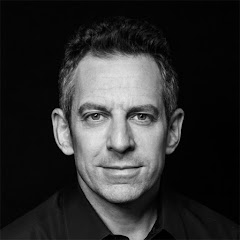 Sam Harris
Key Moments
Pandemic psychology, flawed analogies, and the urgent need for collective action and preparedness.
Key Insights
The COVID-19 pandemic highlights psychological biases that make it difficult for humans to grasp exponential growth and act preemptively.
Analogies to the flu are dangerously misleading, downplaying the severity and unique risks of COVID-19, especially concerning systemic healthcare collapse and potential long-term health effects.
Information siloing, both online and offline, exacerbates the problem, with political polarization hindering a unified and informed response.
The delay in taking decisive action, such as social distancing and travel bans, was a critical failure, demonstrating our difficulty in acting when the threat seems abstract or distant.
The pandemic exposes significant weaknesses in global supply chains and the need for robust government infrastructure and preparedness for future crises.
While the pandemic is devastating, it can serve as a crucial 'dress rehearsal' for facing future, potentially more severe global threats like climate change, emphasizing the need for collective action and trust in expertise.
THE PSYCHOLOGY OF A GLOBAL EMERGENCY
The conversation delves into the psychological hurdles of responding to the COVID-19 pandemic. Speakers discuss the phenomenon of time compressing during the crisis and the personal stress of being ahead of societal awareness. A key difficulty highlighted is the psychological challenge of convincing others, especially friends, to take the threat seriously. This often involves attempting 'exorcisms' of their brains, particularly when people are not taking the situation seriously enough, leading to frustration for those more informed. The speaker notes a difference in dealing with strangers versus friends, preferring private persuasion for the latter, though acknowledging the difficulty in achieving it.
DEBUNKING FLAWED ANALOGIES AND MISINFORMATION
A significant point of discussion is the damaging analogy drawn between COVID-19 and the seasonal flu. Critics argue this analogy is fundamentally flawed, as it downplays the exponential growth of the virus, its higher mortality rate (especially for vulnerable populations), and the potential for long-term health impairments. The flu analogy is seen as a meme that causes real damage to people's thinking. It's argued that even if COVID-19 were less severe for younger, healthier individuals, indifference to the suffering of older and compromised populations is morally unacceptable due to their increased risk when exposed by younger carriers.
THE ROLE OF INFORMATION AND POLITICAL SILOING
The discussion explores how individuals consume and process information, leading to differing perceptions of reality. A marked difference is observed between those who are 'very online' and those who are not, with the latter sometimes being oblivious to the unfolding crisis due to a different information diet. Conversely, being too online can lead to echo chambers. Political polarization is identified as a major factor, with some individuals, particularly those aligned with Trump, initially denying the gravity of the situation even as the president’s messaging shifted. This political siloing, especially evident early on with liberals being more concerned and Trump supporters dismissive, complicates a unified response.
THE CHALLENGE OF PREEMPTIVE ACTION
The pandemic presents a unique coordination problem, making preemptive action difficult. The virus's ability to spread asymptomatically means one can be a carrier without appearing sick, making the risk invisible. Exponential growth is hard for humans to grasp when immediate surroundings appear normal. The virus itself is not a malevolent agent, but an unfeeling biological entity. This psychological disconnect made it hard to act when the threat was distant, as seen in the reluctance to close schools or implement social distancing measures when no one appeared sick. This delay, exemplified by actions in New York and elsewhere, has significant human and economic costs.
ECONOMIC IMPLICATIONS AND POTENTIAL SILVER LININGS
The economic fallout from the pandemic is a significant concern, with the fear that panic could cause more harm than the virus itself. However, the paradox is that measures needed to contain the virus, like social distancing, inevitably impact the economy. While some argue that giving people money might not encourage them to visit restaurants if they fear the virus, such checks can provide essential support to those losing jobs. A silver lining discussed is the potential for lessons learned in preparedness, robust healthcare systems, and supply chain resilience, transforming the crisis into a 'dress rehearsal' for future, potentially more severe, global threats. The pandemic also highlights the shortcomings of free markets in addressing essential needs like medical supplies and the necessity of government intervention.
LEARNING FROM THE CRISIS FOR FUTURE GLOBAL CHALLENGES
The pandemic serves as a stark wake-up call about societal vulnerabilities and the need for expertise, potentially challenging anti-vaccine sentiments and the notion of 'America First' in a globalized world. It underscores that global problems require global solutions. However, the difficulty in galvanizing action for the immediate pandemic raises concerns about humanity's capacity to address long-term, slower-moving threats like climate change. The analogy of a 'war' is suggested as a motivator, but biological and physical threats lack the clear enemy needed to inspire collective action as effectively as an alien invasion might. Recognizing how free markets fail to optimize for responses to critical problems, like drug production and ventilator supply, necessitates a significant government role.
Mentioned in This Episode
●Software & Apps
●Concepts
●People Referenced
Common Questions
Several psychological factors make it difficult: the causality is indirect (asymptomatic spread); exponential growth is hard to intuitively grasp; the virus itself isn't a visible 'enemy'; and we tend to assume we're fine if our immediate surroundings appear normal. Analogies to familiar threats like the flu are also misleading.
Topics
Mentioned in this video
Co-host of the Making Sense podcast, discussing the psychological aspects of the pandemic and societal reactions.
Mentioned in the context of 'libertarian fanfiction' that needs to be shed, particularly from Silicon Valley, to accept the need for big government in crises.
Cited for his earlier statements about the guaranteed threat of global pandemics.
Mentioned for his excellent podcast episodes discussing the pandemic, particularly his point about altruistic motives.
Discussed in relation to his initial indifference to the crisis, potential for xenophobia, messaging on the virus, and handling of travel restrictions. His influence on the stock market is also noted.
Host of the Making Sense podcast, initiating the discussion on the pandemic and its societal impact, and encouraging listener support for the podcast.
Mentioned for implementing travel restrictions for Canada, similar to the US, without being seen as xenophobic.
Used as an example of a country overwhelmed by the virus, with hospitals at capacity and restrictions on funerals, serving as a warning for the US.
Mentioned in the context of Prime Minister Justin Trudeau's announcement of closing its doors to non-Canadians and Americans, as a measure to reduce spread.
The current location of one of the podcast participants, where the Canadian Prime Minister announced border restrictions.
Mentioned as a source of the virus for the US from Trump's perspective, contrasted with the initial focus on Asia.
Mentioned as a place where 'libertarian fanfiction' is prevalent, contrasting with the need for government intervention during a crisis.
Discussed as a source of virus spread (wet markets) and as a critical supplier for essential goods like drugs, highlighting the risks of outsourcing production.
The primary setting for the discussion, concerning its response to the pandemic, healthcare capacity, economic effects, and political reactions.
Mentioned as a policy idea that is breaking through during the crisis, alongside universal healthcare, as potential responses.
Identified as a concept gaining traction during the pandemic crisis, alongside universal basic income, highlighting systemic needs.
Used as a common but flawed analogy for COVID-19, which the speakers argue downplays the severity and unique risks of the novel virus.
Critiqued as an insufficient approach for global problems like pandemics, emphasizing the need for global solutions.
Discussed as a potential political tool Donald Trump might employ during the crisis, and whether travel restrictions constitute this.
Identified as a practice akin to bioterrorism, responsible for spawning viruses, with a call for China to shut them down.
Discussed as the primary tool for containing the virus's spread and flattening the curve, though its necessity is often met with resistance when it seems irrational early on.
Discussed in the context of 'fanfiction' that needs to be overcome to accept large-scale government intervention during crises.
Compared to the pandemic in terms of collective action problems, with the speakers noting our greater psychological unpreparedness for its slower, multi-decade timescale.
More from Sam Harris
View all 298 summaries 28 min
Michael Pollan on Consciousness, Psychedelics, and the Limits of Neuroscience
 22 min
Why the Stock Market Has Become a Casino
 61 min
UNRAVELING THE DREAM (A New Documentary Executive Produced by Sam Harris)
 20 min
Francis Fukuyama: The End of History Was Never What You Think
Ask anything from this episode.
Save it, chat with it, and connect it to Claude or ChatGPT. Get cited answers from the actual content — and build your own knowledge base of every podcast and video you care about.
Get Started Free