Key Moments
A Conversation with Andrew Sullivan (Episode #223)
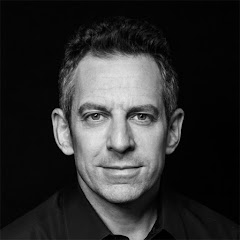 Sam Harris
Key Moments
Sam Harris and Andrew Sullivan discuss Trump's flaws, the media's role, and the path forward for American democracy.
Key Insights
Trump's presidency has empowered the far-left and undermined liberal democracy through his rhetoric and disregard for truth.
The claim that Trump's policies benefit certain groups is challenged by his failure to deliver on key promises and his instrumental approach to issues.
Trump's pathological narcissism prevents him from governing effectively, particularly evident in his response to the COVID-19 pandemic.
Both mainstream media and social media have contributed to political polarization and the suppression of information, eroding public trust.
A potential Biden presidency offers a chance for a more unifying, centrist approach, focusing on policy and restoring trust in institutions.
The Republican party's embrace of Trump has led to a disregard for norms, procedures, and institutions, representing an "extinction-level event" for liberal democracy.
THE IMPERATIVE FOR REASONED DISCOURSE
The conversation begins with the launch of Andrew Sullivan's new podcast, emphasizing a desire for open, reasonable dialogue, free from media pressures. Both hosts acknowledge their shared history of critical election analyses and express a mutual, albeit pessimistic, desire to engage in substantive discussions, even as they doubt their ability to persuade staunch Trump supporters. They highlight the difficulty of reaching those caught in personality cults or extreme ideologies, focusing instead on arguments from otherwise rational individuals.
CHALLENGING THE POLICY-OVER-PERSONALITY ARGUMENT
A key point of contention is the argument that Trump's policy successes outweigh his personal flaws. Sullivan and Harris challenge this, arguing that Trump has largely failed to deliver on significant campaign promises regarding trade, manufacturing, and immigration. They suggest his attachment to these issues was instrumental, and that his rhetoric has, paradoxically, empowered the very elements of the far-left he claims to oppose, making reasoned counterarguments difficult.
TRUMP'S PSYCHOLOGICAL IMPACT ON DEMOCRACY
The discussion deeply examines Trump's character, particularly his pathological narcissism, which they argue prevents him from understanding the experiences of others or taking responsibility. His inability to operate within democratic norms, his disregard for truth, and his constant disruption of expectations are seen as existential threats to liberal democracy. His handling of COVID-19 is presented as a prime example of his self-serving decisions negatively impacting public health and safety.
THE EROSION OF INSTITUTIONAL TRUST AND MEDIA FAILURES
Both speakers lament the decline of trust in institutions, arguing that this erosion is largely warranted due to actual failings and, in Trump's case, deliberate denigration. They criticize the media's role, including its perceived "resistance" narrative and suppression of potentially inconvenient stories like the Hunter Biden laptop. This behavior, they contend, further damages journalistic integrity and contributes to a climate where truth is secondary to partisan agenda.
THE THREAT TO PEACEFUL TRANSFER OF POWER
A critical concern is Trump's refusal to commit to a peaceful transfer of power, seen as a profound danger to the American system. This, coupled with his rhetoric, stokes fears of political unrest and violence. The hosts express dismay that this fundamental threat has not significantly eroded his support, highlighting a dangerous complacency about the stability of democratic norms and institutions.
NAVIGATING THE POST-TRUMP LANDSCAPE
Looking ahead, they discuss the potential for a Biden presidency to unify the country, emphasizing policy shifts toward infrastructure and green energy, and a restoration of traditional alliances. While acknowledging the challenges from the left, they see an opportunity for a centrist, unifying approach. They also consider the Republican party's challenge in redefining itself post-Trump and the potential for figures to re-emphasize rule of law and democratic give-and-take.
THE PRESIDENTIAL ROLE AND COLLECTIVE GRIEF
Biden's personal history of loss is presented as a crucial asset for a presidency needing to address national grief and healing, especially post-pandemic. In contrast to Trump's dismissive approach, Biden's capacity for empathy is seen as vital for binding the nation. The pandemic itself is viewed as a unique moment for potential societal restructuring toward greater compassion and addressing systemic inequalities.
CONSIDERING A HARRIS PRESIDENCY AND THE FUTURE
The possibility of Kamala Harris assuming the presidency is explored, with some reservations about her perceived seriousness but acknowledgment of her tough-mindedness. Both hosts express hope for a future where politics recedes from consuming daily life and emphasize the importance of supporting independent journalism that prioritizes truth and intellectual honesty, like Sullivan's new endeavor.
Mentioned in This Episode
●Software & Apps
●Organizations
●Books
●Concepts
●People Referenced
Common Questions
Many Trump supporters acknowledge his uncouth personality but argue that policy is what truly matters, often believing his policies are effective and better than Biden's, who they fear would be swayed by the left. They also claim Trump acts as a bulwark against left-wing 'craziness.'
Topics
Mentioned in this video
Its perceived overreaching is attributed to Trump's divisive rhetoric and actions, contributing to the craziness of the 'wokeness cult'.
Criticized for being "captured by the spirit of the resistance" and discrediting itself by exhibiting an obvious agenda rather than neutrality.
Mentioned as one of the few outlets airing the Hunter Biden story, characterized as functioning more as "partisan warfare" than journalism; contrasted with The New York Times.
Mentioned as an institution that has experienced a 'hollowing out' and loss of trust, raising concerns about competent leadership.
Mentioned as an institution that has overplayed its hand in reacting to Trump, contributing to undermining confidence in liberal democracy.
Mentioned as an institution that has experienced a 'hollowing out' and loss of trust, raising concerns about competent leadership.
Mentioned as a mainstream media outlet that the speaker "can't believe anymore" due to its perceived bias and boring, prejudiced recitation of views.
Its credibility has been undermined by Trump's actions and the "Russia obsession," but also by its own overreactions.
A news organization where Glenn Greenwald reportedly attempted to write about the Hunter Biden story.
Compared to Trump, the speaker finds Bin Laden, despite his destructive ideology, more 'understandable personally' than Trump.
Joe Biden's son, involved in a scandal regarding a laptop, which the media allegedly suppressed. Described as "almost certainly a shady individual" but not found to directly implicate Joe Biden in corruption.
His "nutball interviews" about the Hunter Biden laptop story are mentioned as not being persuasive, and contributing to the partisan nature of its spread.
Presidential candidate, whose potential leadership and character are contrasted with Trump's, seen as a unifying figure despite some flaws.
Former presidential candidate, whose flaws were discussed in a previous podcast, inadvertently leading to Trump's victory.
Mentioned as a public figure involved in QAnon conspiracy theories, illustrating the extremity of some beliefs.
Mentioned as part of the "obviously corrupt family in the White House" to diminish the significance of the Hunter Biden scandal by comparison.
Mentioned as a public figure involved in QAnon conspiracy theories, illustrating the extremity of some beliefs.
Mentioned in a hypothetical scenario to emphasize Trump's ability to survive any scandal, even a public masturbation incident.
Journalist interested in writing about the Hunter Biden laptop story for The Intercept, despite wider media suppression.
His reactivation of the Hillary Clinton investigation in 2016 is believed to have decisively changed polling and led to Trump's presidency.
Mentioned as a public figure involved in QAnon conspiracy theories, illustrating the extremity of some beliefs.
Cited as one of the few Republicans with power who has unequivocally stated that Trump's refusal to commit to a peaceful transfer of power is unacceptable.
Journalist from The New York Times, criticized for defending the suppression of the Hunter Biden story while having published the Steele Dossier without qualms.
Mentioned for his inspiring and ennobling presidency, yet also for having alienated some people. Biden is seen as potentially a better spokesman for 'Obamaism.'
The current president whose policies, personality, and impact on American democracy are the main subject of discussion, often criticized for narcissism, lying, and undermining institutions.
Actress who played the possessed girl in The Exorcist, mentioned in the context of a scene where the priest performs an exorcism.
Compared to LBJ in the context of a landslide election, representing an outcome that could help reverse political polarization.
Guest and host of a new podcast, collaborating with Sam Harris. Discusses politics, Trump, Biden, and the state of media and democracy.
Producer of The Apprentice, alleged to have buried tapes of Trump using racial slurs.
Mentioned as part of the "obviously corrupt family in the White House" to diminish the significance of the Hunter Biden scandal by comparison.
Journalist mentioned as one of the "lonely people" interested in writing about the Hunter Biden laptop story, despite media suppression.
Biden's running mate, discussed for her potential future presidency, her political style, and past statements on gun control.
His landslide victory over Goldwater is used as an analogy for a decisive election outcome that could help 'fix the thing' and reverse polarization.
Mentioned as an emerging power against which the West's way of life needs to be defended, contrasting with Trump's undermining.
Referenced as an example where center-right parties (Tories) successfully integrated concerns about globalization and immigration, winning a large majority.
Mentioned as an emerging power against which the West's way of life needs to be defended, contrasting with Trump's undermining.
City where riots and looting occurred, prompting Biden to condemn them as "unacceptable and wrong," distinguishing him from Trump.
TV show where Trump allegedly used racial slurs on buried tapes.
A film referenced to illustrate the speaker's intense aversion to becoming like Trump, using the scene where the demon possesses the priest.
Praised for responsibly reporting on the Hunter Biden laptop story, by focusing on what was not there, which was the right journalistic approach.
More from Sam Harris
View all 298 summaries 28 min
Michael Pollan on Consciousness, Psychedelics, and the Limits of Neuroscience
 22 min
Why the Stock Market Has Become a Casino
 61 min
UNRAVELING THE DREAM (A New Documentary Executive Produced by Sam Harris)
 20 min
Francis Fukuyama: The End of History Was Never What You Think
Ask anything from this episode.
Save it, chat with it, and connect it to Claude or ChatGPT. Get cited answers from the actual content — and build your own knowledge base of every podcast and video you care about.
Get Started Free