Key Moments
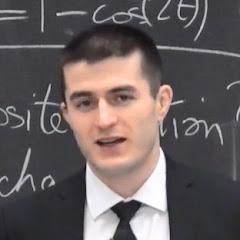
Zev Weinstein: The Next Generation of Big Ideas and Brave Minds | Lex Fridman Podcast #158
 Lex Fridman
Want to know something specific about what's covered?
We've already dissected every moment. Ask and we will deliver (with timestamps).
Key Moments
Young thinker Zev Weinstein discusses philosophy, stagnation, innovation, and the courage to change one's mind.
Key Insights
Philosophy and deep thinking are crucial but become dangerous during times of societal stagnation when power structures resist change.
Continuous growth and innovation are not guaranteed; radical thought and restructuring of established frameworks are necessary to overcome stagnation.
Embracing intellectual humility and being open to changing one's mind publicly is vital for personal growth and societal progress, despite the risks of criticism.
Labels and rigid categorization hinder deep discourse; effective communication requires abstract thinking and avoiding semantic traps.
Morality is not subjective but a proxy for societal fitness, with 'good' inherently being more stable than 'evil'.
Truth, pursued through science, offers universal common ground, essential for stability and reducing conflict.
The pursuit of a 'theory of everything' in physics is essential for understanding the fundamental nature of reality and binding great ideas together.
Investing in oneself, particularly through abstract and deductive reasoning, and contributing to humanity is the most meaningful pursuit.
THE DANGERS OF PHILOSOPHY IN STAGNANT TIMES
Zev Weinstein posits that philosophy, defined as deep thinking and ideation, becomes more dangerous during difficult, stagnant times. In such periods, power is held by those protecting existing structures, making them opposed to novel thoughts that could restructure society. This makes it dangerous for individuals to question deeply, akin to Socrates' fate. Furthermore, the consequences of radical ideas are amplified when people are desperate, as seen with the Communist Manifesto's impact in a tumultuous Russia. Thus, while dangerous, this very thinking is often humanity's only escape route from stagnation.
THE IMPERATIVE OF RADICAL THOUGHT FOR CONTINUED GROWTH
Weinstein argues that the unprecedented growth and innovation of the past century are not sustainable without a commitment to thinkers and philosophers. He emphasizes that current societal promises are built on this continued growth, a prospect that is inherently dangerous. The only way forward is through philosophy and a willingness to radically restructure fundamental notions about existence and societal structures. This requires embracing new frameworks rather than perpetuating current ones, which may lead to problems. He expresses hope that radical thought can break these limiting frameworks and offer solutions.
THE COURAGE TO CHANGE ONE'S MIND PUBLICLY
A significant aspect of Weinstein's philosophy is the openness to change one's mind, even publicly, despite the internet's intolerance for inconsistency. He views this as essential for forming true conceptions of the world and a lifelong process of scrutiny. This willingness to evolve intellectually, even when it invites criticism, is presented as brave and a beacon of hope for a philosophical future. It challenges the current era's intolerance towards change and encourages a more transparent, adaptive approach to ideas and discourse.
DECONSTRUCTING LABELS AND THE POWER OF LANGUAGE
Weinstein critiques the pervasive use of labels, arguing they corrupt abstractions and hinder genuine communication. He illustrates this with politics, where expressing love for foundational American ideals can lead to immediate, oversimplified labeling. He believes that modern conventional politics often devolves into defending existing ideologies rather than creating new ones, using labels to strawman arguments and maintain the status quo. True political engagement, for him, involves inventing new spectums and challenging existing frameworks, rather than adhering to predefined categories.
MORALITY AS SOCIETAL FITNESS AND THE NATURE OF TRUTH
Weinstein asserts that morality is not subjective but a proxy for a society's fitness and stability; actions like stealing or murder are detrimental to civilization. He contrasts this with Nietzsche's idea of 'immoralism,' which he disagrees with fundamentally. He posits that 'good' is inherently more stable than 'evil' because it aligns with societal survival. Similarly, truth is universal and objective, making it a powerful unifier. Science, as the search for truth, thus becomes a vital tool for stability, providing common ground where cooperation, not conflict, can flourish.
THE ROLE OF THINKERS AND THE PURSUIT OF DEEPER UNDERSTANDING
Weinstein distinguishes between thinkers and doers, finding great value in both. While innovators like Einstein provide meaning, those like Carrie Mullis enable survival through practical advancements. He leans towards scientific pursuits for personal contribution, aiming to bring meaning rather than mere sustenance. He sees the pursuit of a 'theory of everything' as essential for understanding reality's fabric. The beauty of mathematics and physics, he believes, lies in their discovered universality, transcending human invention and circumstance, offering a deeper, more fundamental understanding of the universe.
NAVIGATING THE DIGITAL FUTURE AND THE MEANING OF LIFE
Weinstein expresses concern about increasingly immersive digital realities, questioning if they might offer happier lives than the physical world. However, he also sees it as a potential alternative to conflict over dwindling resources. He believes that while joy is a programmed evolutionary success, true meaning comes from observing and contributing to that which transcends humanity. This involves understanding what makes us human, moving beyond those limits, and contributing to universal truths. Abstract thought, especially concerning mortality, is crucial for recognizing life's finite nature and finding meaning within it.
THE STRUGGLE OF EXPRESSION AND THE INSPIRATION OF PARENTS
Weinstein highlights the challenge of communicating deep ideas in a world prone to misinterpretation and labeling, likening it to the 'smudging' of a beautiful canvas. He draws inspiration from his father, Eric Weinstein, for his careful, nuanced approach to difficult conversations and for fostering his own idiosyncratic thinking. The elder Weinstein's unconventional parenting, treating him like an adult and sharing unconventional interests like Tom Lehrer, instilled courage and self-belief. This parental support allowed Zev to embrace his differences, viewing them as a strength rather than a deficiency.
ADVICE FOR YOUNG GENERATIONS AND THE POWER OF OPTIMISM
Weinstein advises young people, amid the collapse of traditional systems, to invest in themselves towards the betterment of humanity. He hopes his generation will create new paths to save what is collapsing, rather than be crushed by its debris. He advocates for retaining youthful hope and optimism, even if it comes at a social or reputational cost. This mindset, he believes, is productive and allows individuals to pursue radical ideas that can revolutionize frameworks and change the world for the better, underscoring the importance of believing in the impossible to make it happen.
MUSIC AS A PATH TO SELF-TEACHING AND ABSTRACTION
Weinstein shares his unique approach to music, learning theory before an instrument due to his perceived lack of musical ear. This abstract method allowed him to quickly grasp various instruments, demonstrating the power of self-teaching. He views music as an accessible reward system through its direct access to neurochemicals. He contrasts rigorous practice with the freedom of improvisation, suggesting that discipline applied to creativity, particularly in self-expression, reconciles these aspects and deepens the experience of music and learning.
Mentioned in This Episode
●Software & Apps
●Books
●Concepts
●People Referenced
Common Questions
Zev explains that in times of stagnation, creative thinking and questioning can threaten those in power who seek to preserve their existing shares. Additionally, desperate people are more likely to embrace radical ideas without fully assessing risks, leading to potentially catastrophic consequences. He defines philosophy broadly as deep thinking and ideation, crucial for societal growth.
Topics
Mentioned in this video
A medieval philosopher and theologian admired by Zev for introducing aspects of the scientific method during a dark period in human history, and for doing so skillfully without overtly offending existing powers, becoming a saint in his tradition.
A podcast host who 'accidentally stumbled' into discovering the hunger for long-form conversations, thus helping define a new medium for deep discussions.
Zev Weinstein's father, also a deep thinker, who is present in the room during the podcast. Zev discusses disagreements and inspirations from him, including his 'fastidious care' in difficult conversations and his support for Zev's idiosyncratic thinking.
A linguist and philosopher whose discussion on how language is used to develop thoughts internally, even more than to communicate them, is mentioned as an interesting perspective.
A musician cited for his quote, 'accepting dreams, you're never really free,' which Zev reflects on regarding the potential for optimism to limit creative freedom.
An Irish poet, referenced for his quote about 'the best lack all conviction, the worst are filled with passionate intensity,' in relation to Nietzsche.
A biochemist, credited with inventing things that make lives 'possible and good,' representing the 'doer' aspect of societal contribution.
Referenced with the term 'Orwellian,' indicating a concern that language is being deliberately used to destroy the ability to think conceptually, similar to the concepts in his novel 1984.
A physicist cited as an example of a 'thinker' who makes lives meaningful through understanding the universe.
A former Navy SEAL and author, known for the saying 'discipline is freedom,' which is brought up by the host in the context of music practice.
A theoretical physicist, listed among Zev's 'greatest heroes' for bringing meaning to humanity through his thought and discoveries.
A young man with a brilliant, bold, and hopeful mind, known for thinking deeply about the world and being open to changing his mind publicly. He is the guest of this podcast.
A modern philosophical thinker discussed as being 'anti-establishment' and 'unconventional,' whose ideas are labeled as dangerous but are seen by Zev as vital for rescuing society by existing outside conventional frameworks.
A modern inspiring figure in engineering and sustenance, described as a 'ridiculous and sensational example' of a radically individualistic person essential for human survival and innovation.
A comedian whom Zev's dad introduced to him at age five, noted for his bizarre satirical writing and as a 'rare intellect.' Lehrer's work drove Zev to research and learn from a broader cultural canon.
A physicist and mathematician, named as a 'hero' and a 'thinker' who brought meaning to humanity.
A Russian novelist whose book 'The Idiot' is recommended by the host to Zev in the context of the struggle to maintain naivete and optimism in a world that often penalizes it.
A video sharing platform mentioned as a medium for communication, noted for its tendency towards quick-moving content but also its potential for deeper exploration.
A social media platform characterized by short, entertaining videos, contrasted with long-form podcasts in terms of consumption habits.
A philosophical idea that one's own mind is the only thing that is certain to exist, mentioned as a legitimate but unactionable thought experiment.
Referrs to the historical pattern of constant growth in different technologies, particularly in computing, mentioned as a comparison to the perceived historical growth of human accomplishments.
More from Lex Fridman
View all 550 summaries 174 min
Biggest Mysteries in Physics: Antimatter, Dark Energy & ToE - Don Lincoln | Lex Fridman Podcast #497
 259 min
FFmpeg: The Incredible Technology Behind Video on the Internet | Lex Fridman Podcast #496
 124 min
Vikings, Ragnar, Berserkers, Valhalla & the Warriors of the Viking Age | Lex Fridman Podcast #495
 146 min
Jensen Huang: NVIDIA - The $4 Trillion Company & the AI Revolution | Lex Fridman Podcast #494
Ask anything from this episode.
Save it, chat with it, and connect it to Claude or ChatGPT. Get cited answers from the actual content — and build your own knowledge base of every podcast and video you care about.
Get Started Free