Key Moments
Why Super Glue Is Perfect For Gluing Skin
 Veritasium
Want to know something specific about what's covered?
We've already dissected every moment. Ask and we will deliver (with timestamps).
Key Moments
Super glue's strength comes from rapidly polymerizing molecules, initially discovered by accident.
Key Insights
Super glue's strength and rapid setting are due to the chemical reactivity of cyanoacrylate monomers, triggered by moisture.
The accidental discovery of super glue by Harry Coover eventually led to its widespread use and medical applications.
Super glue bonds strongly to skin due to its ability to seep into pores and react with skin proteins, but can be dissolved by acetone.
While strong in tension and compression, super glue is brittle and weak against impact and shear forces.
Chemically inert materials like polyethylene and polypropylene do not bond with super glue because they lack reactive sites.
Cyanoacrylate's potential extends to plastic recycling, where it can be de-polymerized into its original monomers for reuse.
AN UNEXPECTED DISCOVERY
The story of super glue, or cyanoacrylate, began in 1942 with Harry Coover at Eastman Kodak. While searching for a clear plastic for gun sights during wartime, he stumbled upon cyanoacrylate, a substance that proved incredibly sticky, making it unsuitable for lenses but hinting at its adhesive potential. Despite its initial inconvenience, Coover revisited the compound in 1951 for jet canopies, and an accidental experiment with a coworker revealed its remarkable bonding strength, leading to the development of Eastman 910 adhesive, now commonly known as super glue.
THE MECHANISM OF RAPID SETTING
Super glue's remarkable speed and strength are rooted in its chemical composition. The liquid glue consists of identical ethyl cyanoacrylate monomer molecules. When applied between two surfaces, these monomers flow into crevices and pores. The key to its rapid solidification lies in its highly reactive double and triple bonds. In the presence of even a slight negative ion, such as from water molecules or hydroxide ions, the carbon double bond breaks, initiating a chain reaction. This process rapidly forms long polymer chains, transforming the liquid into a solid and creating a powerful bond.
WHY IT STICKS ESPECIALLY WELL TO SKIN
Super glue's notorious tendency to stick to skin is due to several factors. Skin provides numerous pores and crevices for the glue to penetrate, increasing surface area for bonding. Furthermore, proteins like collagen in the skin contain negatively charged regions that actively initiate the polymerization of cyanoacrylate. The rapid polymerization triggered by moisture on the skin means the glue solidifies almost instantly. While acetone, found in nail polish remover, can dissolve the hardened glue, attempting to remove it from sensitive areas like the eyes requires immediate medical attention.
STRENGTHS AND WEAKNESSES OF SUPER GLUE
The bonded polymer chains in super glue are densely packed and run linearly, offering significant strength in compression and tension, capable of bearing immense weight when pulled in the direction of these chains. However, this rigid structure makes it brittle; sudden impacts can cause the bond to fracture, especially at points of stress within the polymer matrix. Super glue is also particularly weak in shear, where forces are applied perpendicular to the polymer chains, and in peeling forces, where stress concentrates on a few polymers, causing them to break sequentially like a zipper.
THE CHALLENGE OF INERT MATERIALS
Certain materials, notably those made from polyethylene, polypropylene, and Teflon, resist bonding with super glue. These materials are chemically inert, meaning their surfaces lack the reactive sites that initiate the cyanoacrylate polymerization. Their carbon-carbon bonds are strong and do not readily share electrons. Even the presence of water, which typically triggers the glue, has little effect on these hydrophobic and non-porous surfaces, causing water to bead up and preventing the glue from adhering. This inertness is paradoxically crucial for storing super glue safely.
REVOLUTIONIZING MEDICINE AND RECYCLING
Coover's discovery paved the way for medical applications, with modified cyanoacrylates designed to be flexible, release less heat, and break down into non-toxic byproducts over time, revolutionizing wound closure and saving lives, particularly in military settings. Beyond medicine, cyanoacrylate's unique property of depolymerizing back into its original monomers when heated opens exciting possibilities for plastic recycling. By distilling these monomers, plastics can be reformed into high-quality new polymer, offering a sustainable alternative to traditional recycling methods, which often result in material degradation and microplastic pollution.
THE MINDSET OF INNOVATION
The journey of cyanoacrylate from a sticky nuisance to a life-saving medical adhesive and a potential solution for plastic pollution underscores the importance of open-mindedness and curiosity. Coover's ability to see the potential benefit in a frustrating characteristic, and later researchers' inspiration to view it as a plastic rather than just an adhesive, highlights that innovation often stems from re-framing problems and pursuing unexpected observations. Such critical thinking and problem-solving skills are learnable and essential for future discoveries.
Mentioned in This Episode
●Products
●Software & Apps
●Tools
●Companies
●Concepts
●People Referenced
Super Glue Dos and Don'ts
Practical takeaways from this episode
Do This
Avoid This
Common Questions
Super glue's strength comes from its monomers (ethyl cyanoacrylate) rapidly polymerizing in the presence of moisture. These monomers form long polymer chains that fill pores and crevices, creating a very strong bond.
Topics
Mentioned in this video
The chemical compound that forms the basis of super glue, known for its strong adhesive properties.
The specific monomer molecule that makes up most super glues, which polymerizes rapidly in the presence of moisture.
A common plastic that is chemically inert and resists bonding with super glue, useful for handling the monomers and as a material super glue won't stick to.
A type of plastic that is chemically inert and does not readily bond with super glue, making it useful for handling the glue's monomers.
More from Veritasium
View all 99 summaries 42 min
The Man Who Worked At Subway, Then Solved An "Impossible" Problem
 35 min
What Is Disrupting GPS Over Europe?
 30 min
How Does Google Maps Actually Work?
 22 min
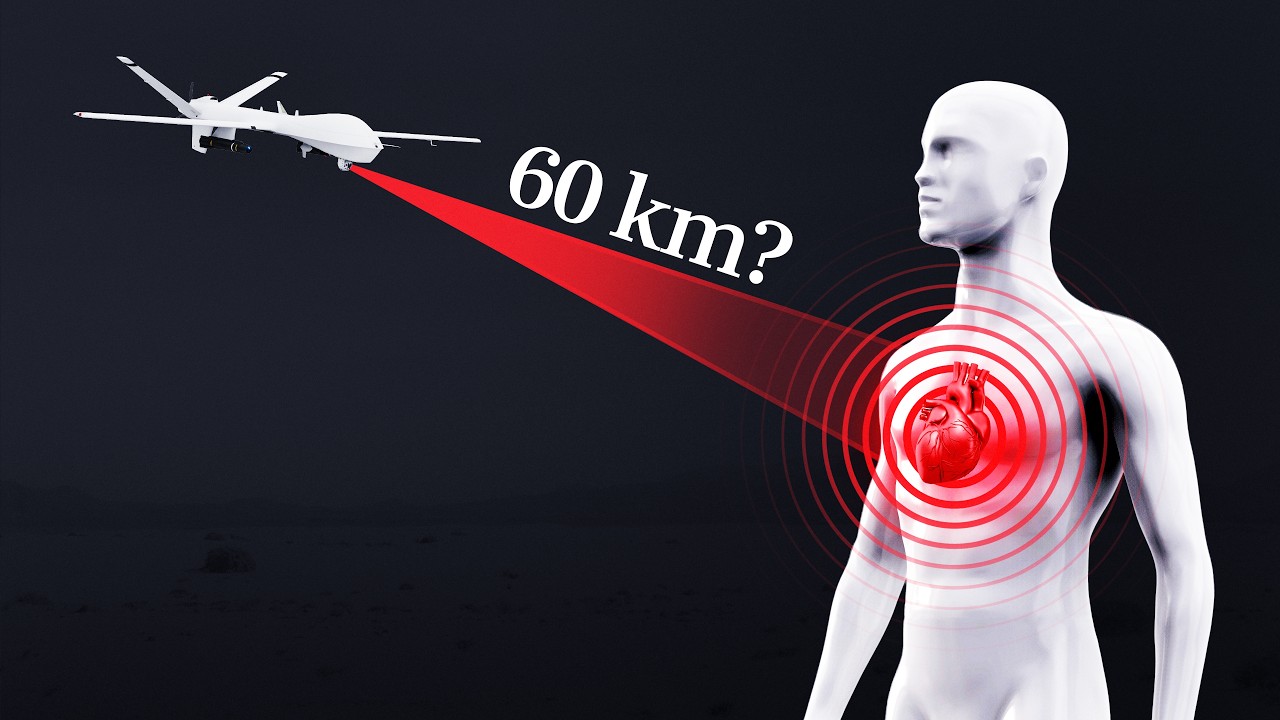
Can a quantum sensor detect your heartbeat from 60 km away?
Ask anything from this episode.
Save it, chat with it, and connect it to Claude or ChatGPT. Get cited answers from the actual content — and build your own knowledge base of every podcast and video you care about.
Get Started Free