Key Moments
What If the Paranormal Is Real? | Jeffrey Mishlove (Full Conversation)
 Closer To Truth
Key Moments
Parapsychology research faces skepticism due to weak data, but proponents argue it's due to the phenomenon's subtle nature, not lack of evidence, suggesting a need for new scientific paradigms.
Key Insights
Parapsychology categorizes phenomena into psi-conception (receiving information outside normal senses) and psychokinesis (influencing events with intention).
Carl Jung's concept of synchronicity, an acausal connecting principle, offers an alternative to traditional causal models of psi phenomena.
Despite strong anecdotal evidence, laboratory studies in parapsychology are criticized for weak statistical significance, often requiring massive datasets for clear results.
The scientific community's acceptance of parapsychology has been slow, though publications in journals like 'American Psychologist' suggest a gradual shift.
The possibility of consciousness surviving bodily death is a contentious issue, with some arguing it can be explained by living psi (telepathy/psychokinesis) and others citing more precise information from alleged deceased entities.
The future of parapsychology may involve integration with theories of higher dimensions or hyperspace, challenging current understandings of physics and consciousness.
Defining and categorizing psi phenomena
Parapsychology encompasses phenomena studied under the umbrella term 'psi,' broadly divided into two main categories: psi-conception and psychokinesis. Psi-conception is seen as passive, involving the reception of information from distant sources through means other than ordinary sensory channels. This can be further broken down into telepathy (mind-to-mind communication) and extrasensory perception (ESP) (awareness of something not mediated by another mind). Precognition (awareness of future events) and retrocognition (awareness of past events) are also distinct forms. Psychokinesis, on the other hand, is considered active, involving the influence of human intention on distant events without ordinary physical means. Other related concepts include synchronicity, described by Carl Jung as an acausal connecting principle that meaningfully links events that would otherwise be disconnected, often illustrated by meaningful coincidences like a client dreaming of an Egyptian scarab beetle just as one appears at the window.
The challenge of scientific evidence and skepticism
A significant challenge in parapsychology is the perception of weak empirical evidence, leading to widespread scientific skepticism. Early research, like J.B. Rhine's card-guessing experiments, often faced criticism regarding experimental design, potential for fraud, and data selection biases, such as the underreporting of negative results. This selective publication can create a distorted picture of the evidence. While statistical significance can be achieved, the effect sizes are often small, requiring massive datasets to demonstrate reliably. This weakness in data makes it difficult for the mainstream scientific community to accept the phenomena as real. Skeptics often argue that the phenomena are impossible, a circular argument that presumes materialism, while proponents counter that this materialistic assumption itself is a limitation, and that the evidence, though subtle, persists and improves with more rigorous methodology.
Methodological rigor and evolving research practices
In response to criticisms, parapsychological research has adopted more rigorous methodologies. This includes pre-registration of experiments, where all hypotheses and statistical analyses are decided upon before data collection, to prevent QRPs (Questionable Research Practices). The field has also moved away from simple card-guessing tasks towards more sophisticated approaches, utilizing quantum mechanical random event generators to ensure true randomness. Despite these improvements, the phenomena remain subtle, often described as being like a baseball player hitting many strikeouts for every home run, as exemplified by J.B. Rhine's work. However, the data's statistical significance has not diminished with increased rigor, suggesting that while weak in the lab, the phenomena can manifest powerfully in case studies.
The debate over survival after death
The question of survival after death has been a central theme since the early days of psychical research but was largely set aside by J.B. Rhine, who argued that alleged evidence for an afterlife could be more simply explained as telepathy or psychokinesis from the living. However, the debate continues. Some researchers argue that information purportedly from deceased individuals is more precise and detailed than typically seen in laboratory psi studies, lending credence to the idea of genuine discarnate entities. Conversely, the counter-argument points to the statistical rigor of laboratory findings and the 'file drawer problem' – the vast number of unobserved or unreported instances that would put observed successes into statistical perspective. While anecdotal evidence is rich, its reliability and the lack of a calculable denominator for non-occurrences make it difficult to definitively prove survival.
Hyperspace, consciousness, and potential mechanisms
Exploring potential mechanisms for psi phenomena often leads to discussions of consciousness and its fundamental nature. Some theories propose that consciousness is primary (metaphysical idealism) and the brain acts as a receiver or filter, limiting our awareness for biological survival. This framework suggests that psi phenomena might involve accessing information beyond the brain's filtered consciousness. Another prominent avenue is the hyperspace hypothesis, which posits higher dimensions of space or time. These dimensions could potentially allow for non-local connections and violate current understandings of physics, such as the separation of consciousness from spacetime constraints. This aligns with the idea that future physics may incorporate multidimensional aspects to explain phenomena that defy current laws.
Synchronicity as an alternative framework
Synchronicity, as conceptualized by Carl Jung, offers a non-causal framework for understanding meaningful coincidences. Unlike the information-transfer model of traditional psi research, synchronicity focuses on the acausal yet meaningful connection between inner subjective states and outer events. While Jung developed this theory in parallel with J.B. Rhine's work on psi, Rhine rejected the acausal principle, insisting on a causal basis. The spontaneous nature of synchronicity makes it challenging to study experimentally compared to planned laboratory psi experiments. However, some researchers suggest that exploring states of 'flow,' commonly discussed in psychology, might offer insights into how synchronistic events could manifest or be enhanced.
The future of parapsychology and consciousness research
Looking ahead, the field of parapsychology is anticipated to move from the fringes into mainstream acceptance. This shift may be driven by further scientific validation, but also by a growing public awareness and the potential for interspecies communication, especially concerning UFO phenomena. As humanity enters a new era of space exploration and potential contact with extraterrestrial intelligences, the study of consciousness, psi, and life beyond Earth are likely to become more integrated. The recognition of non-human intelligence, whether from distant planets or other dimensions, could fundamentally alter our understanding of reality, consciousness, and our place in the cosmos.
Mentioned in This Episode
●Products
●Organizations
●Books
●Concepts
●People Referenced
Common Questions
Psi, as a comprehensive approach, includes two main categories: extrasensory perception (ESP) and psychokinesis (PK). ESP can be further divided into telepathy (mind-to-mind communication), clairvoyance (perceiving something not mediated by another mind), and precognition (knowing future events), and retrocognition (knowing past events).
Topics
Mentioned in this video
A parapsychologist whose work is discussed as a traditional model for Psi research, focusing on information transfer and dealing with the issue of life after death. He is criticized for rejecting Jung's non-causal synchronicity concept.
A philosopher who has studied the survival of consciousness and believes it cannot be ruled out.
Conducted a study with Douglas Dean at Newark College of Engineering on business executives' Psi abilities.
A late philosopher of religion who discussed the 'primordial tradition' and the common principles found in both Eastern and Western religions.
The editor of the Journal of Parapsychology, who wrote an article summarizing the evidence for Psi in the American Psychologist journal.
A statistician and friend of the speaker who argues that Psi data is scientifically and statistically sound, comparable to evidence for aspirin preventing heart attacks, but notes that personal experience is often more convincing.
A former president of the Parapsychological Association who advocated for considering synchronicity as a new and distinct conceptual model for Psi phenomena.
A psychologist deeply involved in fractal mathematics who suggests that synchronicities evolve like fractal patterns, repeating themselves in nature.
Author of 'Man's Search for Meaning,' cited in a discussion about the human quest for meaning.
A parapsychologist whose quote about even the best psychics losing money in Las Vegas (albeit slowly) is cited to illustrate the weak nature of Psi phenomena in laboratory settings. He is also mentioned for his research into esoteric Western traditions of magic to enhance psychic abilities.
The inventor of the Bell Helicopter and a mentor to the speaker, who believed in exploring approaches beyond traditional science.
A person from J.B. Rhine's lab who correctly guessed 25 Zener cards in a row, an event with astronomical odds, cited as an example of strong Psi phenomena.
A highly respected physicist who also considers the concept of super-space in relation to consciousness.
A contactee who discusses his UFO abduction and relationship with an alien being, also mentioning a deceased friend being present on the craft, highlighting the overlap between extraterrestrial exploration and spirituality.
A magician and skeptic who claimed to debunk Uri Geller's abilities, suggesting they were mere magic tricks.
Former US President who claimed to have seen a UFO.
A 'psychic man' who was a former assistant to J.B. Rhine, claiming precognition and psychokinesis abilities attributed to 'intelligent space beings,' whose 20-year database of activities is being analyzed using AI. He is also mentioned in the context of Uri Geller.
A Nobel Peace Prize laureate who, along with John Mihalasky, conducted a study at Newark College of Engineering on business executives' Psi abilities, finding a correlation between successful executives and positive Psi scores, and unsuccessful ones with 'psi-missing' (negative scores).
A psychic who achieved worldwide fame as a mentalist, studied by SRI International, and featured in a Nature paper. He is discussed regarding his claims of telepathic and psychokinetic abilities, often associated with UFOs and extraterrestrial beings, and the debate around whether his abilities were genuine or magic tricks. The speaker sponsored Geller's first public appearance in the US in 1973.
A pioneer and close friend of the speakers, who suggested that Psi mechanisms are not weak or unusual but rather the natural way the mind interacts with the body, with only a small portion manifesting as observable Psi.
The central figure in a significant research project on physical mediumship and spirituality, who conducted seances studied by researchers for two years and reported extraordinary physical phenomena, including the full materialization of an extraterrestrial body.
A neurologist at the University of Toronto who proposed a hypothesis that a part of the brain (left bilateral frontal lobe) might suppress Psi abilities, based on his work with brain-damaged patients and experiments using Transcranial Magnetic Stimulation (TMS).
A philosopher who has studied the survival of consciousness and believes it cannot be ruled out.
A philosopher who eloquently termed the underlying essence beneath cultural traditions as 'the Real,' a way to resolve apparent contradictions on the surface.
An astronomer at Harvard University Observatory who wrote a book debunking UFOs and to whom the speaker wrote as a child, receiving confirmation that UFOs were not real.
A researcher with whom Jacques Vallee compiled a computer database of UFO sightings.
A respected parapsychologist and a professor to the speaker, who withdrew from the speaker's graduate committee due to his focus on combining UFO and parapsychology research.
A philosopher who, along with others, hypothesized that the brain does not generate consciousness but acts as a receiver or filter for it.
A philosopher of science and the speaker's dissertation supervisor at Berkeley, who viewed materialism as 'imperialistic,' absorbing all phenomena.
A researcher who compiled a computer database of approximately 20,000 UFO sightings while working with Robert Bigelow.
The Swiss psychiatrist who described synchronicity as a non-causal principle meaningfully connecting otherwise separate events. He inspired J.B. Rhine's work and had correspondence about synchronicity, which Rhine rejected as non-causal.
The founder of the Hasidic mystical tradition, a great 17th-century rabbi believed to be surrounded by synchronicities and miraculous events due to his holiness.
Author of 'The Perennial Philosophy,' a book that seeks to find underlying principles common to Eastern and Western mystical traditions.
A film director whose recent movie is cited as an example of how extraterrestrial beings might be portrayed, hinting at their eventual recognition and "disclosure" in society.
A mathematician and physicist, a close friend of the speaker, who wrote an appendix on super-space and consciousness in 'Roots of Consciousness.' He also conducted an experiment with Uri Geller where Geller seemingly reversed time on a bean sprout.
Former US President who, upon taking office, inquired about UFOs and found no evidence of alien craft or biological samples at Area 51, stating that there was 'nothing there.'
The flagship journal of the American Psychological Association, which published a lengthy article by Zyl Cardenia summarizing evidence for psi in 2018, indicating a slow growth in scientific acceptance.
A journal mentioned in the context of its editor, Zyl Cardenia, publishing a summary of Psi evidence in the American Psychologist.
A book mentioned as having a second edition with an appendix by Saul Paul Sirag on super-space and consciousness.
A prominent scientific journal that published a paper on Uri Geller in 1974.
A famous book by Viktor Frankl, referenced in the discussion on finding meaning in life.
A book by Aldous Huxley exploring the common principles found in both Eastern and Western religions, cited as evidence for a shared thread in esoteric traditions.
Hypothetical megastructures around stars to capture energy, mentioned as something one might expect to see if advanced extraterrestrial civilizations truly existed and were active on a vast scale.
A philosophical allegory used to illustrate how people perceive shadows of reality, with only a few escaping to see the 'bright world' and returning to share their insights, often to disbelief.
A laboratory mentioned for its work on psychokinesis research.
The academic institution where neurologist Maurice Friedman works.
The medical center where Maurice Friedman was head of the neurology department, affiliated with the University of Toronto.
The institution where Douglas Dean and John Mihalasky conducted their study on business executives and Psi abilities.
An institution that studied Uri Geller's purported psychic abilities, with a paper published in Nature in 1974.
A professional organization mentioned in the context of its former president, John Palmer, advocating for synchronicity as a conceptual model.
The observatory where Donald Menzel worked, mentioned in the context of his debunking of UFOs.
More from Closer To Truth
View all 70 summaries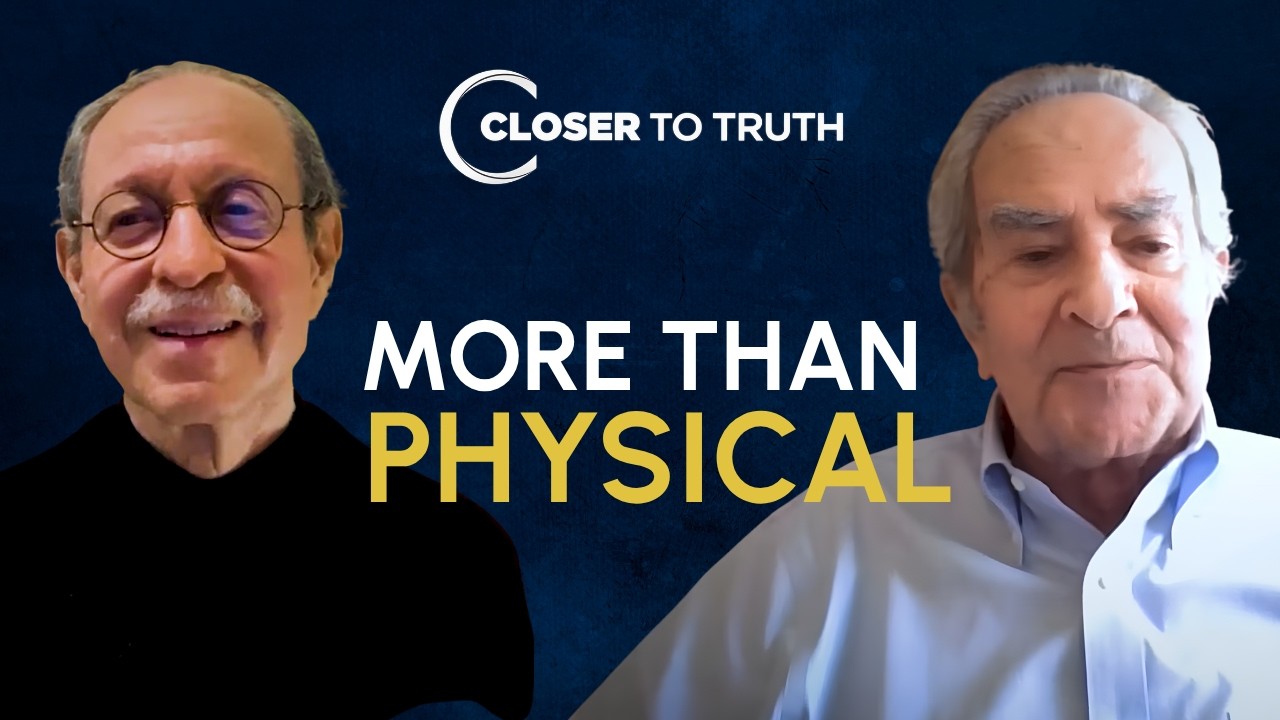 23 min
Why Physics Cannot Be a Theory of Everything | Thomas Nagel
 113 min
Thomas Nagel: What Is It Like to Be a Bat? (Full Conversation)
 34 min
Free Will Is the Ability to Envision Futures | Martin Seligman
 112 min
Acharya Prashant: Is Ego or Consciousness Fundamental? (Part 1)
Ask anything from this episode.
Save it, chat with it, and connect it to Claude or ChatGPT. Get cited answers from the actual content — and build your own knowledge base of every podcast and video you care about.
Get Started Free