Key Moments
What if seriousness is the real problem? | Dagmawi Bedilu | TEDxArada Play
 TED
TEDKey Moments
Play is not an escape from reality but a powerful tool for connection and empathy, challenging the notion that seriousness is always necessary.
Key Insights
The speaker defines seriousness as a 'disease' that arises when we stop being curious and start protecting ourselves, leading to self-consciousness and awkwardness.
Over 10 years, the speaker's organization has hosted over a thousand game nights, growing from an initial group of 5-8 people to a flourishing play ecosystem.
Games are not about winning, but about connection, trust, and empathy, enabling individuals to navigate complex situations by understanding different perspectives.
The speaker proposes 'game thinking' as a tool to reframe daily challenges, such as dealing with a traffic officer or resolving marital disputes, through empathy rather than manipulation.
True play requires losing the ego, the need to be right, and the fear of embarrassment, allowing for genuine connection and a more fulfilling life.
Play-based learning has been officially recognized, with the city administration announcing a policy on play-based learning after a decade of advocacy.
The pervasive problem of seriousness
Dagmawi Bedilu opens by questioning the audience about their last smile and when they last deliberately planned to make someone smile, highlighting a potential deficit in our daily lives. He acknowledges the severe global issues like war, inflation, and corruption, which naturally lead to an atmosphere of seriousness. However, he provocatively suggests that perhaps 'seriousness itself is the reason' for many of our problems. He introduces himself as a 'kid and proud of it,' and a 'game thinker' who specializes in smiles, moments, experiences, fun, and engagement. His organization, 'Ch,' aims to find a 'zantote for seriousness,' which he believes is a detrimental disease. He observes that when we take things too seriously, they tend to go wrong, particularly in relationships.
An experiment in overcoming awkwardness
To illustrate his point, Bedilu conducts an impromptu experiment. He asks the audience to turn to a stranger next to them and simply look at each other without speaking. The immediate reaction is palpable awkwardness and tension, which he identifies as 'seriousness.' He explains that seriousness is what happens when we stop being curious and start protecting ourselves, becoming self-conscious and introspective ('Do I look good? Is this weird?'). This initial discomfort, he argues, is the embodiment of seriousness that play aims to dismantle.
The origins of a play movement
Bedilu recounts the genesis of his work, which began ten years prior during a period of national unrest. Facing widespread talk of war and emigration, he and his colleagues felt a deep need for rest and simple, reasonable happiness – just a single smile a day. This led to the simple act of collecting games and getting together to play. Starting with just five to eight people at game nights, their gatherings gradually grew. This organic movement was guided by the 'golden rule' and quickly revealed its first major lesson: games are not solely about fun, but fundamentally about connection. He observed how games could transform individuals, like a nervous young man becoming confident when given an Uno card, demonstrating play's power to foster social bonds and alter self-perception.
Games as a catalyst for trust and empathy
Over the past decade, Bedilu's organization has hosted over a thousand game nights, expanding to include workshops on designing moments and creating fun. They even hosted 'sleepovers' for game designers to create games in 48 hours. The impact extended to the corporate world, where companies with 'boring cultures' or strained employee-boss relationships sought their help. Through games, CEOs shed their formal demeanor, dancing and interacting with junior employees, fostering a sense of rest and connection that could last for months. This led to the understanding of the second rule of games: they are not an escape from reality but a foundation of trust. Players trust the game designer to create a safe space with clear rules and a path to progress. This trust extends to fellow players, allowing for emotional expression—anger, competition—within the game, followed by camaraderie once it concludes.
Building games that matter
Taking the concept of trust further, Bedilu's team began building games with a deeper purpose. They developed a board game for conflict resolution in Azosa, where farmers and investors could role-play to understand each other's perspectives. This game fostered empathy, leading farmers to consider upgrading their practices and investors to recognize the long-term implications of their actions. Another game was designed to raise awareness about gender-based violence; playing as a teacher, a participant experienced the shock of a student's victimization due to his indecision, highlighting games' potential to change behavior. They also utilized games with street children, enabling them to discover hope and leadership potential, with some even later pursuing opportunities like opening bank accounts.
Shifting from 'me' to 'we'
The third rule of play, according to Bedilu, is that it's never about 'us' (the organizers) but about 'everyone.' Their client's feedback, stating they needed 'more people like you' in a population of 120 million, spurred a 'teach one, teach one' model. This approach helped build their own companies and transformed a nascent play ecosystem into a flourishing one, with game nights now common in Addis Ababa at concerts, schools, and even influencing city policy towards play-based learning after ten years of effort.
Applying game thinking to everyday challenges
Bedilu then offers practical applications of 'game thinking' for common, difficult scenarios. He addresses dealing with traffic officers (acknowledging the perceived inevitability of a penalty), potential bar fights, arguments with loved ones, and the challenge of feeding a toddler. He proposes a playful approach, not as manipulation, but as a method rooted in empathy. For the traffic officer scenario, it's about understanding the officer's difficult job. In disputes, it's about recognizing the other person's need to be heard or to avoid being hurt. For feeding a toddler, it involves showing consequences rather than simply stating facts, contrasting it with punishment. The humorous example of a couple pretending to feed each other to get the toddler to eat illustrates this 'game thinking' in action.
Losing to win through empathy
Bedilu asserts that true play has nothing to do with manipulation; instead, it's about 'true empathy.' He clarifies that fooling a traffic officer misses the point. Instead, empathy involves understanding the officer's difficult situation, the customer's need to protect themselves in a fight, or a partner's need to feel understood. He argues that play is fundamentally about 'losing'—losing the need to be right, the desire to dominate, and crucially, the fear of embarrassment and ego. He believes we are playing the 'wrong game' by clinging to ego and the illusion that life is solely about ourselves. The takeaway is to 'lose the eye so that the we can win,' lose the fight to win the war, and lose the ego to win life. This resonates with ancient wisdom, where a 'jaw' (wise person) is not foolish but has surpassed limitations and understands reality on a deeper level, making space for rest and resolution. He concludes by asking the audience to look at each other again, this time with a smile, demonstrating how moments of connection, not grand institutions, create movements, and inviting everyone to embrace 'Let there be games.'
Mentioned in This Episode
●Products
●People Referenced
Applying Playful Thinking to Everyday Scenarios
Practical takeaways from this episode
Do This
Avoid This
Common Questions
The speaker argues that seriousness itself might be the root problem in many situations. He suggests that taking things too seriously can lead to self-consciousness, fear, and a breakdown in connection, whereas embracing play and empathy can lead to better outcomes.
Topics
Mentioned in this video
More from TEDx Talks
View all 123 summaries 23 min
What have we got wrong about leadership? | Shoandeep Radhakrishnan | TEDxMonash University Malaysia
 23 min
My Two Dances With Depression, Fall Again, Rise Again | Ben Ibrahim | TEDxMonash University Malaysia
 24 min
Then Yesterday Happened | La Criscia Fowlkes | TEDxOvertown
 21 min
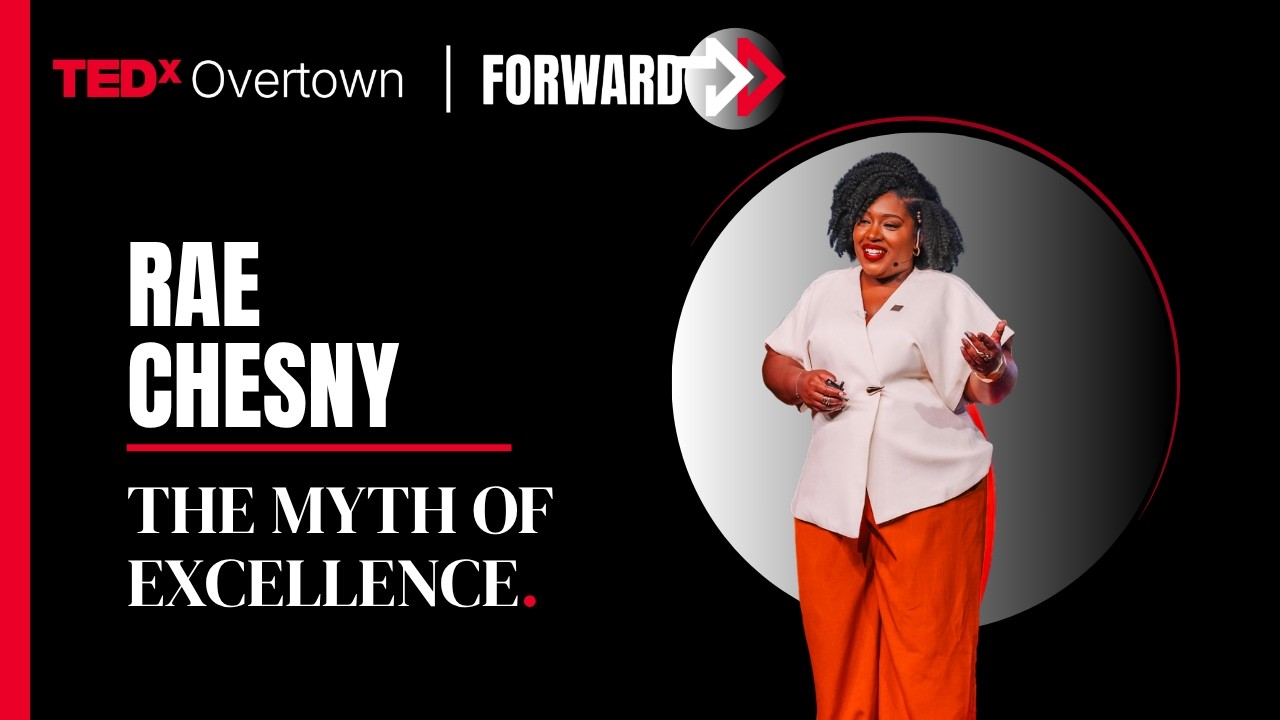
The Myth of Excellence | Rae Chesny | TEDxOvertown
Ask anything from this episode.
Save it, chat with it, and connect it to Claude or ChatGPT. Get cited answers from the actual content — and build your own knowledge base of every podcast and video you care about.
Get Started Free