Key Moments
What have we got wrong about leadership? | Shoandeep Radhakrishnan | TEDxMonash University Malaysia
 TED
TEDKey Moments
Leaders aren't followed for authority or confidence, but for trust, which can be built through self-trust, trusting others, and earning trust via passion, care, and sacrifice. This applies to everyone, not just those in high positions.
Key Insights
Julius Caesar's legions followed him into treason not through command, but because he flattened hierarchy and fought alongside them, fostering a deep bond.
Augustus's disciplined legions mutinied the moment he died, demonstrating that false compliance built on fear is not genuine allegiance.
A 2014 study of 70 Malaysian teams (300 people) found that leader-portrayed trust spreads to co-workers, fostering teamwork and performance, a phenomenon termed 'trust contagion'.
Elephants followed an older, weaker matriarch over a younger, stronger leader when facing danger, indicating trust is prioritized over perceived strength in critical times.
Effective leadership trust is built on three pillars: self-trust (and accountability), trusting others (to grow them, not micromanage), and earning others' trust through passion, care, and sacrifice.
Followership is built on trust, not authority
The common perception of leadership often equates influence with authority, volume, or confidence. However, this talk argues that true followership stems from trust. Historical and biological examples illustrate this point. Julius Caesar, facing political annihilation, convinced his legions to commit treason not by commanding them, but by flattening the hierarchy, referring to them as peers, and fighting alongside them in the trenches. This shared experience forged a deep bond and willingness to follow him despite immense risks. In contrast, Augustus, Caesar's heir, maintained a strong, disciplined empire through an iron grip, but his legions instantly descended into mutiny upon his death. This highlights the difference between genuine allegiance and false compliance, which looks similar to loyalty but crumbles without constant enforcement.
False compliance is unsustainable
The example of Augustus starkly illustrates the fragility of leadership based solely on discipline and authority. While his reign brought stability, it was contingent on his personal enforcement. The immediate mutiny of his legions after his death reveals that their obedience was a product of his coercive power, not a deep-seated trust or belief in his leadership. This underscores a crucial distinction: what appears to be followership might merely be compliance driven by fear or obligation, which is inherently unstable and unsustainable in the long run.
Trust is an ancient, inherent human and animal trait
The concept of trust predates human language and history, deeply embedded in our instincts. Research into animal behavior further supports this. In a study of elephants, researchers simulated lion roars to observe leadership responses. In one group, the leader was an older, wiser, but weaker matriarch. In another, a younger, stronger leader was present. Despite her physical weakness, the elephants followed the older matriarch to safety, demonstrating that in times of danger, they prioritized who they could trust over who appeared strongest. This implies that even in the animal kingdom, trust is a primary driver of followership, challenging the conventional wisdom that the strongest always lead.
Trust contagion drives team performance
A study conducted in Malaysia involving 70 teams and 300 participants examined how trust operates within workplace dynamics. Over a three-month period, researchers observed that trust displayed by a leader would permeate through their co-workers, leading to improved teamwork and enhanced performance. This phenomenon, termed 'trust contagion,' is akin to social contagion: when trust becomes the established norm, it is passed from one individual to another, creating a ripple effect. This illustrates how a leader's trustworthy behavior can fundamentally alter the team's atmosphere and productivity, making trust a tangible asset that spreads organically.
Personal experiences shape leadership understanding
The speaker shares personal leadership experiences, highlighting a progression of learning. Initially, as a young leader, he focused on being the 'dreamer,' generating ideas and pushing the team hard, which resulted in burnout. In a subsequent role, he tried a more passive 'let it go' approach, which led to panic and micromanagement when issues arose. A more significant leadership challenge involved a large, unfamiliar team with no prior connections. Faced with uncertainty, he shifted focus from imposing his will to building relationships and understanding needs. This led to the discovery that fostering trust, despite its messiness, was the most effective way to propel the team forward.
Building trust requires self-trust and accountability
The foundation of building trust with others begins with self-trust. A leader must first believe in their own capabilities and decisions, even while acknowledging their limitations. This involves being able to state that one did their best under the given circumstances and, crucially, taking accountability for any mistakes made. Simply saying 'I did my best' is insufficient; it must be paired with responsibility. This self-leadership is the prerequisite for others to place their trust in you. Without self-belief and accountability, a leader cannot credibly ask for or expect trust from their team.
Trusting others means enabling their growth
The second pillar is trusting others. This goes beyond simply delegating tasks; it involves truly believing that individuals can accomplish what is assigned. Even if they falter, a leader's role is not to replace or remove them, but to guide and help them grow. This means investing in team members, supporting those who struggle, and fostering an environment where development is prioritized. Just as others likely helped you grow, the expectation is to pay that forward. This approach cultivates loyalty and strengthens the team by developing its members, rather than simply demanding results.
Earning trust through passion, care, and sacrifice
The most challenging aspect is earning others' trust, especially when you are new or unknown. This is achieved through three key elements: passion, care, and sacrifice. Passion for the work demonstrates commitment and inspires others to follow suit. Care involves genuinely looking after the well-being of the team and the work itself, extending beyond mere enthusiasm to deep consideration. Sacrifice, though not necessarily grand gestures, means being willing to give up something valuable, such as time or personal comfort, for the benefit of the team or organization. When leaders demonstrate these qualities, they build credibility and show they are reliable, creating an unbreakable bond akin to the one Caesar forged with his legions.
Mentioned in This Episode
●People Referenced
Building Trustworthy Leadership
Practical takeaways from this episode
Do This
Avoid This
Common Questions
The most crucial element of leadership is trust. It's not about being the loudest or most powerful, but about building genuine trust with your team.
Topics
Mentioned in this video
More from TEDx Talks
View all 122 summaries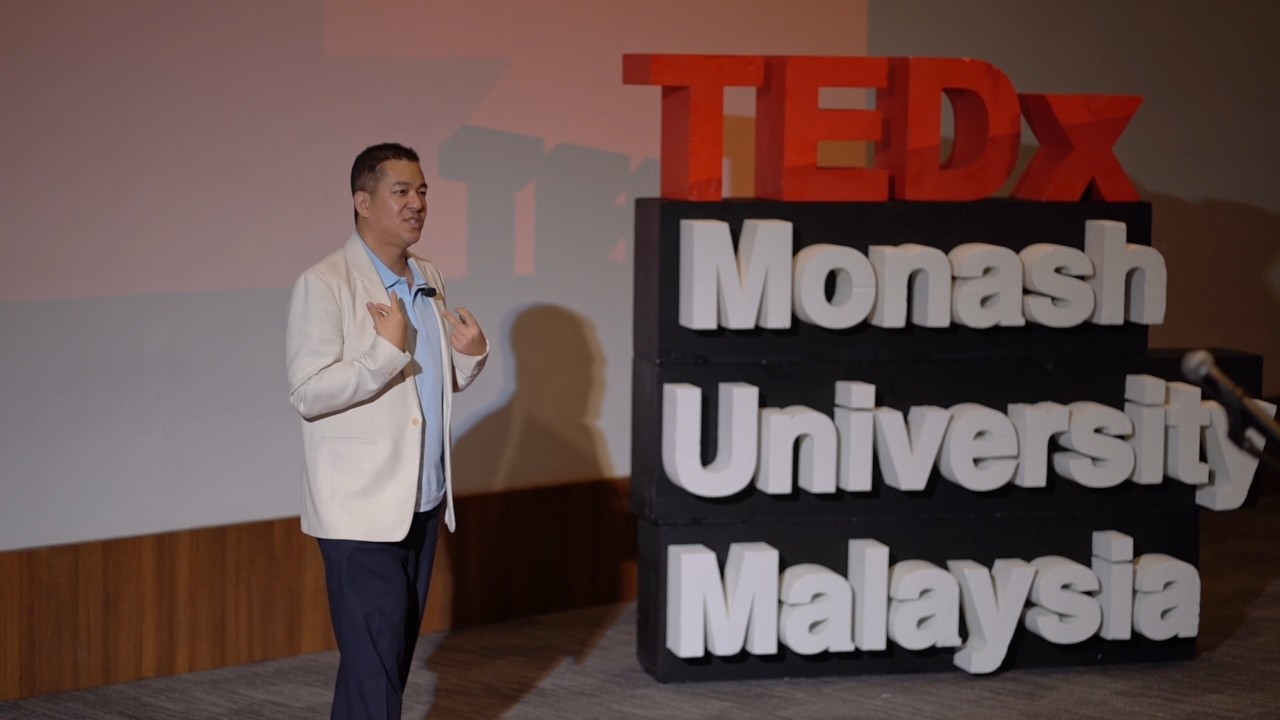 23 min
My Two Dances With Depression, Fall Again, Rise Again | Ben Ibrahim | TEDxMonash University Malaysia
 24 min
Then Yesterday Happened | La Criscia Fowlkes | TEDxOvertown
 21 min
The Myth of Excellence | Rae Chesny | TEDxOvertown
 22 min
Music is the home I carry with me | John Paul Da Bosco | TEDxChangwai Bilingual School
Ask anything from this episode.
Save it, chat with it, and connect it to Claude or ChatGPT. Get cited answers from the actual content — and build your own knowledge base of every podcast and video you care about.
Get Started Free