Key Moments
Two Years of War in Gaza: Where Are We Now? (Making Sense Ep. 437)
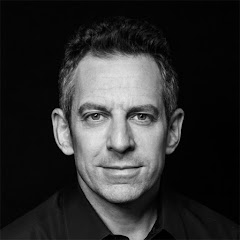 Sam Harris
Want to know something specific about what's covered?
We've already dissected every moment. Ask and we will deliver (with timestamps).
Key Moments
Two years post-Oct 7th: rising antisemitism, Israel's global PR crisis, and Europe's struggle with integration.
Key Insights
Antisemitism has dramatically increased globally since October 7th, exceeding initial concerns and showing no signs of abatement.
Western Europe faces a critical challenge integrating large Muslim populations, with some areas exhibiting signs of cultural unravelling and demands for Sharia law.
Political leaders in Europe have attempted to manage rising tensions by criticizing Israel, a strategy seen as 'feeding the crocodile' without addressing underlying issues.
The term 'Islamophobia' is critiqued as a rhetorical tool to stifle legitimate criticism of Islamic ideas and practices, unlike criticism of other ideologies.
Critiquing Islam as a system of ideas is distinct from racism or ethnic prejudice, similar to how communism can be analyzed without targeting individuals based on birth.
The rise of religious fanaticism, particularly within some Muslim communities, poses a significant threat to open societies, demanding a clear-eyed confrontation with its consequences.
ESCALATING ANTISEMITISM AND GLOBAL PERCEPTION
Two years after October 7th, a significant increase in global antisemitism is a primary concern, surpassing initial expectations. Events like the murders of Jews in Manchester and subsequent celebrations in London highlight a disturbing trend. This rise is linked to the normalization of rhetoric labeling Israel as a genocidal or apartheid state, leading to a perception that Jews supporting Israel are complicit in alleged crimes. This environment fosters a dangerous logic where attacks on perceived supporters become a grim consequence.
EUROPE'S INTEGRATION CHALLENGES AND CULTURAL UNRAVELLING
Western Europe is grappling with the consequences of integrating large Muslim populations, leading to concerns about cultural unravelling. Sam Harris points to the failure to acknowledge the 'death cult' imported into Europe, citing incidents like the Manchester Arena bombing and Charlie Hebdo attacks, which, while not directly linked to Israel, demonstrate a shared ideological threat. Protests calling for Sharia law and the historical neglect of issues like grooming gangs reveal a societal masochism and delusion in confronting these realities.
POLITICAL RESPONSES AND 'FEEDING THE CROCODILE'
European leaders like those in the UK and France have reacted to rising tensions, often by criticizing Israel. This strategy, described as 'feeding the crocodile,' aims to appease domestic populations and prevent societal collapse. However, this approach has proven counterproductive. For instance, French President Macron initially showed strong solidarity with Israel but later pivoted, emphasizing 'balance' to cater to France's Muslim population, which critics argue emboldens rather than appeases extremist elements.
THE LOGIC OF CRITICISM: ISLAM AS IDEOLOGY VS. IDENTITY
A crucial distinction is drawn between criticizing Islam as a set of ideas and engaging in racism or xenophobia. Unlike Judaism, which is not a missionary faith and is largely tied to ethnicity, Islam is a proselytizing religion. Therefore, critiquing its tenets or its impact on society should not be conflated with bigotry. The term 'Islamophobia' is seen as a rhetorical device designed to shut down legitimate debate about religious extremism and its societal consequences, conflating criticism with prejudice.
THE DANGERS OF POLITICAL PANDERING AND CONTAGIOUS IDEAS
The current political landscape in Europe forces leaders to pander to significant Muslim constituencies, even when these groups represent a small percentage of the population, like 6-8%. This pandering, through policy or rhetoric, fails to quell the sentiments driving radicalization. The example of the Manchester attacker, whose father celebrated October 7th, illustrates how extremist ideas are incubated within families and communities, becoming contagious and deeply ingrained, leading to a breeding ground for violence.
THE SPECTER OF THE FAR-RIGHT AND THE NEED FOR CONFRONTATION
If mainstream political forces in the West fail to confront the challenges posed by religious fanaticism and its societal impact, there is a significant risk of a surge in far-right movements. These movements, while sometimes driven by legitimate concerns, can also attract genuine racists and white supremacists. The difficulty lies in navigating this complex landscape to address the reality of religious fanaticism without falling prey to bigotry or succumbing to the allure of extreme political factions.
Mentioned in This Episode
●Software & Apps
●Organizations
●Concepts
●People Referenced
Common Questions
The biggest surprise has been the explosion and escalating depth of antisemitism globally, even beyond initial expectations from the year prior.
Topics
Mentioned in this video
The Islamic legal system, which the guest observes is being called for in some protests in the UK.
A potential future state, which France has considered recognizing without conditions related to Hamas.
Jewish Day of Atonement, during which murders of Jews in Manchester occurred, highlighting the shocking timing of the violence.
More from Sam Harris
View all 306 summaries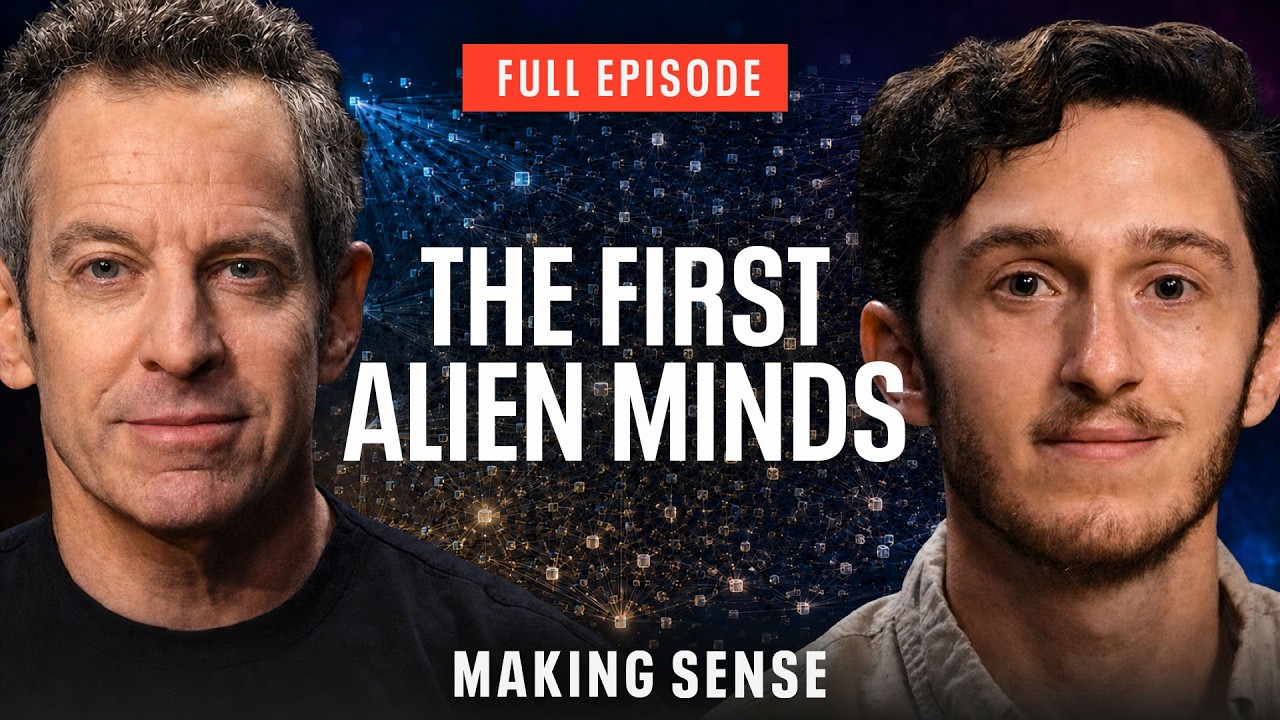 92 min
Is AI Already Conscious? (FULL EPISODE)
 25 min
Why Sam Harris Is Still Angry at Ezra Klein
 30 min
Can AI Cure Loneliness?
 25 min
Why Is Everyone So Unhappy?
Ask anything from this episode.
Save it, chat with it, and connect it to Claude or ChatGPT. Get cited answers from the actual content — and build your own knowledge base of every podcast and video you care about.
Get Started Free