Key Moments
Twitter, Elon, & Free Speech (Episode #307)
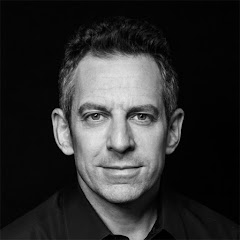 Sam Harris
Key Moments
Sam Harris critiques Elon Musk's chaotic Twitter leadership and the flawed concept of free speech absolutism.
Key Insights
Sam Harris deleted his Twitter account, finding it akin to leaving a toxic relationship and a significant personal experience.
The current political landscape requires navigating concerns about Trumpism's threat to democracy and the excesses of 'woke' ideology.
Elon Musk's handling of Twitter and understanding of free speech is perceived as intellectually and ethically unserious and reckless.
The 'Twitter Files' releases are presented as evidence of government overreach, but Harris argues they reveal more about Twitter's internal struggles and weak justifications for content moderation.
Harris contends that Twitter is not a true public square and that platform moderation decisions, especially during crises like the pandemic, are complex and necessary responsibilities.
Elon Musk's application of 'free speech absolutism' is contradictory, as evidenced by throttling negative speech and banning users like Kanye West and the user tracking his jet.
PERSONAL ACCOUNT DELETION AND THE PERVASIVE IMPACT OF TWITTER
Sam Harris begins by discussing his decision to delete his Twitter account, describing it as a psychologically significant act comparable to leaving a bad relationship. Despite no longer being a user, he observes Twitter's continued pervasive influence and chaos in public discourse and the media. He posits that social media, and Twitter in particular due to its anchoring of journalists and politicians, serves as a central hub for societal dysfunction.
NAVIGATING THE DICHOTOMIES OF MODERN POLITICS
Harris outlines the challenging political landscape of the past half-decade, emphasizing the need to acknowledge both the severe threat posed by Trump and Trumpism to democratic principles and the significant, often 'woke,' excesses on the political left. He criticulates those who fixated on only one of these issues, arguing that failure to recognize the scope of both problems leaves individuals susceptible to manipulation by liars and grifters on the opposing side.
ELON MUSK'S LEADERSHIP AND THE FREE SPEECH DEBATE
While confessing personal uncertainty about critiquing a former friend, Harris feels compelled to address Elon Musk's stewardship of Twitter due to its cultural significance. He questions the ethics of balancing friendship with public commentary, noting a tendency to be more reserved when criticizing friends compared to strangers. However, Musk's actions at Twitter have been so culturally pervasive that Harris believes he must speak out, despite potential implications for their relationship.
MISINTERPRETATIONS AND THE HUNTER BIDEN LAPTOP STORY
Harris addresses a viral clip that misrepresented his views on the Hunter Biden laptop story, clarifying that he never advocated for lying to resist Trump. He explained his initial impulse to ignore the story was due to its timing as an 'October surprise' intended to detonate without sufficient time for debunking. He acknowledged the story's shadiness and potential for disinformation, expressing indecision about the propriety of ignoring it, and later agreeing that Twitter's suppression was the wrong call in retrospect.
ANALYSIS OF THE TWITTER FILES AND GOVERNMENT INVOLVEMENT
Regarding the 'Twitter Files,' Harris challenges the narrative of government censorship. He notes that requests for content moderation, particularly concerning Hunter Biden's material, were not from powerful government figures since Biden was not president at the time. He also points out that similar requests were made by the Trump administration without constituting coercion. Harris argues the FBI's warnings about potential Russian disinformation were plausible given the context and that the Twitter employees involved were struggling with immense pressure during a chaotic information environment.
CONTENT MODERATION AS A NECESSARY FUNCTION
Harris contends that dismissing content moderation as censorship misunderstands the nature of platforms like Twitter. He argues that these platforms are not public squares and that moderation, especially during a global pandemic or amidst widespread disinformation campaigns, is a necessary, albeit difficult, responsibility. He highlights instances where Twitter de-boosted or suspended doctors skeptical of COVID policies, acknowledging the dysfunction but contextualizing it within an environment of overwhelming misinformation and a rapidly evolving crisis.
THE CONTRADICTIONS OF FREE SPEECH ABSOLUTISM
Harris criticizes the concept of 'free speech absolutism' as espoused by Musk, pointing out its practical contradictions. Musk's admission that Twitter throttles negative speech ('freedom of speech doesn't entail freedom of reach') and his banning of Kanye West for antisemitic remarks demonstrate a departure from a pure absolutist stance. Harris finds Musk's actions—celebrating Kanye's return only to later distance himself from his antisemitism—reckless and inconsistent with genuine free speech principles.
SECURITY CONCERNS AND HYPOCRISY IN PLATFORM MANAGEMENT
The suspension of the college student tracking Elon Musk's private jet is presented as another example of hypocrisy. Harris sympathizes with Musk's security concerns, suggesting such real-time location data should not be publicly available. However, he criticizes Musk for championing free speech while subsequently banning users and enacting ad-hoc policies to address his own security risks, creating an impossible and inconsistently applied standard.
AMPLIFYING CONSPIRACY THEORIES AND IRRESPONSIBILITY
Harris condemns Musk's amplification of the conspiracy theory surrounding the attack on Paul Pelosi, highlighting the irresponsible nature of promoting unverified and harmful narratives. He criticizes Musk for deleting the tweet without apology, especially after it was used to frame a violent attack as a political meme. Similarly, Musk's initial celebration of Kanye West's return to Twitter, before his overt antisemitism became widely apparent, is seen as amplifying a dangerous figure.
ETHICAL SHORTCOMINGS AND RECKLESS MANAGEMENT
Elon Musk is accused of being intellectually and ethically unserious, particularly in his handling of sensitive issues on a platform with millions of users. Harris views Musk's approach as reckless and improvisational, making up policy as he goes along. This includes the dangerous public vilification of his former head of trust and safety, Yoel Roth, which Harris deems objectively dangerous and a significant ethical lapse in management.
Mentioned in This Episode
●Software & Apps
●Companies
●Organizations
●Concepts
●People Referenced
Common Questions
Sam Harris deleted his Twitter account because he described it as leaving a bad relationship and found the platform to be a source of societal dysfunction and chaos.
Topics
Mentioned in this video
The social media platform whose ownership by Elon Musk and its policies on free speech are the central topic of discussion.
Mentioned as an example of a platform that is not the public square, contrasting with the perception of Twitter.
Mentioned as an example of a platform that is not the public square, contrasting with the perception of Twitter.
Host of the Making Sense podcast, discussing his experience leaving Twitter and analyzing Elon Musk's actions.
A Stanford doctor whose skeptical tweets about COVID-19 policies were throttled by Twitter, illustrating platform dysfunction.
A journalist involved in releasing the Twitter files, noted by the speaker as being more careful and less like PR for Elon than others.
Host of a talk show where Kanye West appeared and made controversial statements.
Owner of Twitter, whose actions and policies regarding free speech, content moderation, and the 'Twitter Files' are heavily scrutinized.
Former head of Trust and Safety at Twitter, who Elon Musk publicly vilified.
Discussion revolves around the laptop story associated with him and its handling by Twitter.
Former Vice President who was pressured by Trump to overturn the results of the 2020 election on January 6th.
Mentioned as being the subject of a past conspiracy theory by the website that Elon Musk initially used to explain the attack on Nancy Pelosi's husband.
Her husband was the subject of a conspiracy theory tweet by Elon Musk shortly after taking over Twitter.
Contacted Twitter and other platforms about potential Russian disinformation related to Hunter Biden, a point debated in the context of government influence.
Chinese Communist Party, mentioned in the context of TikTok being potentially nefarious spyware.
The publication whose story about the Hunter Biden laptop was initially suppressed by Twitter, sparking controversy.
Mentioned as one of the political entities that requested Twitter to block certain tweets, including some related to Hunter Biden.
More from Sam Harris
View all 298 summaries 28 min
Michael Pollan on Consciousness, Psychedelics, and the Limits of Neuroscience
 22 min
Why the Stock Market Has Become a Casino
 61 min
UNRAVELING THE DREAM (A New Documentary Executive Produced by Sam Harris)
 20 min
Francis Fukuyama: The End of History Was Never What You Think
Ask anything from this episode.
Save it, chat with it, and connect it to Claude or ChatGPT. Get cited answers from the actual content — and build your own knowledge base of every podcast and video you care about.
Get Started Free