Key Moments
Tracy DiNunzio Interview: Part 2 (Full Episode) | The Tim Ferriss Show (Podcast)
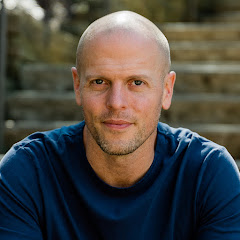 Tim Ferriss
Want to know something specific about what's covered?
We've already dissected every moment. Ask and we will deliver (with timestamps).
Key Moments
Tracy DiNunzio discusses lessons learned as founder of Tradesy, focusing on pitching, financial modeling, strategic hiring, and the female founder experience in tech.
Key Insights
Accelerators like Launchpad offer valuable exposure to investors and mentors, even if the equity stake seems high in retrospect.
Effective pitching requires conciseness, confidence, and a clear articulation of the company's vision, not just data.
Early strategic hires, particularly a strong technical co-founder, are crucial for securing funding and building a scalable company.
Key business model decisions, such as lower commission rates, can be critical for market positioning and competitive advantage.
While overt sexism may be rare in tech, subtle discriminatory practices can exist, impacting the experiences of female founders.
The 'pipeline problem' in tech hiring for technical roles is influenced by societal and cultural factors affecting young women's interests from an early age.
THE STRATEGIC VALUE OF ACCELERATORS
Tracy DiNunzio initially joined Launchpad, an accelerator, not through a grand strategic plan but by chance via a Facebook post. Despite a seemingly high cost in equity (6% for $50,000), she emphasizes that the experience was invaluable. The direct access to a variety of investors and mentors, which would have taken months to replicate through personal networking, was the primary benefit. The structured environment and pre-vetted status with investors made the trade-off highly justifiable for a nascent company.
MASTERING THE ART OF THE PITCH
Two crucial skills DiNunzio developed at Launchpad were pitching and financial modeling. She admits to being initially miserable at pitching investors, highlighting the difficulty in distilling complex internal data into a clear, inspiring, and digestible story. Her advice for aspiring pitchers is to practice extensively, potentially with less critical investors first, to refine their narrative and conquer the initial lack of confidence that often leads to overwhelming potential investors with too much information.
FINANCIAL LITERACY AND INVESTOR RELATIONS
Beyond pitching, DiNunzio learned financial modeling and how to effectively use Excel, skills she lacked upon starting. The guidance from investors like Jim Andelman helped her not only build necessary financial projections but also understand how to approach and build relationships with investors thoughtfully. This process taught her the importance of progress, demonstrating commitment to specific feedback, and building a partnership that evolves over time, proving her capability and trustworthiness.
AVOIDING COMMON PITCHING MISTAKES
DiNunzio identifies two major mistakes in her early pitches: over-obsessing on defensible but ultimately unprovable metrics, such as market size, and a lack of confidence. She advises entrepreneurs not to get lost in rabbit holes of research for numbers that are hard to ascertain and less critical than the overall story. Instead, focusing on a compelling narrative and projecting confidence, rather than eagerness to prove knowledge, creates a much stronger impression on potential investors.
THE POWER OF VISION IN STORYTELLING
A breakthrough in DiNunzio's pitching strategy was shifting from a chronological 'origin story' to leading with a clear, transformative vision. By posing impactful questions about how the company could change commerce and ownership, she immediately captured investor attention, as VCs are drawn to large-scale potential. This visionary opening provided a framework for the rest of the pitch, explaining the 'how' from the present to that future state, making the entire presentation more engaging and persuasive.
STRATEGIC HIRING AND BUSINESS MODEL DECISIONS
Upon securing funding, DiNunzio's most critical decisions revolved around people and strategy. She emphasizes the importance of her first five to six hires, who formed the core team and remain with Tradesy. Strategically, they implemented a lower commission rate than competitors, based on data suggesting higher fees led to off-platform transactions or inflated pricing, thereby preserving marketplace integrity and market positioning. These early radical decisions shaped Tradesy's competitive advantage.
RECRUITING A TECHNICAL CO-FOUNDER
Finding her CTO, John Hall, through a creatively written Craigslist ad seeking an adventurous co-founder, highlights unconventional but effective recruitment. Initially lacking the expertise to vet a CTO, she relied on an outsourced dev shop and ultimately hired him based on his impressive resume from companies like Cars.com. This crucial hire was not only a personal win but also alleviated investor concerns about her technical capabilities, demonstrating her proactive approach ('No Technical Co-Founder? No Problem.' mini-deck).
THE NUANCES OF BEING A FEMALE FOUNDER
DiNunzio views the conversation around being a female founder in tech with evolving perspectives. While her personal fundraising experience hasn't presented overt improprieties, she acknowledges that many female founders face subtle discrimination. She believes that overt sexism is less prevalent than nuanced behavioral discrimination. Efforts to include women, while important, should focus on merit rather than charity, ensuring that individuals are hired for their qualifications.
ADDRESSING THE TECH PIPELINE PROBLEM
The imbalance in technical roles often stems from a 'pipeline problem' rooted in societal and cultural messaging. From a young age, girls may receive subtle (or overt) cues that discourage technical interests in favor of more traditionally 'feminine' pursuits. This influences career choices, leading to fewer women applying for technical positions. While DiNunzio's company hires the best person regardless of gender, she recognizes the need for cultural shifts to encourage young women's participation in STEM fields.
THE ROLE OF EDUCATION AND ACCELERATORS
Regarding education, DiNunzio leans towards the radical view that traditional college education is becoming obsolete in fast-moving sectors like tech. She believes that by graduation, much of the learned material is outdated. For accelerators, however, she doesn't believe the 'top-tier' dilemma strictly applies, as even less-ranked programs can offer crucial investor connections. She argues that a fair deal from any reputable program is better than none, serving as a stepping stone for growth.
Mentioned in This Episode
●Software & Apps
●Companies
●Organizations
●Books
●Concepts
●People Referenced
Startup Pitching and Fundraising Cheat Sheet
Practical takeaways from this episode
Do This
Avoid This
Common Questions
Accelerators like Launchpad offer crucial benefits beyond just funding, including access to a network of investors and mentors, and intensive training in skills like pitching and financial modeling. For new entrepreneurs without strong connections, this built-in access and vetting can be invaluable.
Topics
Mentioned in this video
Host of The Tim Ferriss Show, author, and entrepreneur.
An investor from Rinkonk Venture Partners who mentored Tracy DiNunzio on financial modeling for Tradesy.
Director of Launchpad, who expressed initial doubts about Tracy DiNunzio's lack of a technical co-founder.
Chief Technology Officer and co-founder of Tradesy, recruited via Craigslist.
Marketing author and speaker, cited as a master of short-form content and effective headlines.
Founder and CEO of Tradesy, interviewed on the podcast.
Author referenced for a quote about the effort required for brevity, misattributed in the transcript.
Co-founder of PayPal and Palantir, known for his controversial views on the value of college education.
Renowned investor and CEO of Berkshire Hathaway, his interview is mentioned as content available on Tim Ferriss's blog.
Member of the band Linkin Park, his interview is mentioned as content available on Tim Ferriss's blog.
A reselling marketplace for clothing and accessories, founded by Tracy DiNunzio.
A notable Silicon Valley-based venture capital firm.
An online marketplace where John Hall previously worked as Director of Technology.
An investment firm that led Tradesy's seed round, with Jim Andelman involved.
An online marketplace where John Hall previously worked as West Coast Director of Technology.
American rock band, Mike Shinoda's interview is mentioned on Tim Ferriss's blog.
Social media platform where Tracy DiNunzio first saw a post about the Launchpad accelerator.
Website whose homepage headlines are examined for insights into effective persuasion and content testing.
A previous venture of Tracy DiNunzio's, which provided data informing Tradesy's business model and commission strategy.
A company from the Spring 2013 Launchpad class, founded by a female entrepreneur inspired by 'The 4-Hour Workweek'.
More from Tim Ferriss
View all 703 summaries 70 min
Q&A with Tim — The Art of Male Friendship, Reinvention in The Age of AI, & More
 125 min
Dr. Andrew Huberman — Peptides, Performance, and Protocols
 112 min
The Random Show! Mortality, AI, Supplements, Rock Climbing, & More
 88 min
The Legendary Hollywood Power Broker — Guy Oseary on 36 Years of Managing Madonna, 26 IPOs, and More
Ask anything from this episode.
Save it, chat with it, and connect it to Claude or ChatGPT. Get cited answers from the actual content — and build your own knowledge base of every podcast and video you care about.
Get Started Free