Key Moments
Tony Fadell: iPhone, iPod, Nest, Steve Jobs, Design, and Engineering | Lex Fridman Podcast #294
 Lex Fridman
Want to know something specific about what's covered?
We've already dissected every moment. Ask and we will deliver (with timestamps).
Key Moments
Tony Fadell, co-creator of iPod/iPhone/Nest, shares insights on product development, leadership, and finding meaning.
Key Insights
Great products stem from solving genuine 'pains' with 'painkillers' that ultimately provide an emotional 'superpower' to the user, moving beyond mere 'vitamins'.
Effective product development requires integrating 'why' (customer need, marketing story) with 'what' (engineering, design) from the very beginning, often using a 'press release' concept as a guiding vision.
Leaders must foster a culture of authenticity, vulnerability, and mission-driven passion within teams, pushing individuals beyond their comfort zones while critiquing work, not persons.
True innovation, especially in 'version one' products, relies heavily on opinion-based decisions and a willingness to take risks, as data often reflects the past, not the future.
Mentorship and valuable relationships are built through shared curiosity and a complementary exchange of perspectives, often transcending age or professional background.
Work-life balance is crucial, even when deeply passionate about a mission; it involves setting boundaries and utilizing tools to offload mental burden, allowing for mental and emotional recovery.
EARLY BEGINNINGS: A FOUNDATION OF CURIOSITY AND HACKING
Tony Fadell's journey into technology began in fifth grade with bubble card programming, where the magic of creating worlds through code captivated him. This early fascination deepened with the Apple II, a personal computer cherished for its accessibility and the ability to modify hardware and software. The release of tools like 'Pinball Construction Set' and 'Music Construction Set' further inspired him, demonstrating that complex creations were possible even for young individuals and fostering a 'maker' mentality. These foundational experiences instilled a deep understanding of hardware-software interaction and the power of empowering users.
THE IPOD: FROM PAIN TO SUPERPOWER
The genesis of the iPod stemmed from Fadell's lifelong love for music and his personal 'pain' of lugging around thousands of CDs for DJ gigs. His previous work on Philips' Nino and Velo devices, which introduced audible books, sparked the idea of integrating music. The advent of MP3 compression around 1997-98 made portable digital music storage feasible. The iPod's development was a culmination of market timing, technological readiness (1.8-inch hard drive, FireWire), and Apple's need for a new product, combined with Fadell's passion and deep understanding of the space.
DESIGNING THE INTANGIBLE: FORM, FEEL, AND FUNCTION
Fadell's design process for the iPod was highly iterative and hands-on. He meticulously gathered physical components—batteries, screens from calculators, hard drives—to create physical models, even using fishing weights to simulate density and ensure the device felt 'solid and rigid' like a 'bar of gold.' This tangible approach allowed him to explore form factors, battery life, cost, and UI constraints simultaneously, making the intangible tangible for decision-making. The goal was always to achieve the best 'local maximum' across all components to deliver an optimal user experience.
CHALLENGING THE EXPERTS AND SPOTTING BRILLIANT IDEAS
A crucial lesson from the iPod's development was the art of identifying truly brilliant ideas—those that solve a 'pain' with a 'painkiller,' leading to an emotional 'superpower.' Fadell emphasizes starting with customer pain, not just cool technology. He recounted debates with 'experts' who were too rigid in their thinking, particularly regarding hacking the IDE interface for the iPod's hard drive. He learned to filter out less critical concerns and prioritize fundamental issues, relying on a track record of successes and failures to build confidence rather than succumbing to self-doubt.
STEVE JOBS: THE RELENTLESS PURSUIT OF EXCELLENCE
Working with Steve Jobs was characterized by relentless pursuit of detail and a challenging yet constructive dynamic. Jobs critiqued the work, not the person, pushing teams beyond their perceived limits. Fadell highlights that Jobs excelled at making opinion-based decisions for 'version one' products, where data was scarce. Examples like the virtual keyboard for the iPhone, defying the success of BlackBerry, or the initial resistance to a SIM card slot, demonstrated Jobs's strong vision, which could be swayed by compelling data or a superior framework, as seen in the plastic-to-glass iPhone screen decision.
THE WHY VERSUS THE WHAT: STRATEGIC MARKETING
Fadell argues that great marketing begins at the product's inception, integrating the 'why' (purpose, customer needs, emotional benefit) with the 'what' (features, engineering). He advocates for creating a 'press release' concept at the very beginning of a project, outlining the audience, features, pains solved, and price. This 'story' serves as a constant benchmark, preventing 'feature creep' and ensuring the final product genuinely delivers on its promise. True marketing, in this view, is about articulating the inherent value and emotional 'superpower' of the product, not just a fictional narrative applied post-development.
THE IPHONE: A TRIFOCAL REVOLUTION
The iPhone emerged from Apple's business 'pain' of the mobile phone industry encroaching on the iPod's success, exacerbated by the disastrous Motorola ROKR partnership. Apple explored an 'iPod+phone' concept and a full-screen video iPod. Simultaneously, a multi-touch screen technology, initially for a Mac tablet, was being developed. The iPhone was a 'Frankenstein' of these three projects: marrying multi-touch with the full screen iPod and phone capabilities, running a heavily modified Mac OS, and integrating low-level iPod software. This created a new era of computing centered on entertainment and a full-screen, adaptable interface.
LEADERSHIP: FOSTERING MISSION AND HUMILITY
Effective leadership, as demonstrated by Jobs's storytelling and challenge-ability, is crucial for inspiring teams. Fadell emphasizes separating ego-driven actions from mission-driven pushing for excellence. While acknowledging that leaders are human and make mistakes, he stresses the importance of humility, self-awareness, and apologies to maintain a healthy team culture. He also highlights the importance of acknowledging team members' good ideas, a practice he consciously adopted, unlike Jobs, to foster motivation and creativity.
DESIGN AND ENGINEERING: INTERCONNECTED DISCIPLINES
Fadell views design and engineering not as distinct but as facets of a holistic creative process. He believes that diverse roles—electrical designers, AI designers, data scientists—all contribute to 'design.' The best engineers are 'artists at heart,' empathetic and open to new approaches, rather than rigidly adhering to existing methods. This openness to continuous learning and a shared vulnerability is vital when building something truly novel, where no one is an expert. The journey is a 'rollercoaster ride' of tensions and triumphs that tempers individuals and unites teams in creating 'magic.'
NEST: REVOLUTIONIZING THE UNLOVED THERMOSTAT
For Nest, the core challenge was making people care about their thermostat—an 'unloved, unconsidered' device. Fadell's strategy involved awakening the 'virus of doubt,' reminding consumers of the daily frustrations and hidden costs of traditional thermostats, then offering a 'painkiller' in the form of an intuitive, energy-saving device. Beyond product innovation, Nest also had to disrupt an entrenched, monopolistic go-to-market channel where installers, not consumers, dictated choices. This involved building direct-to-consumer sales, enabling confident self-installation, and navigating restrictive retail contracts, all while maintaining a relentless focus on customer experience, even for details like a custom screwdriver.
ACQUISITION AND PLATFORM STRATEGY
Nest's acquisition by Google was a strategic decision driven by the difficulty for a small startup to build a platform that required "many hundreds of millions of dollars." Fadell knew that without Google's resources and leadership, Nest risked being 'flooded' by larger competitors. He emphasized that the decision was not solely about price, but about ensuring the right leadership and environment for the brand and team to continue building out their vision for a smart home platform. This highlights the importance of anticipating landscape changes and making strategic moves to secure resources for ambitious long-term goals.
CAREER, LEARNING, AND MENTORSHIP
Fadell advises individuals to choose a career by asking: 'What do you want to learn, and who do you want to learn from?' This emphasizes constant curiosity and continuous learning ('learning by doing') over solely financial motivations. Mentors, regardless of age, arise from genuine connections and shared vulnerability within a network, offering complementary perspectives and support. He advocates for fostering authentic relationships over transactional ones, especially with venture capitalists, prioritizing 'smart money' that offers mentorship and network access beyond mere funding.
WORK-LIFE BALANCE AND THE HUMAN CONDITION
While passionate about his mission, Fadell learned from his 'spectacular disaster' at General Magic about the necessity of work-life balance. He emphasizes that 'work is your life' when on a meaningful mission, but boundaries are crucial to prevent physical, mental, and social unhealthiness. He suggests using tools to externalize thoughts and ideas, preventing rumination and allowing for mental escape and rejuvenation. Ultimately, Fadell sees life's meaning in natural curiosity and the enduring 'soul'—the positive impact and influence one leaves on others—which lives on through collective stories and shared experiences, even if the products themselves are ephemeral.
Mentioned in This Episode
●Products
●Software & Apps
●Companies
●Books
●Concepts
●People Referenced
Common Questions
Tony Fadell's journey began in fifth grade with a summer school class in Gross Point Farms, Michigan, where he learned BASIC programming using bubble cards and an IBM microcomputer, which he describes as an early form of cloud computing. This experience sparked his passion for creating and interacting with machines.
Topics
Mentioned in this video
An innovative smart home device co-created by Tony Fadell, designed to make people care about their thermostat and disrupt an entrenched industry.
A remote computer that processed punch card programs, giving Tony Fadell his initial experience with 'cloud computing' and programming machines.
Tony Fadell's first personal computer, which he coveted and worked hard to buy, fostering his love for hardware and software modification, even coming with schematics for users.
A low-cost, credit-card-sized computer, seen as a modern equivalent to early personal computers that encourages a new generation of makers and builders.
A Windows CE-based mobile computing product that Tony Fadell worked on, and the first device to offer Audible books, inspiring him to consider music on mobile devices.
Apple's custom-designed silicon, developed over many years to ensure seamless integration and efficiency, similar to the long-term development of AirPods.
A portable music player co-created by Tony Fadell, which revolutionized how people consumed music on the go. Its genesis came from Fadell's love for music and frustration with carrying CDs.
A device used by Tony Fadell to view output from his BASIC programs, an early form of terminal-based computing.
A Windows CE-based mobile computing product that Tony Fadell worked on.
A transformational smartphone co-created by Tony Fadell, merging mobile communication, internet browsing, and music playback into a single device.
A smart smoke and carbon monoxide detector developed by Nest, where Tony Fadell insisted on design changes at significant cost, believing in the importance of physical aesthetics for the customer.
An early programming language mentioned alongside C compilers, used by Tony Fadell for parts of his hard drive optimizer.
An early productivity suite for the Apple II, similar to Microsoft Office, that required patches to utilize new memory cards.
An operating system used in early mobile computing products like the Philips Nino and Velo.
A popular MP3 player application on PCs, mentioned as an example of existing software that inspired the creation of iTunes.
Apple's music management software, which was crucial for the iPod's success and served as a content delivery platform, existing even before the iPod was fully conceived.
A low-level programming language used to create games like Railroad Tycoon, signifying a period of deep technical understanding for programmers.
An early programming language Tony Fadell learned in fifth grade, which involved using bubble cards and a paper terminal, providing a foundational experience in computing.
An Electronic Arts game for the Apple II that allowed users to create their own pinball games, deeply inspiring Tony Fadell's creative drive.
An early multimedia player, mentioned as an example of existing MP3 player applications on PCs before iTunes.
An Electronic Arts program for the Apple II that allowed users to create musical scores, further hooking 12-year-old Tony Fadell into programming, especially learning it was written by a 16-year-old in assembly.
A company that partnered with Tony Fadell to put audible books on the Philips Nino, marking the first time such content was available on a mobile device.
A music streaming platform that successfully grew from an application into a platform by innovating on its own turf, as an example for startups challenging big players.
A platform for open-source projects where schematics and code are shared, similar in spirit to how early Apple computers provided schematics for builders.
A telecommunications company. Tony Fadell describes hacking its phone system to get free long-distance calls to friends in his youth.
A mail-order company co-founded by Tony Fadell in high school, which sold Apple II accessories and software, notably developing tools for automatic patch installation and a hard drive optimizer.
A telecommunications company. Tony Fadell describes hacking its phone system to get free long-distance calls to friends in his youth.
A social media platform, mentioned as one of the modern 'big guys' or platforms that startups might need to take on.
An automotive and energy company, whose Full Self-Driving Beta program is used as an example of selecting a group of people for specific access, though for safety rather than tinkering.
A technology conglomerate, mentioned as one of the modern 'big guys' or platforms that startups might need to take on.
A large home improvement retailer, which, along with Lowe's, had contracts with entrenched thermostat brands, making it difficult for Nest to enter the retail channel.
A super app mentioned as an example of an application that expanded into a platform offering various services like wallets and travel, illustrating a successful strategy for startups.
A software company that released groundbreaking creative tools for the Apple II, inspiring Tony Fadell with its programmer-as-artist philosophy.
Tony Fadell's investment firm, which helps scientists and great minds develop broader stories about the impact of their technologies for global change.
A large home improvement retailer, which, along with Home Depot, had contracts with entrenched thermostat brands, making it difficult for Nest to enter the retail channel.
A company where Tony Fadell worked early in his career, known for its ambitious but ultimately failed mobile computing projects that were 15 years ahead of their time.
The company that acquired Nest for $3.2 billion, chosen by Fadell to help Nest build out its platform and compete with other large tech players.
A company that partnered with Apple to produce the glass for the iPhone screen, working under immense pressure to make the transition from plastic to glass.
A respected business coach and executive, mentioned by Tony Fadell as a mentor who helped him grow and whose 'soul' lives on in the stories people tell.
An American rock band, whose music Tony Fadell loved from a young age.
CEO of Tesla and SpaceX, mentioned as a leader with a distinct and sometimes chaotic personality.
An American rock guitarist and singer, whose music Tony Fadell loved from a young age.
Musician mentioned for his preference for higher fidelity audio over compressed MP3s, even though his preferred files are still tiny compared to raw audio.
The person who led the iTunes team, whose company's MP3 player app was acquired by Apple, forming the basis of iTunes and a critical partner to the iPod's success.
A British rock band, whose music Tony Fadell loved from a young age.
An American writer, whose quote 'Find what you love and let it kill you' is mentioned in the context of work-life balance and passion.
A music producer mentioned in comparison to early software developers whose backstories were known and celebrated, treating them like artists.
Engineer and designer, co-creator of the iPod, iPhone, and Nest thermostat, and author of the book 'Build.' He is the interviewee in this podcast.
Author of the book 'Story,' focused on scriptwriting principles, recommended for its insights into storytelling for product development.
Co-founder of Apple, known for his relentless pursuit of design detail and his ability to push teams beyond their perceived limits, often making opinion-based decisions that shaped revolutionary products.
A British rock band, whose music Tony Fadell loved from a young age.
An American rock musician, whose music Tony Fadell loved from a young age.
Apple's former Chief Design Officer, whose design team's focus on materials, form, and physical aesthetics greatly influenced Tony Fadell's own design philosophy.
A classic album by Pink Floyd, which Tony Fadell considers a rock opera and a profound audio experience that continues to impress him.
A city-builder game mentioned for being written in assembly language by a single person, illustrating the low-level programming feats of early developers.
A classic rock song by Led Zeppelin, mentioned as a quintessential rock opera that Tony Fadell listened to.
The podcast hosted by Lex Fridman, where Tony Fadell is interviewed, praised by Fadell for its authenticity and the host's vulnerability.
A text-based video game mentioned by Fadell, highlighting the early days of visualizing game worlds in one's own imagination.
Tony Fadell's book, which offers guidance on creating technology, ideas, designs, products, and companies that revolutionize life.
A book by Robert McKee about scriptwriting and traditional story arcs, recommended as valuable for designers, engineers, and technology leaders.
An online encyclopedia highlighted as a brilliant invention that transformed human knowledge by enabling collective editing and access, though not considered a 'sexy' product.
The dominant company in audio categories at the time the iPod was being developed, which Tony Fadell feared would release a competing MP3 player and dominate the market.
More from Lex Fridman
View all 556 summaries 91 min
Visiting Taiwan w/ Jensen Huang | Lex Fridman
 217 min
Psychiatry, Insane Asylums, Mental Illness, ECT, Lobotomies, Freud & Jung | Lex Fridman Podcast #502
 316 min
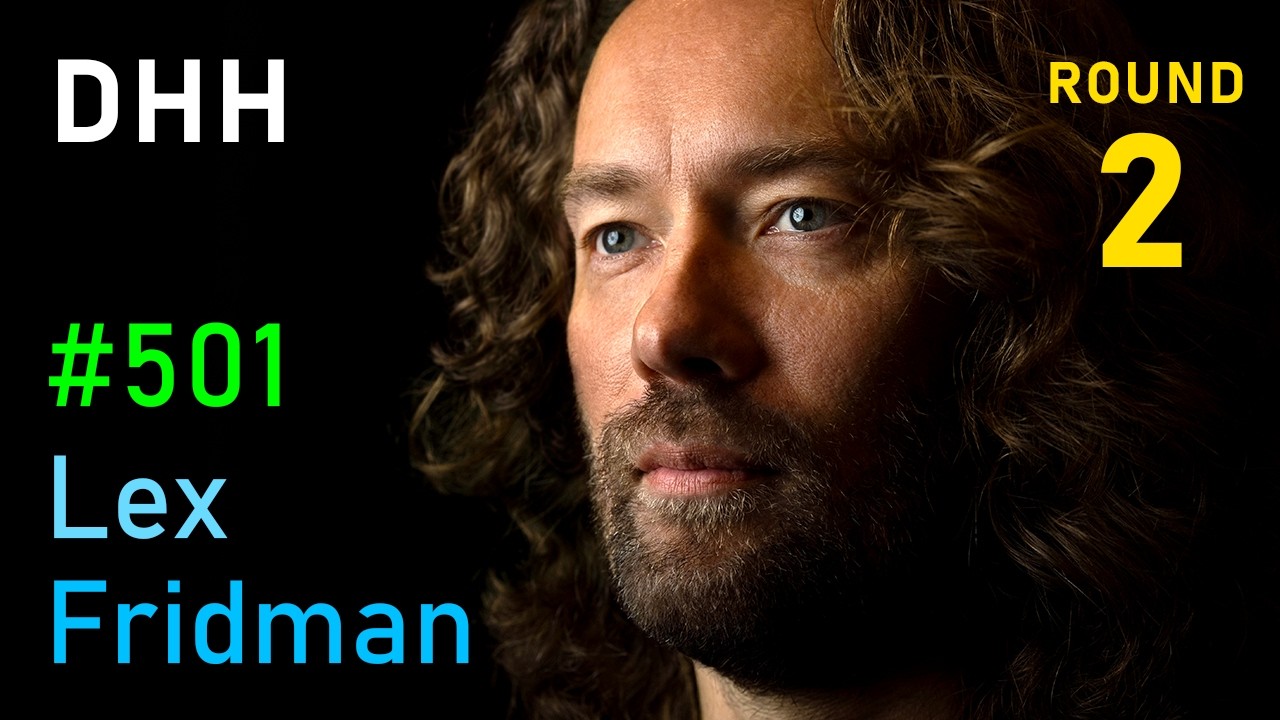
DHH: Future of Programming, AI, Agentic Engineering, Vibe Coding & Linux | Lex Fridman Podcast #501
 193 min
Khabib Nurmagomedov: Dagestan, MMA, UFC, Islam, Conor, Fedor & Football | Lex Fridman Podcast #500
Ask anything from this episode.
Save it, chat with it, and connect it to Claude or ChatGPT. Get cited answers from the actual content — and build your own knowledge base of every podcast and video you care about.
Get Started Free