Key Moments
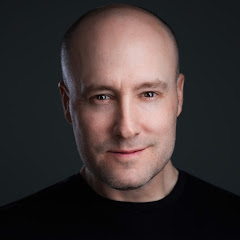
Tom Gayner: Lessons That Every Investor Needs to Learn (Audio)
 The Knowledge Project
Want to know something specific about what's covered?
We've already dissected every moment. Ask and we will deliver (with timestamps).
Key Moments
Tom Gayner shares investing wisdom, lessons from mentors, and life principles.
Key Insights
Learn from mentors like Charlie Munger by working backward from your desired outcome and focusing on deserving what you want.
Adopt a 'win-win-win' philosophy in business, where fair pricing and long-term customer relationships are paramount, drawing inspiration from Quaker merchant principles.
Understand and manage opportunity cost by consistently asking 'If we do this, what are we *not* doing?'
Focus on process over outcome; a sound process, applied consistently over time, leads to favorable long-term results.
Embrace humility and skepticism, recognizing that even experts have limitations in knowledge, especially during times of uncertainty.
Leverage is a powerful tool but can be destructive if not carefully managed; durability and the ability to persist through difficult times are crucial.
WISDOM FROM MENTORS AND QUAKER ROOTS
Tom Gayner emphasizes the profound influence of Charlie Munger, advocating for a life philosophy of 'deserving what you want' by working backward from your obituary and establishing core principles. He connects this to his Quaker upbringing, highlighting the inherent belief in equality before God, which translated into business practices like fixed pricing. This principle fosters a 'win-win' environment with customers, essential for long-term success.
BUILDING WIN-WIN BUSINESSES FOR THE LONG TERM
Gayner distinguishes between short-term gains and true long-term winning, emphasizing that businesses thrive when they are 'doing things for their customers rather than to their customers.' He illustrates this with CarMax, where a win-win model was crucial due to the long purchase cycle, contrasting it with a tourist trap where short-term profit from quick transactions is prioritized over repeat business. True success lies in creating value for all stakeholders over time.
NAIGATING CAREER AND MARKET TURBULENCE
Joining Markel in 1990, Gayner's early career was shaped by Warren Buffett's philosophy. He describes the immense challenge of the late 1990s internet bubble, where understanding unprofitable companies with high valuations tested his accounting background. His ability to pivot, aided by mentors, and his disciplined investment process, even during periods of underperformance, built credibility and helped Markel navigate subsequent crises like 2008.
THE POWER AND PERIL OF OPPORTUNITY COST
A central theme is opportunity cost, deeply ingrained from his father's teachings and reinforced through his career. Gayner stresses the importance of constantly asking, 'If we do this, what are we *not* doing?' He believes mistakes of omission are often more significant than mistakes of commission. Understanding what paths are not taken is crucial for making better decisions and adapting to changing circumstances, a lesson he tries to impart to his children.
PROCESS OVER OUTCOME AND MANAGING EMOTIONS
Gayner advocates for focusing on a sound process rather than fixating on immediate outcomes. He draws parallels to poker, where a good process over many hands leads to long-term success, irrespective of individual hand results. During high-stakes situations like the 2008 financial crisis, he emphasizes slowing down, taking a walk, and relying on established disciplines rather than succumbing to emotional reactions. This methodical approach is key to making rational decisions.
DURABILITY, LEVERAGE, AND INVESTING IN PEOPLE
The Great Financial Crisis reinforced the critical importance of managing leverage and prioritizing durability. Gayner highlights that insurance, being less levered and less prone to bank runs, offered a more stable position. He values investing in people, offering patience and support through difficult periods, believing that a positive environment allows good people to flourish. This long-term perspective, combined with a belief in the inherent goodness of people, forms a core tenet of his philosophy.
THINKING LONG-TERM IN A SHORT-TERM WORLD
Gayner contends that ultra-low interest rates create a 'no curfew' environment, encouraging short-term thinking and a flood of capital into less viable ideas. He contrasts this with higher rates that impose discipline and scarcity. He believes true long-term thinking requires delayed gratification and the willingness to look 'idiotic' in the short term by not chasing trends. This patient approach, exemplified by investing in durable businesses, is a cornerstone of his investment strategy.
THE 'NOT YET' MINDSET AND BASE RATES
He encourages embracing a 'not yet' mindset, seeing companies as perpetually evolving rather than static. Referring to 'base rates' and using a Venn diagram of 'insurance' and 'non-insurance' businesses, Gayner illustrates how to frame decisions within a larger context. This method helps avoid over-complexity and focuses on fundamental principles, fostering clarity and adaptability in a large organization like Markel.
RISK MANAGEMENT AND AUTONOMOUS OPERATIONS
Risk, defined as 'more things can happen than do happen,' requires constant vigilance. Gayner shares an anecdote of a minor car accident, prioritizing safety over confrontation. At Markel, he manages risk by decentralizing operations, creating business units that function autonomously. This structure mitigates fragililty and ensures that even if one unit falters, the entire organization is not compromised, fostering resilience.
THE NATURE OF DEBT AND CAPITAL ALLOCATION
Gayner views debt as 'fixed-cost equity,' emphasizing that its use depends on context. He praises companies like Disney for issuing long-term debt at low rates, seeing it as a sensible strategy. Conversely, he cautions against excessive debt and short-term thinking, which can lead to misallocated capital. The 'no curfew' environment of low rates can mask underlying weaknesses in business models, leading to poor long-term outcomes.
JUDGING PEOPLE AND BUSINESSES
A core lesson from his father is that 'you can never make a good deal with a bad person.' This principle extends to business, where relationships are crucial. Gayner values 'dating' partners and customers to assess character and shared values. He's wary of overly flashy individuals, trusting more in humble, consistent behavior, though he acknowledges the need for others to identify his blind spots. This focus on integrity is paramount.
LEARNING FROM BIOGRAPHIES AND TEAM SPORTS
He finds immense value in biographies, citing Ulysses S. Grant for his focus on logistics and 'otherness,' and Admiral Nimitz for his ability to make decisions with limited information. The team aspect of sports, like Nebraska volleyball, resonates deeply with Gayner, mirroring his ideal of a cohesive, skilled team at Markel. This sense of belonging and shared purpose provides endurance and joy, especially for someone who didn't experience team sports as a child.
THE JOY OF WORK AND LONG-TERM PERSPECTIVE
Gayner finds deep fulfillment in his work, comparing it to a runner experiencing joy in motion. His success stems from a long-term perspective, patience, and a willingness to be contrarian. He advocates for 'doing more of what works,' even if it appears boring or requires letting go of ego. This patient, disciplined approach, coupled with a focus on building a sustainable organization that provides for many, defines his view of success.
Mentioned in This Episode
●Products
●Software & Apps
●Companies
●Organizations
●Books
●Studies Cited
●Concepts
●People Referenced
Common Questions
Tom Gayner believes in investing in companies that work 'for' their customers, not 'to' them. This philosophy emphasizes a win-win relationship where both the company and the customer benefit, fostering long-term success.
Topics
Mentioned in this video
Alice Schroeder's book about Warren Buffett, titled with the concept of compounding effects.
Written by Grant himself, a recommended biography for understanding logistics, supporting others, and providing for one's family.
A book by Annie Duke, highly recommended for its probabilistic approach to decision-making, especially applicable to poker and insurance.
Helps top companies and entrepreneurs build products, with apps like Slack, Coinbase, Facebook Messenger, and Oculus. They offer unique design philosophy for projects.
An app that Metalab helped design or build.
Owner of Guinness, cited as a company with fundamentally good businesses that add value and are trusted by consumers, offering inflation protection.
Founded by R.H. Macy, a Quaker from Nantucket, who offered fixed prices, giving the chain a significant head start.
A restaurant where an anecdote was shared about a poor man paying with Monopoly money, highlighting circumstances that force short-term decisions.
A company whose junk bonds were considered a creditworthy investment during the Drexel Burnham bankruptcy, despite tax law changes.
John Fox's company, a long-term Markel shareholder.
An aluminum company that previously owned Eskimo Pie.
A small investment firm in Richmond where the speaker worked and first encountered content about Buffett.
Used as an example in a discounted cash flow model at Northwestern, despite the speaker finding its growth assumptions unrealistic.
A private, highly vetted leadership program that propels careers forward, focused on small peer groups, a tech-enabled platform, and expert-led curriculum.
An investment that was successful for the speaker, built on the Quaker principle of fixed prices for used cars.
A company that went bankrupt on February 14, 1990, an event that influenced investment decisions.
An attorney who started a wine rating system, originally to communicate with friends, demonstrating the development of a 'frame of reference'.
A friend of the speaker and board member of The Washington Post Company, who likely recommended the speaker to Don Graham.
Former Chairman of Markel, who advised against making the same stupid mistakes repeatedly.
Vice chairman and financial guy at Markel, interested in long-term investment of underwriting profits. Provided support to the speaker during underperformance.
A business leader who is incredibly thoughtful and has demonstrated execution of his plan for decades, serving as an example of self-motivated independent thinking.
Helped the speaker understand cash flows separate from GAAP accounting during the internet bubble.
Author of the book 'The Snowball' about Warren Buffett.
A friend who advises that in business and life, you either look way smarter or way dumber than you really are.
Met the speaker at Northwestern, shared skepticism about aggressive growth assumptions, and is now with Fenimore Asset Management and a long-term Markel shareholder.
A teacher and mentor who advised on avoiding businesses that use too much leverage to prevent dealings with dishonest individuals.
A Quaker who owned a department store in Philadelphia, known for selling goods at fixed prices, a practice derived from Quaker principles.
Chairman and CEO of The Washington Post Company, who reached out to the speaker to consider joining their board.
Operated in Hawaii during WWII, known for intense planning followed by periods of uncertainty due to lack of communication, highlighting the importance of managing existential uncertainty.
A famous baseball hitter, used as an example by Buffett for patiently waiting for the right pitch (investment) to swing at.
Founder of Macy's, a Quaker who brought fixed-price selling to New York City, which was unusual at the time.
A singer-songwriter whose song 'Green Castle Blues' includes the haunting refrain: 'How do you know when it's too late'.
A Russian ambassador to the US for decades, known for his ability to understand both Russian and American cultures, used as an analogy for understanding different business cultures.
The runner from 'Chariots of Fire' who felt God's joy when running, an analogy for finding purpose and enjoyment in one's work.
Wrote an article about Warren Buffett in Fortune magazine in 1984, which deeply influenced the speaker.
A chocolate-covered dessert company, previously owned by Reynolds Metals, which the speaker humorously suggested Markel acquire and rename itself to.
Eight Sleep's product that automatically adjusts bed temperature based on individual needs, allowing users to cool or warm their side of the bed.
More from The Knowledge Project Podcast
View all 108 summaries 46 min
Roblox Founder: Destroy Bureaucracy Before It Destroys You
 54 min
$4.6B CEO: Excellence Is the Capacity to Take Pain
 55 min
Microbiome Expert: Revealing the Biggest Myths About Your Gut, Diet, and Health
 62 min
Mental Models That Change How You Think | Bill Gurley
Ask anything from this episode.
Save it, chat with it, and connect it to Claude or ChatGPT. Get cited answers from the actual content — and build your own knowledge base of every podcast and video you care about.
Get Started Free