Key Moments
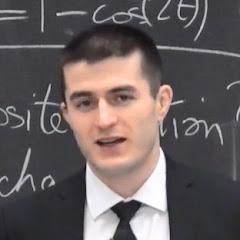
Theano Tutorial (Pascal Lamblin, MILA)
 Lex Fridman
Key Moments
Theano tutorial: symbolic computation, automatic differentiation, graph optimization, GPU usage, and deep learning examples.
Key Insights
Theano is a symbolic expression compiler that allows defining and optimizing mathematical expressions, enabling automatic differentiation.
It builds a computation graph where symbolic variables represent inputs and shared variables store persistent values (like model parameters).
Theano's `function` allows compiling these symbolic graphs into optimized runtime functions for execution on CPU or GPU.
Graph optimizations include removing redundant computations, improving numerical stability, and fusing operations for efficiency.
The `scan` operation enables the implementation of loops for dynamic or sequential computations, like in LSTMs.
Examples demonstrate logistic regression, convolutional neural networks (LeNet), and LSTMs for character-level text generation, showcasing Theano's capabilities.
INTRODUCTION TO THEANO
Theano is a powerful Python library that acts as a symbolic expression compiler, enabling users to define mathematical expressions using familiar NumPy syntax. It constructs a computation graph from these expressions, supporting basic mathematical operations and allowing for complex manipulations like substitutions and replacements. A key feature is its ability to perform automatic symbolic differentiation, optimizing the graph for numerical stability and efficiency before execution. Theano also offers tools for debugging and understanding computational flow.
SYMBOLIC EXPRESSIONS AND COMPUTATION GRAPHS
In Theano, computations are built using symbolic variables. 'Input variables' are placeholders whose values are provided during execution, while 'shared variables' hold persistent values across function calls, commonly used for model parameters like weights and biases. Expressions are formed by applying operations to these variables, creating a directed acyclic graph (DAG) where nodes represent operations and edges represent data flow. This graph structure is fundamental for Theano's optimization and differentiation capabilities.
AUTOMATIC DIFFERENTIATION AND GRADIENT COMPUTATION
Theano excels at automatic differentiation, leveraging the chain rule to compute gradients of a cost function with respect to input variables. Instead of manually defining gradient expressions, users can call `T.grad`, which traverses the computation graph and symbolically constructs the gradient computation. This process extends the graph to include gradient expressions, which can then be used to express weight updates, such as in gradient descent algorithms.
FUNCTION COMPILATION AND OPTIMIZATION
Once a computation graph is defined, it is compiled into an optimized function using `T.function`. This compilation step involves significant graph optimization, including eliminating redundant computations, fusing operations for better memory access, and applying numerical stability enhancements. Theano can also generate C++ or CUDA code for the optimized graph, allowing for highly efficient execution on CPUs and GPUs, respectively. Users can control the level of optimization applied.
USING THE GPU AND ADVANCED TOPICS
Theano provides robust support for GPU acceleration, allowing computations to be offloaded for significant speedups. This can be configured via environment variables or configuration files, with shared variables defaulting to GPU memory. Data types like float32 are preferred for GPU performance. Advanced topics include the `scan` operation, which enables the implementation of loops for dynamic or recurrent computations, essential for models like LSTMs. Debugging tools and techniques are also crucial due to the separation of definition and execution.
PRACTICAL EXAMPLES: LOGISTIC REGRESSION, CONVOLUTIONAL NETWORKS, AND LSTMS
The tutorial demonstrates Theano's application through practical examples. A logistic regression model is built for the MNIST dataset, showcasing symbolic variable definition, loss function creation, and training loop implementation. Subsequently, a convolutional neural network (LeNet) is constructed, illustrating the use of helper classes for layers like convolution and pooling, and highlighting the composition of these layers for a more complex architecture. Finally, an LSTM example demonstrates the use of `scan` for sequence modeling and character-level text generation.
Mentioned in This Episode
●Products
●Software & Apps
●Companies
●Organizations
●Concepts
●People Referenced
Common Questions
Theano is a mathematical symbolic expression compiler. It allows users to define and manipulate mathematical expressions using NumPy syntax, supporting operations like addition, subtraction, max, and min, and facilitating tasks like automatic differentiation and optimization.
Topics
Mentioned in this video
A notebook format used to provide code examples and snippets for Theano.
A high-level deep learning library that uses Theano as a back-end.
A probabilistic programming library that uses Theano for its computational backend.
A machine learning library that uses Theano as a back-end, providing a higher-level interface.
A library built on Theano for distributed training with model and data parallelism.
A machine learning framework mentioned as having familiar concepts to Theano users.
A library developed by Mila to help train models on multiple machines and GPUs.
Basic Linear Algebra Subprograms, a standard for high-performance linear algebra operations, utilized in Theano's optimized graph compilation.
A parallel computing platform and API model created by Nvidia, used by Theano for GPU computations and code generation.
A numerical library whose syntax Theano uses for defining mathematical expressions.
A deep learning library built on Theano, mentioned alongside Blocks and Keras.
A data processing tool developed by students at Mila, used for pre-processing text data for Theano models.
Graphics Processing Unit, hardware that Theano supports for accelerated computation, with configuration flags for device selection.
A containerization platform suggested as a solution for distributing Theano models that require specific dependencies and environments.
A numerical error that Theano's debugging modes can help detect during graph evaluation.
A function applied in Theano for output probabilities, with optimized versions for numerical stability.
The fundamental calculus principle behind backpropagation, which Theano uses for automatic differentiation.
Mentioned in the context of models generating sequences that require loop-like structures, addressed by Theano's 'scan' function.
A matrix of all first-order partial derivatives of a vector-valued function, relevant to calculus operations in Theano.
The underlying structure of Theano's computation graph, which inherently does not support loops directly.
An optimization algorithm used in machine learning, for which Theano can compute update expressions.
The method used for training recurrent neural networks like LSTMs, facilitated by Theano's 'scan' function and its gradient computation.
More from Lex Fridman
View all 549 summaries 259 min
FFmpeg: The Incredible Technology Behind Video on the Internet | Lex Fridman Podcast #496
 124 min
Vikings, Ragnar, Berserkers, Valhalla & the Warriors of the Viking Age | Lex Fridman Podcast #495
 146 min
Jensen Huang: NVIDIA - The $4 Trillion Company & the AI Revolution | Lex Fridman Podcast #494
 311 min
Jeff Kaplan: World of Warcraft, Overwatch, Blizzard, and Future of Gaming | Lex Fridman Podcast #493
Ask anything from this episode.
Save it, chat with it, and connect it to Claude or ChatGPT. Get cited answers from the actual content — and build your own knowledge base of every podcast and video you care about.
Get Started Free