Key Moments
The Second Plane, 25 Years Later
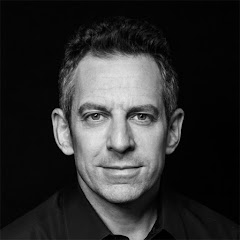 Sam Harris
Want to know something specific about what's covered?
We've already dissected every moment. Ask and we will deliver (with timestamps).
Key Moments
The second plane on 9/11 proved the attacks were intentional, revealing a deadly commitment to religious belief. 25 years later, this ideology has resurged, amplified by Western institutions that enable its spread.
Key Insights
The second plane hitting the South Tower on 9/11 proved the attacks were intentional, a deliberate act of mass murder by individuals willing to die for their beliefs.
The War on Terror cost $8 trillion and resulted in hundreds of thousands of deaths, with an ignominious withdrawal from Afghanistan leaving allies vulnerable.
The author's career as a public speaker and podcaster is a direct result of his reaction to 9/11, leading to the writing of 'The End of Faith'.
Western liberals and academics initially struggled to accept that the 9/11 hijackers were motivated by religious conviction, instead attributing their actions to poverty or US foreign policy.
The October 7th attacks in Israel mirrored 9/11 in their religious motivation, yet Western reactions were quicker to align with apologetics for the perpetrators, exemplified by student groups at Harvard.
The term 'Islamophobia' is strategically used to silence criticism of Islamic ideology, conflating it with racism and xenophobia, despite Islam being a missionary faith and not a race or ethnicity.
The critical significance of the second plane
The morning of September 11th, 2001, marked a profound shift in reality for those who witnessed it. While the first plane hitting the North Tower could be explained away as a tragic accident or the act of a madman, the impact of United 175 on the South Tower irrevocably proved the intentionality of the attacks. This second plane confirmed that thousands of innocent lives were murdered deliberately, and that the perpetrators were committed to dying in the process. This demonstrated a sincere and dangerous belief system, one where sane individuals could be motivated to commit mass murder and simultaneous suicide. The question that immediately arose was: what set of ideas could drive such actions? For those familiar with religious and philosophical texts, the answer pointed towards deeply held, fundamentalist religious convictions, specifically those that promised paradise in return for martyrdom.
The genesis of 'The End of Faith'
The author, Sam Harris, recounts that the events of 9/11 directly influenced his career. At the time, he was pursuing a PhD in neuroscience, researching belief formation. His decade-long immersion in religious and philosophical literature, coupled with meditation practices, had already shaped his concerns about faith, hope, fear, and delusion. The day after the attacks, he began writing, initially to process his own horror and moral outrage. This document evolved into the first chapter of his influential book, 'The End of Faith'. The book's subsequent publication propelled him into numerous culture war debates and established his platform for discussing ethical and spiritual life without reliance on divisive dogma. Therefore, his entire career as an author, speaker, and podcast host is a direct consequence of the foundational ideas explored in response to 9/11.
The failure to grasp the enemy's motivation
A critical failure following 9/11 was the Western world's inability or unwillingness to seriously consider the religious motivations of the attackers. While the hijackers and their network explicitly stated their intentions – seeking martyrdom in paradise through jihad against infidels – many Western intellectuals, academics, and journalists attributed their actions to more mundane factors like poverty, American foreign policy, or general despair. This was despite evidence from the hijackers' own writings, training, and recovered communications, which clearly indicated their commitment to a religious cause. These were not simply desperate individuals; they were motivated by a desire for divine reward and a specific theological framework. This denial persisted, even as the subsequent War on Terror unfolded, costing trillions of dollars and hundreds of thousands of lives, and destabilizing entire regions.
The immense costs and failures of the War on Terror
The response to 9/11 led to a two-decade 'War on Terror,' marked by staggering financial and human costs. An estimated $8 trillion was spent, and while direct killings by US forces might range from 20,000 to 50,000 civilians in Afghanistan and Iraq, the ensuing civil wars and social upheaval resulted in many times that number of deaths. Interventions destabilized countries like Iraq, creating fertile ground for groups like ISIS, which then required further military action. The withdrawal from Afghanistan in 2021 was particularly criticized as ignominious, revealing American impotence and leading to the abandonment of Afghan allies who had risked their lives to assist US efforts. This failure to uphold promises to these allies is described as a profound moral injury.
The continuity of jihadist ideology and modern manifestations
The author draws a stark parallel between the 9/11 attacks and the October 7th, 2023, events in southern Israel, highlighting the enduring nature of jihadist ideology. He argues that both events stem from the same religious certainty, a fervent belief in martyrdom and paradise, and a commitment to murdering Jews and infidels as a sacrament. The immediate Western reaction to October 7th is presented as a disturbing acceleration of the apologetics seen after 9/11. Within minutes, instead of immediate condemnation, many in elite Western institutions and student groups rushed to blame the victims or frame the atrocities as acts of 'liberation' or 'resistance.' This response is characterized as a new, identitarian 'religion' that supersedes factual analysis, driven by an oppressor-oppressed dichotomy that conveniently excuses violence committed by perceived victim groups.
The rise of 'Islamo-leftism' and the weaponization of 'Islamophobia'
The essay identifies a growing phenomenon termed 'Islam-leftism' or a 'red-green alliance,' where a segment of the left increasingly aligns with Islamist agendas. This alliance, evidenced by political figures who fail to unequivocally condemn anti-Semitic violence or rhetoric, leverages identity politics and grievance culture. The author contends that the term 'Islamophobia' has been deliberately weaponized to discredit any criticism of Islam as a system of ideas, conflating it with racism or xenophobia. He argues that Islam is a missionary faith and not a race or ethnicity, and therefore, criticizing its doctrines is not bigotry but a core liberal principle. This tactic aims to shut down legitimate debate and protect the spread of the ideology, enabling Islamists to subvert liberal societies by exploiting their own values of tolerance.
Critiquing ideas versus hating people
The distinction between criticizing dangerous ideas and harboring hatred for people is crucial. The author asserts that 'Islamophobia' is not analogous to anti-Semitism because Judaism is a non-proselytizing ethno-religious group, whereas Islam actively seeks converts and has a global reach with over 2 billion adherents across 50 Muslim-majority countries. He notes that many of these countries do not uphold human freedoms, suggesting a connection between specific Islamic doctrines and the suppression of free thought and gender equality. He posits that those who best understand the threat of radical Islam are often devout members of other faiths or ex-Muslims, as they recognize that religious fanatics genuinely believe their doctrines. Therefore, welcoming dissidents and reformers from Muslim-majority countries, who are fleeing theocracies, is a more rational approach than tolerating the spread of radicalizing ideologies.
The enduring power of ideas and the need for collective sanity
Twenty-five years after 9/11, the author reflects that the core thesis of 'The End of Faith'—that beliefs matter and specific doctrines lead to specific behaviors—remains unassailable. He expresses a 'strange sadness' that the ideas he articulated then require no revision. He had underestimated the time it would take for collective sanity to prevail, believing that the second plane's revelation of intentionality would permanently settle the question of lethal ideas. The current reality, where privileged individuals dismiss the suffering of others and distinguishing between democratic states and death cults carries career risks, suggests that this realization is still pending. The podcast's survival and Harris's ability to speak freely, without advertisers or sponsors influencing his content, are attributed to listener support, underscoring the value of independent discourse in an increasingly polarized and easily manipulated information landscape.
Mentioned in This Episode
●Products
●Software & Apps
●Companies
●Organizations
●Books
●Concepts
●People Referenced
Common Questions
The second plane hitting the South Tower on 9/11 proved the attacks were intentional, not accidental. It demonstrated a willingness to die for a cause, indicating sincere belief and a level of coordination not seen in isolated acts of madness.
Topics
Mentioned in this video
Host of the Making Sense podcast, reflecting on the 25th anniversary of 9/11 and its impact on his career and societal discourse.
Former leader of Iraq, whose continued presence is discussed as a counterfactual to the war.
Founder of al-Qaeda, noted as being dead, contributing to a perceived reprieve in the war on terror.
A political figure in New York whose rise is seen as an indicator of how little entanglement with Islamism costs on the left.
A Democratic Senate candidate in Michigan whose comments after a synagogue attack and subsequent apology are critically analyzed.
An anti-semite with whom Abdul El-Sayed maintains association, casting doubt on his apology.
Author who faced a fatwa, mentioned as an example of an assault on liberal values.
Central figure in Islam, whose depiction in artwork is discussed in relation to freedom of speech and religious sensitivities.
Actress who denounced J.K. Rowling, cited as an example of public figures acting out of fear of backlash.
Author whose public stance on gender identity and subsequent backlash is used as an example of the difficulty of speaking out in the current climate.
Actor who denounced J.K. Rowling, cited as an example of public figures acting out of fear of backlash.
The ideological driver of the 9/11 attacks, which the speaker argues has not been adequately understood or addressed by Western societies.
Referring to Islamists eager to die as martyrs for their cause, a key aspect of the threat discussed.
A term used to describe radical Islam, highlighting its dangerous zealotry.
A term the speaker argues is misused to conflate criticism of Islam with bigotry, and which he believes does not exist as a parallel to anti-semitism.
Contrasted with Islam, noting its non-proselytizing nature and ethnic/racial implications.
The religion discussed extensively, its doctrines, practices, and the behavior they produce are central to the argument.
Used as an analogy for criticizing Islam as a system of ideas, arguing that criticizing it is not bigotry.
Mentioned as sometimes funding organizations that focus on political Islam or jihadism, but their contributions are valued due to secular liberal blindness.
The country where a prolonged war was fought after 9/11, leading to significant loss of life and eventual withdrawal.
The country invaded after 9/11, leading to instability and the rise of new forms of jihadist violence.
A city in Iraq mentioned in the context of military actions and their justification.
A prison in Iraq known for abuses, mentioned in the context of military failures.
Mentioned alongside Israel in the context of ongoing conflict and the ensuing political discourse.
The country attacked on October 7th, whose conduct in war is mentioned as a false parallel for jihadist attacks.
The group to which Afghanistan was handed back after 20 years of US intervention.
Mentioned for abandoning Afghan allies, contributing to a self-inflicted moral injury.
Cited for independent analysis suggesting counterterrorism efforts have stopped numerous attacks on American soil.
Mentioned in the context of Islamists seeking to criminalize blasphemy.
Mentioned as profiling critics of Islam, even those who are non-white, under the guise of fighting hate.
Mentioned as another movement where backlash occurred against those who didn't conform to the prevailing narrative.
More from Sam Harris
View all 314 summaries 23 min
Why the AI Skeptics Keep Being Wrong
 25 min
Elon Musk Didn't Found Tesla
 98 min
Coin Toss for the Future: A Conversation with Ryan Greenblatt UNLOCKED (Ep. 494)
 29 min
It's a Coin Toss Whether AI Takes Over
Ask anything from this episode.
Save it, chat with it, and connect it to Claude or ChatGPT. Get cited answers from the actual content — and build your own knowledge base of every podcast and video you care about.
Get Started Free