Key Moments
The Logic of Doomsday: A Conversation with William J. Perry (Episode #210)
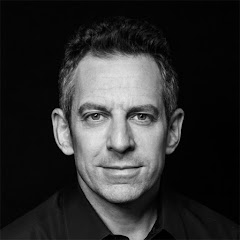 Sam Harris
Want to know something specific about what's covered?
We've already dissected every moment. Ask and we will deliver (with timestamps).
Key Moments
Nuclear war poses an existential threat; accidental war is more likely than deliberate attack.
Key Insights
The risk of accidental or miscalculated nuclear war is the greatest existential threat facing humanity, yet it is largely overlooked.
Despite the immense destructive power of nuclear weapons, humanity has developed a dangerous psychological capacity to ignore the threat, a phenomenon termed 'thinking about the unthinkable.'
The Cuban Missile Crisis was far more dangerous than publicly known, with the presence of operational tactical nuclear weapons significantly increasing the likelihood of full-scale nuclear war.
The logic of deterrence, while seemingly stable, is vulnerable to technical errors, misinformation, and irrational actors, making accidental war a persistent and grave danger.
Nuclear terrorism, though distinct from state-level deterrence, presents a significant threat, with efforts to secure fissile material being a crucial area of progress.
While complete nuclear disarmament may be distant, concrete steps like eliminating ICBMs, renouncing first-use policies, and limiting presidential sole authority can significantly reduce the immediate risks.
THE FORGOTTEN EXISTENTIAL THREAT
The conversation highlights that the most significant risk to humanity is not a deliberate nuclear attack, but rather stumbling into nuclear war through accident, miscalculation, or technical error. This danger is amplified by a widespread public and political ignorance of the issue, akin to living in a rigged environment without acknowledging the danger. The 75th anniversary of the atomic bomb serves as a stark reminder of this ongoing, yet largely ignored, peril.
LESSONS FROM THE BRINK: THE CUBAN MISSILE CRISIS
William J. Perry recounts his direct involvement in the Cuban Missile Crisis of 1962, revealing that the situation was far more perilous than understood at the time. Unbeknownst to President Kennedy, operational tactical nuclear weapons were already deployed in Cuba. Had the US initiated a military attack as advised by some, the use of these tactical nukes would have likely triggered a full-scale nuclear exchange, increasing the probability of catastrophe to over 50% in Perry's assessment.
THE PSYCHOLOGY OF DENIAL AND DETERRENCE
The discussion delves into the psychological difficulty of confronting the unthinkable nature of nuclear holocaust. Jonathan Schell's 'The Fate of the Earth' is cited, noting humanity's peculiar failure to respond adequately to the threat, a phenomenon that violates both self-interest and fellow-feeling. While denial is a survival mechanism, the persistent risk of accidental war, compounded by the logic of deterrence, makes the current status quo untenable, especially with the increasing threat of cyber attacks.
NUCLEAR TERRORISM AND THE NEED FOR GLOBAL COOPERATION
The threat of nuclear terrorism is examined as a distinct but equally grave concern. While states operate under a logic of deterrence based on rational actors, terrorist groups may not. The potential for a single nuclear detonation, even a relatively low-tech one, could cause catastrophic casualties, decapitate governments, and create widespread panic. Although securing fissile material is challenging, advancements made through programs like those initiated by President Obama have somewhat mitigated this risk.
CHALLENGING THE STATUS QUO: POLICY AND PRACTICAL STEPS
The conversation emphasizes that change is possible, contrary to a sense of fatalism. Concrete actions can significantly reduce the risk of nuclear catastrophe. This includes ending presidential sole authority over nuclear weapons, prohibiting 'launch on warning' and 'first use' policies, and retiring land-based ICBMs, which are inherently first-strike weapons. These steps would not only lower the risk of accidental war but also save immense financial resources.
REDUCING RISK THROUGH EDUCATION AND POLITICAL ACTION
The importance of public education is paramount, as ignorance fuels the continuation of dangerous policies. Organizations like the William J. Perry Project, the Bulletin of the Atomic Scientists, and the Nuclear Threat Initiative work to raise awareness and advocate for policy changes. Empowering individuals to educate themselves and support these organizations creates the political will necessary for leaders to enact measures that can lead to a world with reduced nuclear danger.
POLICY IMPLICATIONS AND THE ROLE OF TECHNOLOGY
The discussion touches upon the complexities of strategic missile defense, which is argued to be largely ineffective and potentially destabilizing by incentivizing offensive capabilities. Furthermore, emerging technologies like cyber warfare are seen as exacerbating risks by potentially disrupting command and control systems, rather than mitigating them. The development of low-yield tactical nuclear weapons is also a concern, as it may lower the threshold for their use and escalate conflicts.
THE GLOBAL MOVEMENT FOR NUCLEAR ABOLITION
The Treaty on the Prohibition of Nuclear Weapons (TPNW), inspired by the success of landmine ban treaties, represents a significant effort by non-nuclear states to establish a global norm against nuclear weapons. While nuclear-armed states have not joined, this initiative provides a crucial framework and expresses the will of the majority of the world's nations who are subject to the risks posed by a few nuclear powers. This movement emphasizes that even incremental steps towards disarmament are valuable.
THE CATASTROPHIC CONSEQUENCES OF LIMITED NUCLEAR EXCHANGE
Even a limited nuclear exchange, such as between India and Pakistan involving around 100 nuclear weapons, could have devastating global consequences. Beyond the millions of immediate casualties, the resulting atmospheric debris could trigger a 'nuclear winter,' leading to a drastic drop in global temperatures, widespread crop failures, and mass starvation affecting billions. This underscores the interconnectedness of global security and the existential threat posed by any nuclear war.
THE UNTENABILITY OF THE STATUS QUO AND PATHWAYS FORWARD
The current status quo, characterized by a 'doomsday machine' poised to detonate due to misinformation, is fundamentally untenable. While complete nuclear disarmament may seem distant, maintaining the current level of risk is unsustainable. The conversation advocates for focusing on achievable steps, such as reducing nuclear arsenals, retiring ICBMs, and electing leaders committed to de-escalation, to significantly decrease immediate dangers while working towards the long-term goal of a world free from nuclear weapons.
Mentioned in This Episode
●Organizations
●Books
●Concepts
●People Referenced
Common Questions
The prospect of blundering into a nuclear war, either by accident or political miscalculation, is considered the greatest risk, compounded by public unawareness.
Topics
Mentioned in this video
A book that originated as an article in The New Yorker in 1982, it compellingly describes the potential horror of nuclear war and the human tendency to deny its implications.
William J. Perry's book that delves into the dangerous history and current terrifying status quo of nuclear weapons and presidential power.
A symbolic clock maintained by the Bulletin of the Atomic Scientists that represents humanity's proximity to self-annihilation, currently at 100 seconds to midnight.
The first Japanese city targeted by an atomic bomb in World War II, discussed for its historical significance and the number of casualties.
A former Soviet country that became the third largest nuclear weapon state overnight after the collapse of the Soviet Union, with its weapons dismantled under the Nunn-Lugar program.
A country mentioned as a nuclear power that acquired weapons for security reasons, and a potential site for a limited nuclear exchange leading to global effects.
The second Japanese city to be hit by an atomic bomb, with its bombing's justification being debated in the context of the end of World War II.
Site of an airbase incident during the Cuban Missile Crisis where a false alarm was triggered by a bear, nearly leading to a nuclear launch.
A country mentioned concerning its nuclear deal and potential for a dual-use nuclear program, and a possible blundering point for nuclear exchange.
A country discussed as a nuclear power that sought nuclear weapons for security reasons against perceived threats, and a potential blundering point for nuclear exchange.
The country from which U.S. nuclear missiles were secretly removed as part of the de-escalation deal during the Cuban Missile Crisis.
A former Soviet country whose nuclear weapons were dismantled under the Nunn-Lugar program.
A country mentioned as a nuclear power that acquired weapons for security reasons, and a potential site for a limited nuclear exchange leading to global effects.
A former Soviet country whose nuclear weapons were dismantled under the Nunn-Lugar program.
The U.S. President who made the decision to use atomic bombs against Japan and later established presidential sole authority over nuclear weapons.
Author of a book focusing on each administration's nuclear policy, who discussed Kennedy's experience during the Cuban Missile Crisis.
Communications director for the William J. Perry project and granddaughter of William J. Perry, dedicated to raising public awareness about nuclear threats through her podcast 'At the Brink'.
The President under whom William J. Perry served as Secretary of Defense.
Former U.S. President whom William J. Perry personally advised on nuclear issues; later, Carter was nearly woken up to make a launch decision during a false alarm.
U.S. President who instituted a program for nuclear powers to improve safeguards on fissile material and also approved the nuclear modernization program.
U.S. President mentioned for heavy drinking in the last month of his presidency, raising concerns about compromised decision-making power over nuclear weapons.
Author of 'The Fate of the Earth,' a book that explores the devastating consequences of nuclear war and the psychological challenge of confronting this threat.
Former U.S. Under Secretary of Defense for Research and Engineering in the Carter Administration and Secretary of Defense under President Clinton, who founded the William J. Perry Project to educate the public on nuclear dangers.
The leader of Cuba during the Cuban Missile Crisis.
U.S. Senator (misidentified as Congressman in transcript) who has put forth legislation to limit presidential sole authority to launch nuclear weapons.
U.S. Senator and namesake of the Nunn-Lugar program, who championed efforts to dismantle nuclear weapons in former Soviet countries.
The U.S. President whose rhetoric and actions regarding nuclear weapons raised concerns about the risks of presidential sole authority.
A nuclear security professor and founder of Global Zero, who, as a former nuclear missileer, attested to the rigorous training of missile crews to launch weapons quickly and without question once an order is confirmed.
President Carter's National Security Advisor who received a false alarm call about incoming missiles but waited for more information before waking the president.
Head of ICAN, a highly intelligent woman championing the ban on nuclear weapons.
Former U.S. President during whose administration William J. Perry was involved as a consultant on nuclear issues.
U.S. President who may have mistakenly believed that ICBMs could be recalled after launch.
U.S. President during the Cuban Missile Crisis, who was under pressure to take military action and whose decisions ultimately averted nuclear war. Also mentioned for his heavy medication use.
The Soviet leader during the Cuban Missile Crisis, who along with Kennedy, participated in a back-channel deal to de-escalate the situation.
U.S. Congressman who has put forth legislation to limit presidential sole authority to launch nuclear weapons.
Where William J. Perry serves as an emeritus professor.
The presidential administration during which William J. Perry served as Under Secretary of Defense for Research and Engineering.
Founded by William J. Perry in 2015, this project aims to educate the public on the urgent need to reduce nuclear weapons dangers.
The U.S. intelligence agency whose Deputy Director called William J. Perry to Washington to help assess intelligence during the Cuban Missile Crisis.
The magazine in which Jonathan Schell's 'The Fate of the Earth' was originally published.
The organization that maintains the Doomsday Clock and publishes assessments on nuclear dangers, based in Chicago.
The command center that issued a false alarm of 200 incoming Soviet ICBMs in 1979 to William J. Perry, illustrating the danger of accidental launch.
An international initiative for the elimination of nuclear weapons, co-founded by Bruce Blair.
The center through which presidential orders to launch nuclear weapons would pass, before reaching missile crews.
The international body where a treaty banning nuclear weapons was passed, although it has not yet been fully ratified by all countries.
An important Washington D.C.-based organization that works to eliminate nuclear dangers and minimize their risks, recommended for public support.
An organization that led the successful legal push for the UN Treaty on the Prohibition of Nuclear Weapons, for which it was awarded the Nobel Peace Prize.
Former generals from this command claimed the military would not follow any unlawful order concerning nuclear launches, a claim debated for its legal interpretation.
A terrorist organization discussed in the context of concerns about their potential acquisition of nuclear materials from former Soviet republics after 9/11.
A San Francisco-based organization specifically focused on reducing the danger of nuclear weapons by supporting other organizations working towards this goal, recommended for public support.
A treaty passed at the UN to ban nuclear weapons entirely, currently awaiting ratification, championed by ICAN.
A treaty where non-nuclear powers agree not to go nuclear in return for nuclear powers working towards phasing out and decreasing their nuclear capabilities, currently under threat due to the actions of nuclear powers.
A program championed by William J. Perry during his tenure as Secretary of Defense, which helped secure and dismantle nuclear weapons in former Soviet countries after the collapse of the Soviet Union.
An agreement that gained the U.S. some nuclear security by constraining Iran's nuclear program. Its rescission was considered a major step backward.
A successful treaty that served as the model for the UN Treaty on the Prohibition of Nuclear Weapons, demonstrating that such bans can be effective.
A treaty that aimed to limit the number of deployed strategic nuclear warheads between the US and Russia, passed under Obama.
More from Sam Harris
View all 302 summaries 27 min
Is America Heading for a Debt Crisis? An Economist Explains
 27 min
Is America Heading for a Debt Crisis? An Economist Explains
 34 min
Is Psychedelic Therapy Ready for FDA Approval?
 26 min
You Lose Interest the Moment You Realize It's AI
Ask anything from this episode.
Save it, chat with it, and connect it to Claude or ChatGPT. Get cited answers from the actual content — and build your own knowledge base of every podcast and video you care about.
Get Started Free