Key Moments
The KEY Study Techniques for Exam Success
 Ali Abdaal
Want to know something specific about what's covered?
We've already dissected every moment. Ask and we will deliver (with timestamps).
Key Moments
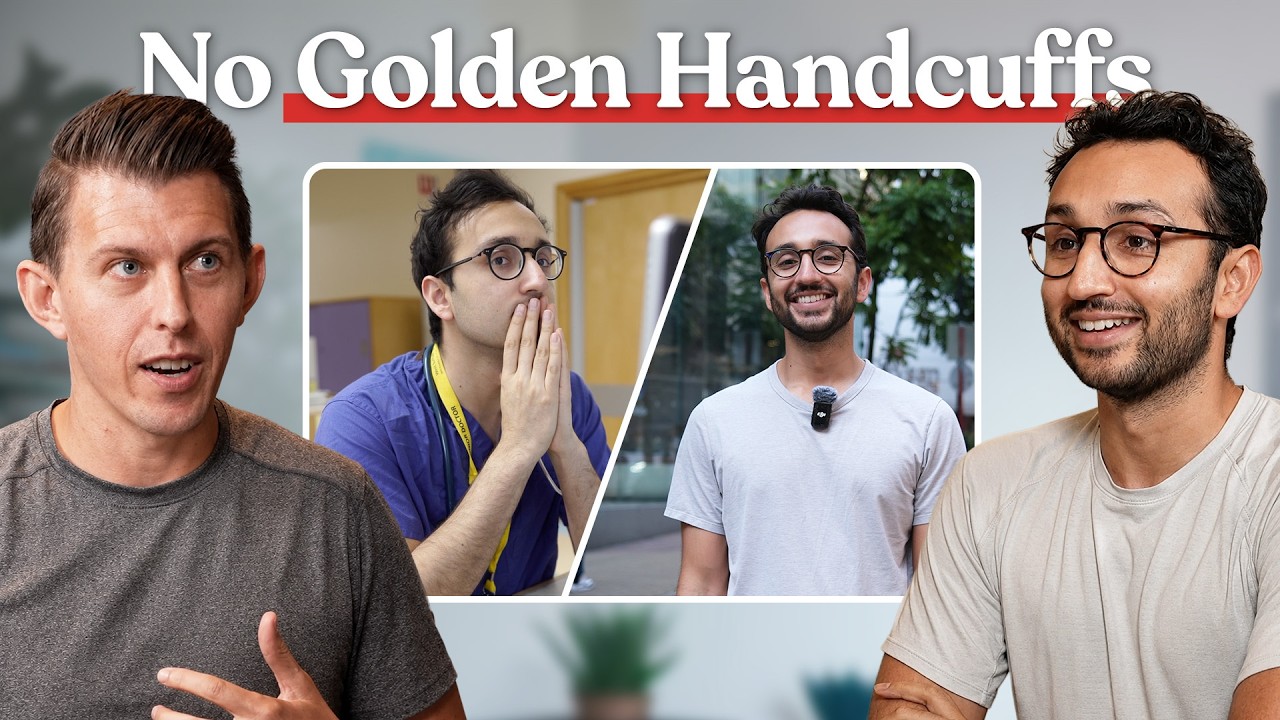
Ali Abdaal and Simon Clark discuss study techniques, focus, active recall, note-taking, and coping with failure.
Key Insights
Minimize distractions and practice mindfulness to improve focus during study sessions.
Active recall is most effective when tailored to exam specifics and subject type.
Technical subjects benefit from extensive practice problems and past papers.
Handwritten notes can enhance learning through kinesthetic engagement, though digital notes are faster.
Develop a retrospective revision timetable and utilize spaced repetition for multi-subject study.
Diversifying identity and viewing failure as an opportunity for improvement are key to resilience.
OPTIMIZING FOCUS AND MINIMIZING DISTRACTIONS
Achieving focus while studying requires actively minimizing distractions, such as closing unnecessary tabs or using background music (instrumental or game soundtracks are recommended). It's also crucial to accept that sustained focus is limited, typically around 45 minutes, and to incorporate short breaks. Applying mindfulness techniques, like non-judgmental awareness of wandering thoughts and gently redirecting attention, can significantly improve concentration without self-criticism.
MASTERING ACTIVE RECALL AND TAILORING QUESTIONS
Active recall is a powerful technique, but the detail of recall questions should align with exam requirements and the subject matter. For memorization-heavy subjects like medicine, self-generated questions are effective. In contrast, technical subjects like physics may require drawing from existing problems in textbooks or past papers. The key is to create recall questions that mirror the complexity and style of the actual exam.
STRATEGIES FOR TECHNICAL AND MEMORIZATION-BASED SUBJECTS
Revising technical subjects like math and physics primarily involves consistent practice with problems. Varying the numbers, assumptions, and variables in practice questions ensures comprehensive learning. For school-level exams, analyzing past papers and understanding mark schemes is vital. Medicine, on the other hand, relies heavily on memorization, making large volumes of information challenging but manageable with effective note-taking and recall strategies.
EFFECTIVE NOTE-TAKING AND REVISION TIMETABLES
While laptop note-taking is faster, handwriting notes can enhance retention due to kinesthetic learning. Combining lecture notes with textbook summaries or using methods like the Cornell Note-Taking System, which incorporates active recall principles, can be beneficial. Creating a retrospective revision timetable, where you log completed topics and schedule future reviews, is crucial for spaced repetition across multiple subjects.
THE POWER OF SPACED REPETITION AND GAMIFICATION
Spaced repetition is a cornerstone of effective memorization, involving revisiting material at increasing intervals. Turning memorization into a game, like timed flashcard challenges, can make the process more engaging and effective. This applies to learning complex processes in biology or memorizing specific legal phrases, where repetition strengthens neural connections and aids long-term recall.
COPING WITH FAILURE AND MAINTAINING WELL-BEING
Experiencing poor results or failure can be disheartening, but it's essential to view them as opportunities for growth rather than definitive setbacks. Diversifying one's identity beyond academic achievements provides resilience. Prioritizing mental and physical well-being, even when facing personal difficulties, is paramount, recognizing that long-term health often outweighs short-term academic gains.
ENVIRONMENT AND PERSONALIZED STUDY APPROACHES
The ideal study environment is subjective and depends on the individual, the subject, and the current mood. Whether it's a quiet library, a bustling coffee shop, or home, the key is to find a space that fosters concentration and enjoyment. Some students benefit from spatially separating different subjects by location to create distinct learning associations.
Mentioned in This Episode
●Software & Apps
●Organizations
●Books
●Concepts
●People Referenced
Exam Success Cheat Sheet
Practical takeaways from this episode
Do This
Avoid This
Common Questions
To stay focused, remove as many distractions as possible, accept that extended focus requires breaks, and use mindfulness techniques to gently redirect your attention when it wanders. Consider using instrumental music playlists to make the study environment more pleasant.
Topics
Mentioned in this video
A film series whose instrumental music is suggested for study playlists.
A video game series with soundtracks suitable for background study music.
A city-building game with a soundtrack beneficial for focused study.
A film whose soundtrack is recommended for studying due to its instrumental nature.
A video game whose soundtrack is considered good for studying as it occupies the background without distraction.
A user who asked for advice on creating revision timetables for upcoming exams.
A user asking for advice on writing concise notes.
The founder of Discovery Channel and Curator Stream.
A user asking whether it's better to study at home, a coffee shop, or the library.
A user asking for advice on how to maintain work ethic during difficult personal times like breakups or family issues.
Author of the book 'What If?', which contains hypothetical questions that can be used for developing self-written study questions.
A user asking how to manage spaced repetition across multiple subjects simultaneously.
An Oxford University graduate and education YouTuber who co-hosts a Q&A on study techniques.
A user asking for advice on how to continue studying after receiving poor exam results.
An individual whose personal brand strategy of narrowing focus to a unique niche is discussed as a method for easier competition.
A note-taking method that involves dividing the page for notes, cues, and a summary, facilitating active recall during review.
A time management technique involving focused work intervals, which has been found useful for studying.
A technique involving moment-to-moment, non-judgmental awareness, applied to studying by acknowledging distractions without self-criticism.
More from Ali Abdaal
View all 195 summaries 28 min
How to Make Work Optional - The Freedom Profile Matrix
 119 min
The Dark Side Of Getting Rich On Youtube
 78 min
How to Quit Your Job (and Find Work You Actually Love)
 89 min
If You Want to Make Money From YouTube, Do This (Case Study)
Ask anything from this episode.
Save it, chat with it, and connect it to Claude or ChatGPT. Get cited answers from the actual content — and build your own knowledge base of every podcast and video you care about.
Get Started Free