Key Moments
Terry Crews and Richard Koch | The Tim Ferriss Show
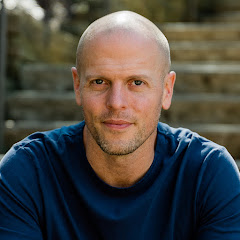 Tim Ferriss
Want to know something specific about what's covered?
We've already dissected every moment. Ask and we will deliver (with timestamps).
Key Moments
Terry Crews and Richard Koch discuss art, resilience, the 80/20 Principle, and achieving "unreasonable success."
Key Insights
Terry Crews' artistic talent was discovered and nurtured by a high school teacher, leading to scholarships and a parallel path with football, emphasizing the importance of finding one's true calling despite perceived obstacles.
Crews learned the critical lesson of "taking the shot" after a missed basketball layup in high school, realizing that regardless of outcome, acting on opportunities is essential for personal growth and avoiding regret.
Crews' account of confronting his abusive father highlights the transformative power of choosing empathy and healing over revenge, emphasizing vulnerability as a strength.
Richard Koch's introduction to the 80/20 Principle (Pareto Principle) at Oxford led him to apply it strategically to his exams, focusing on high-impact areas for disproportionate results.
Koch's investment philosophy, exemplified by his Betfair success, centers on the "star principle": investing in market leaders within defensible, high-growth niches.
Koch identifies nine "landmarks" for achieving "unreasonable success," including self-belief, Olympian expectations, transforming experiences, a breakthrough achievement, defining one's own path, driving a personal vehicle, thriving on setbacks, acquiring unique intuition, and distorting reality.
TERRY CREWS: THE ARTIST'S UNEXPECTED JOURNEY
Terry Crews, growing up in Flint amid economic decline and the crack epidemic, found two potential escapes: music/performing and athletics. While art was viewed as a path to starvation, a high school art teacher, Mr. Eichelberg, recognized Crews' exceptional talent and secretly secured him a full scholarship to Interlochen Arts Academy. This changed Crews' life, exposing him to a global artistic community. An early validation of his talent, when a Cleveland Institute of Art judge recognized both his anonymous drawings as the best, instilled a lifelong confidence. Despite pursuing football, Crews' mother consistently reminded him of his artistic identity, a core part of his being that he continues to integrate into his diverse career.
THE LESSON OF "TAKING THE SHOT" AND REFRAMING FAILURE
Crews recalls a pivotal high school basketball game where, with seconds left, he missed a game-winning layup, leading to intense shame and criticism. This "failure" became a profound lesson: he realized the importance of taking his shot in life, regardless of the outcome. This reframing allowed him to embrace the idea that if he wins or fails, it will be on his own terms. This philosophy extended to understanding personal desire; Crews believes people truly get what they want in life, suggesting that showing up late or failing to commit indicates a lack of genuine desire. This personal insight became a guiding principle for his diverse career, emphasizing active pursuit over passive waiting.
HEALING THROUGH VULNERABILITY AND REFLECTED STRENGTH
Crews bravely shares a profoundly dark period: a violent confrontation with his abusive father at Christmas. While initially seeking revenge for his mother, he found no satisfaction in inflicting pain. Years later, therapy helped him understand the difference between shame and guilt. Shame seeks punishment, but guilt leads to discipline and change. Crews chose healing, telling his father he would choose him as a parent, leading to a tearful apology from his father. This experience taught Crews to use his physical and emotional strength for good and protection, emphasizing that vulnerability and authenticity are true sources of power, allowing for genuine healing instead of perpetuating a cycle of pain.
COURAGE, NERVOUSNESS, AND THE FLOW STATE
Crews lives by Ralph Waldo Emerson's quote: "God will not have his work made manifest by cowards," emphasizing that courage begets more courage. He actively confronts fears, like jumping into a pool repeatedly to overcome a childhood near-drowning experience. He demystifies the idea of effortless performance, admitting that even after decades of acting, he still gets nervous before a take. This nervousness, he argues, is a sign of caring. He pushes through this fear, rushing into the moment until he enters a 'flow state,' where action becomes fluid and seamless. This practice of embracing fear, rather than avoiding it, is key to achieving peak performance and profound satisfaction in his work.
RICHARD KOCH: DISCOVERING THE 80/20 PRINCIPLE AT OXFORD
Richard Koch's introduction to the 80/20 Principle (Pareto Principle) came during his time at Oxford while reading Vilfredo Pareto's "Course of Economic Theory." Although published in French in the late 19th century, Pareto's algebraic equations revealed a consistent pattern: a small percentage of the population owned most of the wealth across different countries and centuries. Koch immediately saw the practical application beyond economic theory, using it to strategically prepare for his 11 final exams. By identifying the few frequently asked questions (the 20%) that would account for the majority of points (the 80%), he focused his research, enabling him to achieve a top degree with significantly less effort than his peers, a testament to the principle’s power.
THE STAR PRINCIPLE AND BETFAIR'S UNREASONABLE SUCCESS
Koch was famously fired from Boston Consulting Group for his lack of analytical skills, despite excelling in other areas. This led him to develop his investment philosophy centered on the 'Star Principle'—investing in market leaders within defensible, high-growth niches. His most notable success was Betfair, an online betting exchange. Despite not understanding how to use their website, Koch recognized Betfair's unique 'star' qualities: a novel business model (peer-to-peer betting, not a traditional bookmaker), a distinct cost structure, and a sophisticated customer base, giving them an 'infinite relative market share.' He invested 1.5 million, his liquid assets, and despite initial skepticism, his belief in the star principle led to a 100 million profit, illustrating the power of this focused investment strategy.
THE ESSENCE OF PRINCIPLES VERSUS KNOWLEDGE
Koch emphasizes that principles are superior to mere knowledge. While knowledge is vast, principles provide a framework to sift, analyze, and extract the essential meaning from information efficiently. The 80/20 Principle and the Star Principle are his core meta-principles, allowing him to quickly assess businesses and identify potential for improvement. These principles simplify complex decision-making, enabling insightful observations that often elude those focused purely on detailed data. This focused, principle-driven approach is what allows him to operate effectively as an investor without employing a large team, dedicating only about a day a week to his work.
FROM PARAGRAPH TO BESTSELLER: THE 80/20 PRINCIPLE BOOK
The book "The 80/20 Principle" emerged serendipitously. Initially, Koch had dismissed the idea of writing an entire book on a concept he believed could be summarized in a paragraph. However, encouraged by his publisher, Nicholas Brealey, who sensed its potential, Koch embarked on extensive research. This inquiry, leveraging the burgeoning internet of 1996, revealed a wealth of applications for the 80/20 Principle far beyond economics, extending to personal lives, happiness, and relationships. The book's success transformed the obscure "Pareto Rule" into the widely recognized "80/20 Principle," fundamentally impacting how people allocate effort for maximum results in all aspects of life.
UNREASONABLE SUCCESS: DEFINING TRANSFORMATIONAL IMPACT
"Unreasonable Success and How to Achieve It" sprang from Koch's fascination with success and its often arbitrary nature. He defines "unreasonable success" by four criteria: it represents such a profound change that it seems unreasonable for one individual to achieve, it's unexpected early in that person's career, it surpasses what their apparent skills would suggest, and it enables the individual to shape the world as they envision it. This definition is value-free; success is measured by the individual's own objectives, regardless of whether those changes are universally deemed positive or negative. The book examines 20 historical figures to identify common "landmarks" leading to this extraordinary achievement.
THE NINE LANDMARKS OF UNREASONABLE SUCCESS
Koch identified nine consistent 'landmarks' present in all 20 of his successful figures. These include: self-belief, Olympian expectations (setting extremely high standards), transforming experiences (events that profoundly alter one's path), having one breakthrough achievement, making one's own trail (deviating from conventional paths), finding and driving a personal vehicle (an organization or concept to leverage one's influence), thriving on setbacks (using failures for feedback and growth), acquiring unique intuition (deep knowledge driving sudden insights), and distorting reality (convincing others of a new, often unconventional, vision). These factors, though not always consciously engineered, are universally found in those achieving extraordinary impact, suggesting a pattern for cultivating significant achievement.
THE POWER OF LONG-TERM VISION AND INTUITION
Koch's landmarks, particularly self-belief, Olympian expectations, a breakthrough achievement, defining one's path, driving a personal vehicle, thriving on setbacks, and distorting reality, are all greatly amplified by a long-term vision. This extended time horizon allows for the patient development of these qualities and the sustained effort required for monumental impact. Acquiring unique intuition, a critical landmark, is exemplified by Nelson Mandela. Despite being imprisoned for 17 years, Mandela developed an intuition that the apartheid government, though outwardly hostile, genuinely sought a deal. This insight, born from deep observation and personal interaction, allowed him to see a path to negotiation where others saw only conflict, leading to a peaceful transition to democracy in South Africa, a testament to the power of a finely honed, context-specific intuition.
Mentioned in This Episode
●Supplements
●Products
●Tools
●Companies
●Organizations
●Books
●Concepts
●People Referenced
Common Questions
Terry Crews grew up in Flint amid the crack epidemic and auto industry decline. His art teacher, Mr. Eichelberg, recognized his talent and helped him secure a full scholarship to Interlochen Arts Academy. He later attended Western Michigan University on an art scholarship while also playing football.
Topics
Mentioned in this video
Author who developed the 'flow' concept, mentioned by Richard Koch in relation to 'happiness islands'.
Terry Crews' high school art teacher who recognized his talent and helped him get a scholarship to Interlochen Arts Academy.
Founder of Boston Consulting Group (BCG) and co-originator of the 'growth share matrix'; greatly admired by Richard Koch for his intellectual contributions and talent for recognizing potential.
South African president who succeeded P.W. Botha and ended up negotiating with Nelson Mandela, acting as his mentor.
Co-editor of the book 'Perspectives on Strategy', recommended by Richard Koch.
One of the 20 people highlighted in 'Unreasonable Success', who formed her own cosmetics company early on.
Founder of Bain & Company, described as a 'clever man' and historian who hired Richard Koch and effectively mentored him.
Author of 'Good Strategy/Bad Strategy', a strategy book recommended by Richard Koch.
Former NFL player, American film and television star, host, and best-selling author.
A successful sports writer and broadcaster who branched into chat shows, mentioned by Richard Koch as an example of reinventing a format.
Co-editor of the book 'Perspectives on Strategy', recommended by Richard Koch.
Publisher who encouraged Richard Koch to write 'The 80/20 Principle' and published 'Managing Without Management'.
A TV show where Terry Crews got his first entertainment job, portraying a character named 'T-money'.
A television show Terry Crews starred in.
A movie where Terry Crews worked with Arnold Schwarzenegger, his first big film role.
A television show hosted by Terry Crews.
A film where Terry Crews experienced being in a flow state during acting.
A television show Terry Crews starred in.
A leading European headhunting firm in Zurich that offered Richard Koch a job after his firing from BCG.
The record label that signed Bob Dylan, giving him confidence and connections.
A conventional British bookmaker mentioned by Richard Koch as a competitor Betfair does not directly compete with due to its different business model.
The consultancy Richard Koch co-started, which experienced incredible growth and made an impact on the corporate world.
A firm originally set up in San Francisco with a slightly different business model than Betfair, making it a competitor.
An online betting exchange where Richard Koch made a significant investment based on his 'star principle', despite not understanding its website.
An example of a client that Bain & Company would work with.
The institution from which a judge came to assess art at Interlochen Arts Academy, where Terry Crews' work was chosen as the best.
A beautiful library in Oxford where Richard Koch discovered the 80/20 principle through Vilfredo Pareto's work.
Terry Crews' high school, where he was a basketball player.
Where Terry Crews received an art scholarship and walked on to the football team.
A world-famous arts camp in Northern Michigan where Terry Crews received a full scholarship funded by Chrysler.
A book written by Richard Koch that sold 20,000 copies, with a title suggested by his publisher, Nicholas Brealey.
Terry Crews' best-selling memoir.
A book by Nassim Nicholas Taleb, mentioned for its thesis that resilience is not the goal, instead one should thrive on setbacks.
Malcolm Gladwell's book, which proposes that success comes from deep experience and long exposure (the 10,000-hour rule), later challenged by Richard Koch's 'Unreasonable Success'.
Richard Koch's most recent book, which identifies nine common traits of unreasonably successful individuals.
A book edited by Carl Stern and George Stalk, recommended by Richard Koch as a good primer on the early theories and concepts of Boston Consulting Group, including the 'experience curve' and 'Boston box'.
A strategy book by Richard Rumelt, recommended by Richard Koch.
More from Tim Ferriss
View all 705 summaries 108 min
The Random Show — AI Super Assistants, Dream Engineering, Wizards, Supplements, and More!
 121 min
How to Legalize Medical Psychedelics in Your Country — Tania de Jong on Australia’s Breakthrough
 70 min
Q&A with Tim — The Art of Male Friendship, Reinvention in The Age of AI, & More
 125 min
Dr. Andrew Huberman — Peptides, Performance, and Protocols
Ask anything from this episode.
Save it, chat with it, and connect it to Claude or ChatGPT. Get cited answers from the actual content — and build your own knowledge base of every podcast and video you care about.
Get Started Free