Key Moments
Success Story of a Failure | Naksha | Dr Umesh Wadhavani | TEDxMITADT
 TED
TEDWant to know something specific about what's covered?
We've already dissected every moment. Ask and we will deliver (with timestamps).
Key Moments
Dr. Umesh Wadhvani pivoted from a failed attempt at becoming a doctor and actor to becoming a successful diet and fitness coach with a unique approach to health education.
Key Insights
Dr. Wadhvani's initial medical studies revealed that over 80% of illnesses could be managed and prevented without medication through lifestyle and diet.
He experienced significant language barriers and cultural adjustment upon moving to the UK from Gujarat, initially struggling with basic English terms like 'cash' and 'bag'.
His holistic approach to health was solidified while managing a psychotherapy unit where conditions were treated with zero medicine, leading him to believe the same could apply to physical health.
Wadhvani found his way into a Bollywood song scene ('Allah Maaf Kare') after moving to the UK to pursue acting, but this detour eventually led him back to his core passion.
He created nutrition pages in five languages, including sign language, to simplify health and nutrition for a broader audience.
His comedy show 'Dieting Ka Mazak' has sold out 17 shows, aiming to educate people that healthy eating is not complicated.
The journey from aspiring doctor to 'diat coach' who doesn't give diets
Dr. Umesh Wadhvani begins by humorously defining himself not as a doctor who prescribes medicine, nor a dietitian who assigns diets, but a coach. He shares that his path wasn't straightforward, attributing his current role to a series of 'successful failures'. Growing up in a Sindhi family where business was paramount, his mother steered him towards becoming a doctor, a path he entered via homeopathy after a suboptimal performance in his 12th grade. During his studies, particularly in Preventive and Social Medicine, he discovered that over 80% of diseases could be managed and prevented without medication, primarily through diet and lifestyle. This revelation sparked a critical view of traditional medical practices and a desire for a more holistic approach, even though he wasn't sure of his exact future role.
Escaping marriage and clinic through higher education abroad
To avoid an impending marriage and the family's plan for him to open a clinic, Dr. Wadhvani applied for higher education abroad, securing a conditional offer from Oxford Brookes. Lacking funds, he had to navigate this challenge independently. His arrival in the UK was marked by significant cultural and linguistic hurdles, having completed his schooling in Gujarati medium. Simple words like 'cash' and 'bag' proved to be points of confusion, leading to humorous misunderstandings in daily life. This period of adaptation was crucial in shaping his resilience and problem-solving skills.
Discovering holistic health and mental-physical connection
While working and managing a unit in social and healthcare in the UK, Dr. Wadhvani had a significant realization: mental health and physical health are intrinsically linked, much like a MacBook's iOS and hardware. He found this particularly evident while managing a psychotherapy unit that treated various conditions with zero medication. This experience was a 'lightbulb moment,' reinforcing his belief that a similar non-medicinal, lifestyle-focused approach could be applied to physical health. This led him to pursue further learning in nutrition and fitness, alongside his psycho-therapy training, effectively becoming a nutritionist and fitness trainer.
Bollywood dreams and a COVID-induced return to Gujarat
A surprising detour in his career occurred when he found himself on the set of the Bollywood movie 'Desi Boyz' while studying in the UK. His fascination with Bollywood led him to leave his full-time job and enroll in acting classes at the New York Film Academy. He pursued acting for a year, taking on odd jobs like selling newspapers to support himself, before eventually returning to his health coaching path. In 2019, he was invited to India to work with a celebrity trainer, but shortly after his return, the COVID-19 pandemic hit. This forced him back to his village in Gujarat, where he began creating content.
Simplifying nutrition through diverse language content
During the lockdown in Gujarat, Dr. Wadhvani started creating videos from his farm, initially to pass the time. His engaging communication style garnered attention, leading people to seek his advice on diet and fitness. He realized the extensive fear surrounding food on the internet, with conflicting advice about staples like tea and rice. Determined to combat this misinformation, he committed to simplifying health and nutrition. He launched content pages in Hindi, Gujarati, Sindhi, and Marathi, and notably, in sign language, aiming to connect with people in languages they felt most comfortable with.
From health coaching to stand-up comedy on dieting
Leveraging his natural ability to connect with audiences and generate laughter, Dr. Wadhvani decided to channel his expertise in nutrition and fitness into stand-up comedy. He developed a 60-minute set titled 'Dieting Ka Mazak' (The Joke of Dieting), highlighting the complexities and often absurd advice surrounding healthy eating. Despite having no prior professional comedy experience, his shows have been remarkably successful, selling out numerous dates and educating audiences about the simplicity of healthy food, demonstrating a unique and effective way to communicate his core message.
The philosophy of embracing failure
Reflecting on his 15-year journey, Dr. Wadhvani states that he has 'failed successfully' in many aspects of life, including family, relationships, marriage, and his clinic. However, he emphasizes that this 'failure' comes from choosing paths aligned with his true desires rather than external expectations. His core philosophy is about trying and learning, acknowledging that not everything will be a success, but the act of trying is where true validation and growth lie. He encourages his audience to embrace their own pursuits, understanding that one life is too short not to try what calls to them.
Mentioned in This Episode
●Software & Apps
●Organizations
●People Referenced
Dr. Umesh Wadhavani's Philosophy on Success and Failure
Practical takeaways from this episode
Do This
Avoid This
Common Questions
'Charya' is a Sindhi word that means 'crazy' or 'mad'. The speaker's mother used this term to question his unconventional career choices.
Topics
Mentioned in this video
A Bollywood movie where the speaker had a brief appearance in a song sequence, which fueled his aspiration to work in Bollywood.
A Bollywood movie that inspired the speaker's early desire to explore multiple career paths, similar to the protagonist's character.
A movie mentioned by the speaker to illustrate his initial struggles with understanding and speaking English in the UK, comparing his character to Kamlesh Kapaasi.
More from TEDx Talks
View all 70 summaries 21 min
The Future We Focus Into Being | Marc Aurel Schnabel | TEDxXJTLU
 24 min
Hoà âm của bản sắc | Kieu Anh Nguyen | TEDxTranPhuGiftedHighSchoolYouth
 27 min
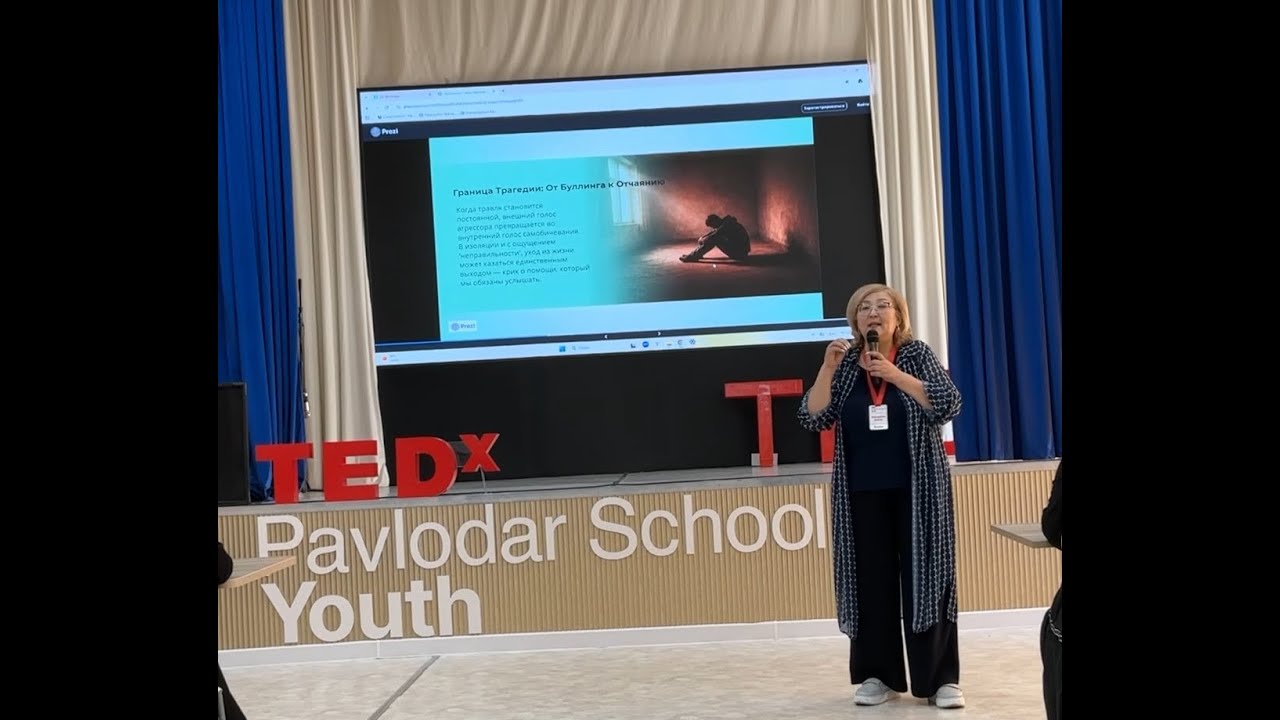
How to Prevent Circumstances from Breaking You | Shynar Zhangazina | TEDxPavlodar School 26 Youth
 24 min
Il Più Grosso Giocattolo per Adulti | Michele Magoni | TEDxSan Giovanni in Persiceto
Ask anything from this episode.
Save it, chat with it, and connect it to Claude or ChatGPT. Get cited answers from the actual content — and build your own knowledge base of every podcast and video you care about.
Get Started Free