Key Moments
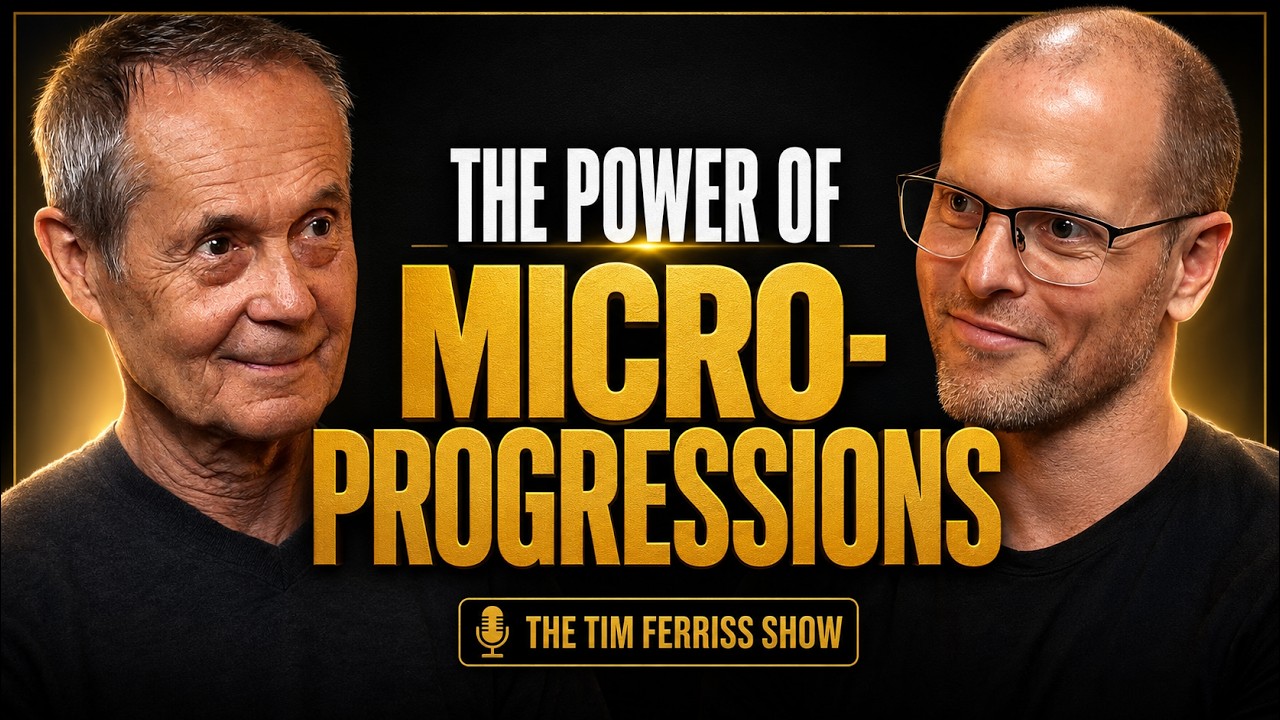
Stewart Copeland Interview | The Tim Ferriss Show (Podcast)
 Tim Ferriss
Want to know something specific about what's covered?
We've already dissected every moment. Ask and we will deliver (with timestamps).
Key Moments
Stewart Copeland on music, The Police, drumming techniques, and life lessons.
Key Insights
Stewart Copeland's diverse upbringing in the Middle East influenced his unique approach to music.
The formation and unique sound of The Police were partly shaped by serendipitous events and collaboration.
Entrepreneurship, even in music, means constant work without days off, demanding a different mindset.
Copeland's approach to orchestral composition differs from traditional methods, blending improvisation with structure.
Mastering drumming involves not just technique but also dynamic control, especially playing quietly.
The ability to relax and find calmness is crucial for peak performance, whether on stage or in athletics.
FROM MIDDLE EAST TO BRITISH BOARDING SCHOOL
Stewart Copeland's early life was marked by a unique multicultural upbringing, living in Cairo and Beirut. His mother, a British intelligence analyst and archaeologist, and his father, who facilitated governmental transitions, provided a stable yet dynamic environment. This exposure to different cultures, languages, and political landscapes, including interactions with future notable figures and experiencing periods of civil unrest and foreign intervention, significantly shaped his worldview and later, his musical sensibilities. His transition to a boarding school in England highlighted cultural and linguistic differences but also exposed him to a broader Western perspective.
THE BIRTH OF A MUSICAL ENTREPRENEUR
Copeland's entrepreneurial spirit emerged early. While attending college, he developed a 'tip sheet' that compiled concert performance data from various universities, selling advertising to record companies. This venture taught him the demanding nature of entrepreneurship, where one is always working and never truly off duty. This contrasts sharply with a traditional nine-to-five job, offering freedom but requiring constant hustle. The experience instilled valuable lessons about self-reliance, information management, and the relentless dedication required to build something from the ground up, foreshadowing his future success in the music industry.
THE ACCIDENTAL FORMATION OF THE POLICE
The iconic band The Police didn't form through conventional means. An unexpected need for a drummer in a punk band that wanted to play reggae led Copeland to collaborate with Sting and Andy Summers. Initially, the focus was on adapting the punk sound to reggae-influenced dub, which Copeland, with his prior experience in Lebanon playing similar rhythms, naturally embraced. The band's unique sound, a blend of punk energy, reggae's rhythmic foundations, and Summers' distinctive guitar work, emerged organically from these collective experiences and a willingness to experiment beyond the typical genre boundaries.
VISUAL STYLE AND SONIC IDENTITY
The distinctive visual style of The Police, including the famous bleached-blond hair, originated not from conscious artistic decisions but from practical opportunities. A Wrigley's chewing gum commercial sought a punk band and, finding the members not 'gnarly' enough, decided to peroxide their hair. This unexpected look was embraced by the band, becoming an iconic part of their image. Musically, their sound evolved from the raw energy of their early work to more sophisticated arrangements, influenced by Copeland's growing interest in orchestral composition and Sting's musical development, creating a rich, layered sonic identity.
THE ORCHESTRAL COMPOSER'S APPROACH
Copeland approaches orchestral composition with a unique methodology, diverging from traditional methods. Instead of relying on existing sheet music and standard practices, he builds compositions layer by layer, often starting with his drumming and then adding other instruments, much like producing a record. He then works with an arranger to transcribe his ideas. This method, while initially alien to studio crews, allows for a significant degree of creative freedom and improvisation, blending the precision of written music with the spontaneity of his own musical instincts. This contrasts with the structured, sight-reading-dependent nature of classical musicians.
MASTERING DYNAMICS: THE ART OF PLAYING QUIETLY
One of the most underappreciated skills for a drummer, according to Copeland, is the ability to play quietly with great dynamic control. He noted that rock music relies on sheer volume and force, often overwhelming subtler nuances. When performing with orchestras, which are inherently quieter than amplified rock bands, the challenge lies in matching their dynamic range without being drowned out. Copeland has dedicated significant practice to mastering this quiet play, finding that it not only allows for greater finesse and expression of techniques learned in his youth but also enhances the overall sound and allows for better interplay with other musicians and the audience.
PERSONAL INSIGHTS: HEALTH, PHILOSOPHY, AND PERFORMANCE
Copeland candidly discusses personal challenges, including arthritis and the physical demands of drumming. He manages this through consistent practice and staying in shape, likening it to an athlete's regimen. Philosophically, he finds Old Testament theology fascinating due to its complex narratives and historical debates, noting discrepancies between biblical accounts and archaeological evidence. For advice to young musicians facing high-pressure gigs, he emphasizes relaxation, suggesting that calmness enables greater ferocity and energy, a principle he observes in athletics and which he has personally adopted, leading to some of his best performances when appearing relaxed or even groggy.
Mentioned in This Episode
●Software & Apps
●Companies
●Organizations
●Concepts
●People Referenced
Common Questions
Stewart Copeland grew up in the Middle East (Beirut and Damascus) with his parents, whose work in archaeology and diplomatic/intelligence analysis exposed him to diverse cultural and political environments. He attended an American Community School and left the region in the mid-1960s.
Topics
Mentioned in this video
A brand of dress shirts designed to be wrinkle-free, antimicrobial, and sweat-wicking, suitable for travel and everyday wear.
A company that produces shelf-stable bone broth made from grass-fed, organically raised animals, recommended for its convenience and nutrient content.
A coffee company that posed a question about the most technical yet underappreciated skill for a drummer.
A chewing gum brand for which The Police did a commercial that inspired their iconic bleached blonde hair.
Bassist for KISS and a member of 'The Grateful Dad' school band, also a student of Old Testament theology.
Musician and member of 'The Grateful Dad' school band.
An illusionist and endurance artist featured in the first episode of 'Fear Less'.
Mentioned as a classmate of Stewart Copeland's in Beirut.
Stewart Copeland's brother, a decorated Vietnam veteran who volunteered for service and later struggled with PTSD and health issues.
A legendary jazz drummer known for his exceptional technique and artistry, considered one of the greatest drummers of all time.
Musician whose double album Stewart Copeland would take to a desert island.
A world champion Brazilian Jiu-Jitsu practitioner who exemplifies the ability to be intensely focused after a period of relaxation.
Drummer for The Jimi Hendrix Experience, known for his effervescent and lively drumming style.
The pharaoh traditionally associated with the Exodus narrative, though Copeland questions the historical dating.
Drummer for The Police, considered one of the greatest drummers of all time, composer, and storyteller.
Musician whose concert expenses and performance details Stewart Copeland gathered for his college tip sheet business.
Guitarist who joined The Police, bringing a strong musical training and contributing to the band's songwriting.
Filmmaker for whom Stewart Copeland has also scored films, known for tightly controlling every aspect of his productions.
A scientist and past podcast guest who recommended Kettle & Fire bone broth.
Filmmaker for whom Stewart Copeland scored films, known for spotting talent and giving artists creative freedom.
A past podcast guest and four-time world champion in endurance races, who recommended Kettle & Fire bone broth.
The drummer for James Brown, celebrated for his funk drumming that makes people want to dance.
An NFL player who loves the Mizzen+Main brand and is involved in relief efforts in southern Texas.
Musician whose concert expenses and performance details Stewart Copeland gathered for his college tip sheet business.
Drummer for Led Zeppelin, admired for his powerful, colossal drum sound achieved with economy of strokes.
A Facebook user who asked Stewart Copeland about playing with a traditional grip on drums.
A pioneering jazz drummer who influenced Stewart Copeland's early drumming education.
A listener who asked Stewart Copeland about his top three albums for a desert island.
A Twitter user who asked Stewart Copeland about his playing and writing weaknesses.
A musical genre that influenced the punk bands in London in 1977, providing a form of 'chill' that The Police incorporated into their sound.
Stewart Copeland's secret obsession and potential TED talk subject, focusing on the historical and theological debates surrounding its texts.
A school band composed of musician dads, which included Stewart Copeland, Gene Simmons, and Stephen Stills.
Band whose 'White Album' or 'Sgt. Pepper' Stewart Copeland would consider taking to a desert island for variety.
The US Navy's Sixth Fleet, which demonstrated military power in Lebanon in 1958 to help de-escalate a civil war.
Stands for 'Special Operations Executive', a British WWII organization where Stewart Copeland's mother worked, analyzing data for strategic purposes.
A school attended by Stewart Copeland, where children from various international families, including Saudi princes, received a Western education.
An example of a renowned orchestra where musicians derive pride from collective performance and adherence to the score.
A highly successful rock band founded by Stewart Copeland, known for their unique sound.
The university Stewart Copeland attended for his higher education.
More from Tim Ferriss
View all 696 summaries 127 min
Reimagining Biotech with Jake Becraft of Strand Therapeutics — Tim’s Founder Kitchen
 132 min
Reversing Type 2 Diabetes and Rowing 2,750 Miles — Sami Inkinen of Virta Health
 71 min
The Most Incredible Transformation I’ve Ever Seen — Jerzy Gregorek on Cerebral Palsy and Coaching
 34 min
PRISONER NO MORE: The True Story of Tae Jin Park
Ask anything from this episode.
Save it, chat with it, and connect it to Claude or ChatGPT. Get cited answers from the actual content — and build your own knowledge base of every podcast and video you care about.
Get Started Free