Key Moments
Steps in the Right Direction: A Conversation with Russ Roberts (Episode #299)
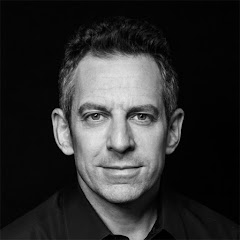 Sam Harris
Want to know something specific about what's covered?
We've already dissected every moment. Ask and we will deliver (with timestamps).
Key Moments
Russ Roberts discusses the limits of economics for complex decisions and the importance of recognizing intangible values beyond utility.
Key Insights
Economics as a science often oversimplifies complex human behaviors and values by focusing on quantifiable maximization.
Distinguishing between 'tame' problems with clear solutions and 'wild' problems that are ill-defined and transformative is crucial for decision-making.
Techniques like decision analysis can be useful but are limited when dealing with immeasurable aspects of life such as love, belonging, and personal identity.
Great books and education should focus on 'kindling the fire' of the mind through critical engagement, not merely filling it with information.
Many significant life decisions, like marriage or having children, involve leaps of faith and self-transformation that cannot be captured by cost-benefit analysis.
Recognizing the 'incommensurability' of certain goods and values, and the potential for free-riding, is essential for ethical decision-making.
THE LIMITS OF ECONOMIC ANALYSIS
Roberts critiques economics as a discipline, particularly its tendency to model human behavior through mathematical maximization. While acknowledging its utility in understanding choice under constraints and market dynamics, he argues it falls short in capturing what truly matters to humans: belonging, dignity, and significance. The economist's focus on aggregating pleasures and pains, a utilitarian calculus, is deemed insufficient for deeply personal and qualitative experiences like love or familial bonds, suggesting a need for alternative ways of thinking.
DISTINGUISHING WILD VERSUS TAME PROBLEMS
A core concept from Roberts' book, 'Wild Problems,' is the distinction between 'tame' and 'wild' problems. Tame problems, like navigation or choosing a movie, can often be solved with data, algorithms, and existing decision-making tools. Wild problems, however, are complex, ill-defined, and transformative. These include decisions about marriage, career paths, or having children, where data is scarce, experiences are difficult to share, and the decision itself alters the decision-maker, rendering traditional analytical approaches inadequate.
DARWIN'S DILEMMA AND THE NATURE OF COMMITMENT
Roberts uses Charles Darwin's humorous and ultimately flawed pro-con list for marriage as an example of a 'tame' approach to a 'wild' problem. Darwin's rational analysis, focusing on practicalities and neglecting emotional depth, ultimately gives way to an intuitive leap. This highlights how significant decisions often involve aspects of identity and future self-creation that cannot be quantified, suggesting that a person's sense of self and desired future identity should guide these choices more than a simple summation of potential pleasures and pains.
THE TRANSFORMATIVE POWER OF EDUCATION AND BOOKS
Roberts emphasizes that true education is not about information transfer but about 'kindling the fire' of the mind, a concept often lost in modern schooling. He advocates for engaging with great texts under the guidance of skilled teachers, fostering critical thinking, and learning how to converse with profound ideas across time. Books are presented as powerful technologies for this, offering a dialogue with wise individuals that can lead to personal transformation and a deeper understanding of oneself and the world.
CHALLENGES IN DECISION ANALYSIS AND PROBABILISTIC THINKING
The conversation touches upon decision analysis, a tool that attempts to systematize probabilistic thinking and integrate information for more rational choices. While acknowledging its value, Roberts raises concerns about its limitations, particularly in 'wild' problems where the most important factors are immeasurable or intangible. The Stanford professor Ron Howard's exercise of assigning probabilities to exam answers is cited as a powerful lesson in never being 100% certain, underscoring the inherent uncertainty in many life decisions.
INCOMMENSURABILITY, FREE-RIDING, AND ETHICAL CHOICES
Roberts argues that many goods and values are 'incommensurate,' meaning they cannot be simply added up or compared on a single scale, challenging the foundations of utilitarianism. He discusses the temptation to 'free-ride' on others' efforts, especially in relationships like marriage, and emphasizes that ethical considerations and commitments often transcend narrow self-interest. Rejecting the idea that the 'best' decision is one that maximizes personal happiness, he posits that living a virtuous and meaningful life involves recognizing and honoring values that cannot be easily quantified.
Mentioned in This Episode
●Software & Apps
●Organizations
●Books
●People Referenced
Common Questions
Tame problems can be solved using data, algorithms, and standard decision-making tools, like choosing a movie or navigating traffic. Wild problems, such as choosing a spouse or career, involve uncertainty, deep personal change, and are not easily solvable with data, often misleadingly quantifiable elements.
Topics
Mentioned in this video
A research institution at Stanford where Russ Roberts is a research fellow.
Where Russ Roberts was trained as an academic economist.
A university where Russ Roberts taught economics.
A university where Russ Roberts taught economics.
A liberal arts college in Jerusalem with a Core Curriculum in philosophy, history, and great books, where Russ Roberts serves as president.
Host of the Making Sense podcast and author. He is discussing his background, interests, and the implications of decision-making with Russ Roberts.
An economist whose works, 'The Theory of Moral Sentiments' and implicitly 'The Wealth of Nations', are discussed in relation to economic thinking and ethics.
A professor at Stanford who taught a unique exam where students assigned probabilities to their answers, illustrating the importance of acknowledging uncertainty.
Russ Roberts' most recent book, which is the main topic of the conversation, focusing on 'wild' vs. 'tame' problems and decision-making.
One of Russ Roberts' five books, focusing on Adam Smith's ideas.
Adam Smith's book discussed for its insights into ethical behavior and the life well-lived, contrasting with purely self-interested economic models.
More from Sam Harris
View all 304 summaries 30 min
Can AI Cure Loneliness?
 25 min
Why Is Everyone So Unhappy?
 27 min
Is America Heading for a Debt Crisis? An Economist Explains
 27 min
Is America Heading for a Debt Crisis? An Economist Explains
Ask anything from this episode.
Save it, chat with it, and connect it to Claude or ChatGPT. Get cited answers from the actual content — and build your own knowledge base of every podcast and video you care about.
Get Started Free