Key Moments
Secret History #1: How Power Works (4K Re-Upload with Audio Fixed)
 Predictive History
Want to know something specific about what's covered?
We've already dissected every moment. Ask and we will deliver (with timestamps).
Key Moments
The course framework: understanding power via geopolitics, economics, and history to reveal 'secret history' and achieve liberation.
Key Insights
Reality is a construct of perception, not objective truth (Kantian phenomena vs. noumena).
Historical narratives are often implanted by powerful entities; true history is a 'secret history'.
Money creation by banks is not based on scarcity but on creating an illusion of value and incentivizing work.
Modern concepts of the 'individual' and 'nation-state' are relatively new constructs, unlike historical collective focus.
The dominant scientific worldview, emphasizing individual agency and rationalism, may be less accurate than older polytheistic views regarding the nature of power and fate.
Education systems, particularly mandatory schooling, function as tools for 'brainwashing' to instill belief in concepts like the nation-state and obedience.
THE NATURE OF REALITY AND KNOWLEDGE
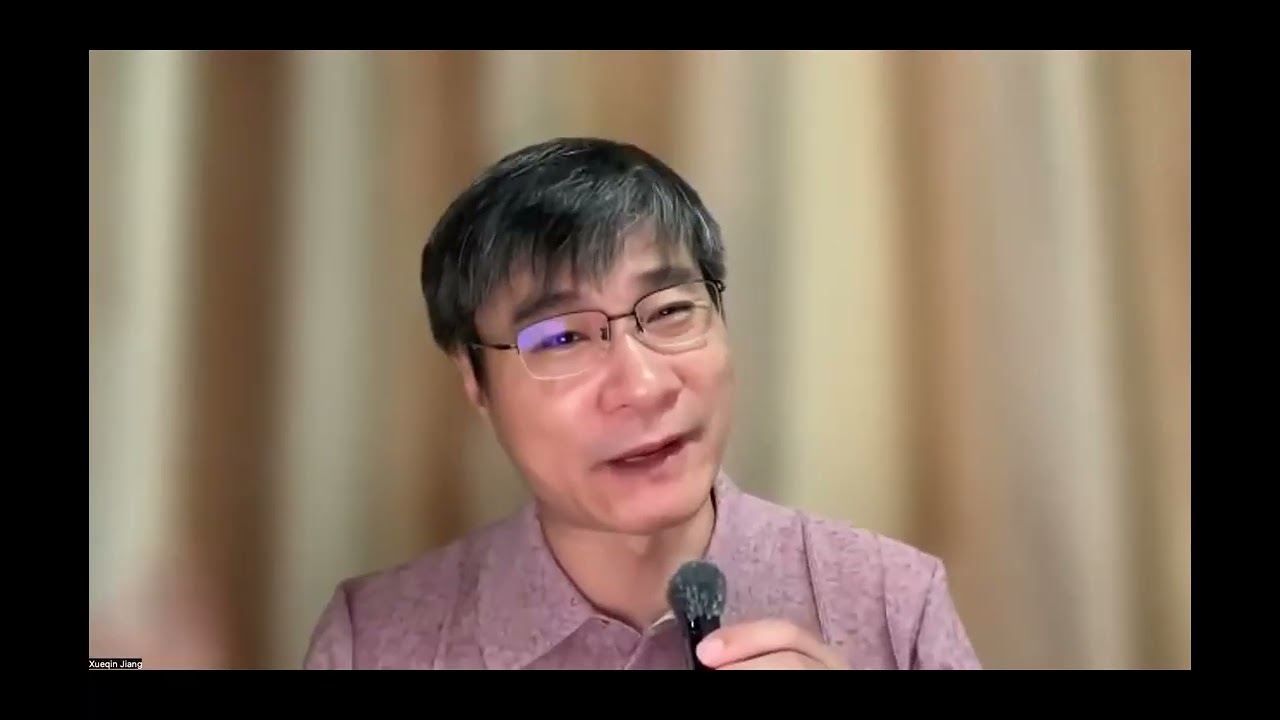
Professor Jiang introduces Immanuel Kant's philosophy, stating that objective reality (noumena) is unknowable. We perceive reality through our senses, which transform it into phenomena – the world as it appears to us. Concepts like time and space are constructs our minds use to process this information. Therefore, reality is what we collectively imagine it to be, requiring us to augment our imagination to see the world more clearly. This course focuses on 'how to think,' not 'what to think,' by analyzing the past, present, and future to construct a more objective, though imperfect, reality.
GEOPOLITICS AND PREDICTIVE MODELING
The course will analyze present-day geopolitics to understand current events like wars in the Middle East and Ukraine. By formulating analytical models of geopolitical dynamics, the aim is to make predictions about the future. This method is compared to testing artificial intelligence models against reality. The success of these predictions will validate or invalidate the analytical models. This process is part of a larger project to uncover the 'secret history of the world,' suggesting that commonly accepted historical accounts are often fabricated narratives imposed by powerful figures.
THE MECHANICS OF MONEY AND POWER
Money is presented not as a scarce resource but as a construct of power. Banks, through mechanisms like fractional reserve banking, can create money seemingly out of nothing by lending out deposited funds. Historically, this system originated from merchants using gold receipts as contracts, effectively multiplying the perceived value beyond the actual gold. This ability to create 'money' challenges the notion of scarcity as the cause of poverty and inequality, suggesting these are artificial conditions maintained to incentivize work and maintain the illusion of money's value.
THE HISTORICAL EVOLUTION OF POWER STRUCTURES
The lecture traces the evolution of financial systems from merchant trade to modern central banking. Early banks dealt in gold, issuing receipts that facilitated trade but also allowed for over-issuance. Problems like bank runs and the risk of lending to unreliable kings led to the formation of cartels and eventually central banking. The core concept of power is identified as the ability to turn 'nothing into everything,' exemplified by money creation. This system is designed to make individuals work hard by creating artificial scarcity and misery.
THE CONCEPT OF THE INDIVIDUAL AND HAPPINESS
The modern focus on individual happiness is contrasted with historical emphasis on collective well-being. In the past, wealth was often displayed through communal feasts, highlighting generosity and reputation within the community. The idea of the 'individual' as a distinct entity, separate from family and community, is a recent development. Historically, banishment, not death, was the worst punishment, signifying the importance of community belonging. Modern concepts of individual happiness, wealth accumulation, and personal freedom are presented as potentially misleading.
WORLDVIEWS: GODS VS, SCIENCE AND AGENCY
Two worldviews are presented: one where humans are subject to powerful, capricious gods and fate (polytheism), and another where humans are essentially synapses influenced by DNA and environment, capable of controlling their actions through memory manipulation (science/neuroscience). The course argues that the polytheistic view, despite suggesting a lack of control, better reflects reality and inspires individuals to live to their fullest potential ('eudaimonia'). The scientific worldview, while seemingly empowering, is argued to be a tool of power that promotes individual responsibility, discourages collective action, and leads to dependency on authority.
THE FUNCTION OF MODERN EDUCATION SYSTEMS
Mandatory public schooling, exemplified by historical societies like Sparta, the Aztecs, and Prussia, is framed not as a means of learning but as a system of 'brainwashing.' Schools are designed to instill obedience and loyalty to the concept of the 'nation-state.' This is achieved by separating children from their parents, creating insecurity, and positioning the teacher as a trusted authority. The curriculum, including language, history, and geography, serves to implant a false sense of national identity, creating a populace willing to serve the state.
THE ORIGINS OF MODERN CONCEPTS
The course posits that the modern concepts of money, the individual, and the nation-state originated from the revolution in thought brought about by monotheism. These concepts, though powerful and pervasive, are presented as artificial constructs rather than inherent realities. Power, in this context, is akin to alchemy – the ability to turn 'nothing into everything,' creating value and meaning where none intrinsically exists. This system has led to lives that are perceived as miserable, despite the illusion of progress.
RECLAIMING IMAGINATION AND CONTROL
The current system, built on these artificial constructs, is presented as an accident of human imagination, not an inevitable progression. The lecture suggests that by understanding how these concepts were created and how power operates through them, individuals can gain control over human imagination. This understanding offers the potential to create a new system that fosters true human flourishing ('eudaimonia') rather than the manufactured pursuit of pleasure or obedience, thereby enabling genuine liberation.
Mentioned in This Episode
●Software & Apps
●Companies
●Organizations
●Concepts
●People Referenced
Common Questions
Immanuel Kant's key idea presented is that we can never know objective reality (noumena). We perceive the world through our senses, which warp it into phenomena (things as they appear to us). Therefore, reality is essentially what we imagine it to be.
Topics
Mentioned in this video
Mentioned as one of the large Chinese banks that have become major global players by creating money to fund infrastructure projects, illustrating how banks create money.
Included in the list of major Chinese banks that exemplify how money can be created out of nothing to finance national infrastructure projects.
Cited as an example of Chinese banks that rapidly grew to become the largest in the world over the past 20 years through creating money to finance infrastructure, illustrating the mechanism of money creation.
Described as a system developed from early cartels and inner marriages among banks to mitigate risks like bank runs and a king refusing to repay loans. It is presented as the controlling force behind the modern world and its economy.
A Greek concept meaning 'flourishing' or living life to the best of one's ability, contrasted with the modern pursuit of pleasure. It is presented as a more inspiring ideal from the first worldview.
Referred to as 'the things in themselves,' representing the objective reality that is unknowable because it cannot be accessed directly by human senses.
Grouped with neuroscience and psychiatry as part of the second worldview that the speaker argues is fundamentally wrong, despite being the basis of modern education and society.
More from Predictive History
View all 183 summaries 100 min
Global Meet-Up #2 (Los Angeles): The "End of the World" US Tour
 156 min
Global Meet-Up #2 (New York City): The Eschatology of Capitalism
 183 min
Emergency Discussion #2: The Blackmailing of Spain
 146 min
Emergency Discussion #1: Spain Wins World Cup, US Plans Ground Invasion of Iran
Ask anything from this episode.
Save it, chat with it, and connect it to Claude or ChatGPT. Get cited answers from the actual content — and build your own knowledge base of every podcast and video you care about.
Get Started Free