Key Moments
Sam Harris & Jordan Peterson in Vancouver 2018 (with Bret Weinstein moderating) — Night One
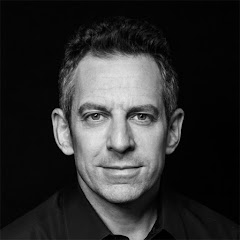 Sam Harris
Want to know something specific about what's covered?
We've already dissected every moment. Ask and we will deliver (with timestamps).
Key Moments
Sam Harris and Jordan Peterson discuss morality, religion, and the search for objective truth.
Key Insights
Agreement on the dangers of both moral relativism and dogmatic absolutism.
Free speech is considered crucial for correcting dogmatic excesses and dogmatic error.
Religious dogma's dangers lie more in its dogmatic nature than in religion itself.
The utility of religious texts as heuristics for navigating complex life choices.
The challenge of grounding values in objective facts versus interpretive frameworks.
Discussion on the nature of God, prayer, and the potential for religious ideas to offer psychological truths.
THE HISTORICAL MOMENT AND THE NEED FOR CLARITY
Moderator Bret Weinstein introduces the discussion between Sam Harris and Jordan Peterson, framing it as a potentially historical event in a time of institutional breakdown. He emphasizes the shared goal of these figures in offering alternative ways of making sense of the world and highlights the responsibility of both the speakers and the audience to engage in deep discussion, urging participants to avoid filming to foster maximal freedom of expression.
SEEKING SOLID GROUND FOR ETHICS: AGREEMENT ON CATASTROPHES
Harris and Peterson establish significant agreement on foundational principles. Both identify two major pitfalls to avoid: religious fundamentalism (or dogmatism more broadly) and moral relativism. Peterson frames these as a 'pathology of order' and a 'pathology of chaos,' respectively. They concur that a solid ethical structure is crucial and that a morality that aims to reduce unnecessary suffering and promote well-being is a shared priority, though they may conceptualize 'well-being' slightly differently.
MORAL REALISM AND THE CRUCIALITY OF FREE SPEECH
Peterson articulates a position as a moral realist, asserting that genuine right and wrong answers to moral questions exist and are discoverable. They agree that both secular and religious totalitarianism share a core problem: dogmatism, which prevents the revision of ideas through conversation and necessitates enforcement by force. Consequently, they strongly agree on the primacy of free speech as the mechanism to correct totalitarian or dogmatic excesses and rectify errors.
THE UTILITY AND DANGER OF RELIGIOUS HEURISTICS
The conversation explores the functional aspects of religious texts, with Peterson suggesting they might act as heuristics, offering simplified ways for individuals to navigate complex life choices and potentially increasing well-being. While acknowledging the evolutionary advantage these stories might confer, they also grapple with the dangers of outdated or barbaric passages within these texts, particularly those that cannot be easily updated or interpreted metaphorically, citing examples like slavery and stoning.
INTERPRETIVE FRAMEWORKS AND THE NATURE OF TRUTH
A significant portion of the discussion focuses on the difficulty of deriving values purely from facts. Harris questions whether an a priori interpretive structure is necessary to mediate between facts and values, suggesting that stories or personalities can serve this role. He posits that religious texts might function as such structures, even if they are not literally true but metaphorically useful. Peterson counters that while stories are powerful, fundamental intuitions about reality and truth, which are deeper than religion, are essential for communication and sanity.
THE CONCEPT OF GOD AND THE SEARCH FOR UNIVERSAL PRINCIPLES
The dialogue delves into the nature of God. Peterson offers a complex, multifaceted definition of God, emphasizing transcendent reality, the evolution of consciousness, and guiding principles for personal and societal development. Harris questions whether this aligns with the common understanding of God, particularly regarding personal care for individual actions like masturbation. They debate the mechanism of prayer and the possibility of interpreting religious ideas as functional heuristics without supernatural belief, ultimately acknowledging the profound differences in cross-cultural religious interpretations and the challenge of finding universal moral principles.
Mentioned in This Episode
●Organizations
●Books
●Concepts
●People Referenced
Common Questions
While both agree on avoiding moral fundamentalism and relativism, Harris believes ethics can be grounded in objective facts about well-being, whereas Peterson argues that an a priori interpretive structure (often in the form of stories or personalities) is necessary to mediate between facts and values.
Topics
Mentioned in this video
A psychologist mentioned for his method of discussion: telling someone what you think they think until they agree it reflects their view, useful for intimate partners.
Used as an example of an atheist totalitarian leader whose regime resembled a religion due to its personality cult and dogmatism, demonstrating that atheism does not preclude atrocities.
Mentioned in the context of spiritual experiences and also regarding the New Testament's stance on slavery and the idea of truthful speech.
Mentioned in the context of Nazism, with Harris stating Hitler was not an atheist and spoke of a 'divine plan,' suggesting even secular-appearing tyrannies can have religious or quasi-religious elements.
His thinking, rooted in the idea that culture corrupts humans and that people commit atrocities due to cultural influence, is contrasted with Jane Goodall's findings on chimpanzees.
His observation that encountering other belief systems can shatter one's own, leading to postmodern nihilism, is referenced in the context of reconciling diverse religious truths.
Her discovery about chimpanzee behavior at Gombe is cited to illustrate that tribal violence and atrocities are not unique to humans or religious dogma, but have deeper evolutionary roots in primates.
Brought up for his philosophical claim about a priori interpretive structures that mediate between individuals and facts, supporting the idea that values cannot be directly derived from facts.
Author of 'Crime and Punishment' which features the character Raskolnikov, used by Jordan Peterson to illustrate the moral vacuum he believes atheism creates.
His philosophical work, particularly 'postmodernist readings' of it, is referenced by Peterson as an example of ideas that wrongly suggest scientific truths are not fundamental, contrasted with the enduring reality of protons.
The founder of Mormonism, mentioned as someone whose claim of seeing golden tablets is not a 'respectable intuition' in the same way as fundamental moral truths, according to Sam Harris.
Grouped with 'Enlightenment types' who Peterson believes 'radically overestimate' the degree to which rationality alone brought about progress, underplaying the lengthy developmental history of such advancements.
Used by Harris as an analogy for how Peterson's redefinition of religious terms could be seen as misleading, similar to how Chopra uses 'quantum spookiness' to justify pseudoscientific beliefs, even if he doesn't explicitly endorse related products.
Mentioned as an example of a secular totalitarian state with pernicious dogmas, comparable to religious fundamentalism in its negative effects.
Used as a contemporary example of how religious doctrines (Islam) can motivate 'clearly good people' to commit unthinkable atrocities, including taking sex slaves.
The research site where Jane Goodall observed chimpanzees engaging in 'raiding parties' and tearing interlopers to pieces, challenging Rousseauian ideas about human-unique aggression.
Cited as a modern example of a religious cult, even without traditional supernatural claims, emphasizing that dogmatism and cult-like behavior are the core issues, not necessarily the belief in a 'next life.'
Presented as a document that 'supersedes' the Old Testament's harsh laws, though its own stance on issues like slavery is debated.
Jordan Peterson's book, where he sought to address the 'postmodern problem' of multiple interpretations by using conciliation across diverse systems to find repeating patterns, similar to scientific convergence.
Sam Harris's book, frequently referenced as the source of his arguments for grounding ethics in objective well-being and identifying moral realism.
Referenced as another catastrophic example of human suffering that should be universally condemned.
Cited as a religious text whose claims (e.g., cutting off a thief's hand, condoning slavery) can be unambiguously interpreted to support barbaric practices, according to Sam Harris.
Referenced in discussions about literal interpretation, slavery, and the developmental narrative of Christian scripture.
Mentioned as a source of Islamic tradition where different interpretations lead to varying stances on issues like stem-cell research.
Mentioned as including the elemental claim that one should not utter the name of God, because defining it too tightly loses its essence, connecting to Peterson's redefinition of 'God.'
Discussed as a 'hallucinogenic nightmare' read psychologically, where the hero is born at the darkest point and redemption is found in truthful speech; however, Harris criticizes literal interpretations anticipating a cataclysmic end.
Cited as an example of a religious system with completely different stories and psychological imports compared to Christianity, particularly regarding the concept of good and evil.
Used as an example of a belief system founded on intuitions (Joseph Smith's golden tablets) that Harris considers less respectable or evidence-based compared to universal moral intuitions.
Identified as a secular totalitarian state whose dogmas were as pernicious as religious ones, showing dogmatism is the core problem, not necessarily religion itself.
Mentioned alongside Hinduism as an Eastern religious tradition that views 'evil' differently, often as ignorance, posing a challenge to the universality of Western moral concepts.
More from Sam Harris
View all 304 summaries 30 min
Can AI Cure Loneliness?
 25 min
Why Is Everyone So Unhappy?
 27 min
Is America Heading for a Debt Crisis? An Economist Explains
 27 min
Is America Heading for a Debt Crisis? An Economist Explains
Ask anything from this episode.
Save it, chat with it, and connect it to Claude or ChatGPT. Get cited answers from the actual content — and build your own knowledge base of every podcast and video you care about.
Get Started Free