Key Moments
Sam Harris & Dan Harris: This Is How to Stay Calm in a Turbulent World
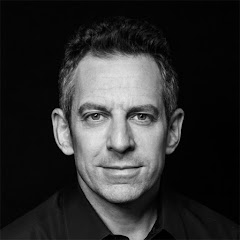 Sam Harris
Want to know something specific about what's covered?
We've already dissected every moment. Ask and we will deliver (with timestamps).
Key Moments
Sam Harris and Dan Harris discuss meditation, impermanence, guns, and the nature of consciousness, offering guidance on staying calm.
Key Insights
Meditation and mindfulness are crucial tools for managing stress and cultivating equanimity in the face of life's challenges, such as natural disasters.
Understanding impermanence can help detach from material possessions and reduce suffering when loss occurs.
Possessing a gun can be ethically justified as a means of self-defense, especially for public figures who receive threats, serving as an 'equalizer' against potential attackers.
Social media algorithms can amplify negative aspects of human psychology, leading to a skewed and cynical view of humanity, making stepping away a significant 'life hack'.
Cultivating compassion, even for political opponents, is essential, and viewing individuals as 'forces of nature' rather than personalizing hatred can be effective.
The concept of free will is presented as an illusion, with actions stemming from prior causes and conditions; however, practicing mindfulness can still lead to a sense of freedom and better decision-making.
The ultimate realization in contemplative practice is the absence of a separate, enduring self, leading to a profound sense of freedom and happiness.
Non-dual mindfulness, which recognizes the absence of a center to experience, offers greater freedom than dualistic mindfulness, which may still harbor an agenda to change unpleasant experiences.
IMPERMANENCE AND EQUANIMITY IN CATASTROPHE
Sam Harris shares his experience evacuating during the LA fires, highlighting how meditation provided a sense of equanimity. He emphasizes that recognizing the inherent impermanence of all things – health, relationships, possessions – is crucial for managing distress. While acknowledging the difficulty of detaching from deeply personal losses, Harris suggests that framing a current problem as significantly better than an adjacent, worse possibility can foster gratitude and reduce suffering. This perspective, rooted in both Buddhist mindfulness and Stoic reframing, helps to contextualize challenges.
THE ETHICS OF VIOLENCE AND THE ROLE OF A GUN
The conversation delves into the ethics of violence, with Harris arguing against pacifism as a form of outsourcing responsibility for defense. He asserts that in situations where immediate self-defense is necessary, a firearm can serve as an 'equalizer,' particularly for those who are not physically imposing or face multiple attackers. Harris explains that his personal stance on gun ownership is informed by his experiences with death threats and the understanding that authorities may not always be able to provide immediate protection during extreme civil unrest, such as looting during the fires.
THE DIGITAL AGE AND THE CORROSION OF HUMAN PSYCHOLOGY
Harris expresses deep concern over the negative impact of social media on human psychology, describing it as a 'funhouse mirror' that amplifies outrage, superficiality, and a 'subterranean hatred' of public figures. His decision to delete his Twitter account is cited as a significant 'life hack' that improved his worldview by reducing exposure to a distorted perception of humanity. He posits that algorithms often favor the most extreme voices, further exacerbating societal division and cynicism, making it vital to curate one's information intake.
COMPASSION AND THE CHALLENGE OF POLITICAL DISAGREEMENT
Addressing political polarization, Harris suggests cultivating compassion, not as approval, but as a non-hatred stance that makes constructive action more feasible. He proposes viewing figures like Donald Trump not as embodiments of evil to be hated, but as 'forces of nature' or 'malfunctioning robots' acting according to their conditioning. This perspective helps to depersonalize political animosity and focus on mitigating damage, rather than getting entangled in emotional reactivity. He acknowledges the persuasive and entertaining aspects of Trump's persona while maintaining a clear focus on his detrimental influence.
FREE WILL AS AN ILLUSION AND PRACTICAL FREEDOM
The discussion explores the concept of free will, arguing that it is an illusion stemming from a deterministic view of causality. Harris contends that our choices and preferences are products of genetic, environmental, and neurochemical factors, not an uncaused, independent agency. Despite this, the practice of mindfulness is presented as a means to cultivate a sense of freedom. By becoming aware of one's thoughts and emotions without being completely identified with them, individuals gain the capacity to make more deliberate, less reactive choices, effectively becoming their own 'wise, compassionate best friend.'
WAKING UP: THE RECOGNITION OF NON-DUALITY
The conversation shifts to the core of contemplative practice: the realization of non-duality, the absence of a separate, enduring self. Harris explains that while dualistic mindfulness, focusing on observing the breath or sounds, is a valuable first step, the ultimate insight reveals that there is no central 'I' doing the observing. This is not about eliminating an existing self but recognizing that the sense of self is a misperception, an illusion. Practices like looking for one's head or turning attention back on itself can facilitate glimpses of this 'egolessness,' a state of pure consciousness prior to subject-object division.
MEDITATION AND THE NATURE OF CONSCIOUSNESS
Meditative practice, especially when conducted with eyes open, can help dissolve the illusion of a separate self and the dualistic perception of a subject experiencing an object. Harris distinguishes between dualistic mindfulness, which may aim to change experience, and non-dual mindfulness, which recognizes the inherent freedom in consciousness regardless of its content. Even in states of anger or anxiety, acknowledging the lack of a central 'me' experiencing the problem leads to a profound freedom. The Waking Up app is designed to guide users through these concepts and practices, emphasizing that the goal of recognizing consciousness's true nature is not distant but already present.
Mentioned in This Episode
●Products
●Software & Apps
●Organizations
●Books
●Drugs & Medications
●Concepts
●People Referenced
Common Questions
Meditation allowed Sam Harris to maintain equanimity and let go of attachment to material possessions, even when he believed his home was burning. It helped him reframe the situation by realizing it could have been much worse and focusing on the present moment.
Topics
Mentioned in this video
A philosopher and spiritual teacher, influenced by Zen, who developed the 'no-head' paradigm for non-dual insight.
An Irish philosopher known for his idealism, whose ideas Samuel Johnson attempted to refute.
A prominent Western Buddhist teacher, mentioned in the context of understanding non-attachment and his contributions to the Waking Up app.
A philosophical and spiritual tradition whose teachings on impermanence and non-attachment were applied by Sam Harris during the fire crisis.
A global framework that Sam Harris believes is being undermined by certain political forces, expressing concern for its stability.
More from Sam Harris
View all 302 summaries 27 min
Is America Heading for a Debt Crisis? An Economist Explains
 27 min
Is America Heading for a Debt Crisis? An Economist Explains
 34 min
Is Psychedelic Therapy Ready for FDA Approval?
 26 min
You Lose Interest the Moment You Realize It's AI
Ask anything from this episode.
Save it, chat with it, and connect it to Claude or ChatGPT. Get cited answers from the actual content — and build your own knowledge base of every podcast and video you care about.
Get Started Free