Key Moments
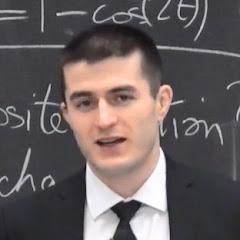
Sacha Arnoud, Director of Engineering, Waymo - MIT Self-Driving Cars
 Lex Fridman
Key Moments
Waymo's Director of Engineering discusses deep learning's role in self-driving cars, covering technical aspects, industrial challenges, and future directions.
Key Insights
Self-driving technology has the potential to revolutionize mobility by enhancing safety, accessibility, and efficiency.
Developing a production-ready self-driving system requires significant effort beyond algorithms, focusing on industrial-scale engineering and rigorous testing over many iterations.
Deep learning has been instrumental in advancing Waymo's capabilities, with early breakthroughs in analyzing street imagery for mapping and later in real-time perception for autonomous driving.
Perception in self-driving is a complex system that integrates sensor data with prior knowledge to build a comprehensive understanding of the environment, going beyond simple obstacle avoidance to predict behaviors.
Robust testing, including real-world driving, simulation, and structured testing, is crucial for validating the safety and reliability of machine learning systems in self-driving cars.
The transition from lab-proven technology to a production-grade system involves a '10x' improvement in capabilities, team size, sensor quality, and overall system quality.
THE POTENTIAL AND MOTIVATION FOR SELF-DRIVING CARS
Self-driving technology promises to fundamentally change mobility by significantly improving safety, as human error causes most crashes. It also enhances accessibility and efficiency, allowing people to reclaim commute time and potentially redesign urban environments and traffic flow. Waymo's mission is to make transportation safe and easy for people and goods.
THE HISTORICAL DEVELOPMENT OF WAYMO AND DEEP LEARNING
Waymo's journey began nearly a decade ago as a Google project, initially focused on proving the feasibility of self-driving by tackling challenging routes. Early milestones included autonomously driving 100 loops in Northern California, navigating diverse conditions like mountains, highways, and dense urban areas. The subsequent evolution involved extensive iteration and development, leading to the significant achievement of removing safety drivers in 2017.
THE '90% TO GO' CHALLENGE AND THE ROLE OF DEEP LEARNING
Transitioning from a functional demo to a production-ready system is a monumental task, often described as having '90% left to go when you're 90% done.' This requires a '10x' improvement in technology, team size, sensor capabilities, and overall system quality. Deep learning has been critical, with breakthroughs in areas like computer vision and speech understanding by teams like Google Brain enabling advancements in various applications, including Waymo's perception systems.
PERCEPTION: UNDERSTANDING THE ENVIRONMENT FOR AUTONOMOUS DRIVING
Perception is the core system enabling a self-driving car to understand its surroundings by integrating sensor data (cameras, lidar, radar) with prior knowledge from detailed maps. This goes beyond basic object detection to a deeper semantic understanding, predicting the behavior of other agents (cars, pedestrians, cyclists) and anticipating complex interactions, such as a car swerving to avoid a cyclist. This level of understanding is crucial for safe navigation in dynamic environments.
DEEP LEARNING TECHNIQUES FOR PERCEPTION AND SCENE UNDERSTANDING
Deep learning techniques, particularly convolutional neural networks, are applied to process sensor data. Initial work involved projecting sensor data into 2D planes like top-down or driver views for segmentation and object detection. More advanced methods, like single-shot detectors and embeddings, are used for efficiency and to capture semantic meaning. Handling deformable objects like pedestrians and understanding contextual cues (e.g., emergency lights, parked car doors) are key challenges addressed by these models.
INDUSTRIALIZING MACHINE LEARNING FOR SCALABLE SELF-DRIVING
Building a production-scale self-driving system requires robust infrastructure and processes beyond algorithms. This includes massive labeling efforts for supervised learning, significant computational power for training and inference, and the development of sophisticated tools like TensorFlow and specialized hardware accelerators (TPUs). Addressing challenges like sensor noise, reflections, and adversarial scenarios necessitates a multi-layered approach with redundant sensor systems and deep semantic understanding.
RIGOROUS TESTING AND VALIDATION FOR SAFETY
Ensuring safety and reliability involves a comprehensive testing strategy. This includes extensive real-world driving to gather data across millions of miles and diverse conditions, advanced simulation to replay scenarios and test software iterations rapidly, and structured testing at dedicated facilities to recreate rare but critical situations. These efforts aim to validate the machine learning models and the entire self-driving stack, ensuring the system can generalize and operate safely across an infinite range of real-world events.
FUTURE DIRECTIONS AND ONGOING CHALLENGES
Waymo continues to expand its operational design domain, testing in more complex urban environments and diverse weather conditions. Future advancements will focus on deeper semantic understanding, enabling cars to navigate scenarios like chaotic roundabouts that currently require significant human judgment and nuanced social cues. The ongoing challenge lies in developing systems that can truly generalize and reason about the intricacies of the real world.
Mentioned in This Episode
●Products
●Software & Apps
●Companies
●Organizations
●People Referenced
Common Questions
Waymo's fundamental mission is to make it safe and easy to move people and things around using self-driving technology. This aims to improve safety by reducing human error, increase mobility access and affordability, and enhance collective efficiency by freeing up commute time.
Topics
Mentioned in this video
The latest generation of Waymo's self-driving vehicle, based on this model.
Proprietary hardware accelerators developed by Google for efficient training and inference of deep learning models.
A Google service providing panoramic views of streets, used for extracting mapping data and early deep learning development.
A location where Waymo conducted early autonomous driving tests.
An area in California with small roads, two-way traffic, and cliffs used for early Waymo testing.
A region in California's Sierras where Waymo conducted early autonomous driving tests in various weather conditions.
A city where Street View imagery was used to detect and transcribe house numbers, showcasing early deep learning applications.
State where Waymo's testing facility is located and where early testing took place.
A dense urban area where Waymo conducted early autonomous driving tests, presenting unique challenges.
Area in Arizona where Waymo has been continuously operating and expanding its self-driving car testing.
A constrained geographical area near Phoenix, Arizona, where Waymo initially focused its driverless testing.
A city where Street View imagery was used for mapping purposes, demonstrating deep learning impact.
A city in South Africa where deep learning work has significantly improved mapping quality.
Famous street in San Francisco, known for its sharp turns, used in early Waymo testing.
The original name of the Google project that eventually became Waymo.
A machine learning ecosystem developed by Google, used for programming ML models, encoding architectures, and managing data at scale.
An internal Google project that used deep learning to analyze Street View imagery for mapping purposes.
A mapping service from Google that benefits from deep learning applications like street number and name extraction.
More from Lex Fridman
View all 549 summaries 259 min
FFmpeg: The Incredible Technology Behind Video on the Internet | Lex Fridman Podcast #496
 124 min
Vikings, Ragnar, Berserkers, Valhalla & the Warriors of the Viking Age | Lex Fridman Podcast #495
 146 min
Jensen Huang: NVIDIA - The $4 Trillion Company & the AI Revolution | Lex Fridman Podcast #494
 311 min
Jeff Kaplan: World of Warcraft, Overwatch, Blizzard, and Future of Gaming | Lex Fridman Podcast #493
Ask anything from this episode.
Save it, chat with it, and connect it to Claude or ChatGPT. Get cited answers from the actual content — and build your own knowledge base of every podcast and video you care about.
Get Started Free