Key Moments
Ronald Sullivan: The Ideal of Justice in the Face of Controversy and Evil | Lex Fridman Podcast #170
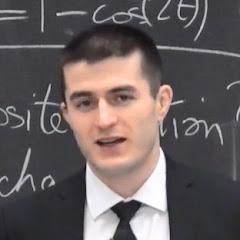 Lex Fridman
Key Moments
Law professor Ronald Sullivan discusses ideal justice, defending unpopular clients, and academic freedom.
Key Insights
The importance of defending unpopular clients to uphold the integrity of the criminal justice system.
The controversy at Harvard regarding Sullivan's representation of Harvey Weinstein and its implications for academic freedom.
The concept of 'unsafe spaces' in universities and the role of civil discourse in challenging ideas.
The nature of evil, its contingent origins, and the individual's responsibility for choices.
The complexities of the criminal justice system, acknowledging both its strengths (liberty privilege) and weaknesses (racial disparities).
The profound emotional and psychological toll of representing wrongfully convicted individuals.
The challenges of jury selection and the ideal of an unbiased jury.
The narrative power of storytelling in legal advocacy.
The tragic story of Aaron Hernandez and the loss of potential.
The philosophical and personal reflections on mortality, the meaning of life, and continuous learning.
THE PRINCIPLE OF DEFENDING THE UNPOPULAR
Ronald Sullivan emphasizes his commitment to taking on challenging and unpopular cases, particularly those involving defendants whom society deems least palatable. He articulates a core principle: defending such individuals is crucial for maintaining the fairness and integrity of the criminal justice system. By ensuring even those facing societal condemnation receive robust legal representation, society safeguards the rights and liberties of all citizens, preventing a gradual erosion of civil rights that could eventually affect everyone. This commitment mirrors historical examples where lawyers championed the rights of individuals like Ernesto Miranda, leading to foundational legal protections.
HARVARD'S CONTROVERSIAL DECISION AND ACADEMIC FREEDOM
Sullivan recounts the controversy at Harvard University when he joined the defense team for Harvey Weinstein. Despite his role as a faculty dean for undergraduate students, his legal representation sparked protests and a petition for his removal. Ultimately, Harvard administrators, succumbing to perceived student pressure, declined to renew his dean position rather than engaging in a robust defense of academic freedom. Sullivan critiques this decision as cowardly and a repudiation of the university's core mission, arguing it missed a vital teaching moment about due process and the right to a defense.
NAVIGATING THE CONCEPT OF 'UNSAFE SPACES' AND CIVIL DISCOURSE
The discussion delves into the notion of 'unsafe spaces' within universities. Sullivan acknowledges the psychological aspect of feeling disquiet but argues that universities, especially elite institutions, should challenge students to confront difficult ideas rather than shield them. He posits that learning to grapple with differing viewpoints, even uncomfortable ones, is essential for personal growth. Sullivan advocates for a strong tradition of civil discourse, drawing a line between respectful debate and uncivil behavior, asserting that the university's primary role is to facilitate the rigorous examination of challenging topics.
THE NATURE OF EVIL AND THE CONSTELLATION OF CHOICES
Sullivan explores the philosophical concept of evil, suggesting it is a category that does intellectual work for him, though its origins might be contingent on circumstances and predispositions rather than being solely genetic. He emphasizes that individuals still bear responsibility for their choices, even when faced with a 'constellation of bad choices' due to societal inequities. This perspective frames human actions not as predetermined but as outcomes influenced by a complex interplay of biology, environment, and personal decision-making, highlighting the tragedy of individuals with limited positive trajectories.
THE CRIMINAL JUSTICE SYSTEM: IDEALS VERSUS REALITY
Acknowledging the imperfections, Sullivan defends the American criminal justice system's core ideal of privileging liberty, referencing the principle that it's better for ten guilty individuals to go free than for one innocent person to be wrongly convicted. He discusses significant problems, particularly racial and class disparities, which he argues have become detrimental features rather than mere bugs. These inequities disproportionately affect people of color, leading to vastly different experiences from arrests to sentencing, underscoring the urgent need for systemic reform.
THE EMOTIONAL TOLL OF EXONERATING THE INNOCENT
Sullivan shares the profound emotional and psychological impact of his work representing wrongfully convicted individuals. He describes 'empathic representation,' where deep client relationships can lead to personal psychic injury, but also immense satisfaction. Witnessing clients endure decades of wrongful imprisonment, only to emerge with resilience and a lack of bitterness, is described as inspiring and a testament to human strength. This process highlights the legal system's capacity for error and the remarkable fortitude of those who overcome such profound injustice.
THE O.J. SIMPSON TRIAL AND THE POWER OF NARRATIVE
Reflecting on the O.J. Simpson trial, Sullivan identifies key lessons for legal advocacy. He points to the prosecution's failure to effectively communicate complex DNA science to a lay jury, a misstep Johnny Cochran masterfully exploited by framing the narrative in accessible terms. This case underscored that irrespective of scientific evidence, storytelling and constructing a compelling narrative are paramount in trial work. Sullivan also reiterates the fundamental trial advocacy rule: never ask a question to which you don't know the answer, as demonstrated by the courtroom spectacle of the ill-fitting glove.
THE TRAGEDY OF AARON HERNANDEZ AND MISSED POTENTIAL
Sullivan discusses his involvement in the Aaron Hernandez double murder trial, describing it as one of his 'impossible cases' due to the client's prior murder conviction being public knowledge. He reflects on Hernandez's charisma and potential, expressing sadness over his fate. While refraining from discussing specifics due to attorney-client privilege, he notes the prosecution's dismissed theory of 'gay rage' as offensive. Sullivan maintains his belief in Hernandez's innocence for the charges they defended and expresses that his death was a shock, highlighting the tragic loss of a remarkably talented athlete.
CHALLENGING MORTALITY AND THE MEANING OF EXISTENCE
Approaching his mid-50s, Sullivan contemplates mortality more frequently, viewing it not with fear but with acceptance, drawing strength from his Christian faith that death is not the end. This perspective shifts the focus to the present and the ongoing journey of life. He posits that the ultimate purpose of education is to explore fundamental questions: what it means to be human, why it is in our interest to do good, and to continuously seek answers through various disciplines like philosophy, economics, and the arts, viewing life as a lifelong endeavor of self-understanding.
ADVICE FOR YOUNG PEOPLE: EMBRACING INTELLECTUAL LIMITATIONS
Drawing on advice from a Harvard professor, Sullivan encourages young people to be willing to confront their intellectual limitations. In elite academic settings and life generally, encountering challenges and not fully grasping concepts can be daunting. He advises against retreating but rather embracing these difficulties, risking full effort even without guaranteed success. This willingness to face fears and push boundaries, he contends, leads to becoming a better student, a stronger human being, and ultimately, a more well-rounded individual capable of growth and resilience.
Mentioned in This Episode
●Software & Apps
●Companies
●Organizations
●Books
●Concepts
●People Referenced
Common Questions
Ronald Sullivan takes on unpopular cases as a matter of principle, believing that defending the rights and liberties of even the most disliked individuals is crucial for determining the quality of the criminal justice system as a whole. He argues that if the state can short-circuit the rights of one, it can eventually threaten anyone's rights, as exemplified by cases like Ernesto Miranda and the establishment of Miranda warnings. This commitment ensures that the legal system's best values are upheld for all citizens.
Topics
Mentioned in this video
The institution where Ronald Sullivan is a professor and where the controversy around his representation of Harvey Weinstein occurred, leading to widespread debate on academic freedom.
An article in The New Yorker magazine that allegedly exposed Harvey Weinstein's actions, shaping public opinion before Sullivan took the case.
The NFL football team Aaron Hernandez played for, making him a popular and well-known figure in Boston. Sullivan was part of Hernandez's legal defense team.
A major newspaper that published an op-ed about the controversy at Harvard involving Ronald Sullivan.
Another elite institution mentioned alongside Harvard, Yale, and MIT in the context of academic excellence and the challenges facing higher education.
One of Harvard College's residential houses where Ronald Sullivan served as faculty dean. His role was not renewed due to student protests over his representation of Harvey Weinstein.
Mentioned as the inspiration for Harvard's college system, which Ronald Sullivan's faculty dean role was a part of.
A premier university highlighted in the discussion about academic freedom and the challenges of student protest and 'cancel culture'.
Another prestigious university mentioned in comparison to MIT and Harvard, in the context of academic freedom and institutional decision-making.
Mentioned as the inspiration for Harvard's college system, where Ronald Sullivan served as faculty dean.
An online wine store, mentioned as a sponsor of the podcast.
An app that summarizes books, mentioned as a sponsor of the podcast.
A brand offering low-carb snacks, mentioned as a sponsor of the podcast.
A newspaper that published a letter signed by 52 Harvard Law School professors supporting Ronald Sullivan amidst the controversy.
A sponsor of the podcast.
A former Patriots football player who Ronald Sullivan defended in a double murder case. Hernandez was already convicted of a separate murder, making his defense highly challenging.
A man whose case led to the establishment of Miranda warnings, illustrating how unpopular clients' cases can vindicate civil liberties for everyone.
Second President of the United States, mentioned by Sullivan because national media compared him to Adams for taking controversial cases, though Sullivan considers it an inapt comparison.
A Harvard academic mentioned as fighting against 'cancel culture' and similar ideas, aligning with Sullivan's concerns about free speech in universities.
His tragic death in 2020 sparked widespread protests and brought into focus racial tensions and issues within the criminal justice system.
A defense attorney and friend of Ronald Sullivan, who brought Sullivan onto the Aaron Hernandez defense team. He also teaches at Sullivan's trial advocacy workshop.
A drug dealer who, in exchange for a deal, implicated Aaron Hernandez in a double murder, forming the central prosecution argument against Hernandez in the trial Sullivan handled.
Used as an extreme example of evil, prompting discussion on whether any individual is 'too evil' to deserve legal defense, to which Sullivan contends everyone deserves a fair process.
Dean of the Faculty of Arts and Sciences at Harvard, who Sullivan criticized for capitulating to student pressure regarding his position as faculty dean.
O.J. Simpson's defense attorney, praised for his skill in translating complex scientific evidence into an understandable narrative for the jury, famously coining "If the glove doesn't fit, you must acquit."
A Russian novelist whose works, particularly 'Crime and Punishment,' are valued by Sullivan for their deep philosophical exploration of the human condition.
Professor at Harvard Law School, known for taking on difficult and controversial cases, including Harvey Weinstein and Aaron Hernandez. He emphasizes the importance of protecting individual rights and ensuring a robust legal process for all.
The police officer on trial for the death of George Floyd, whose case raises questions about justice, racial tension, and the role of the legal process in the public eye.
Dean of Harvard College, criticized by Sullivan for yielding to student demands during the controversy with Harvey Weinstein's representation.
An American polymath whose book 'The Souls of Black Folk' profoundly influenced Sullivan and is recommended as a sophisticated introduction to Black American history.
A film producer facing multiple charges of sexual assault, whom Ronald Sullivan controversially represented. This decision led to significant criticism and conflict with Harvard University.
Former South African President and anti-apartheid revolutionary, quoted at the end of the podcast about the consequences of denying individuals the right to live life as they believe.
An early American Puritan minister whose statement, 'Better 10 guilty go free than one innocent person convicted,' embodies the American legal system's prioritization of liberty.
The subject of a highly publicized trial in the 1990s, used as an example of how racial tensions and a lawyer's narrative can influence a jury verdict.
A philosopher whose book, 'Contingency, Irony, and Solidarity,' influenced Ronald Sullivan's intellectual framework, particularly on the contingency of beliefs and the concept of imaginative solidarity.
A philosophy Sullivan mentions as influencing his stoic approach to pressure, not getting 'too high' or 'too low' despite the public scrutiny of his cases.
The legal right for individuals to remain silent when arrested, established due to the case of Ernesto Miranda, as an example of how defending unpopular clients protects broader civil rights.
A class taught by Ronald Sullivan at Harvard where students learn how to try cases, including the importance of storytelling in legal defense.
A novel by Fyodor Dostoevsky that profoundly meditates on the meaning of life and what it means to be human, captivating Sullivan since high school.
Another novel by Fyodor Dostoevsky, mentioned by Sullivan as part of Dostoevsky's impactful body of work.
A book by Richard Rorty that helped Sullivan grapple with the idea that deeply held beliefs are contingent but can still be held strongly, promoting intellectual humility and imaginative solidarity.
A pivotal set of essays by W.E.B. Du Bois, recommended by Sullivan for its profound sociological, philosophical, and historical analysis of the predicament of Black people in America.
More from Lex Fridman
View all 549 summaries 259 min
FFmpeg: The Incredible Technology Behind Video on the Internet | Lex Fridman Podcast #496
 124 min
Vikings, Ragnar, Berserkers, Valhalla & the Warriors of the Viking Age | Lex Fridman Podcast #495
 146 min
Jensen Huang: NVIDIA - The $4 Trillion Company & the AI Revolution | Lex Fridman Podcast #494
 311 min
Jeff Kaplan: World of Warcraft, Overwatch, Blizzard, and Future of Gaming | Lex Fridman Podcast #493
Ask anything from this episode.
Save it, chat with it, and connect it to Claude or ChatGPT. Get cited answers from the actual content — and build your own knowledge base of every podcast and video you care about.
Get Started Free