Key Moments
Roger Reaves: Smuggling Drugs for Pablo Escobar and the Medellin Cartel | Lex Fridman Podcast #199
 Lex Fridman
Key Moments
Roger Reaves, former drug smuggler for Pablo Escobar, shares his life of crime, adventure, and regret.
Key Insights
Roger Reaves describes his motivation for drug smuggling as primarily money, but also acknowledges the thrill and adventure involved.
He details his early, highly dangerous drug smuggling operations using small planes and later larger aircraft across continents.
Reaves recounts his experiences working with Pablo Escobar and Jorge Ochoa of the Medellin Cartel, emphasizing their business-like approach despite their criminal enterprises.
He highlights his close friendship with Barry Seal, detailing their shared adventures and Seal's eventual assassination.
Reaves shares harrowing accounts of escaping prison multiple times and enduring severe torture in a Mexican prison.
He expresses regret for the time lost with his family due to his criminal activities and imprisonment.
Reaves believes many in positions of power are worse than him and criticizes the 'war on drugs' for its human and financial costs.
His wife, Mari, emphasizes the steadfast nature of their love and her unwavering support throughout his life and imprisonments.
Despite his criminal past, Reaves insists he is not a 'bad man' as he never directly participated in violence and always supported his loved ones.
He found his wife Mari to be his anchor, and their enduring love is a testament to their strong spiritual connection.
Reaves reflects on the nature of good and evil, contrasting himself with more corrupt individuals in power and highlighting the potential harm of prohibitionist policies.
He believes the movie 'American Made' inaccurately portrayed Barry Seal and the events of that era.
Reaves' daughter, Mariam, wrote a touching poem expressing her love and understanding for her father despite his absence and criminal past.
INITIAL MOTIVATIONS AND EARLY OPERATIONS
Roger Reaves began his career in drug smuggling driven primarily by money, a motivation that persisted even when he had amassed significant wealth. He acknowledges the immense thrill and adventure that accompanied these dangerous ventures. His early operations involved flying small planes, like a Cessna 182, from Mexico to the United States, often landing on improvised strips or even highways. These initial trips were fraught with peril, including navigating treacherous weather, avoiding detection, and dealing with unreliable logistics, but they also provided him with experiences of exotic beauty and human connection, such as his first landing in Veracruz.
ASSOCIATIONS WITH THE MEDELLIN CARTEL
Reaves recounts his introduction to Jorge Ochoa and Pablo Escobar of the Medellin Cartel, describing them as gentlemen and business-like. He was impressed by their organization and their ability to ensure smooth operations, including a system that guaranteed replacement of lost cargo. While he met Escobar, he ultimately found Ochoa to be the 'brains' behind much of the operation. Reaves emphasizes that his dealings were purely about transporting drugs, distinguishing his role from the cartel leaders' involvement in violence, though he later expressed deep regret over Escobar's brutal actions.
RELATIONSHIP WITH BARRY SEAL
A significant part of Reaves' story involves his friendship with Barry Seal, an infamous smuggler and pilot. Reaves met Seal after Seal flew a plane Reaves was on, and they quickly developed a bond. Reaves hired Seal for numerous high-paying smuggling trips, impressed by his exceptional piloting skills and daring maneuvers. Their relationship was characterized by trust and shared adventures, with Seal even staying with Reaves' family. Reaves later became involved in Seal's troubles, which included his work with the DEA and eventual assassination.
ESCAPES AND TORTURE
Reaves details five dramatic prison escapes and a near-fatal torture experience in a Mexican prison. His escapes included a daring leap from a courthouse balcony in Spain and a climb up a scaffold to escape a German prison. The torture he endured involved beatings, waterboarding, and the horrific insertion of chili peppers into his body, all in an attempt to force a confession. Despite the extreme suffering, his stubbornness and will to survive, coupled with the hope of returning to his family, allowed him to persevere through these dark periods.
THE PRICE OF CRIME AND REGRET
The most profound impact of Reaves' criminal endeavors was the prolonged separation from his wife, Mari, and children. He expresses deep regret for the 33 years he spent in prison and the missed moments of his family's lives. His wife, Mari, remained a steadfast source of support, writing letters and waiting for him, embodying a love that endured through immense hardship. Reaves now acknowledges that no amount of money or adventure was worth the cost to his family and reflects on how the 'war on drugs' often ensnares individuals while more powerful, corrupt figures operate with impunity.
PERSPECTIVES ON THE DRUG WAR AND HUMANITY
Reaves critiques the 'war on drugs,' arguing it has been a colossal failure, costing trillions and ruining countless lives, while drugs like tobacco cause far more deaths. He posits that addiction should be treated as a health issue rather than a criminal one. He also reflects on the nature of good and evil, suggesting that many in power are more destructive than those like him, who, despite their crimes, avoided direct violence. His own resilience, his wife's unwavering support, and his daughter's loving poem underscore themes of enduring love, faith, and the search for meaning amidst a complicated life.
Mentioned in This Episode
●Products
●Companies
●Organizations
●Books
●Drugs & Medications
●Concepts
●People Referenced
Common Questions
Initially, Roger was motivated by money, aiming to earn around $10,000 per load, which was equivalent to about two years' pay from his job at the fire department. However, he also admits to being driven by the thrill and adventure, though he later expresses significant regret for his choices due to the time spent in prison and away from his family.
Topics
Mentioned in this video
A turboprop aircraft owned by Roger Reaves, which he describes as 'hot' and difficult to fly. He had Barry Seal convert its fuel tanks for extended range, and later hired Seal to fly it.
A larger twin-engine aircraft, also called a 'Beach 18', used by Roger for marijuana smuggling trips after his early experiences with smaller planes.
A type of assault rifle, mentioned as part of the 'arms' Barry Seal would fly back to Central America for the Contras, exchanged for cocaine as part of the alleged Iran-Contra scheme.
A nine-millimeter pistol that Roger kept taped to his radio, which he used for self-defense after being shot down in Mexico.
A specific type of aircraft, capable of carrying 3 tons, used by Roger Reaves which was shot down in Colombia by military jets. He also mentions using it to make his own runway by repeatedly tearing grass.
A small, single-engine aircraft used by Roger Reaves for his first drug smuggling flight of marijuana from Jalapa, Veracruz.
A type of private jet that Barry Seal used to fly to Washington D.C. to meet with Attorney General Edwin Meese and reveal CIA drug trafficking.
President of the United States. Roger recalls seeing his face on TV announcing 'absolute proof' of the Sandinista government's involvement in cocaine trafficking, which signaled Barry Seal's cooperation with the DEA.
Host Lex Fridman mentions Jocko Willink in the context of a previous conversation about the distinction between 'murder' and 'killing' in military conflict.
A leader behind the Medellín Cartel, known as 'the brains' of the operation. Roger describes him as a smart, savvy, and gentlemanly figure who always kept his word in business dealings. He was Roger's main contact.
Legendary musician whose song 'In the Ghetto' is referenced by Roger to illustrate the intergenerational cycle of poverty and welfare that impacts children from broken homes, a topic he connects to the foster care system.
Described as the 'best lawyer in the country' and head of the defense team for all of America. Barry Seal hired him to represent Roger after Roger's arrest.
Then-governor of Arkansas, whom Barry Seal allegedly had dinner with. Roger suggests a high-level connection that made Mena, Arkansas, a 'safe' landing spot for Seal's operations, leading to conspiracy theories about Clinton's involvement.
A U.S. Marine Corps lieutenant colonel implicated in the Iran-Contra affair. Roger mentions his involvement in the scheme to supply arms to the Contras in exchange for cocaine.
Leader of the Medellín Cartel. Roger Reaves describes him as a gentleman in business, honest and reliable in transactions, but also as a brutal murderer responsible for killing innocent people, like in the airliner bombing. He was a central figure in the drug trade Roger was involved in.
A co-founder of the Medellín Cartel, who initially ran cocaine through the Bahamas. Roger mentions that Lehder 'talked a lot' and was disliked by other cartel members, but without specific accusations of betrayal.
U.S. Attorney General whom Barry Seal attempted to contact to expose CIA drug trafficking. Initially dismissed, Meese eventually connected Seal with an agent to gather evidence.
Drug trafficker whose story is told in the movie 'Blow.' Roger says he was active at the same time and also used inventive smuggling methods.
An infamous drug smuggler and close friend of Roger Reaves, who also worked for the Medellín Cartel. He was a former TWA pilot, ex-CIA operative, and 'hot shot' pilot who later became a DEA informant, leading to his assassination by the cartel.
Former military leader of Panama. Roger states that he is mentioned in more DEA files than Noriega, implying his significant role in drug smuggling.
One of the most prolific drug smugglers in history, known for working with Pablo Escobar and Jorge Ochoa, and a close friend of Barry Seal. He transported tons of cocaine and marijuana across six continents, escaped prison five times, was shot down twice, and endured torture in a Mexican prison. He is the focus of the interview and author of the memoir 'Smuggler'.
A former DEA agent and author of 'The Big White Lie,' who exposed alleged CIA involvement in drug trafficking and was targeted by the CIA for his revelations.
One of the younger Ochoa brothers, who Roger understands paid for the hit on Barry Seal.
Actor who played George Jung in the movie 'Blow.'
The author of 'The Alchemist', mentioned by Roger as someone who also describes out-of-body experiences, similar to his own.
A country singer whose songs Roger would sing to his daughter Miriam, a nostalgic memory evoked in her poem.
Actor who played George Jung's father in the movie 'Blow.' His scene with Johnny Depp is highlighted as particularly heartbreaking.
A powerful and organized drug cartel in Colombia, co-founded by Pablo Escobar and the Ochoa brothers. Roger details their 'insurance company' model for drug shipments, which ensured no loss for traffickers and helped organize the chaotic drug trade in Medellín.
A Christian organization that flies missionaries into remote areas. Roger initially learned to fly with the idea of becoming a pilot for this group, and later, after being shot down, was rescued by their headquarters in Loma Linda for the Amazon.
A Marxist-Leninist guerrilla group in Colombia. Roger refers to them as one of the three forces dividing Colombia, alongside the military and the 'Contras', and mentions an incident where they kidnapped Jorge Ochoa's sister.
The communist government of Nicaragua, which Ronald Reagan publicly accused of involvement in cocaine trafficking, an accusation linked to Barry Seal's activities as a DEA informant.
A federal agency that investigates and prosecutes drug traffickers. Roger mentions the DEA in the context of Barry Seal becoming an informant and the CIA's controversial alleged involvement in drug trafficking.
Roger and Barry Seal's former affiliation. Discussed in the context of Barry Seal's connections and alleged involvement in the Iran-Contra affair, where renegade agents purportedly traded arms for cocaine to fund covert operations.
The federal body responsible for parole hearings. Roger mentions their legal requirement to provide a hearing within 90 days, which was violated during his extended isolation.
Nicaraguan rebel groups fighting against the Sandinista government, who allegedly received arms from Barry Seal (and indirectly, the CIA) in exchange for facilitating cocaine trafficking.
A federal prison where Roger was sent after his time in Oklahoma, describing it as a place for 'infillets' (infirm or aged prisoners) with many dying of illness.
A town in Arkansas where Barry Seal allegedly operated a secret base for drug and arms smuggling, protected by high-level connections (implied to involve Bill Clinton). Roger paid a significant sum for Seal to use this 'safe' landing location.
The headquarters for Missionary Aviation Fellowship in the Amazon, where Roger Reaves was rescued after escaping through the jungle.
A maximum-security prison in Germany where Roger Reaves was held and from which he executed a 'miraculous' escape by pulling bars together and climbing scaffolding to the roof.
A Central American country used as a refueling stop for smugglers like Roger and Barry Seal. Its military bases were allegedly used by the Sandinista government to facilitate cocaine trafficking.
An offshore financial center mentioned by Roger as a place where his money was kept, illustrating efforts to conceal illicit earnings.
A movie starring Tom Cruise that depicts the life of Barry Seal. Roger Reaves critiques the movie as 'disgustingly wrong' and a sensationalized fantasy that failed to capture the true spirit and details of Barry Seal or the smuggling operations.
A movie about George Jung (Boston George), which Roger confirms was a 'wonderful movie' that 'captured it' correctly, in contrast to 'American Made'.
A modification for aircraft, possibly developed by the CIA in Southeast Asia, involving removing and converting instruments and installing four-bladed 'q-tip' propellers for quieter operation. Barry Seal requested these for smuggling planes.
The policy initiative under President Reagan, under which Roger Reaves' DC-3 was reportedly the first plane shot down, during the 1980 World Series.
A governmental policy initiated in 1971, which Roger and the host discuss as a trillion-dollar endeavor that has filled prisons and caused widespread damage, leading to arguments for drug legalization and treatment as a health issue.
Mentioned as an example of a country where treating drug addiction as a health issue, rather than a criminal one, has led to positive outcomes like reduced crime, in contrast to the US approach.
A book mentioned by Roger, written by Michael Levine, which alleges how the CIA developed and distributed crack cocaine across the U.S. to fund covert operations, and implicates Barry Seal in bringing in tons of cocaine.
Roger Reeves' memoir, detailing his life as a drug smuggler for the Medellín Cartel, his experiences with Pablo Escobar and Barry Seal, and his 33 years in prison.
A book mentioned by Roger (referencing Paulo Coelho, the author who wrote it) in the context of out-of-body experiences, stating that the author also describes similar phenomena.
Another book mentioned by Roger, which also references his involvement in the drug trade.
A movie mentioned by Roger to describe the isolation he experienced in prison, with guards watching him through one-way mirrors in the 'shoe' (solitary confinement).
More from Lex Fridman
View all 549 summaries 259 min
FFmpeg: The Incredible Technology Behind Video on the Internet | Lex Fridman Podcast #496
 124 min
Vikings, Ragnar, Berserkers, Valhalla & the Warriors of the Viking Age | Lex Fridman Podcast #495
 146 min
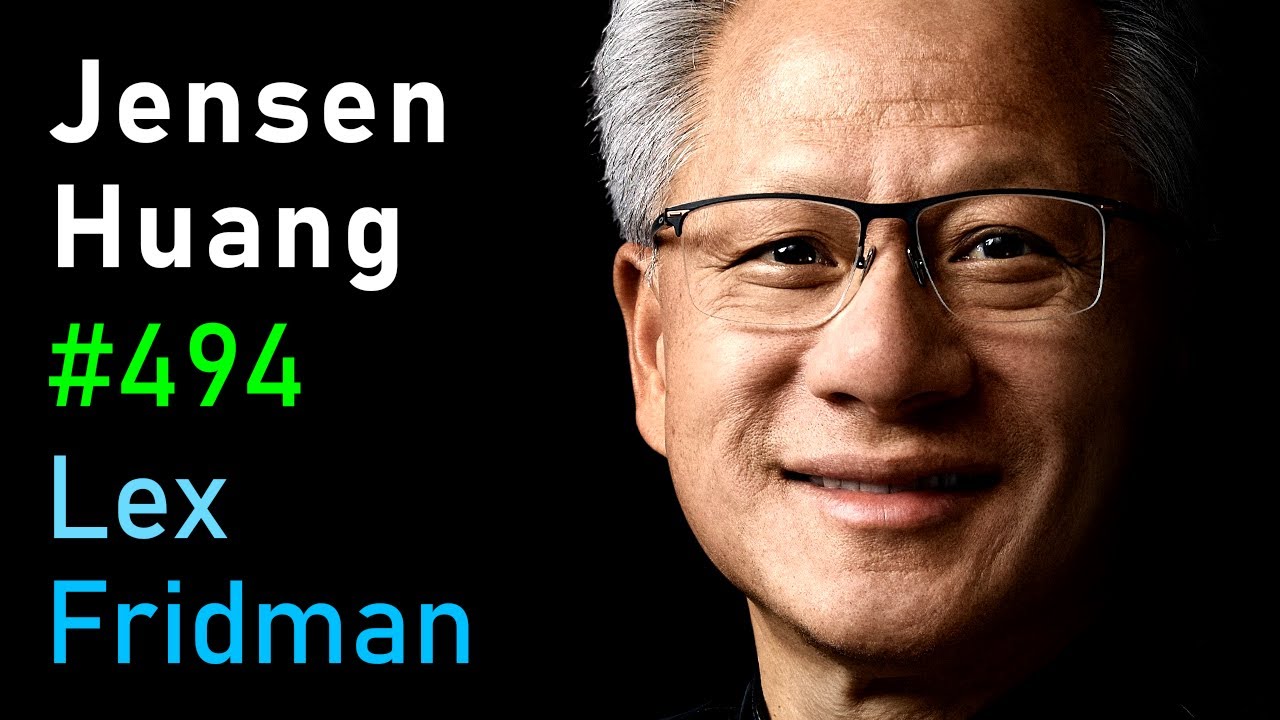
Jensen Huang: NVIDIA - The $4 Trillion Company & the AI Revolution | Lex Fridman Podcast #494
 311 min
Jeff Kaplan: World of Warcraft, Overwatch, Blizzard, and Future of Gaming | Lex Fridman Podcast #493
Ask anything from this episode.
Save it, chat with it, and connect it to Claude or ChatGPT. Get cited answers from the actual content — and build your own knowledge base of every podcast and video you care about.
Get Started Free