Key Moments
Republic Of Lies (Episode #225)
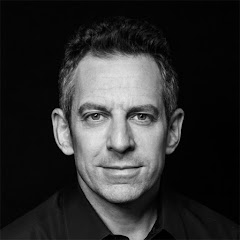 Sam Harris
Key Moments
Sam Harris discusses Trump's election denial, calls for discerning contempt for Trump, not his voters, and warns against misinformation.
Key Insights
Trump's refusal to concede the 2020 election and his enablers are dangerously undermining democracy.
It's crucial to distinguish between contempt for Trump and his actions, and dismissing his 70+ million voters, who represent complex societal issues.
Many on the intellectual left and in the 'intellectual dark web' err by either calling for vengeance against Trump supporters or by credulously accepting Trump's 'stolen election' narrative.
The election system's complexity and checks, ironically, make widespread fraud difficult to execute at scale.
Trump's actions, including his pre-election rhetoric and post-election fundraising based on false claims, are not merely political missteps but a deliberate attempt to delegitimize democracy and profit from fear.
While legal consequences for Trump's actions may be limited, the erosion of democratic norms is a profound harm, necessitating a societal withdrawal of attention from him and his family.
THE DANGEROUS DELUSIONAL DEFENSE OF THE ELECTION
Sam Harris opens by highlighting the dangerous moment facing democracy due to President Trump's refusal to concede the 2020 election. He criticizes Trump and his enablers for desperately clinging to power, escalating societal danger. Harris emphasizes the necessity of holding contempt for Trump's actions and his enablers within government, framing it as patriotic. However, he cautions against extending this contempt to the 70 million Trump voters, recognizing that their support stems from complex reasons and that Trump is as much a symptom as a cause of deep societal divisions.
THE NEEDLE TO THREAD: DISCERNING CONTEMPT FROM CONDEMNATION
Harris elaborates on threading the needle between critiquing Trump and alienating his supporters. He points out the error of figures like AOC calling for vengeance and keeping lists of Trump supporters, deeming it a path to nowhere good. He argues that many Trump voters have reasons for their choice, and dismissing them as irredeemable is a significant mistake. Conversely, he notes the opposite error where some discount Trump's harm by overly focusing on the far-left or taking Trump's 'stolen election' claims too seriously with delusional charity.
THE INTELLECTUAL DARK WEB AND MEDIA CONFUSION
Harris distances himself from the 'intellectual dark web,' noting how some members' post-election rhetoric has sounded 'bonkers.' He clarifies he's not part of any group and only represents himself. He addresses the crisis of legitimacy and collapsed trust in institutions, including the media. While acknowledging mainstream media's flaws, he asserts a critical distinction between their attempts at factual reporting and the outright lies of political operatives or conspiracy theorists, warning against false equivalence in blaming both sides for misinformation.
FALSE EQUIVALENCE AND TRUMP'S AUTHORITARIAN PLAYBOOK
The podcast argues that equating Biden with Trump is a serious error, contributing to societal misinformation. Harris contends that such comparisons require Biden to be as maniacal and deceitful as Trump, which is not the case. He describes the Republican party as a personality cult devoted to a 'fake strongman' actively undermining democracy. He reiterates that a focus on Trump and his enablers is warranted, distinguishing them from the millions of voters who may be misled. He notes the inherent incoherence in disputing presidential election results while celebrating congressional victories on the same ballots.
THE MANUFACTURED CRISIS OF ELECTION FRAUD
Harris states there is no credible evidence of significant voter fraud in the 2020 election, with courts dismissing the Trump campaign's allegations. He points out the irony that the decentralized nature of US elections makes large-scale fraud difficult. He contrasts the current situation with closer elections like Bush v. Gore, emphasizing the vast difference in scale and the norm of concession, even by Hillary Clinton in 2016 after winning the popular vote. President Obama facilitated a transition, while Trump's refusal creates a dangerous national security and operational vacuum.
DELEGITIMIZING DEMOCRACY FOR PERSONAL AND POLITICAL GAIN
The president and his team are accused of manufacturing controversy in bad faith, not believing the election was stolen but aiming to delegitimize democracy. This is likened to a soccer player faking a foul to gain an advantage. Trump's fundraising on these false allegations is seen as a form of theft, using fear for personal enrichment and to fund future political endeavors, potentially a 2024 presidential run. This behavior, Harris argues, heightens the risk of societal collapse and is a direct attack on democratic norms, not mere political disagreement.
THE EROSION OF NORMS AND THE PSYCHOPATHIC PRESIDENCY
Harris believes that Trump's actions threaten democracy more profoundly than legal statutes, highlighting the crucial role of political norms. He is confident that institutions will hold and Trump can be removed if necessary. However, the fact that the integrity of institutions was even in doubt is alarming. He argues that accusing critics of 'Trump Derangement Syndrome' is a crime against all of us. The core truth is a sitting US president attempting to shatter democratic norms and sabotage his successor for personal gain, a situation perhaps unparalleled since the Civil War.
THE 'BOMBS ON THE PLANE' ANALOGY AND TRUMP'S LIE CAMPAIGN
The deception of Trump's supporters is likened to a pilot falsely announcing a bomb on a plane, causing panic. Trump's fundraising on fake election fraud claims is a prime example, promising to 'land the plane safely' if people donate. This manufactured crisis fosters division and increases the likelihood of disaster. Harris asserts that Trump and his inner circle know they are amplifying conspiracy theories, increasing the risk of violence, and deliberately hindering the transition, which is uniquely reprehensible compared to genuine confusion on the left about racism.
THE NECESSITY OF ACCOUNTABILITY AND WITHDRAWING ATTENTION
While advocating for understanding the social problems behind Trump support, Harris stresses the need for consequences for those who tried to torch democracy for personal gain. He compares the situation to O.J. Simpson, suggesting Trump and his family should be allowed to fall into oblivion after January 20th. He urges people to withdraw attention from Trump, who has received unprecedented focus. He counters the idea that resisting the left requires ignoring Trump's badness, arguing Trump has energized and legitimized the far-left, acting as a catalyst for its growth.
TRUTH DEVALUATION AND THE PATH TO SANITY
The most destructive aspect of the Trump presidency is the 'orgy of lying and misinformation,' devaluing truth itself. Harris notes that while he wasn't enthusiastic about Biden-Harris, they represent a significant difference from figures like AOC, and are far more moderate than the QAnon-fueled insanity encouraged by Trump. He believes the transition to a Biden presidency is likely but unpredictable. Post-transition, immense work is needed to steer culture toward sanity on critical issues like the pandemic, economy, inequality, and foreign adversaries, requiring fact-based discussions.
Mentioned in This Episode
●Companies
●Organizations
●Concepts
●People Referenced
Common Questions
Sam Harris argues for a distinction between contempt for Donald Trump and his enablers, which he sees as a patriotic necessity, and contempt for the 70 million Trump voters, which he considers a serious error. He emphasizes the need to address the underlying social problems that led to Trump's support without dismissing those voters.
Topics
Mentioned in this video
Mentioned as Samantha Power's husband and a constitutional law scholar associated with the podcast.
The winner of the 2020 election, whose victory was disputed by Trump and his allies, leading to concerns about the transition of power.
His administration's cooperation with a presidential transition is contrasted with Trump's refusal to cooperate with the Biden transition team.
Host of the Making Sense podcast, discussing the aftermath of the 2020 election, political division, and Donald Trump's actions.
Frequently discussed as the central figure in the post-election controversy, accused of undermining democracy, spreading misinformation, and refusing to concede.
Mentioned in the context of the election, questioning why Democrats, if they had rigged the presidential election, didn't also unseat him in the Senate.
His death is mentioned as the subject of a QAnon conspiracy theory that Trump tweeted, suggesting Seal Team Six was involved in a cover-up.
Credited with putting Donald Trump on television, facilitating his rise to prominence.
Shared a tweet about restricted airspace over Biden's home, with the comment 'it's real our institutions will hold,' which deeply affected the speaker.
Her concession in the 2016 election after winning the popular vote is contrasted with Trump's refusal to concede the 2020 election.
Used as an analogy for how Donald Trump and his family should be treated after January 20th: ignored and allowed to fall into oblivion.
Mentioned as someone Trump accused of voter fraud in the Iowa caucuses, illustrating Trump's pattern of making such claims.
Mentioned in a hypothetical scenario of a Trump-like conspiracy theory, suggesting the CIA invented coronavirus to kill black people.
Mentioned as something Biden would have to support, along with lying about everything, to be comparable to Trump, illustrating the perceived vast difference between the two.
Mentioned in relation to a QAnon conspiracy theory tweeted by Trump, suggesting they were murdered to conceal facts about Osama bin Laden's death.
Cited as an example of a media outlet that, despite potential biases, strives to report facts, distinguishing it from less credible sources.
Described as a conspiracy theory that the sitting U.S. president is associated with, highlighting the degradation of political discourse.
A loose grouping of public figures, which the speaker distances himself from, particularly in the wake of the election results and the rhetoric from some members.
More from Sam Harris
View all 298 summaries 28 min
Michael Pollan on Consciousness, Psychedelics, and the Limits of Neuroscience
 22 min
Why the Stock Market Has Become a Casino
 61 min
UNRAVELING THE DREAM (A New Documentary Executive Produced by Sam Harris)
 20 min
Francis Fukuyama: The End of History Was Never What You Think
Ask anything from this episode.
Save it, chat with it, and connect it to Claude or ChatGPT. Get cited answers from the actual content — and build your own knowledge base of every podcast and video you care about.
Get Started Free