Key Moments
Rajat Monga: TensorFlow | Lex Fridman Podcast #22
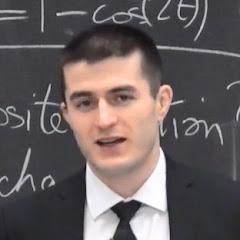 Lex Fridman
Key Moments
TensorFlow's evolution into an ecosystem, open-source impact, and future accessibility.
Key Insights
TensorFlow's open-source release was a pivotal moment, fostering open innovation in the tech industry.
The early days of Google Brain focused on scaling deep learning with massive compute power and data, proving its potential through speech and image recognition.
TensorFlow was designed with flexibility, hardware diversity (CPUs, GPUs, TPUs), and mobile deployment in mind from its early stages.
TensorFlow's ecosystem is expanding to enable machine learning on every capable device, from data centers to edge devices.
Keras integration into TensorFlow 2.0 simplifies adoption for beginners and enterprise users, making common tasks like transfer learning more accessible.
Balancing backward compatibility with innovation is a key challenge, requiring careful trade-offs to maintain trust and encourage adoption across various user bases.
ORIGINS AND EARLY VISION OF GOOGLE BRAIN
The conversation delves into the genesis of Google Brain, starting in 2011 with the belief in scaling proprietary machine learning libraries. The early mission, spearheaded by Jeff Dean and Rajat Monga, was to prove that by scaling compute power and data, deep learning models could achieve significantly better results. Initial successes in speech recognition and image processing (the 'cat paper') validated this hypothesis, demonstrating the potential of neural networks when applied at Google's scale. This early work laid the groundwork for what would become TensorFlow.
THE SEMINAL DECISION TO OPEN-SOURCE TENSORFLOW
A major turning point discussed is the decision to open-source TensorFlow in 2015. This move, influenced by Jeff Dean's advocacy, signaled a commitment to open innovation, inspiring other companies to share their work. The realization that deep learning was growing rapidly, both internally at Google and in academia, drove the need for a robust, shareable software library. While existing academic libraries like Theano and Torch existed, they lacked the production-ready capabilities and scale that Google envisioned, leading to the development of TensorFlow.
DESIGN PHILOSOPHY AND KEY DECISIONS
The design of TensorFlow involved critical decisions aimed at flexibility and production readiness. Key considerations included supporting diverse hardware like GPUs and TPUs, enabling on-device inference (mobile), and accommodating custom user code. The choice to incorporate a computational graph, a concept debated and influenced by prior libraries like Theano, was driven by the need for efficient production deployment and optimization. This focus on a graph structure, while initially less intuitive than immediate execution, provided significant advantages for scalability and deployment.
GROWTH OF THE TENSORFLOW ECOSYSTEM
TensorFlow's evolution extends beyond a mere software library to a comprehensive ecosystem. Projects like TensorFlow.js for browser-based ML, TensorFlow Lite for mobile, and TensorFlow Extended (TFX) for production pipelines demonstrate this expansion. The overarching goal is to enable machine learning on every capable device, from powerful data centers to resource-constrained edge devices. This includes supporting new research frontiers like transformers and reinforcement learning, while also providing stable tools for existing applications and researchers worldwide.
SIMPLIFICATION AND ACCESSIBILITY THROUGH KERAS
The integration of Keras into TensorFlow 2.0 is highlighted as a significant step towards making machine learning more accessible. Keras, initially an independent project by François Chollet, offered a user-friendly API that resonated with both researchers and developers. This strategic integration streamlined the learning curve, particularly for common tasks like transfer learning, making it easier for beginners and enterprises to adopt TensorFlow. The decision to standardize on Keras addressed community feedback regarding API fragmentation.
CHALLENGES, COMMUNITY, AND FUTURE OUTLOOK
Building and maintaining a large-scale open-source project like TensorFlow involves continuous challenges, including balancing innovation with backward compatibility and managing a vast community. The project emphasizes transparency and community involvement through RFCs and special interest groups. Future directions include modularizing the monolithic core, improving performance out-of-the-box, and exploring novel hardware integrations. The goal remains to democratize ML, making it easier for individuals and organizations to leverage its power, supported by a robust ecosystem and a continuously evolving cloud infrastructure.
MANAGING TEAMS AND FOSTERING INNOVATION
Rajat Monga discusses the complexities of managing large, innovative teams. He emphasizes team cohesion, shared vision, and intrinsic motivation as crucial for success, especially in a fast-paced environment like Google Brain. The hiring process prioritizes not only technical skills but also cultural fit and passion for the work. While individual 'superstars' contribute significantly, fostering a collaborative team dynamic is paramount to achieving product goals. Balancing exploration with a defined direction is key to sustainable progress.
THE ROLE OF COMPETITION AND ITERATION
Competition, particularly from PyTorch, is viewed as a positive force that drives innovation. PyTorch's research-focused approach encouraged TensorFlow to accelerate the development of features like eager execution, which was crucial for aligning with community needs. This iterative process, fueled by diverse perspectives and constructive criticism, helps refine the platform. TensorFlow's responsiveness to these external influences ensures it remains at the cutting edge of the rapidly evolving ML landscape.
THE BUSINESS OF ADS AND MONETIZATION MODELS
Monga reflects on his previous experience leading Google Search Ads, emphasizing the importance of connecting users with relevant information and products. He highlights the commitment to ad quality, ensuring that displayed ads meet a minimum standard to avoid degrading user experience. The future of internet monetization is seen as a hybrid model, combining ad-supported content with an increasing willingness among users to pay for premium services. This diversification helps sustain online platforms while offering value to both users and advertisers.
EMPOWERING BEGINNERS AND THE FUTURE OF ACCESS
For beginners interested in machine learning, the advice is to start with accessible resources like TensorFlow tutorials and Google Colab, which requires no installation. The project aims to continuously simplify the user experience, from providing pre-trained models to offering intuitive APIs like Keras. The future involves making powerful tools, including TPUs and cloud services, readily available for educational purposes, enabling students to train complex models and explore ML without significant barriers, thus fostering the next generation of AI talent.
Mentioned in This Episode
●Products
●Software & Apps
●Companies
●Organizations
●People Referenced
Common Questions
TensorFlow originated from Google Brain's efforts, starting in 2011 with Jeff Dean, to scale deep learning research using Google's vast compute power and data. It was initially an internal project that evolved into the open-source library released in 2015.
Topics
Mentioned in this video
Engineering Director at Google leading the TensorFlow team. He discusses the history, development, and future of TensorFlow.
Creator of the Keras API, who joined Google and was instrumental in integrating Keras into TensorFlow.
A key figure at Google Brain, instrumental in the development of deep learning at Google and the inception of TensorFlow.
A video-sharing platform where Google hosts TensorFlow content and which itself uses advertising for monetization.
A streaming service used as an example of a successful paid content model, contrasting with ad-supported content.
A large technology company involved in TensorFlow's special interest groups, optimizing for user needs.
An open-source library for machine learning and deep learning, evolving into an ecosystem of tools for deployment across various devices and platforms.
An open-source software framework for distributed storage and processing of large data sets, stemming from Google's internal technologies.
Allows running TensorFlow models directly in the browser using JavaScript.
A popular deep learning model that is still widely used, illustrating the need for stability in TensorFlow.
The alpha version of TensorFlow, representing a significant step in its evolution with features like eager execution by default.
An open-source, non-relational, distributed database modeled after Google's Bigtable.
Google's suite of cloud computing services, offering integrations and support for TensorFlow.
An early numerical computation library that influenced the development of deep learning frameworks.
A high-level API for neural networks, integrated deeply into TensorFlow 2.0 and recommended for beginners due to its simplicity.
A platform within the TensorFlow ecosystem designed for building and deploying production-grade machine learning pipelines.
A competing deep learning framework that primarily focuses on research, influencing TensorFlow's development, particularly regarding eager execution.
Google's proprietary NoSQL distributed storage system, which influenced open-source projects like HBase.
A language model developed by Google, representing the kind of cutting-edge research enabled by TensorFlow.
Google's free, cloud-based Jupyter notebook environment that allows users to write and execute Python code, ideal for learning TensorFlow.
A common convolutional neural network model often used for transfer learning tasks.
A framework for deploying TensorFlow models on mobile and embedded devices.
More from Lex Fridman
View all 549 summaries 259 min
FFmpeg: The Incredible Technology Behind Video on the Internet | Lex Fridman Podcast #496
 124 min
Vikings, Ragnar, Berserkers, Valhalla & the Warriors of the Viking Age | Lex Fridman Podcast #495
 146 min
Jensen Huang: NVIDIA - The $4 Trillion Company & the AI Revolution | Lex Fridman Podcast #494
 311 min
Jeff Kaplan: World of Warcraft, Overwatch, Blizzard, and Future of Gaming | Lex Fridman Podcast #493
Ask anything from this episode.
Save it, chat with it, and connect it to Claude or ChatGPT. Get cited answers from the actual content — and build your own knowledge base of every podcast and video you care about.
Get Started Free