Key Moments
Q&A with Tim Ferriss — How to Live with Urgency
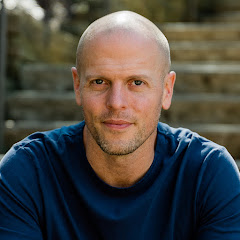 Tim Ferriss
Want to know something specific about what's covered?
We've already dissected every moment. Ask and we will deliver (with timestamps).
Key Moments
Tim Ferriss discusses parenting changes, career pivots, finding joy, and the importance of urgency and self-reflection.
Key Insights
Parenthood: A significant mindset shift, acknowledging the complexity and personal growth involved.
Career Evolution: Embracing exploration outside comfort zones and emphasizing identity diversification.
Finding Joy: Prioritizing simple pleasures, physical activity, deep work, and meaningful relationships.
Urgency and Reflection: The necessity of distance for clarity and making non-obvious decisions.
Questioning Mindset: Utilizing diverse sources and frameworks (like AI) to maintain fresh inquiry.
Resilience: Learning from failures and understanding that most professional moves are non-fatal.
A PIVOT TOWARDS PARENTHOOD
Tim Ferriss shares a significant personal pivot regarding fatherhood, admitting he previously lacked evidence supporting his suitability as a dad. He reflects on the decision's permanence and the child's potential well-being, considering it a fundamentally self-interested choice. Observing friends with children, and hearing their encouragement, prompted him to apply a question he uses elsewhere: 'Has anyone less capable, intelligent, or resourced figured this out?' The affirmative answer regarding parenting made him realize he hadn't previously connected this logic to this aspect of his life, marking a major shift in his perspective.
NEXT STEPS AND CAREER EXPLORATION
Regarding his career, Ferriss emphasizes a short-term planning horizon (6-12 months) believing that longer-term, perfectly executed plans are likely too comfortable. He prioritizes exploring new avenues outside his established expertise, such as gaming and comics, to diversify his identity and avoid complacency. This strategy, proven by past experiments like 'The 4-Hour Body,' grants permission to explore further. Current explorations include revisiting early interests like illustration and animation, and potentially self-publishing a book serially to engage a community for feedback and refinement.
THE PURSUIT OF JOY AND WELL-BEING
Ferriss finds joy in simple, fundamental practices. This often involves spending mornings outdoors with his dog, engaging in physical activity and sunlight, followed by focused, immersive work for a few hours. He distinguishes joy from happiness, viewing joy as an emergent experience of forgetting oneself, often facilitated by shared experiences with close friends or engaging in active group retreats. When feeling out of sorts, he consults basic elements: morning light, exercise, diet, and minimizing self-imposed distractions like excessive social engagements, suggesting these fundamentals are often the quickest remedies.
MAINTAINING A QUESTIONING MIND
To keep his questioning fresh, Ferriss employs tactical approaches, including using AI tools like ChatGPT to adopt the interviewing styles of various hosts (e.g., James Lipton, Terry Gross). He also saves compelling questions from diverse sources like novels or magazines. Central to his questioning are consistent prompts, similar to those found in 'The 5-Minute Journal,' that help achieve desired outcomes. He acknowledges that the ability to ask good questions is increasingly vital, especially in the context of AI, and actively seeks new angles to explore topics for himself and his audience.
RESILIENCE, FAILURE, AND BELIEF SYSTEMS
Ferriss reflects on influential figures who have faced significant setbacks. He believes that slowing down or taking breaks is crucial for oblique thinking and making unique decisions, as constant productivity can keep one too close to a problem. He emphasizes the importance of identifying and examining implicit beliefs, stating that the world continues without you and that hyper-kinetic modern society isn't necessary for outsized results. He draws parallels to artists like Daniel Day-Lewis who take extended breaks, suggesting that mastery allows for career flexibility and options.
NAVIGATING GRIEF AND SPIRITUALITY
Addressing grief, Ferriss acknowledges its place in the human condition and notes the societal lack of codified mourning rituals, which religion once provided. He suggests the book 'Grief and Grieving' as a resource. On spirituality, he expresses a recognition of the vast unknown, influenced by experiences and a continued exploration of life's fringes. He connects a perceived 'softening' in his personality to observing successful but perpetually dissatisfied individuals, realizing professional success doesn't solve all problems. He also acknowledges the impact of loss, emphasizing the finite nature of life and the importance of cherishing connections.
LONGEVITY AND NAVIGATING INNOVATION
Ferriss admits he doesn't actively try to stay current with the rapidly evolving field of longevity protocols, citing the prevalence of misinformation and influencers. He trusts specific sources like Peter Attia for healthspan, given their long-standing relationship and Attia's integrity. He favors focusing on basics like exercise and diet, and minimizing exposure to environmental toxins, over speculative cutting-edge interventions. He frames his approach as subtraction – what can be removed to improve health – rather than solely adding new protocols, acknowledging the potential trade-offs inherent in any intervention.
CREATIVITY, THE ECSTATIC, AND ADAPTABILITY
Ferriss relates to the concept of creative projects providing an 'ecstatic' feeling not as a destination, but as an energetic 'scent trail' or 'quickening.' He pays attention to this energetic response, differentiating it from constant stimulation. He uses the metaphor of driving at night with headlights, suggesting that progress is made by seeing just far enough ahead. Projects like 'Cock Punch' provided this energetic signal, liberating creative flow. He also values adaptability and confidence in one's ability to learn and trial-and-error, especially when navigating rapid change like that brought by AI, suggesting that most career moves are not fatal.
PATIENCE, AWARENESS, AND PHYSIOLOGY
Contrasting with a guest's theme of developing patience, Ferriss identifies his primary focus over the last decade as cultivating awareness to self-regulate his physiological responses. He describes a baseline hypervigilance stemming from childhood, where his sympathetic nervous system can be easily activated. He now understands that physiological states can precede cognitive stories, leading him to focus on noticing bodily sensations without immediate judgment. Tools like meditation apps and therapy help him observe these responses, allowing for less reactive engagement in challenging conversations and a greater understanding of how his body drives his thoughts.
CAREER CHANGE AND THE ROLE OF AI
Addressing concerns about AI consuming certain professions, Ferriss advises focusing on the 'quickening' — what genuinely excites an individual — rather than speculation. While acknowledging AI's impact, he suggests that fields like architectural design may not be fully automated due to human preference for authentic creation and the potential for AI to become a powerful tool rather than a replacement. He emphasizes adaptability and confidence in trial-and-error as key skills. He recommends the 'fear setting' exercise to demystify worst-case scenarios, highlighting that most career decisions are reversible and offer opportunities for learning and growth.
Mentioned in This Episode
●Supplements
●Products
●Software & Apps
●Tools
●Companies
●Organizations
●Books
●Drugs & Medications
●Concepts
●People Referenced
Navigating Career Changes and Creative Pursuits
Practical takeaways from this episode
Do This
Avoid This
Common Questions
Tim Ferriss typically focuses on a 6-12 month horizon for his plans, believing that rigid long-term goals might be too comfortable. He prioritizes exploring new avenues like games, comics, and animation to diversify his identity and acquire new skills, rather than sticking to comfortable, known territories.
Topics
Mentioned in this video
The new title for Tim Ferriss's creative project, formerly referred to as 'Game Punch', focusing on fantasy art and narrative.
An animated Netflix series by Riot Games, highly praised by Tim Ferriss as a remarkable example of high-budget animation.
Mentioned as the introducer of the book 'DC Comics Guide to Writing Comics'.
An actor known for his dedication to craft, who disappears for extended periods, used as an example of individuals who can take breaks due to their exceptional skill.
Interview style from 'Inside the Actor's Studio' used as a prompt for ChatGPT to generate interview questions.
Radio host whose interview style was used as a prompt for ChatGPT to generate interview questions.
Mentioned as another leading figure in science-facted information seeking, in the context of longevity protocols.
Mentioned as an example of a tool with consistent prompts that work to achieve a desired result, like a recipe.
A book featuring fantasy art, including work by Frazetta, shown by Tim Ferriss as an example of his creative interests.
A book by Dennis O'Neal with an introduction by Stan Lee, shown as an example of Tim Ferriss's interest in illustration and comics.
Book by Rick Rubin that discusses 'ecstasy' as a guide for creative breakthroughs.
More from Tim Ferriss
View all 700 summaries 88 min
The Legendary Hollywood Power Broker — Guy Oseary on 36 Years of Managing Madonna, 26 IPOs, and More
 77 min
The Many Benefits of Coca — The “Divine Leaf” with 8,000+ Years of Use
 100 min
Inside The AI Race: DeepMind, OpenAI, Anthropic, China, and The Race to Superintelligence
 108 min
The Path from The Soviet Union to Building Multi-Billion Dollar Companies — Max Levchin
Ask anything from this episode.
Save it, chat with it, and connect it to Claude or ChatGPT. Get cited answers from the actual content — and build your own knowledge base of every podcast and video you care about.
Get Started Free