Key Moments

Want to know something specific about what's covered?
We've already dissected every moment. Ask and we will deliver (with timestamps).
Key Moments
Pylon redefines B2B customer support by integrating multiple customer-facing teams into a single AI-native platform, emphasizing rapid growth and adaptability.
Key Insights
Pylon targets the B2B market with an integrated customer support platform designed for multiple customer-facing teams, unlike traditional single-function tools.
The founding team's 'happy grinder' culture, characterized by high competency and low ego, drives their intense work ethic and company growth.
Pylon leverages AI to structure unstructured conversational data, enabling better routing, insights, and identification of product gaps or feature requests.
Building in public on platforms like LinkedIn has been a key strategy for Pylon, significantly boosting brand awareness and lead generation.
The company's product strategy is inspired by 'compound startups' like Rippling, aiming to launch multiple integrated verticals rapidly.
Pylon's long-term vision is to become the operating system for customer-facing teams, orchestrating AI agents and evolving into a new system of record and engagement.
THE FOUNDING TEAM AND SCRAPPY STARTUP CULTURE
The Pylon founding team operates with a core value of being 'happy grinders,' embodying high competency and low ego. This culture is exemplified by their continued cohabitation in a modest, windowless apartment, reflecting a deep commitment to the company's mission. They emphasize building a large, successful business as their primary motivation, contrasting with founders solely focused on product perfection. This scrappy approach, born from early days of living and working in their office, underpins their 'all in' dedication, making the company their paramount priority.
EMBRACING THE GRIND: WORK CULTURE AND MOTIVATION
The article "No Booze, No Sleep" sparked discussion on Pylon's intense working culture. While agreeing on the 'no booze' aspect, the founders clarified that their motivation stems from the fun and adventure of building a significant company, rather than just inherent passion for the problem. They acknowledge working extensive hours, often beyond the 996 framework, but differentiate this from employee expectations, stressing that employee long hours are voluntary. The focus remains on output and moving fast, fostering a culture where dedication is valued but not strictly mandated for all.
BUILDING IN PUBLIC AND DEVELOPING BRAND AWARENESS
Pylon has strategically utilized 'building in public' on platforms like LinkedIn to gain visibility and generate pipeline. Initially posting rudimentary content, they discovered that authentic stories, like their journey from idea to MVP in 17 days, resonated most effectively. This approach created a perception of success and kept Pylon top-of-mind for prospects and investors. With a following of approximately 45,000, they continue to expand their reach, aiming to become influential voices in the customer success space.
PINPOINTING B2B SUPPORT NEEDS: THE PILON PLATFORM
Pylon addresses a gap in the B2B customer support market by providing an integrated platform for diverse customer-facing teams—including customer success, account management, and professional services. Unlike consumer-focused tools, Pylon consolidates data and workflows across these functions. This B2B focus, especially with the rise of conversational tools like Slack for customer interaction, positions Pylon to manage the complexity and multi-channel communication inherent in business relationships. Their strategy centers on offering a unified solution where previous approaches required a patchwork of disparate tools.
THE 'WHY NOW' AND AI'S ROLE IN THE SUPPORT ECOSYSTEM
The timing of Pylon's inception, coinciding with the launch of ChatGPT, was remarkable. The founders recognized the 'why now' for their platform, driven by the increasing use of conversational tools for customer engagement and the potential of AI to process this unstructured data. They emphasize a product-first approach, ensuring AI genuinely solves customer problems rather than being a trend. Pylon uses AI for tasks like intelligent ticket routing, summarizing conversations, identifying product feedback, and flagging documentation gaps, making customer interactions more efficient and insightful.
PRODUCT STRATEGY: A 'COMPOUND STARTUP' APPROACH
Pylon adopts a 'compound startup' strategy, akin to Rippling, aiming to rapidly launch multiple integrated verticals within its platform. Initially focused on support, they are expanding into areas like account intelligence to serve customer success and account management personas. This high-risk, high-reward strategy allows them to capture customers early, particularly those up to 500 employees, and grow with them. By offering an all-in-one solution, Pylon aims to replace the need for multiple specialized tools, positioning itself as the central operating system for customer-facing operations.
VISION FOR THE FUTURE: ORCHESTRATING AI AGENTS
Pylon's long-term vision is to evolve into the operating system for customer-facing teams, enabling them to orchestrate AI agents. As a new system of record, engagement, and intelligence, Pylon is poised to facilitate the transition to a fully agentic future. They are building with AI native from the ground up, allowing them to adapt more easily than incumbents facing the innovator's dilemma. This approach ensures Pylon can support the coexistence of people and AI agents, managing customer data across various touchpoints and paving the way for the next generation of customer operations.
DECISION-MAKING AND NAVIGATING UNCERTAINTY
In high-pressure situations with limited data and time, the Pylon founders rely on intense debate and a shared vision of building a generational company. Their decision-making process involves rigorously debating ideas, a practice honed through years of experience. While instincts play a role, they are informed by continuous customer engagement and deep dives into market dynamics. They describe their debates as a form of 'sport,' where extensive discussion aims to uncover all potential outcomes, leading to a unified conclusion or a decision to defer further information gathering.
Mentioned in This Episode
●Products
●Software & Apps
●Companies
●Organizations
●Concepts
●People Referenced
Common Questions
The co-founders met through college (Caltech) and later through the KP Fellows internship program. They discovered they worked well together during hackathons and internships at companies like DoorDash, Slack, and Airbnb, eventually leading to them living together and deciding to start Pylon.
Topics
Mentioned in this video
More from a16z Deep Dives
View all 56 summaries 42 min
Building the Future of Image Generation with Ideogram's CEO
 50 min
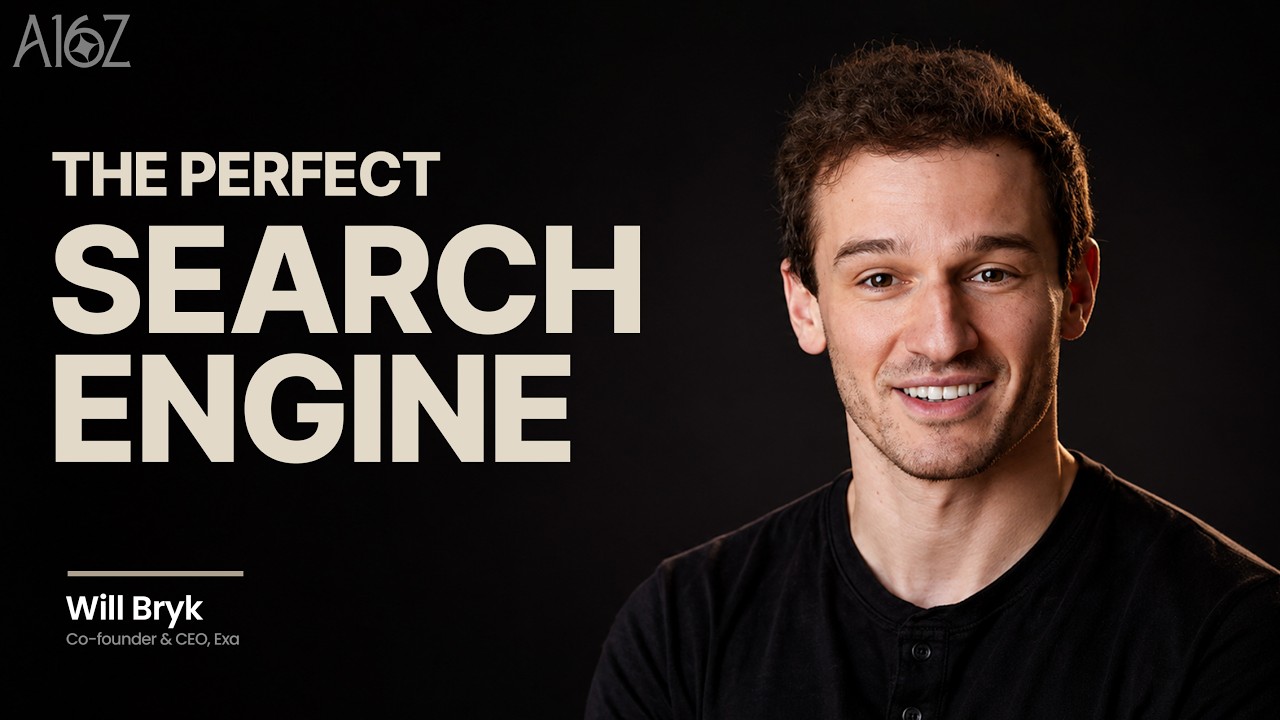
How Exa is Building the Perfect Search Engine | Deep Dives with a16z
 51 min
Why AI Agents Need Context | Deep Dives with a16z
 46 min
Pyramid of Work and The Future of Enterprise Automation | The a16z Show
Ask anything from this episode.
Save it, chat with it, and connect it to Claude or ChatGPT. Get cited answers from the actual content — and build your own knowledge base of every podcast and video you care about.
Get Started Free