Key Moments
Noam Chomsky: Putin, Ukraine, China, and Nuclear War | Lex Fridman Podcast #316
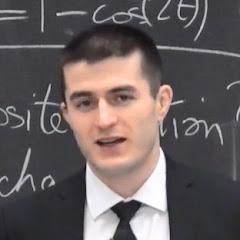 Lex Fridman
Key Moments
Chomsky discusses Putin's motives, Ukraine war, China threat, nuclear risk, US policy, propaganda, and the US internal decline, emphasizing cooperation for survival.
Key Insights
Putin's invasion of Ukraine is motivated by restoring Russia's global power, preventing NATO expansion into Ukraine, and securing his legacy, rather than a sudden desire to restore the Russian Empire.
The US and Western policies, particularly NATO expansion and the de facto integration of Ukraine within NATO, are seen as provocative and have contributed to the current conflict.
While Russia is to blame for the invasion, US policy should balance defense support for Ukraine with serious diplomatic efforts to end the war and prevent escalation, including nuclear conflict.
Nuclear war remains a significant threat, with proposals like a no-fly zone being extremely risky. The West's gamble is that Putin won't escalate if faced with total defeat.
Western media exhibits significant Russophobia and propaganda, presenting a biased narrative. Finding truth requires critical thinking, examining historical context, and cross-referencing sources.
The US faces severe internal challenges, including declining life expectancy, rising mortality, and a polarized political climate, posing a greater threat to its stability than external adversaries.
A US-China accommodation is crucial for global survival, given the existential threats of environmental collapse, pandemics, and nuclear war. Current US policy of encircling China is counterproductive and dangerous.
The global South's reluctance to join the US in opposing Russia stems from a perception of Western hypocrisy regarding their own past and present actions.
The US's internal decline is linked to the neoliberal economic policies of the last 40 years and the radicalization of the Republican party, manifesting in decaying infrastructure and a Supreme Court pushing a regressive agenda.
Human civilization's survival depends on the US taking a leading role in addressing global crises like climate change, but current US political and corporate actions often obstruct these efforts.
PUTIN'S MOTIVATIONS AND THE ORIGINS OF THE UKRAINE WAR
Noam Chomsky posits that Vladimir Putin's actions, particularly the invasion of Ukraine, stem from a long-term goal to restore Russia's global standing and prevent NATO expansion, rather than sudden irrationality. He traces the roots of the conflict back to broken promises to Gorbachev regarding NATO, the chaotic post-Soviet economic transition, and subsequent Western policies. Specifically, the expansion of NATO eastward and the perceived integration of Ukraine into NATO's military structure, despite Russian objections and warnings from Western diplomats, are highlighted as key escalatory factors. Chomsky argues that Putin's actions, while aggressive and criminal, are a response to perceived threats and a desire to secure Ukraine from joining NATO, maintain control over Crimea, and establish his legacy as a restorer of Russian power.
ASSESSING BLAME AND THE ROLE OF US POLICY
Chomsky unequivocally places blame on any power that commits aggression, including Putin's invasion of Ukraine, comparing it to US actions in Iraq. However, he critically examines the role of US foreign policy, particularly its persistent expansion of NATO and its encouragement of Ukraine's de facto integration into the alliance. He contends that these actions, warned against by many diplomats and analysts as provocative, significantly contributed to the crisis. While acknowledging the legitimacy of supporting Ukraine's defense, Chomsky stresses the urgent need for diplomatic solutions to end the war and prevent catastrophic escalation, a dimension he feels is inadequately addressed in Western discourse.
THE EVER-PRESENT THREAT OF NUCLEAR WAR
The specter of nuclear war is a primary concern for Chomsky, who believes that anyone not worried about it is not thinking critically. He points to proposals like establishing a no-fly zone over Ukraine, which would necessitate attacking Russian air defense systems within Russia, as extremely dangerous. He also critiques the widespread Western assumption that Putin, if faced with total defeat, would simply back down. Instead, Chomsky warns that this constitutes a dangerous gamble, as a cornered Putin might resort to using the devastating weapons at his disposal, leading to the destruction of Ukraine and potentially a wider nuclear conflict.
PROPAGANDA, MEDIA, AND THE QUEST FOR TRUTH
Chomsky observes that propaganda is rampant across Russia, Ukraine, and the West, noting a significant increase in Russophobia. He elaborates that while the mainstream media isn't always outright lying, its reporting is shaped by selection, framing, and a particular ideological framework, creating a 'propaganda system' that limits discourse. He advocates for critical thinking, historical awareness, and consulting diverse sources to discern truth. His earlier work, 'Manufacturing Consent,' with Edward Herman, is cited as an analysis of how media systems operate within boundaries, often by omitting critical perspectives rather than fabricating falsehoods.
US-CHINA RELATIONS AND THE RISK OF GLOBAL CONFLICT
A war between the US and China in the 21st century would be catastrophic, Chomsky warns, potentially destroying organized life on Earth. He argues that an accommodation and cooperation between the two powers are essential for human survival, given shared global threats like environmental crisis and pandemics. Chomsky criticizes the current US policy of attempting to 'encircle' China through alliances and military operations in the Indo-Pacific, deeming it a dangerous and counterproductive approach. He contends that China's refusal to adhere to US-dictated 'rule-based international order' is a primary source of friction, not an inherent threat.
INTERNAL DECAY OF THE UNITED STATES
Chomsky identifies severe internal threats to the United States, arguing that the country is 'tearing itself apart.' He points to declining life expectancy, rising mortality rates (unique among developed nations outside of wartime), and poor health outcomes despite high spending, all linked to the neoliberal economic policies of the past four decades. The Republican party's drift from traditional politics, its focus on obstructionism, and the Supreme Court's increasingly reactionary decisions, which he suggests aim to create a white supremacist, Christian nationalist state, are also cited as critical internal weaknesses posing a greater danger than external adversaries.
HOPE AND THE PATH TO SURVIVAL
Despite the dire circumstances, Chomsky suggests that human civilization's survival hinges on the United States taking a leading role in addressing existential crises, particularly climate change. He criticizes actions that undermine climate efforts, such as withdrawing from the Paris Agreement and punishing corporations for considering environmental impact. For Chomsky, the path forward requires a fundamental shift away from a political system driven by the pursuit of power and profit at any cost. He implies that a return to more cooperative, rational, and ethical governance, both domestically and internationally, is essential for overcoming these challenges and ensuring a future for humanity.
Mentioned in This Episode
●Organizations
●Books
●People Referenced
Common Questions
Chomsky argues that Russia's invasion is an act of aggression comparable to historical crimes. He believes US and NATO expansion policies created red lines that were ignored, contributing to the conflict. He also stresses the importance of seeking diplomatic solutions to end the war and avoid escalation to nuclear conflict.
Topics
Mentioned in this video
Discussed in the context of potential war with the US, its role in the global order, and US policy to encircle it.
Mentioned in the context of US sanctions after the US unilaterally withdrew from the Iran nuclear agreement, which China ignores.
Region annexed by Russia in 2014 following the Maidan uprising, discussed in relation to Russia's strategic interests.
Mentioned as a 'sentinel state' being armed by the US to encircle China.
The central focus of the discussion regarding Russia's invasion, its potential NATO membership, and the need for both defense and diplomatic solutions.
The leading recipient of US foreign aid, criticized for its ongoing 'terror violence and repression'.
The second leading recipient of US foreign aid, described as having the worst dictatorship in its history with widespread political imprisonment and torture.
Former CIA official and expert on Russia, quoted on the extreme Russophobia observed in the West.
Co-author of 'Manufacturing Consent', mentioned in relation to the propaganda model of the media.
Renowned linguist, philosopher, cognitive scientist, historian, social critic, political activist, and anarchist.
British Prime Minister, quoted indirectly regarding the phrase 'war, war is not joy, joy'.
Former US President, referenced hypothetically in a discussion about confronting leaders with their past actions, specifically the escalation of the Vietnam War.
The United Nations, discussed in terms of the UN-based international order versus the US's preferred 'rule-based international order'.
Military alliance whose eastward expansion is cited as a major factor contributing to Russia's grievances and the lead-up to the Ukraine invasion.
Organization that attacked the media, criticized in 'Manufacturing Consent' for its unsubstantiated charges regarding media dishonesty in the Vietnam War.
Organization that gives US infrastructure a failing mark annually.
The US Department of Defense, mentioned for its cautious approach and objections to aggressive actions that could escalate the conflict with Russia.
More from Lex Fridman
View all 549 summaries 259 min
FFmpeg: The Incredible Technology Behind Video on the Internet | Lex Fridman Podcast #496
 124 min
Vikings, Ragnar, Berserkers, Valhalla & the Warriors of the Viking Age | Lex Fridman Podcast #495
 146 min
Jensen Huang: NVIDIA - The $4 Trillion Company & the AI Revolution | Lex Fridman Podcast #494
 311 min
Jeff Kaplan: World of Warcraft, Overwatch, Blizzard, and Future of Gaming | Lex Fridman Podcast #493
Ask anything from this episode.
Save it, chat with it, and connect it to Claude or ChatGPT. Get cited answers from the actual content — and build your own knowledge base of every podcast and video you care about.
Get Started Free