Key Moments
Naval Ravikant and Nick Kokonas — The Tim Ferriss Show
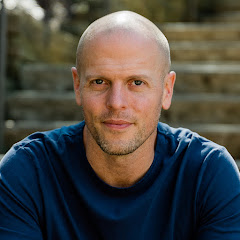 Tim Ferriss
Want to know something specific about what's covered?
We've already dissected every moment. Ask and we will deliver (with timestamps).
Key Moments
Naval Ravikant on honesty, presence, and finding happiness; Nick Kokonas on asymmetric risk and challenging norms.
Key Insights
Honesty and presence are foundational to happiness, reducing stress and distraction in life.
Founders with intelligence, energy, and integrity are crucial for startup success, with integrity being the hardest to assess.
Internal emotional states greatly influence decision-making, particularly in investing, emphasizing the need for self-awareness and bias reduction.
Habits dictate much of human behavior; cultivating good habits and replacing bad ones is a continuous, long-term process for personal transformation.
Challenging conventional wisdom and asking fundamental "why" questions can uncover hidden opportunities and lead to significant innovation in various industries.
Asymmetric risk-taking and transparency in opaque markets are key to identifying and capitalizing on undervalued opportunities, leading to substantial returns.
NAVAL RAVIKANT: THE IMPORTANCE OF TRUTH AND PRESENCE
Naval Ravikant emphasizes honesty as a core, non-negotiable value, stemming from his physics background where truth is paramount. He learned from a childhood encounter within the Russian mob that honesty can transcend even extreme conflict, highlighting its deep importance in relationships. Ravikant links honesty to presence and happiness, arguing that deceit, even small white lies, creates internal cognitive threads that pull individuals out of the moment, leading to stress and unhappiness. To achieve true happiness and presence, one must be completely honest consistently, avoiding the self-foolery he learned from physicist Richard Feynman.
ATTRIBUTES OF SUCCESSFUL FOUNDERS AND INVESTORS
When evaluating founders, Ravikant prioritizes three qualities: intelligence, energy, and integrity. Intelligence ensures a deep understanding of the problem and specific knowledge, while energy guarantees perseverance through the brutally difficult startup journey. Integrity is the most challenging to assess, as a smart, energetic individual lacking ethics can be destructive. He seeks founders with a core sense of values beyond financial incentives, warning against those who compromise others for personal gain. Furthermore, Ravikant stresses the importance of genuinely liking the people one works with, as these relationships can span a decade or more, making compatibility crucial for a fulfilling professional life.
OVERCOMING EMOTIONAL BIASES IN INVESTING
Ravikant highlights the pervasive influence of emotions on investors, despite many pretending to be rational. He notes that investment decisions often stem from initial impressions, and negative emotional responses can hinder future opportunities. He believes that skills like self-awareness, happiness, and investing are built gradually over decades through continuous feedback loops, not through single epiphanies. He advocates for working on one's internal state to reduce biases and conditioned responses, thereby improving every aspect of life, including resource allocation, by fostering emotional detachment and objective judgment.
WISDOM FROM ANCIENT PHILOSOPHY AND RATIONAL BUDDHISM
Ravikant finds significant influence in Stoicism, particularly Marcus Aurelius's "Meditations," which taught him that success and power do not inherently improve one's internal state. He also values "rational Buddhists" like Jiddu Krishnamurti and Sam Harris, who provide intelligent, reasoned approaches to training the mind. These teachings emphasize looking inward and understanding one's thoughts to achieve mental clarity and presence, detaching from the constant internal narrative. He also cites Bruce Lee's philosophy, demonstrating the diverse sources of his impactful wisdom.
A HACK FOR EFFECTIVE READING IN A DISTRACTED AGE
Acknowledging the modern challenge of short attention spans and the pressure to finish books, Ravikant developed a unique reading strategy. He treats books as disposable blog posts or tweets, feeling no obligation to complete them. This approach allows him to flip through multiple books simultaneously, skipping boring parts or starting in the middle, and abandoning any book that loses his interest or contains questionable information. This "hack" helped him reintegrate classic, source material into his learning, as older books often contain time-tested solutions to enduring human problems like health, peace of mind, and values.
DEFINING SUCCESS AND PRACTICING MINDFULNESS
Ravikant offers a nuanced definition of success, extending beyond conventional achievements like wealth or fame. While acknowledging the success of creators like Steve Jobs and Elon Musk, he ultimately considers true winners to be those who transcend the 'game' entirely, achieving internal mental and self-control. For him, success is the ability to sit quietly by oneself for 30 minutes and be content. His meditative practice, "choiceless awareness," involves observing thoughts without judgment while going about daily life, recognizing that most thoughts are fear-based. This practice quiets the mind, fostering presence, peace, and gratitude, shifting perspective from personal narrative to the richness of the present moment.
THE POWER OF HABITS AND SELF-IMPROVEMENT
Inspired by a Polish trainer's routine, Ravikant realized the transformative power of daily habits for both physical and mental well-being. He views life as a continuous process of building good habits and discarding bad ones, emphasizing that sustainable change is a long-term journey, not a quick fix. His approach to diet, for instance, focuses on changing taste buds and substituting unhealthy foods with healthy, tasty alternatives that are effortlessly sustainable. He advises his younger self to 'chill out,' be more authentic, protect time, and give love freely, believing that authentic self-actualization leads to happiness and attracts positive experiences.
ACCEPTANCE AS A MANTRA AND DESIRE AS SUFFERING
Ravikant's personal mantra during moments of internal struggle is a single word: "accept." He believes in three options in any situation: change it, accept it, or leave it. The struggle arises from refusing to accept what cannot be changed or left, leading to misery. He sees desire as a contract with oneself to be unhappy until a specific outcome is achieved, prompting him to carefully choose and limit his desires. This philosophical stance helps him manage suffering by recognizing the roots of dissatisfaction and cultivating a more present and content state of being.
NICK KOKONAS: CHALLENGING CONVENTIONAL WISDOM
Nick Kokonas's career trajectory, from philosophy to derivatives trading to award-winning restaurants, is unified by his relentless pursuit of asking "why." He thrives in areas where information is opaque and challenges traditional assumptions, viewing everything as a series of decisions rather than successes or failures. His philosophical background, particularly his training in logic and concise thinking, equipped him to dissect problems and identify parallels across seemingly disparate fields. This mindset allows him to question deeply embedded industry practices, such as why restaurants use white tablecloths or why publishing numbers are so guarded.
ASYMMETRIC RISK-TAKING AND THE SMALL HOOP PHILOSOPHY
Kokonas's success is rooted in his embrace of asymmetric risk, seeking opportunities where potential upside significantly outweighs downside. He is drawn to ventures with high perceived failure rates, like trading or restaurants, because the smaller the 'hoop,' the fewer people are willing to jump through it, reducing competition. He views the high failure rates often cited for these industries as mispriced risk, believing that thorough preparation and a commitment to understanding the underlying mechanics can significantly alter the odds. This philosophy also extended to his early career, where he deliberately simplified his resume to secure a low-level job on the trading floor, seeking mentorship to master a complex domain.
TRANSFORMING THE RESTAURANT INDUSTRY: THE ALINEA JOURNEY
The creation of Alinea, a three-Michelin-starred restaurant, began with a profound dining experience that inspired Kokonas to partner with chef Grant Achatz. Recognizing Achatz's unparalleled talent and dedication, Kokonas committed to building a restaurant that would rethink every aspect of the dining experience, from design to service. They challenged norms like the need for a host stand and candles on tables, meticulously designing details to evoke emotional responses. This collaborative, inquiry-driven approach, despite initial friction and the immense personal challenge of Achatz's cancer diagnosis, established Alinea's reputation for innovative and emotionally resonant dining.
INNOVATING RESERVATIONS AND YIELD MANAGEMENT
Challenging the dysfunctional restaurant reservation system, Kokonas pioneered a ticketing model for Alinea. He observed that traditional reservations created a transactional imbalance where customers often lied and restaurants overbooked, leading to inefficiencies and poor hospitality. Inspired by behavioral economics, he introduced a system where guests pay upfront, creating a small vested interest similar to buying movie tickets. This not only eliminated no-shows and optimized table utilization but also allowed for dynamic pricing based on demand, making off-peak times more affordable. The success of this system led to the development of Tock, a widely adopted reservation software.
REVOLUTIONIZING PUBLISHING AND UNCOVERING OPAQUE MARKETS
Kokonas extended his "why" philosophy to the publishing industry, discovering its opaque financial structures. Upon receiving low-advance offers for the Alinea cookbook, he questioned the cost of printing and the industry's profitability. By digging for information often guarded by publishers, he realized that authors were often at a disadvantage. This led to a unique deal for the Alinea book, where his team retained control over production and a significantly higher percentage of sales. For "The Aviary Cocktail Book," he bypassed traditional publishers altogether, using a Kickstarter campaign and direct sales, demonstrating the power of transparency and direct-to-consumer models in what he considers a traditionally "black box" market, akin to the truffle market he dreams of disrupting.
LESSONS IN HIRING AND ENTREPRENEURIAL MENTORSHIP
Kokonas views hiring as a critical and challenging task, employing a "self-selection" approach during interviews. He transparently outlines the upsides and downsides of working for him and the company, allowing candidates to assess their fit. He uses questions like "What were the last five books you read?" to gauge intellectual curiosity and passion, valuing diverse interests beyond formal education. He also looks for individuals who enjoy writing and excel at processing feedback, essential skills in his demanding environment. For aspiring entrepreneurs, he provides "black box" problems as independent projects, acting as both a filter and a mentorship opportunity for those genuinely committed to learning and innovation.
THE VALUE OF PAUSING AND CURIOSITY
If Nick Kokonas were to put one word on a billboard, it would be "pause." This represents his core belief in intellectual curiosity and the importance of taking a moment to critically examine assumptions and ask fundamental questions. Despite his fast-paced, high-pressure career, Kokonas integrates deliberate pauses to challenge the status quo, uncover inefficiencies, and spark innovation. This continuous inquiry, coupled with a willingness to deconstruct established systems, has been a driving force behind his success in diverse and challenging fields, enabling him to identify and capitalize on opportunities that others might overlook.
Mentioned in This Episode
●Supplements
●Products
●Software & Apps
●Tools
●Companies
●Organizations
●Books
●Concepts
●People Referenced
Common Questions
Naval views honesty as a core foundational value, learned from his physics background and childhood experiences. He believes being consistently honest, even about 'white lies,' leads to presence and happiness by avoiding a 'second thread' of thought that creates stress and distraction.
Topics
Mentioned in this video
One of the greatest restaurants in American history, where Grant Achatz previously worked, and a benchmark for Alinea.
A cocktail bar (a 'non-bar' as described) co-founded by Nick Kokonas and Grant Achatz, known for its culinary approach to cocktails.
A visual effects company where Allan Hemberger worked on The Hobbit movies.
Sean Brock's famous restaurant.
The hotel where Auguste Escoffier worked, marking a high point for French cuisine around 1906.
A hosting company used by Nick Kokonas to launch the rudimentary Tock booking system in 2010.
The Chicago office of Google, where Brian Fitzpatrick previously worked as director.
A publishing house that offered a unique distribution deal for the Alinea Cookbook.
A visual effects company where Sarah Hemberger worked as a graphics designer.
A speakeasy below The Aviary, known for its cocktails.
A Michelin three-star restaurant co-founded by Nick Kokonas and Grant Achatz, known for its innovative approach to dining and emotional experience.
A restaurant concept by Nick Kokonas and Grant Achatz that changes its menu every four months, offering different 'time travel' cuisines.
A publishing house that published 'The French Laundry' book, and initially approached Alinea for their cookbook.
Charles Darwin's foundational work on evolution, recommended by Naval Ravikant as a source for understanding human action.
Grant Achatz's first cookbook, which faced traditional publishing challenges but became a self-published success story due to innovative distribution.
Allan Hemberger's 400-page, beautifully illustrated, and written book documenting his five-year journey of cooking through The Alinea Book.
A short book by Sam Harris that explores the impact of lying and generalized deceit, influential for Naval Ravikant.
A collaborative book project by Nick Kokonas, Grant Achatz, Allan Hemberger, and Sarah Hemberger, detailing sophisticated cocktails with a culinary approach.
A book by Bertrand Russell written in plain language, recommended by Nick Kokonas for its digestible approach to philosophy.
An out-of-print book that Nick Kokonas shared with Grant Achatz, describing a meal in emotional terms that resonated with Grant's work.
A book mentioned as reading like a murder mystery, about a monk who found and rewrote Lucretius's work, saving it for history.
A book by Bruce Lee summarizing his philosophy, recommended by Naval Ravikant.
A traditional memoir written by Grant Achatz and Nick Kokonas without a ghostwriter.
The restaurant where Nick Kokonas first dined and met Grant Achatz, experiencing a transformative meal.
A futures and options exchange where Nick Kokonas's mentor, Frank Zino, later traded bonds.
The university where Nick Kokonas studied philosophy and encountered Professor Jerome Balmuth.
A renowned chef mentioned as part of Team USA for whom Martin Kastner designed a platter.
Nick Kokonas's first employee and business partner for 25 years, who he taught how to trade options.
Nick Kokonas's business partner and CTO of Tock, formerly of Google Chicago.
An editor at Ten Speed Press who made an 'unusual offer' to publish The Alinea Cookbook without an advance, becoming a distributor.
A bartender at The Aviary's office/speakeasy, with whom Nick Kokonas filmed a video promo for the book.
Nick Kokonas's mentor on the trading floor, who taught him options theory from scratch.
A renowned chef, whose team Martin Kastner designed a platter for, and later became a friend of Nick Kokonas.
An unimpeachable food critic who declared Alinea the best restaurant in America, mirroring her prior praise for The French Laundry.
Nick Kokonas's influential philosophy professor at Colgate University, who taught him how to think clearly and concisely.
The chef and co-founder of Alinea, known for his artistic and intellectual approach to dining.
A genius designer who conceptualized unique plateware and a silverware bracketing system for Alinea.
A now famous chef who was the first diner through Alinea's door and wrote a glowing blog post.
The 'father of French cuisine,' who was at the Ritz during the height of the Paris 1906 culinary era.
A procedural effects artist from WETA Studios and Pixar who became fascinated with The Alinea Book and created his own book, 'The Alinea Project.'
Allan Hemberger's wife, who worked at Industrial Light & Magic as a graphics designer and designed The Aviary Cocktail Book.
A Mexican cuisine chef in Chicago that Nick considers very talented.
A type of chart visualization, discovered by Nick Kokonas from his CFO, used for utility analysis and food cost analysis in restaurants.
Prestigious culinary awards, likened to the Oscars in their importance.
A prestigious culinary competition mentioned in the context of Martin Kastner winning an award for a platter design.
More from Tim Ferriss
View all 698 summaries 100 min
Inside The AI Race: DeepMind, OpenAI, Anthropic, China, and The Race to Superintelligence
 108 min
The Path from The Soviet Union to Building Multi-Billion Dollar Companies — Max Levchin
 127 min
Reimagining Biotech with Jake Becraft of Strand Therapeutics — Tim’s Founder Kitchen
 132 min
Reversing Type 2 Diabetes and Rowing 2,750 Miles — Sami Inkinen of Virta Health
Ask anything from this episode.
Save it, chat with it, and connect it to Claude or ChatGPT. Get cited answers from the actual content — and build your own knowledge base of every podcast and video you care about.
Get Started Free