Key Moments
Nate Silver Predicts: Democrats Take the House, Newsom Is Fading & AOC Might Win It All in 2028
 All-In Podcast
Want to know something specific about what's covered?
We've already dissected every moment. Ask and we will deliver (with timestamps).
Key Moments
California's slow ballot counting, while not fraudulent, creates an "appearance of impropriety." This, combined with increasing polarization, makes predicting elections difficult, even for experts like Nate Silver.
Key Insights
California's election system is criticized as "unacceptable" and takes longer to count votes than countries like India, despite being a technological leader.
Nate Silver predicts Democrats have an 85-90% chance of taking the House in the upcoming midterms due to factors including an unpopular incumbent president and economic anxiety.
Gavin Newsom's political standing has declined, falling from 25% to 15% in Democratic primary polls, potentially opening the door for other candidates like AOC in 2028.
Partisanship is described as "gravity" in US elections, making it highly predictable in 43 out of 50 states with 97% confidence for 2028.
Social media algorithms, particularly on X (formerly Twitter), are seen as entrenching polarization by creating filter bubbles and prioritizing engagement over chronological feeds.
Younger generations (under 40) are more likely to be disillusioned with capitalism, potentially due to economic anxieties like student loan debt and coming of age during economic downturns.
California's slow vote counting and the appearance of impropriety
Nate Silver addresses the controversial ballot counting in California, arguing there's no evidence of fraud but significant problems with the system's speed and transparency. He likens California's post-election counting process to a "failed state" for taking longer than many developing nations, while acknowledging its partisan nature. Democrats' tendency to vote by mail, especially after Trump discouraged it, contributes to late surges in vote tallies. Silver uses the analogy of different entrance lines at Madison Square Garden to explain how different voting methods attract different cohorts of voters, leading to predictable "blue shifts" or "red shifts." He advocates for simplifying the system and faster counting, even supporting ranked-choice voting if it doesn't excessively delay results.
The overwhelming power of partisanship in US elections
Silver emphasizes that partisanship acts as "gravity" in American elections, making outcomes in most states highly predictable. He estimates that 43 out of 50 states could be predicted with 97% confidence for 2028, not due to rigging, but because the forces of polarization are so strong. This predictability, while statistically sound, poses challenges for forecasters who can still face criticism if their predictions are overturned. This pervasive partisanship influences how political parties strategize and how voters perceive candidates, often reducing complex issues to a simple red versus blue binary.
The Democrats' internal factions and the fading of Gavin Newsom
The Democratic party is characterized by three main factions: the "left" (represented by figures like AOC and Bernie Sanders), the "abundance libs" (pro-free market, critical of current governance), and the "resistance libs" (loyal to the establishment, exemplified by Gavin Newsom's base). Silver notes that Newsom, despite his polished image, has seen a significant drop in Democratic primary polls from 25% to 15%. This decline is attributed to his perceived alignment with a failing strategy of continuity with the Biden-Harris administration and an embrace of Biden when he's become unpopular. Newsom's position is seen as defensive, while younger candidates with credentials from purple states are gaining traction.
Social media and the entrenchment of polarization
Social media platforms, particularly X (formerly Twitter), are identified as key drivers of polarization. Silver explains how algorithmic feeds, which prioritize engagement over chronological order, create filter bubbles that reinforce existing beliefs. He criticizes the shift away from user-curated feeds, where following an account should guarantee seeing their content, to systems where algorithms dictate what users see. While acknowledging that algorithmic feeds existed before Elon Musk's takeover, he argues that the current regime has exacerbated the issue. This dynamic makes it difficult for nuanced or dissenting opinions to gain traction, further isolating users within their respective ideological camps.
The shifting demographics and generational divides on capitalism
Silver highlights a significant generational divide, particularly regarding capitalism. He notes that individuals under 40, who came of age during or after the Great Recession and the rising costs of education, are more likely to express disillusionment with capitalism. This contrasts with older generations who experienced the economic boom of the 1990s. Furthermore, immigrant groups, often entrepreneurial and having fled socialist economies, are shifting away from the Democratic party, while second and third-generation Americans are more susceptible to socialist appeals. This suggests a complex interplay of economic experience, generational outlook, and cultural messaging influencing political affiliation.
The 2028 playbook: Anti-oligarch messaging and young men's desire for control
Looking towards 2028, Silver suggests a winning playbook might involve anti-oligarch rhetoric, resonating with a general distrust of concentrated power. He specifically points to young men seeking a sense of control over their own destinies, indicating a need for platforms that acknowledge this desire without excessive "handholding." He also notes that immigrants are "fleeing the Democrats," a demographic trend that presents an opportunity. Combining pragmatic governance with a message that acknowledges anxieties around AI and economic inequality, while moderating on certain cultural issues, could form a compelling platform. The success of figures like Eric Adams in New York, who focuses on basic governance and pragmatic solutions, is seen as a potential model, emphasizing competence over ideological purity.
AOC's potential for 2028 and the evolving political landscape
Nate Silver identifies Alexandria Ocasio-Cortez (AOC) as a potential frontrunner for 2028, viewing her as a charismatic and potentially generational candidate. He contrasts her with Gavin Newsom, whose strategy of aligning with an unpopular Biden administration he sees as a losing proposition. Silver suggests that the traditional Democratic establishment may be vulnerable, with voters seeking alternatives to the status quo. The increasing appeal of socialist ideas among younger Democrats, while America remains a fundamentally capitalist country, points to a dynamic and evolving political landscape where established party brands may hold less sway than individual figures and shifting generational values.
Midterm projections and the Democrats' optimistic outlook
For the upcoming midterms, Silver's models indicate Democrats are strong favorites to win the House (85-90% likelihood) due to an unpopular president, economic voter anxiety, and historical midterm backlash patterns favoring the incumbent's party. The Senate, however, is a tighter race, with Democrats needing to win seats in red states, making it more precarious. He highlights specific races like Maine as unnecessarily risky. Despite internal Democratic divisions and potential misgivings about their candidates, the perception that democracy is on the line could drive enthusiasm. Silver cautions that while these predictions are based on strong data and models, there's always a small chance of an unforeseen event altering the outcome.
Mentioned in This Episode
●Software & Apps
●Companies
●Organizations
●Concepts
●People Referenced
Common Questions
Nate Silver's models suggest Democrats are highly likely to take the House, with prediction markets placing their chances around 80-90%. The Senate outcome is seen as more competitive, possibly leaning slightly Republican due to the need to win seats in red states.
Topics
Mentioned in this video
Mentioned as a potentially fading political figure in the Democratic party, despite being from California, a highly partisan state. His strategy of continuity with Biden is questioned, and he is seen as being in a defensive position.
The guest on the podcast, known as a gambler, statistician, podcaster, and Substacker. He is renowned for his election forecasting and analysis.
A key player for the Knicks, praised for his grit and offensive performance, though noted as not a terrific one-on-one defender due to his size.
Referred to as 'Cat', a player for the Knicks whose revelation as a point center and improved defense significantly contributed to the team's mid-season turnaround.
Former coach of the Knicks, mentioned as having 'ground them into submission' and whose departure is seen as a positive step for the team's current success.
Mentioned in the context of an LA election where concerns about mailed ballots and statistical differences were raised, though Nate Silver states there's no evidence of fraud.
Mentioned in comparison to Nipia Ramen regarding late-counted ballots in a California election. Bass was part of the initial counting cycle results.
His 2006 election win, which came down to a narrow recount of a few hundred votes, is mentioned as an example of how close elections can be, though with a clear margin of error.
Mentioned as an example of a Republican governor in New England who exhibits cross-partisanship, contrasting with the political landscape in California.
Mentioned as a Republican governor in Vermont who demonstrates cross-partisanship, similar to Charlie Baker in New England.
A moderate Democratic governor in Kentucky, cited as an example of a less partisan political figure, contrasting with the trend in California.
Referred to as a 'partisan Democrat' from California. Her performance is discussed in relation to Biden's popularity and the Democratic party's strategy.
His approval ratings among independents (20%) are contrasted with Obama's (57%). His presidency is seen as having won a 'gimme' election due to a pandemic, but struggling in close ones. Democrats are criticized for sticking with him when he's unpopular.
His 2012 election win and his post-presidency approval rating (57% among independents) are cited as evidence of successful bridge-building rhetoric, contrasting with Biden's current numbers.
An avatar for the 'left' faction of the Democratic party, recognized for building a significant movement and coming close to winning the presidential nomination.
The 'abundance libs' faction of the Democratic party is humorously named after him, representing a more pro-free market and centrist wing concerned with governance.
His influence is discussed in relation to the Republican party's shift to populism and his potential impact on the 2028 election. His unfavorable ratings are noted.
His appearance on Gavin Newsom's podcast is mentioned as a sign of Newsom's defensive strategy.
A Republican Senator from Maine. Graham Platter is only two points ahead of her in polling, making her race a potential risk for Democrats.
A Republican candidate in Texas, mentioned as being in a roughly toss-up race within a heavily red state, facing criticism for attacking opponents on issues like sexuality.
Described as a 'far less than ideal Republican nominee' within Texas contests.
Nate Silver's Substack newsletter, where he publishes his analysis and predictions, particularly on elections and politics.
Mentioned as the provider of Claude Note Pro, a tool for capturing meeting notes and action items.
Mentioned as a polarizing AI model compared to platforms like Blue Sky or Twitter, suggesting it may be less polarizing due to gravitating towards consensus views.
Mentioned as a social media platform that is potentially more polarizing than ChatGPT, alongside Twitter.
Mentioned as an example of convoluted systems that can arise from poor governance, causing long waits for transportation.
The ongoing conflict in Iran is cited as a factor that could influence gas prices and, consequently, the political outlook for the midterms.
Mentioned as an underdog that could potentially tie with Spain in a soccer match, used as an analogy for unexpected outcomes in elections.
Discussed as a pragmatic, capitalist city that attracts people globally, contrasting with California's governance. Also mentioned as a potential venue for the NBA Finals.
Described as a partisan state with unacceptable election systems and poor governance in parts, though with historical appeal. Its current political climate is contrasted with that of New York.
Mentioned as a beautiful city in California where the speaker spent New Year's, evoking a sense of the state's past appeal despite current governance concerns.
The site of an election with questionable ballot counting processes. Also mentioned as a city that has not fully recovered from the pandemic.
Mentioned as a state with a Democratic governor (Phil Scott) who exhibits cross-partisanship, contrasting with the political landscape in California.
Mentioned as a Southern state with a moderate Democratic governor (Andy Beshear), serving as another example of potential cross-partisanship.
Discussed in the context of elections, specifically the race between Graham Platter and Susan Collins, which is highlighted as a potential risk for Democrats due to its competitiveness.
Mentioned as the state where John Oaf, a potential Democratic candidate, successfully won an election in a purple state.
A heavily red state where a Republican candidate like Ted Cruz is in a competitive race, facing criticism for attacking opponents.
Mentioned as an example of a place one might be traveling to if they have a disability or are in dire straits, justifying the need for mail-in voting in certain circumstances.
The term 'liberal' is discussed in its European context, meaning some role for the state but generally pro-market, as opposed to the American usage.
Used as a comparison for political instability, noting the frequent changes in prime ministers and suggesting it's not a good time to be a defender of the status quo.
Mentioned as one of the complex political issues that partisanship squashes into a simple blue vs. red dichotomy.
The generation is discussed in relation to economic experiences and political views, with the second half of Gen X considered 'sane' for having worked hard and seen the system function.
Identified as the core force dictating US elections, leading to polarization and difficultly in finding common ground or bipartisan governance. It simplifies complex issues into a blue vs. red divide.
Discussed as a practice that exacerbates political polarization and leads to a 'war to the bottom' in political strategy, with Democrats having previously opposed it but now engaging in it.
Highlighted as a key area for political appeal, particularly for young men seeking control over their destiny, and a sector where immigrant groups are highly entrepreneurial.
Mentioned as a factor for which voters were unhappy with the 2020 handling of COVID-19, potentially impacting election outcomes.
Mentioned in contrast to Gen X, indicating that some millennials might not have the same positive experience with the American system as older generations.
Contrasted with current liberal culture, where expressing grievances is more common than a stoic approach, although AI might influence this.
Discussed as being 'on the line,' a motivatior for Democratic voters to turn out even if they have misgivings about their party.
A key driver of elections, exacerbated by factors like gerrymandering, leading to lower quality governance and an inability to bridge partisan divides.
The Republican party has shifted to become a populist party, influenced by figures like Trump, contrasting with its historical 'country club' image.
Discussed as a core aspect of the US economy, particularly in cities like New York. Youth disillusionment with capitalism due to factors like student debt is also explored.
Supported as a way to give voters more choice, but criticized for its slow counting process in states like Maine and New York City, creating an appearance of impropriety.
The federal student loan program is cited as a factor contributing to significant debt burdens for college graduates, potentially limiting their economic mobility.
Discussed as a growing ideology among younger Democrats, with contrasting historical connotations of communism and economic failure versus its perception in contemporary politics.
Their data on election fraud is discussed, indicating that documented cases are minimal and unlikely to sway election outcomes.
Nate Silver mentions he used to work at the New York Times and used it as an example of a media organization with significant editorial control.
Mentioned as part of a discussion about centralized news delivery systems that have become decentralized with the rise of the internet and social media.
A sports betting platform where Nate Silver has been limited, leading him to prefer prediction markets.
No specific mention of Palantir in transcript. Assuming this is an error in the prompt for placeholder.
Mentioned as a platform that shifted to a 'for you page' (FYP) algorithm, impacting user engagement and content delivery, similar to YouTube and X.
Mentioned as part of a discussion about centralized news delivery systems that have become decentralized with the rise of the internet and social media.
Mentioned as a platform that switched to a full algorithm for content delivery, similar to TikTok and X.
Discussed extensively regarding its algorithm's impact on politics, its shift towards algorithmic feeds, and its role in political polarization and filter bubbles.
No specific mention of NVIDIA in transcript. Assuming this is an error in the prompt for placeholder.
A service that provides businesses with an identity, including address, domain, website, and phone number, with privacy protection.
A sports betting platform where Nate Silver has been limited, leading him to prefer prediction markets.
Mentioned as part of a discussion about centralized news delivery systems that have become decentralized with the rise of the internet and social media.
More from All-In Podcast
View all 427 summaries 102 min
Socialists Sweep NYC, China Catches Up in Coding, AI Memory Crunch, Micron's Blowout Quarter
 64 min
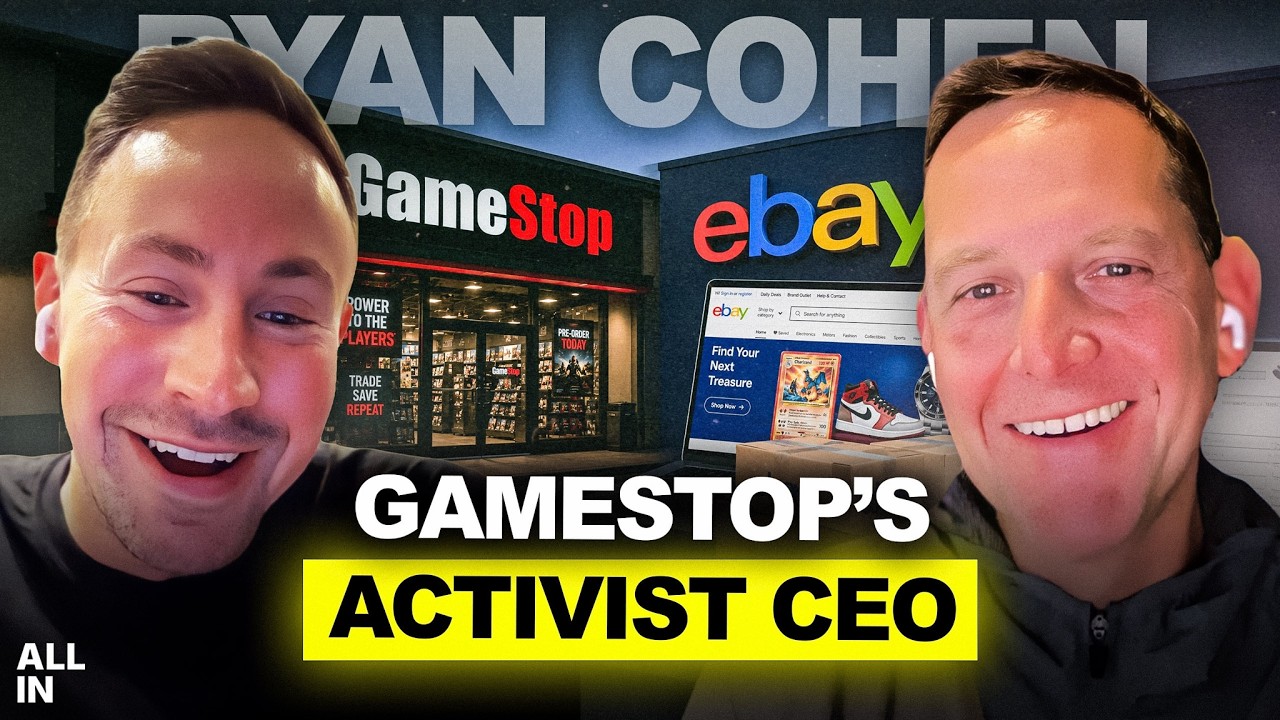
GameStop CEO Ryan Cohen’s $56B Plan to Take Over eBay
 85 min
World's First Trillionaire, Anthropic Fable Banned, The New Oligarchs, Iran Peace Deal
 102 min
Anthropic's Fable Backlash, Nationalizing AI, Inflation Heats Up & California’s Broken Elections
Ask anything from this episode.
Save it, chat with it, and connect it to Claude or ChatGPT. Get cited answers from the actual content — and build your own knowledge base of every podcast and video you care about.
Get Started Free