Key Moments
MIT 6.S094: Deep Reinforcement Learning
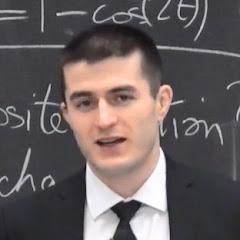 Lex Fridman
Want to know something specific about what's covered?
We've already dissected every moment. Ask and we will deliver (with timestamps).
Key Moments
Deep reinforcement learning teaches AI to act by learning from experience, applied to games and driving.
Key Insights
Deep reinforcement learning extends traditional AI by enabling systems to learn complex tasks end-to-end, from raw sensor data to action.
Reinforcement learning operates on a principle of learning from sparse rewards over time, using temporal consistency to infer optimal behaviors.
Deep Q-Networks (DQNs) use neural networks to approximate the Q-function, enabling reinforcement learning in vast state and action spaces.
Key techniques like experience replay and target networks are crucial for stabilizing and improving the training of deep reinforcement learning models.
AlphaGo Zero demonstrated the power of self-play and deep learning in mastering complex games like Go, surpassing human capabilities.
DeepTraffic simulates a real-world application, allowing participants to train agents in a browser-based environment to improve traffic flow.
THE AI STACK: FROM SENSORS TO ACTION
An AI system functioning in the world requires a complete stack: sensing the environment, extracting features and higher-order representations through deep learning, forming knowledge from this data, reasoning to connect information, and finally planning and executing actions using effectors. The ultimate goal is to accomplish complex objectives, guided by an objective or reward function. This lecture explores how deep reinforcement learning can treat much of this stack as an end-to-end learning problem, moving beyond simple games to more complex, real-world tasks.
REINFORCEMENT LEARNING FUNDAMENTALS
Reinforcement learning (RL) is a machine learning paradigm that sits between supervised and unsupervised learning. It learns from sparse reward signals, leveraging the temporal consistency of the environment. An agent interacts with an environment by taking actions in a given state, receiving a reward, and transitioning to a new state. The core objective is to learn a policy—a strategy for choosing actions in each state—that maximizes cumulative future rewards, often by estimating value functions. Key components include the policy, value function, and sometimes a model of the environment.
DEEP REINFORCEMENT LEARNING AND DEEP Q-NETWORKS
When state and action spaces become exceedingly large, traditional RL methods like Q-tables become intractable. Deep Reinforcement Learning (DRL) addresses this by using deep neural networks as function approximators. Deep Q-Networks (DQNs) are a primary example, where a neural network takes the state as input and outputs the estimated value for each possible action. This allows RL to handle complex, high-dimensional sensory inputs like raw pixels, as seen in games and potentially autonomous driving, by learning relevant representations.
KEY TECHNIQUES FOR STABLE TRAINING
Training deep reinforcement learning agents effectively involves several critical techniques. Experience replay stores past transitions (state, action, reward, next state) and samples them randomly for training, preventing overfitting to the current trajectory. A fixed target network, updated periodically, provides a stable target for the loss function, preventing oscillations. Reward clipping normalizes reward signals to a consistent range, and slowing down action execution (e.g., one action every four frames) can improve stability and efficiency in high-frequency environments.
ADVANCED APPLICATIONS: ALPHAGO ZERO AND DEEP TRAFFIC
AlphaGo Zero represents a significant milestone, learning to master the game of Go solely through self-play, without human expert data, surpassing previous versions and human champions. It combined Monte Carlo Tree Search with deep neural networks that acted as intuition for good moves and also predicted winning probabilities. DeepTraffic illustrates a practical application in autonomous driving simulation. Participants train agents in a browser to optimize traffic flow and average speed, demonstrating how DRL can tackle complex, multi-agent coordination problems within a simulated environment.
CHALLENGES AND FUTURE DIRECTIONS
While DRL has achieved remarkable success in games and simulations, applying it directly to complex real-world physical systems like robotics (e.g., Boston Dynamics) or advanced autonomous driving remains challenging. These systems often rely more on optimization-based, model-driven approaches for control and planning. The issue of reward hacking, where agents exploit unintended loopholes in reward functions to achieve high scores without performing the desired task, is a significant concern for safety and generalization, especially when aiming for Artificial General Intelligence (AGI).
Mentioned in This Episode
●Software & Apps
●Companies
●Books
●Concepts
●People Referenced
Common Questions
The AI system stack includes sensing the environment, extracting features and representations, aggregating information into knowledge, reasoning with that knowledge, and finally forming a plan to act using effectors.
Topics
Mentioned in this video
A type of machine learning where systems learn from labeled datasets, often described as memorization of ground truth.
Advanced methodologies within AI that combine deep learning with reinforcement learning to tackle complex tasks.
A mathematical framework used to model decision-making in situations where outcomes are partly random and partly under the control of a decision-maker.
A technique used in training deep reinforcement learning agents where past experiences (transitions of state, action, reward, next state) are stored and randomly sampled for training, improving stability and efficiency.
A subset of machine learning that uses neural networks with multiple layers to learn representations from data.
A fundamental equation in dynamic programming and reinforcement learning used to calculate the value of a state or action by relating it to future states and rewards.
A type of machine learning where systems learn from unlabeled data, with no explicit human ground truth.
The ability of a system to accomplish complex goals and an overarching field of study focused on creating intelligent systems.
A reference to Ivan Pavlov's experiments on classical conditioning, illustrating learning through association and reward.
A model-free reinforcement learning algorithm that aims to find the optimal action-selection policy for an agent by learning the value of actions in given states.
A heuristic search algorithm used for decision-making in game playing and other domains, particularly effective in large state spaces.
A machine learning paradigm where an agent learns to make decisions by taking actions in an environment to maximize a cumulative reward.
An ancient board game with a vast number of possible positions, often considered a grand challenge for artificial intelligence.
A technique used in DQN training where a separate, periodically updated network is used to provide stable target values for the loss function, mitigating instability issues.
A company whose rocket image was used as a customizable avatar in the Deep Traffic competition.
An artificial intelligence research laboratory responsible for significant advancements in deep reinforcement learning, including DQN and AlphaGo.
A leading robotics company known for its advanced robots, whose control systems largely rely on model-based optimization rather than learning approaches.
A platform where the starter code and additional information for the Deep Traffic competition are hosted.
A deep reinforcement learning algorithm developed by DeepMind that uses a neural network to approximate the Q-function, enabling learning in large state spaces.
Residual Networks, an architecture that significantly improved performance on large-scale image recognition tasks like ImageNet and was adopted for AlphaGo Zero.
A competition and methodology focused on applying deep reinforcement learning to simulate and optimize driving behavior.
An advanced version of DeepMind's AlphaGo system that achieved superhuman performance in the game of Go by learning from self-play without human expert data.
More from Lex Fridman
View all 550 summaries 174 min
Biggest Mysteries in Physics: Antimatter, Dark Energy & ToE - Don Lincoln | Lex Fridman Podcast #497
 259 min
FFmpeg: The Incredible Technology Behind Video on the Internet | Lex Fridman Podcast #496
 124 min
Vikings, Ragnar, Berserkers, Valhalla & the Warriors of the Viking Age | Lex Fridman Podcast #495
 146 min
Jensen Huang: NVIDIA - The $4 Trillion Company & the AI Revolution | Lex Fridman Podcast #494
Ask anything from this episode.
Save it, chat with it, and connect it to Claude or ChatGPT. Get cited answers from the actual content — and build your own knowledge base of every podcast and video you care about.
Get Started Free