Key Moments
MIT 6.S094: Computer Vision
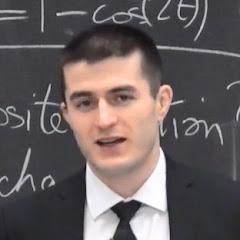 Lex Fridman
Key Moments
Computer vision uses deep learning and CNNs. Key challenges include illumination, pose, and occlusion. Segmentation, optical flow, and time dynamics are crucial for self-driving cars.
Key Insights
Deep learning, particularly neural networks, dominates modern computer vision for image and video interpretation.
Convolutional Neural Networks (CNNs) are central to image classification due to spatial parameter sharing and feature learning.
Key challenges in computer vision for driving include illumination variability, object pose, occlusion, and intraclass variability.
Semantic scene segmentation aims to classify every pixel, crucial for precise object boundary detection in applications like autonomous driving.
Optical flow estimates pixel movement between frames, providing temporal information vital for understanding dynamic scenes.
The SegFuse competition focuses on dynamic scene segmentation, emphasizing the integration of temporal information for improved perception.
THE FOUNDATION OF MODERN COMPUTER VISION
Computer vision, the field of enabling machines to 'see,' is now overwhelmingly powered by deep learning and neural networks. These models learn representations from raw sensory data, like images, by mapping inputs to ground truth labels. The process is iterative: a neural network processes vast amounts of annotated data, learning to generalize from training to testing datasets. Crucially, it's understood that the machine perceives images as numerical data, often with a single channel (grayscale) or three for red, green, and blue (RGB), with the task being classification or regression.
NEURAL NETWORK ARCHITECTURES AND INSPIRATION
The inspiration for deep neural networks comes from the human visual cortex, which processes information in layers, forming increasingly higher-order representations. Early layers detect simple features like edges, while deeper layers combine these to recognize complex objects and scenes. This layered approach is mimicked in deep neural networks. However, applying these to computer vision presents challenges, particularly for driving. Variability in illumination, object pose, and occlusion (where parts of an object are hidden) are significant hurdles, as are intraclass variations (e.g., many different types of dogs).
CONVOLUTIONAL NEURAL NETWORKS (CNNS) FOR IMAGE ANALYSIS
Convolutional Neural Networks (CNNs) are a specialized architecture that excels at image processing. Unlike fully connected networks, CNNs leverage spatial parameter sharing through convolutional filters. These filters slide across the input image, detecting specific features (like edges or textures) regardless of their location. This invariance significantly reduces the number of parameters needed, making training more efficient. The depth of CNNs allows for learning hierarchical features, moving from basic patterns to complex semantic understanding of an image.
EVOLUTION OF IMAGE CLASSIFICATION NETWORKS
The history of CNNs in image classification is marked by significant architectural advancements, starting with AlexNet and progressing through VGGNet, GoogleNet, ResNet, and SE-Net. VGGNet introduced simple, uniform depth, while GoogleNet innovated with 'inception modules' that used parallel convolutions of different sizes to capture features at multiple scales. ResNet enabled much deeper networks by using residual blocks, which eased the training of very deep models. SE-Net achieved state-of-the-art by introducing a mechanism to dynamically re-weight feature channels, allowing the network to better adapt to input content.
SEGMENTATION AND FULLY CONVOLUTIONAL NETWORKS (FCN)
Moving beyond classification, semantic scene segmentation aims to classify every pixel in an image. This is crucial for tasks requiring precise object boundaries, such as in medical imaging or autonomous driving. Fully Convolutional Networks (FCNs) adapt classification networks by replacing fully connected layers with convolutional ones, allowing them to output pixel-wise predictions. Techniques like skip connections and dilated convolutions help maintain resolution during the upsampling process, while methods like Conditional Random Fields (CRFs) are often used as post-processing steps to refine segmentation boundaries by considering image intensities.
ADDRESSING DYNAMIC SCENES AND OPTICAL FLOW
A major limitation of current perception systems is their weak handling of temporal dynamics – how scenes change over time. To address this, optical flow estimation is vital. Dense optical flow calculates the apparent motion of each pixel between consecutive frames, providing directional and magnitude information. State-of-the-art methods like FlowNet 2.0 use neural networks to efficiently compute optical flow. The SegFuse competition, presented in this lecture, aims to advance dynamic scene segmentation by encouraging the integration of temporal information, using both segmentation outputs and optical flow to improve understanding of moving objects in complex environments.
Mentioned in This Episode
●Software & Apps
●Companies
Computer Vision Deep Dive: Key Takeaways
Practical takeaways from this episode
Do This
Avoid This
Common Questions
Key challenges include illumination variability, pose variation of objects, and occlusion, where parts of objects are hidden. Understanding these issues is crucial for developing robust perception systems.
Topics
Mentioned in this video
A large-scale dataset used in computer vision research, mentioned alongside ImageNet and Places.
A dataset of scene-centric images, mentioned alongside ImageNet and COCO.
An architecture that introduced residual blocks, enabling much deeper networks and easier training, and achieved state-of-the-art performance.
A series of models (v1, v2, v3) that advanced semantic segmentation by incorporating dilated convolutions and conditional random fields (CRFs).
A large-scale image dataset with millions of images and thousands of categories, widely used for training and evaluating computer vision models.
A toy dataset of handwritten digits, commonly used as an example in machine learning and computer vision.
A simpler dataset of small icons with ten categories, commonly used to explore basic convolutional neural networks.
One of the first highly successful GPU-trained neural networks on ImageNet, marking a significant boost in performance.
Won the ImageNet challenge in 2017, achieved significant error reduction by adding a parameter to each channel in convolutional blocks to adjust weighting based on input content.
A convolutional neural network architecture known for its depth and uniform structure, used in the ImageNet challenge.
A network architecture in development since the 90s, inspired by Geoff Hinton, focusing on representing spatial relationships and overcoming limitations of traditional CNNs regarding pose and orientation invariance.
A dataset for urban street scene understanding, used for applying segmentation techniques in driving contexts.
A neural network architecture designed to learn optical flow directly from images, with versions like FlowNetS, FlowNetC, and FlowNet 2.0 improving efficiency and detail.
Introduced the 'inception module', allowing for more efficient and effective training by using multiple convolution sizes simultaneously.
A neural network architecture repurposed for semantic segmentation, building upon ImageNet pre-trained networks by replacing fully connected layers with convolutional layers.
More from Lex Fridman
View all 549 summaries 259 min
FFmpeg: The Incredible Technology Behind Video on the Internet | Lex Fridman Podcast #496
 124 min
Vikings, Ragnar, Berserkers, Valhalla & the Warriors of the Viking Age | Lex Fridman Podcast #495
 146 min
Jensen Huang: NVIDIA - The $4 Trillion Company & the AI Revolution | Lex Fridman Podcast #494
 311 min
Jeff Kaplan: World of Warcraft, Overwatch, Blizzard, and Future of Gaming | Lex Fridman Podcast #493
Ask anything from this episode.
Save it, chat with it, and connect it to Claude or ChatGPT. Get cited answers from the actual content — and build your own knowledge base of every podcast and video you care about.
Get Started Free