Key Moments
Marie Kondo Interview | The Tim Ferriss Show (Podcast)
 Tim Ferriss
Want to know something specific about what's covered?
We've already dissected every moment. Ask and we will deliver (with timestamps).
Key Moments
Marie Kondo shares her KonMari Method focusing on 'sparking joy' and organizing life.
Key Insights
The KonMari Method emphasizes retaining items that 'spark joy' and discarding those that don't.
Tidying is seen as a way to order and purify the mind, leading to a more organized life.
The process involves gathering items by category, handling each one, and thanking them before discarding.
Gratitude towards possessions aids in letting go and understanding personal values.
Applying the KonMari Method can lead to significant life changes, including career and relationship shifts.
Organizing principles can be applied to family members, although individual tidying must come first.
THE PHILOSOPHY BEHIND THE KON MARI METHOD
Marie Kondo introduces her revolutionary KonMari Method, which centers on the idea of tidying up by category and keeping only those items that 'spark joy.' This approach goes beyond mere organization; it's presented as a lifestyle and a state of mind that purifies and orders the mind. The method encourages a mindful interaction with one's possessions, fostering a deeper appreciation for what truly brings happiness.
FROM CHILDHOOD INTEREST TO WORLDWIDE MOVEMENT
Kondo's fascination with tidying began at a young age. Inspired by her mother's contentment in homemaking, she started reading organizing magazines at five and later took on organizing tasks at school. This childhood passion evolved into a career, initially through helping friends, which eventually led to professional consultations and the development of her globally recognized method. Her work has sold millions of copies and established 'KonMari' as a verb.
THE 'SPARK JOY' PRINCIPLE AND GRATITUDE
A core tenet of the KonMari Method is the concept of 'sparking joy,' which Kondo explains as 'tokimeku' in Japanese. This involves holding each item and sensing the joy it brings. Paradoxically, she found that focusing on what to discard led to stress, so she shifted to focusing on what to keep. Expressing gratitude to items before discarding them is crucial, as it helps alleviate guilt and makes the letting-go process easier, allowing for a clearer understanding of one's values.
APPLYING KON MARI TO FAMILY AND ORGANIZING PRACTICES
Kondo advises tackling one's own tidying first before attempting to organize family members. She notes that once an individual's space is organized, the positive energy often inspires family members to tidy their own belongings. For those who are resistant, clear boundaries are recommended, such as designating specific storage areas for their items. For children, teaching the correct way to fold clothes is presented as a fundamental step in instilling organizing habits.
DISTINGUISHING KON MARI FROM MINIMALISM AND INHERITED ITEMS
The KonMari Method differs from minimalism by not focusing on owning the least amount of possessions. Instead, it emphasizes having the right amount of items that bring joy and contentment. When dealing with inherited items, sentimental objects are best addressed last, after other categories. The process involves evaluating if the item evokes positive feelings or honors the memory of the previous owner, with gratitude being a key element in deciding whether to keep or let go.
THE GOAL OF GLOBAL ORGANIZATION AND PERSONAL GROWTH
Kondo's ultimate dream is to 'organize the world' by helping people find happiness through her method. She believes that by decluttering and cherishing what truly matters, individuals can lead more fulfilling lives, which can translate into life changes like career shifts or improved relationships. Her personal philosophy echoes her grandmother's value of cherishing belongings and maintaining order, emphasizing that small, consistent efforts build a life of joy.
SHOPPING WITH INTENTION AND PERSONAL JOY
Kondo's shopping criterion is straightforward: does the item 'spark joy'? This sense of joy is a cultivated skill, honed through the tidying process and by cherishing existing possessions. She distinguishes between short-term excitement and items that bring lasting happiness, noting that while both are valid, the process of decluttering helps identify what truly resonates long-term. Her recent purchases reflect this, often being items for her daughter that bring immediate delight.
FAVORITE FAILURES AND THE 'LOVE YOUR THINGS' MESSAGE
A significant 'favorite failure' for Kondo involved discarding her family's belongings during her intense research phase as a student, leading to conflict. This experience taught her the profound importance of respecting others' values and obtaining permission before discarding their possessions. Her core message to the world, displayed on a hypothetical billboard, is 'Love the things you own,' reinforcing the idea of cherishing what one has.
DAILY ROUTINES AND CULTIVATING A JOYFUL ENVIRONMENT
Kondo's daily routine begins with greeting her home and opening windows for fresh air. She incorporates yoga to center herself and then prepares meals for her family. A unique habit includes wiping down the entrance (genkan) to clear away external energies. Her evening routine focuses on returning all items to their designated places, expressing gratitude for the day's work. These rituals emphasize mindfulness and respect for her living space and belongings.
Mentioned in This Episode
●Software & Apps
●Companies
●Books
●Concepts
●People Referenced
KonMari Method: The Essentials
Practical takeaways from this episode
Do This
Avoid This
Common Questions
The KonMari method is a tidying philosophy developed by Marie Kondo, which involves tidying by category and keeping only items that 'spark joy'. The core idea is to surround yourself with things you love.
Topics
Mentioned in this video
The Japanese word for 'spark joy', representing the feeling of excitement or delight an object brings.
Marie Kondo's method of tidying which involves gathering all belongings by category and keeping only those that 'spark joy'.
The core principle of the KonMari method, referring to the feeling of happiness or excitement an object brings when held.
A lifestyle or philosophy focused on living with only the essential items, contrasted with the KonMari method which prioritizes joy over quantity.
A philosophy that teaches the development of self-control and fortitude as a means of overcoming destructive emotions, mentioned in relation to keeping possessions.
Marie Kondo's first and most famous book, which outlines her tidying method and has sold millions of copies worldwide.
A book that Marie Kondo's mother read, which influenced her interest in homemaking.
A book featuring photos of cats and encouraging messages, which Marie Kondo gifted to friends in Japan.
More from Tim Ferriss
View all 703 summaries 70 min
Q&A with Tim — The Art of Male Friendship, Reinvention in The Age of AI, & More
 125 min
Dr. Andrew Huberman — Peptides, Performance, and Protocols
 112 min
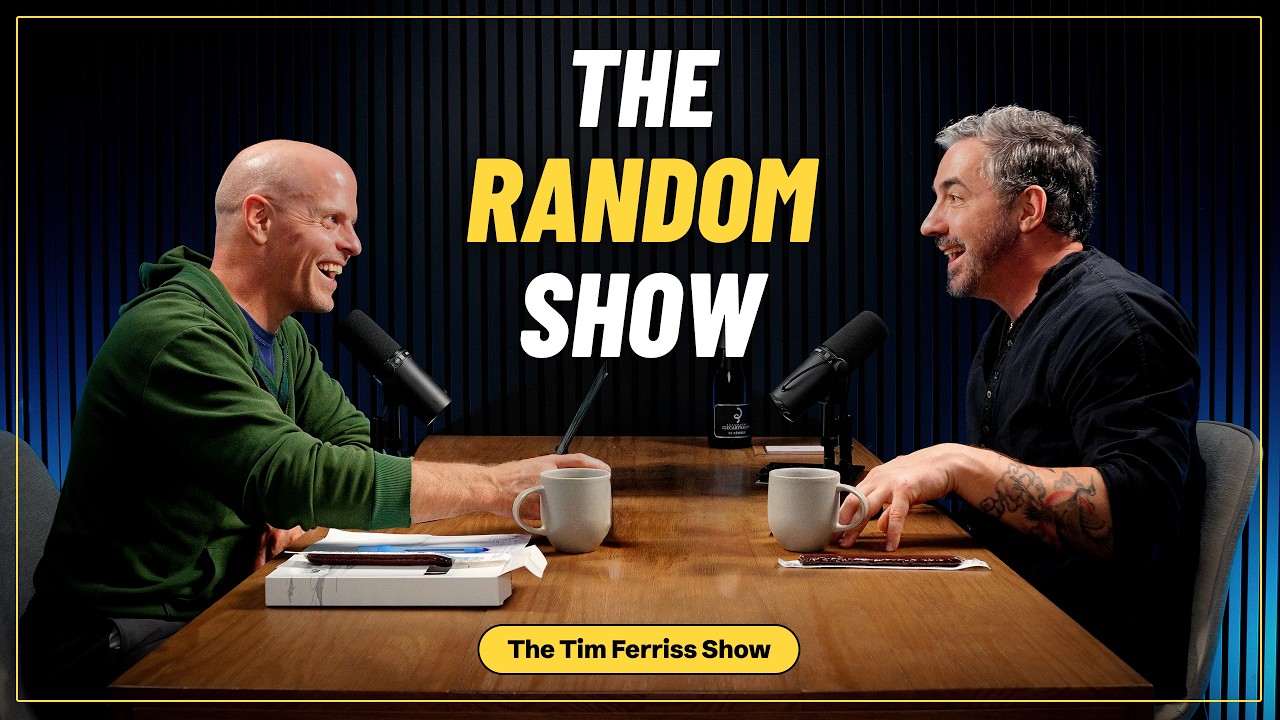
The Random Show! Mortality, AI, Supplements, Rock Climbing, & More
 88 min
The Legendary Hollywood Power Broker — Guy Oseary on 36 Years of Managing Madonna, 26 IPOs, and More
Ask anything from this episode.
Save it, chat with it, and connect it to Claude or ChatGPT. Get cited answers from the actual content — and build your own knowledge base of every podcast and video you care about.
Get Started Free