Key Moments
Making Sense of Belief and Unbelief
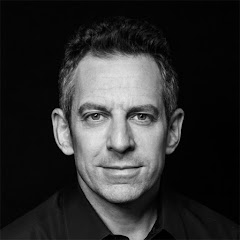 Sam Harris
Key Moments
Sam Harris discusses belief, religion, atheism, and societal impacts with guests who left oppressive faiths.
Key Insights
Belief motivates behavior, making bad ideas a greater problem than bad people.
Militant atheism can be a catalyst for individuals to critically examine their faith.
The Westboro Baptist Church's actions stemmed directly from literal interpretations of religious texts.
Feminist discourse often struggles with critiques of religious practices, particularly the hijab, exhibiting a double standard.
Leaving oppressive religious systems can be influenced by personal doubt, logical inconsistencies, or profound personal experiences.
Societal and cultural contexts significantly shape the expression and enforcement of religious beliefs.
THE NATURE AND MOTIVATION OF BELIEF
Sam Harris posits that belief is a primary driver of human behavior, arguing that "bad ideas are a far bigger problem than bad people." He contends that individuals are rarely inherently 'bad' but are rather motivated by flawed or harmful beliefs. This distinction is crucial because it suggests that minds are generally malleable and open systems, capable of being influenced by better ideas. Therefore, the most effective approach to fostering societal well-being is through reasoned persuasion and the transmission of sound ideas, rather than through condemnation.
THE ROLE OF 'MILITANT ATHEISM'
The concept of 'militant atheism,' characterized by direct and often sharp critique of religious belief systems, is examined. While not suitable for everyone, this approach can serve as a catalyst for individuals to scrutinize their own deeply held religious convictions. Sarah Hader, founder of Ex-Muslims of North America, shares how encounters with militant atheists, who questioned her faith, prompted her to investigate Islamic texts more deeply, ultimately leading her to abandon her religious beliefs.
EXITING OPPRESSIVE RELIGIOUS SYSTEMS
The episode features personal narratives of individuals who have left restrictive religious organizations. Sarah Hader's journey involved questioning problematic verses in the Quran after being challenged by atheists. Megan Phelps-Roper, who grew up in the Westboro Baptist Church, details how a logical inconsistency regarding the death penalty for both gay individuals and those who have children out of wedlock, pointed out by a Jewish person on Twitter, initiated her deconversion process.
THE WESTBORO BAPTIST CHURCH AND LITERAL INTERPRETATION
Megan Phelps-Roper offers a powerful account of growing up in the Westboro Baptist Church, emphasizing that their controversial public actions, like picketing funerals, were not driven by inherent hatred but by a literal interpretation of religious texts, particularly Leviticus. She highlights that their beliefs were a direct consequence of their understanding of scripture, not an imposition of pre-existing malice. The church's focus was on adhering to what they perceived as God's commands, including advocating for severe punishments.
CRITIQUES OF RELIGIOUS IDEOLOGY AND FEMINISM
The episode delves into the complexities of critiquing religious ideologies, particularly Islam, and the often-conflicted reactions from some segments of Western feminism. Yasmine Mohammed points out a double standard where oppression faced by women in some Muslim contexts, like forced marriage or the niqab, is sometimes reframed as empowering by Western observers. She contrasts the unambiguous condemnation of exploitation in the Fundamentalist Church of Jesus Christ of Latter-Day Saints with the more hesitant critique of similar practices within Islamic communities.
THE COERCIVE NATURE OF RELIGIOUS DOGMA
Yasmine Mohammed's personal story illustrates the profound impact of religious dogma, particularly when intertwined with familial coercion and abuse. Her mother's shift from secularism to a strict, born-again Muslim practice, driven by a need for a supportive male figure, led to a life of diminished freedom for Mohammed. She recounts being pressured into a marriage, further restricted by the niqab, and the use of religious threats, like eternal damnation, to ensure compliance, highlighting how belief systems can be weaponized.
CHALLENGING SOCIAL AND POLITICAL TABOOS
Sam Harris and his guests address the sensitive issue of openly criticizing religious beliefs, especially those associated with specific ethnic or national groups. The 'new atheist' movement, which Harris was a part of, aimed to push back against the special status often afforded to religions, arguing for the pragmatic necessity of examining the societal consequences of various belief systems. This stance often leads to accusations of intolerance, even when the critique is aimed at harmful doctrines rather than individuals.
THE PSYCHOLOGICAL AND SOCIAL FACTORS IN BELIEF
The disentanglement from deeply ingrained religious beliefs is not solely a matter of intellectual reasoning. Factors such as loyalty to family, fear of social exclusion, financial dependency, and reactionary personality traits can entrench individuals within their belief systems. While these psychological variables play a significant role, Harris consistently returns to the idea that the specific content of the beliefs themselves is the ultimate driver of behavior, even if other factors influence how those beliefs are adopted or maintained.
THE POWER OF PERSUASION VERSUS VIOLENCE
Harris emphasizes that conversation and persuasion are the primary alternatives to violence in addressing harmful ideas and behaviors. He acknowledges the necessity of force in certain dire circumstances but advocates for a sustained effort to transmit good ideas to as many people as possible. This approach stems from the belief that most individuals are capable of good behavior if guided by sound principles, contrasting with a more hopeless scenario where widespread psychopathy is the norm.
CONTROVERSIES SURROUNDING ISLAM AND CRITIQUE
The transcript highlights the particular scrutiny Islam has faced, especially in the context of terrorism. Sam Harris and others have argued for the need to honestly assess the link between religious doctrine and outward behavior, contrasting the reactions to groups like the Westboro Baptist Church with the responses to violent extremism in the Muslim world. This involves navigating complex political sensitivities and accusations of bigotry, while maintaining that sincere critique is necessary for societal progress.
THE HYPOCRISY OF FEMINIST INTERPRETATIONS OF THE HIJAB
The discussion around the hijab serves as a focal point for critiquing liberal confusion on religious issues. While liberals may intend to support religious freedom, embracing the hijab as solely a symbol of empowerment can mask the coercive reality for many women. This perspective fails to acknowledge that for many, wearing the hijab is not a choice but a requirement enforced by social pressure or religious law, leading to a disconnect between liberal ideals and the lived experiences of some women.
THE 'EX-MUSLIM' DILEMMA
Sarah Hader's powerful statement, 'If Muslims feel they're being badly treated here in the United States, they can go to Muslim majority countries. But where can a person like me go?' underscores the unique and perilous position of ex-Muslims. While Muslims may face Islamophobia in the West, ex-Muslims often contend with both societal biases and the potential threat of violence from within certain segments of the Muslim community itself, creating a situation where they may be less safe in Western countries than average Muslims.
THE ROLE OF SOCIAL MEDIA AND DECONVERSION
The influence of social media in the process of questioning and abandoning religious beliefs is noted. For Megan Phelps-Roper, sustained conversations on Twitter provided a crucial platform for her to confront logical inconsistencies within her faith. While Sam Harris doesn't dismiss the value of patient dialogue, he also recognizes that the accessibility of information and the potential for reasoned argument on these platforms can play a significant role in facilitating deconversion experiences for individuals who may not have had direct encounters with 'militant atheists'.
Mentioned in This Episode
●Organizations
●Books
●Concepts
●People Referenced
Common Questions
The series aims to organize and compile conversations from Sam Harris's podcast to provide a coherent overview of his perspectives on belief and unbelief, encouraging deeper exploration of the topics.
Topics
Mentioned in this video
A memoir by Megan Phelps-Roper detailing her journey of leaving the Westboro Baptist Church.
A book by Richard Dawkins, part of the 'New Atheist movement' alongside Sam Harris's 'The End of Faith.'
A book by Daniel Dennett, part of the 'New Atheist movement.'
A book in the Hebrew Bible and Old Testament containing laws and commandments, cited by the Westboro Baptist Church as justification for their beliefs.
A foundational text of the Latter Day Saint movement, mentioned as an example of a religious work treated with less scrutiny than Islam.
A book by Sam Harris, described as his direct response to the events of September 11, 2001, and a key work in the New Atheist movement.
A book by Christopher Hitchens, mentioned as part of the 'New Atheist movement.'
Sam Harris's book that explores his arguments against moral subjectivism, related to his TED Talk mentioned by Yasmine Mohammed.
The central religious text of Islam, which Sarah Hader began reading critically in her mid-teens, finding problematic verses.
A chapter in the New Testament, cited by the Westboro Baptist Church to support their view that gay people are worthy of death.
A headscarf worn by many Muslim women, discussed as a symbol of religious freedom versus a symbol of oppression and a point of contention in feminist discourse.
The religion discussed in relation to the Westboro Baptist Church's extreme interpretation and the broader context of religious belief.
A veil that covers the face, worn by some Muslim women, discussed by Yasmine Mohammed as a dehumanizing practice that suppresses individuality.
An informal movement in the early 21st century characterized by public efforts to push back against the special status of religion, particularly in response to events like 9/11.
The religion discussed through the lens of Sarah Hader's experience leaving it, Yasmine Mohammed's upbringing under a strict interpretation, and its comparison to other faiths.
Author of 'The God Delusion,' mentioned as a contemporary of Sam Harris in the 'New Atheist movement.'
Author of 'God Is Not Great,' associated with the 'New Atheist movement' and known for sharp criticism of religious belief.
Founder of the Westboro Baptist Church, whose theology and actions heavily influenced Megan Phelps-Roper's upbringing.
Host of the Making Sense podcast, introducing a series on belief and unbelief by compiling existing conversations.
Co-founder of Ex-Muslims of North America, sharing her personal journey of leaving Islam and frustrations with liberalism's stance on religious criticism.
Author of 'Breaking the Spell,' mentioned as part of the 'New Atheist movement.'
Former member of the Westboro Baptist Church and author of 'Unfollow,' sharing her experience of growing up in and leaving the controversial organization.
Author of an article titled 'What ISIS Really Wants,' which connected religious doctrine to outward behavior, relevant to Megan Phelps-Roper's reflections.
Activist and author, sharing her story of leaving a faith system due to familial pressures, abuse, and the coercive nature of certain religious doctrines, particularly concerning women.
A controversial Christian church founded by Fred Phelps, known for its extreme anti-LGBTQ+ stance and funeral picketing.
An extremist militant group whose actions are discussed in relation to religious doctrine and compared to the Westboro Baptist Church's extremism.
An organization co-founded by Sarah Hader that engages in non-belief advocacy and provides community support for questioning Muslims.
Mentioned in comparison to Muslim extremist groups, highlighting how a raid on a fundamentalist Mormon compound was seen as unambiguously righteous, unlike interventions in Muslim communities.
More from Sam Harris
View all 298 summaries 28 min
Michael Pollan on Consciousness, Psychedelics, and the Limits of Neuroscience
 22 min
Why the Stock Market Has Become a Casino
 61 min
UNRAVELING THE DREAM (A New Documentary Executive Produced by Sam Harris)
 20 min
Francis Fukuyama: The End of History Was Never What You Think
Ask anything from this episode.
Save it, chat with it, and connect it to Claude or ChatGPT. Get cited answers from the actual content — and build your own knowledge base of every podcast and video you care about.
Get Started Free