Key Moments
Leonard Susskind: Quantum Mechanics, String Theory and Black Holes | Lex Fridman Podcast #41
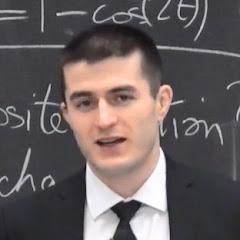 Lex Fridman
Want to know something specific about what's covered?
We've already dissected every moment. Ask and we will deliver (with timestamps).
Key Moments
Physicist Leonard Susskind discusses quantum mechanics, string theory, AI, and the universe as an information processing system.
Key Insights
Intuition and visualization are crucial tools for theoretical physicists, even when dealing with counterintuitive concepts.
Quantum mechanics and modern physics require developing new intuitions, essentially rewiring our brains.
Quantum computers hold immense potential, primarily for simulating quantum systems due to classical computers' limitations.
String theory provides a consistent mathematical framework for unifying gravity and quantum mechanics, even if not directly testable experimentally.
The universe can be viewed as a massive information processing system, but understanding consciousness remains a significant challenge.
Understanding the arrow of time is linked to thermodynamics and large, complex systems, not fundamental to microscopic physics.
THE ROLE OF INTUITION AND VISUALIZATION IN PHYSICS
Leonard Susskind emphasizes that intuition and visualization are paramount in his approach to physics, heavily influenced by Richard Feynman's methods. He finds that visualizing phenomena and then attempting to translate these insights into mathematics is more effective than starting with equations. While quantum mechanics and relativity are inherently counterintuitive, Susskind suggests that prolonged engagement with these concepts leads to the development of new, 'rewired' intuitions.
THE CHALLENGE OF INTUITING HIGHER DIMENSIONS
Despite the ability to develop new intuitions for quantum mechanics, Susskind notes a fundamental limitation in visualizing higher spatial dimensions. He explains that humans are wired for three dimensions and struggle to conceptualize four or more dimensions directly. While mathematical tools can help us work with these concepts, true intuitive visualization of dimensions beyond our perceived reality remains a significant cognitive hurdle.
EGO, HUMILITY, AND THE SCIENTIFIC MINDSET
Susskind discusses the dual nature of ego in science, requiring both arrogance to tackle difficult problems and humility to accept potential errors. He shares his personal experience of feeling like an outsider in academia due to his working-class background, rather than doubting his scientific abilities. This perspective highlights the importance of managing self-doubt while maintaining the confidence needed to push the boundaries of knowledge.
QUANTUM COMPUTERS AND THEIR POTENTIAL
Quantum computers, as actual quantum systems, offer a profound advantage over classical computers for simulating other quantum systems. Susskind explains that simulating even a modest number of quantum systems classically would require more information than exists in the observable universe. While some algorithms like factoring show exponential speedups, Susskind believes the primary power of quantum computers lies in their ability to model complex quantum phenomena in fields like chemistry and materials science.
THE UNIVERSE AS AN INFORMATION PROCESSING SYSTEM
Viewing the universe as an information processing system, or a giant computer, offers a powerful lens for discussing phenomena like black holes. Susskind notes that all systems process information by evolving. However, understanding emergent phenomena like consciousness remains elusive, with introspection often proving misleading. He hopes that future advancements in AI and machine learning might offer new avenues for scientific inquiry into these complex questions.
STRING THEORY: A UNIFIED FRAMEWORK
Susskind views string theory not as a distinct subject but as a tool used by theoretical physicists to address fundamental questions, particularly the unification of gravity and quantum mechanics. Originally developed to understand hadrons, it later found application as a theory of gravity. Its significance lies in providing a mathematically rigorous framework that demonstrates the consistency between quantum mechanics and gravity, resolving long-standing theoretical challenges.
THE MYSTERY OF CONSCIOUSNESS AND INTELLIGENCE
Susskind acknowledges that consciousness is a frontier science is still grappling with, potentially lying in the domain of computer scientists and neuroscientists. He highlights the surprising success of machine learning, where systems evolve intelligence by playing against themselves, suggesting that machines can indeed develop intelligence. This process offers potential clues for understanding human intelligence and consciousness, even if the precise nature of this intelligence remains unknown.
THE QUEST FOR FUNDAMENTAL LAWS AND UNANSWERABLE QUESTIONS
Science continually seeks the simplest underlying rules for complex phenomena, a process evident in fields like superconductivity. While physics aims to simplify, it avoids oversimplifying intrinsically complex systems. Susskind suggests that questions about a fundamental intelligence underlying reality or whether we live in a purposeful simulation may be beyond current scientific methods, though they remain profound and compelling inquiries.
THE ARROW OF TIME AND THERMODYNAMICS
The arrow of time, a symmetrical concept in fundamental physics, emerges with thermodynamics and large systems, linked to entropy and statistical behavior. While microscopic systems are reversible, macroscopic systems' tendency towards randomness makes reversal difficult but not impossible in carefully controlled lab settings. Susskind clarifies that this is not true time travel but the capacity to reverse a system's trajectory, which becomes technologically challenging with increasing complexity.
BLACK HOLES AND THE EVOLUTION OF OBSERVATION
The first image of a black hole is celebrated as a triumph of scientific development, confirming Einstein's general relativity. While it validates existing theories on black hole collisions, Susskind suggests it may not reveal entirely new insights about black holes themselves. However, the technological advancements, from LIGO to the Event Horizon Telescope, represent magnificent achievements in our ability to observe and measure the universe with unprecedented precision.
Mentioned in This Episode
●Products
●Software & Apps
●Companies
●Organizations
●Books
●Concepts
●People Referenced
Common Questions
Leonard Susskind explains that Richard Feynman's deeply intuitive and visual style validated his own approach to physics. While Susskind acknowledges the necessity of mathematics, he prioritizes visualization and intuition as a first step before converting insights into equations.
Topics
Mentioned in this video
A fundamental theory in physics that describes nature at the smallest scales. Susskind notes it's unintuitive but can be learned, and its consistency with gravity is a major achievement of string theory.
A type of spacetime geometry with negative curvature, which is mathematically well-understood and theoretically easier to simulate on a computer compared to our universe's geometry.
The study of complex, non-linear systems highly sensitive to initial conditions. Susskind mentions it in the context of the difficulty in reversing physical processes with many particles.
The broader field encompassing the creation of intelligent machines. Susskind views AI as civilization's journey to understand the human mind and create echoes of it.
A principle in quantum mechanics stating that certain pairs of physical properties, like position and momentum, cannot be known with perfect accuracy simultaneously. Quantum computers intrinsically satisfy this principle.
Massive objects in spacetime with such strong gravity that not even light can escape. Their physics is complex and has connections to quantum computing and cosmology.
The basic unit of quantum information, analogous to classical bits. Susskind highlights the massive scalability challenges in quantum computing, noting 400 qubits would require more information than can be stored in the universe.
The theoretical thermal radiation predicted to be emitted from black holes. Although Stephen Hawking is mentioned in relation to the consistency of gravity and quantum mechanics, Hawking Radiation itself is not explicitly discussed.
A theoretical framework in physics that Susskind is considered one of the fathers of, aiming to understand gravity and quantum mechanics. It originated from explaining sub-nuclear particles and later became a tool for studying gravity and unification of forces.
A cosmological theory that suggests inflation, the rapid expansion of the early universe, may be eternal, potentially implying an infinite multiverse.
A fundamental equation in quantum mechanics that describes how the quantum state of a physical system changes over time. Susskind notes that classical computers can solve this equation for systems but are not quantum systems themselves.
A quantum mechanical phenomenon where two or more particles become linked, sharing the same fate regardless of distance. Susskind emphasizes it as key to what constitutes an 'observer' in quantum mechanics.
The type of spacetime geometry that describes our universe, characterized by positive curvature and exponential expansion due to dark energy. Its quantum mechanics are not well understood.
In quantum mechanics, the phenomenon where the act of observation influences the state of a system. Susskind explains it technically as a system becoming entangled with the observer.
A theoretical framework that combines quantum mechanics, special relativity, and classical field theory. Susskind mentions it as a complex system that quantum computers could simulate.
The branch of physics dealing with heat and its relation to other forms of energy. Susskind explains that the arrow of time emerges at the thermodynamic level due to entropy and large numbers of interacting systems.
Co-founder of Google, with whom Susskind discussed the concept of infinity, using Brin's wealth as a relatable example.
A Nobel Prize-winning physicist whose deeply intuitive and visual approach to physics influenced Leonard Susskind, validating his own thinking style.
A renowned theoretical physicist who questioned the consistency between quantum mechanics and gravity. Susskind notes that this consistency is no longer questioned due to breakthroughs like string theory.
A Nobel laureate physicist who hypothesizes a deterministic substructure underlying quantum mechanics, where quantum phenomena emerge from classical determinism. Susskind finds his ideas interesting but disagrees with his proposed answers.
A specific type of machine learning using neural networks with many layers. Susskind positions AI as a broader concept than just deep learning.
A specific project that produced the first image of a black hole, which Susskind considers an incredible triumph of science and a confirmation of Einstein's theory.
A subset of AI where systems learn from data without explicit programming. Susskind notes its effectiveness is not fully understood and is being explored by physicists.
More from Lex Fridman
View all 550 summaries 174 min
Biggest Mysteries in Physics: Antimatter, Dark Energy & ToE - Don Lincoln | Lex Fridman Podcast #497
 259 min
FFmpeg: The Incredible Technology Behind Video on the Internet | Lex Fridman Podcast #496
 124 min
Vikings, Ragnar, Berserkers, Valhalla & the Warriors of the Viking Age | Lex Fridman Podcast #495
 146 min
Jensen Huang: NVIDIA - The $4 Trillion Company & the AI Revolution | Lex Fridman Podcast #494
Ask anything from this episode.
Save it, chat with it, and connect it to Claude or ChatGPT. Get cited answers from the actual content — and build your own knowledge base of every podcast and video you care about.
Get Started Free