Key Moments
John Arnold on Trading, Energy, and Evidence-Based Philanthropy
 Conversations with Tyler
Want to know something specific about what's covered?
We've already dissected every moment. Ask and we will deliver (with timestamps).
Key Moments
John Arnold discusses energy trading, evidence-based philanthropy, and the challenges of societal change.
Key Insights
Successful trading requires emotional detachment, first-principles analysis, and intense focus.
Energy markets present complex challenges, including the transition from fossil fuels and methane leaks.
Philanthropy is significantly more challenging than trading due to long feedback loops and difficult behavioral change.
Evidence-based approaches are crucial in philanthropy, but improving the integrity of research is vital.
Grid modernization requires linking independent grids for efficiency and reliability.
Reforming tax laws and electoral systems is necessary for a more equitable and functional society.
THE ART AND SCIENCE OF ENERGY TRADING
John Arnold, renowned as one of history's greatest energy traders, attributes his success to a blend of emotional detachment, rigorous first-principles analysis, and an unwavering focus on specific market niches. He emphasizes the importance of identifying and exploiting market imbalances, particularly at the close of trading days. Arnold's approach involved an intense commitment, eating, sleeping, and breathing the markets, yet crucially, he stresses the necessity of removing fear and greed from decision-making processes. This analytical rigor, combined with a self-described chip on his shoulder and a deep passion for the game, allowed him to achieve remarkable success.
TRANSITIONING TO PHILANTHROPY
Arnold's departure from energy trading occurred at the height of his success, driven by a diminishing passion for the game and evolving market dynamics, such as the shale revolution. The growing interest in his foundation work also diverted his energy. He describes philanthropy as a far more challenging endeavor than predicting natural gas prices, citing the difficulty of changing human behavior long-term. This transition marked a significant shift in his career, moving from tangible market dynamics to the complex, often intangible, realm of societal improvement.
ENERGY MARKETS AND THE GREEN TRANSITION
Discussing the energy landscape, Arnold notes that solar power has significantly replaced coal generation but has not kept pace with the growth in electricity demand, leading to continued reliance on natural gas. He highlights methane leaks as a critical environmental concern with natural gas, a problem the industry has historically overlooked. The expansion of solar also brings challenges like the 'duck curve,' necessitating battery storage or transmission upgrades. Furthermore, he points out that global energy demand is projected to double by 2050, adding immense pressure to transition efforts.
CHALLENGES OF GRID MODERNIZATION AND DATA CENTERS
Arnold identifies the U.S.'s fragmented grid system, with three independent grids (East Coast AC, West Coast AC, and Texas DC), as a major obstacle to efficiency and reliability. Linking these grids could unlock significant benefits by balancing loads and generation across regions. He also addresses the burgeoning demand from data centers, fueled by AI, which strains existing power infrastructure. Communities are increasingly resisting data center development due to their high energy consumption and limited job creation, leading to a complex balancing act between technological progress and local impact.
THE RATIONALE FOR EVIDENCE-BASED PHILANTHROPY
Arnold's philanthropic endeavors, particularly through Arnold Ventures, are deeply rooted in an evidence-based approach. He learned that effectively changing human behavior for societal benefit is far more complex than anticipated, encountering a need to critically assess the integrity of academic research. This led to a focus on improving scientific and academic integrity, aiming to combat incentives that favor positive results over rigorous, unbiased findings. His work now centers on developing better evidence and increasing demand for it from both public and private funders.
REFORMING TAXES, ELECTIONS, AND SOCIAL PROGRAMS
Arnold advocates for significant reforms, including taxing bads over goods (like carbon or sugar) and rethinking how past wealth is taxed, particularly concerning capital gains step-ups and endowments. He also suggests increasing the required annual spend for foundations beyond the current 5-6%. In electoral reform, he champions nonpartisan primaries to reduce extremism and give more voice to moderate and independent voters. He expresses disappointment with the overall results of the K-12 education reform movement, emphasizing the need to change incentives to allow successful service providers to scale more effectively.
THE SOUL OF HOUSTON AND ARTISTIC ENDEAVORS
Arnold is drawn to Houston's dynamic growth and opportunity-driven culture, appreciating its diversity and its role as an 'execution city' at the center of the energy industry. His art collection reflects a deep appreciation for timeless pieces, with a particular affinity for modernism and Cubism, valuing the intersection of abstraction and figuration. While acknowledging the discipline required to maintain modernist spaces, he finds great value in art that speaks to its moment and endures through generations. His approach to art acquisition mirrors his investment philosophy: making well-considered decisions with significant long-term impact.
Mentioned in This Episode
●Companies
●Organizations
●Books
●Concepts
●People Referenced
John Arnold's Insights: Trading, Energy, and Philanthropy
Practical takeaways from this episode
Do This
Avoid This
Common Questions
John Arnold attributes his success to detachment from emotion, a first principles approach to information, a balanced confidence level, quantitative modeling skills, a competitive drive, and a deep passion for trading. He also emphasized surrounding himself with smarter people and listening more than talking.
Topics
Mentioned in this video
A proposed set of policies aiming to address climate change and economic inequality, discussed in relation to energy transition feasibility.
An art movement that John Arnold appreciates for its blend of abstraction and figuration, and its revolutionary nature.
An art historical period, specifically 17th-century Baroque, which John Arnold finds relevant to his art collection's narrative arc.
Artist whose later works are considered overrated by John Arnold, suggesting their value is tied more to his name than intrinsic merit.
Filmmaker and designer whose modernist house John Arnold resides in, known for its aesthetic demands.
Wife of John Arnold and co-founder of Arnold Ventures; instrumental in the organization's operations and strategy.
More from Conversations with Tyler
View all 54 summaries 63 min
Luke Burgis on Mimetic Desire, Catholicism, and the Age of Social Contagion
 63 min
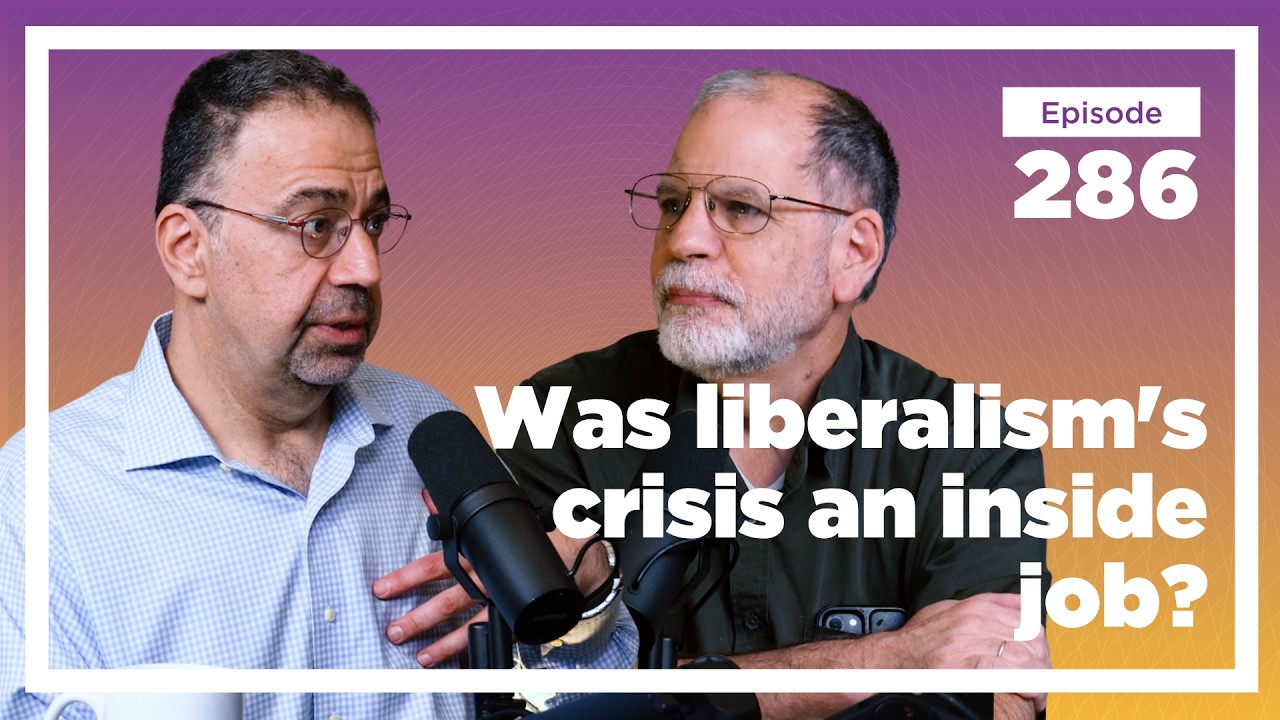
Daron Acemoglu on Liberalism, Automation, and the Educated Elite
 68 min
Julia Ioffe on Russian Women, Missing Men, and the Roots of Autocracy
 64 min
Andrew Graham-Dixon on Vermeer, a Forgotten Sect, and Underrated Artists
Ask anything from this episode.
Save it, chat with it, and connect it to Claude or ChatGPT. Get cited answers from the actual content — and build your own knowledge base of every podcast and video you care about.
Get Started Free