Key Moments
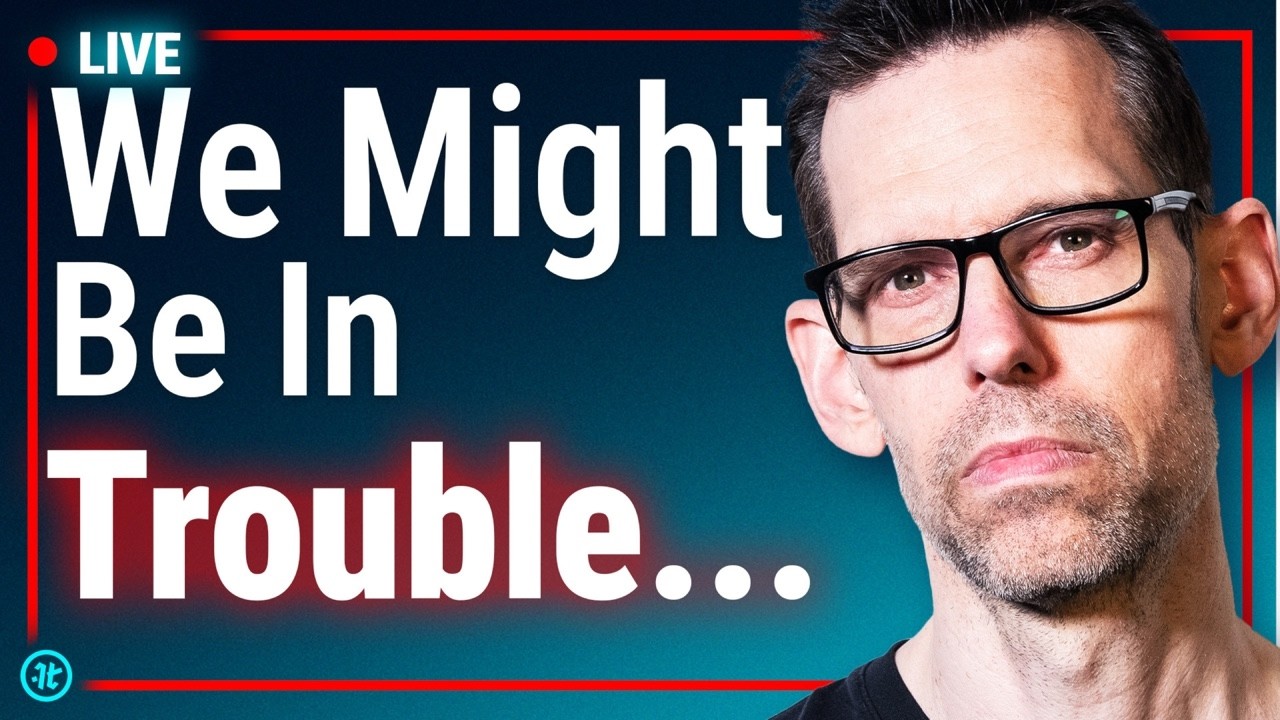
Inflation Just Crashed — and That's the Scariest Part
 Impact Theory
Want to know something specific about what's covered?
We've already dissected every moment. Ask and we will deliver (with timestamps).
Key Moments
Falling inflation, driven by collapsing demand in China and the US, is a warning sign of a brewing global recession, not a sign of economic health.
Key Insights
Headline CPI recently posted its largest monthly drop since COVID, alarming economists who see it as a sign of demand destruction rather than innovation.
China's housing crisis has led to a "massive destruction of wealth" ($18 trillion) and a significant pullback in oil demand, accounting for 74% of the global decrease.
In the US, wage growth is now tied with inflation, but this is largely due to consumers exhausting savings and racking up credit card debt, leading to decreased demand.
The ongoing Iran war, while causing oil price spikes, has not led to sustained high prices due to a global lack of demand, with long-term oil futures locked in the $60s.
Japan has officially reclassified crypto as a financial instrument, integrating it into its securities market law and banning insider trading on crypto assets.
The launch of an AI companion named Olivia by the creators of Genshin Impact saw 100,000 downloads on its first day, indicating a strong consumer interest in personalized AI agents.
Inflation's steepest drop signals a deeper economic illness
The recent headline CPI (Consumer Price Index) has seen its largest monthly drop since the COVID-19 pandemic. While this might seem like good news, signaling lower prices for consumers, the underlying cause is deeply concerning. Instead of being driven by innovation or productivity gains, this deflationary pressure is attributed to a severe "demand destruction" stemming from China's housing crisis and a stealth recession building in the US. Wage growth in the US has conveniently caught up with inflation, but this is a symptom of consumer hardship, not economic recovery. The fear is that this isn't the beneficial, innovation-led deflation that economists hope for, but rather a dangerous sign of a global economic slowdown.
China's housing crisis fuels global demand collapse
A significant contributing factor to the global decline in demand, particularly for oil, is China's ongoing housing crisis. This crisis has resulted in an $18 trillion destruction of home wealth and a drastic reduction in consumer spending. China's pullback in oil demand accounted for a staggering 74% of the global decrease. Despite building up a massive strategic oil reserve, China has failed to draw down significantly, indicating weak underlying demand. Their decision to stop purchasing oil, even as prices dropped, coupled with a large reserve, suggests they are masking economic distress. This demonstrates a critical shift: energy demand, long considered inelastic, is now showing signs of significant contraction.
US consumers are tapped out, leading to decreased demand
In the United States, the situation is also marked by declining demand, albeit from a different cause. Consumers have exhausted their savings and accumulated significant credit card debt in an effort to maintain spending post-COVID. This has led to a point where people are realizing they are getting poorer, forcing them to pull back on purchases. The labor force participation rate is also showing alarming softness, with job growth significantly down from previous levels. This widespread pullback in consumer spending, even impacting energy consumption, signals a stealth recession that is now becoming undeniable. The fact that energy demand has become elastic, contrary to 50 years of economic thought, highlights the severity of this demand destruction.
The Iran war's muted impact on oil prices reveals demand weakness
The ongoing conflict in Iran, which historically would have driven oil prices significantly higher, has had a surprisingly muted effect. Despite supply disruptions and predictions of oil reaching $150-$200 per barrel, long-term oil futures have remained stable in the $60s. This is largely attributed to the weak global demand, particularly from China and the US. The fact that oil prices aren't skyrocketing, even with a major geopolitical conflict, is a strong indicator that demand has collapsed. Traders are betting on deflationary pressures rather than inflationary ones, suggesting a grim outlook for the global economy.
Japan leads the way in crypto regulation
In a significant move for the cryptocurrency market, Japan's upper house has passed a landmark amendment reclassifying crypto as a financial instrument. This moves crypto assets into the same legal category as stocks and bonds, bringing them under the Financial Instruments and Exchange Act. This development is seen as a positive step towards legitimacy, implementing measures like banning insider trading and mandating annual disclosures for issuers. While the US government has largely relied on litigation to regulate crypto, Japan's proactive approach offers a clearer framework for investors and businesses, potentially paving the way for spot crypto ETFs on the Tokyo Stock Exchange.
AI companions gain traction with booming downloads
The growing interest in AI companions is highlighted by the success of Olivia, an AI companion launched by Mi Hoyo, the creators of the popular game Genshin Impact. Olivia, designed to live on your desktop, play piano, and exchange letters, achieved 100,000 downloads on its first day. This rapid adoption signals a strong consumer desire for personalized AI agents that can integrate into daily life. Gaming companies, with their deep understanding of human psychology and character development, are well-positioned to lead in this space, potentially creating unique, proprietary AI experiences that go beyond commodified intelligence.
US manufacturing renaissance and innovation in rare earth alternatives
There's a growing movement to revitalize US manufacturing, exemplified by companies like Terra Firma, Inc., which has raised $115 million to build next-generation manufacturing equipment for off-world bases and domestic use. This focus on tangible production, in contrast to the prior emphasis on software and financialization, is seen as crucial for strengthening the US economy and creating jobs. Simultaneously, innovation in crucial materials is emerging: Vigmag Labs, a startup from Bangalore, has patented a motor design that eliminates the need for rare earth magnets, a resource heavily controlled by China. This breakthrough could reduce reliance on China and drive down costs for electric vehicles and other technologies, potentially fueled by further AI advancements.
Mentioned in This Episode
●Products
●Software & Apps
●Companies
●Organizations
●People Referenced
Median Age of US Politicians
Data extracted from this episode
| Chamber | Median Age |
|---|---|
| Senate | 64 |
| House of Representatives | 59 |
China's Dominance in Rare Earth Magnets (2024)
Data extracted from this episode
| Category | Global Share |
|---|---|
| Rare Earth Refining | 91% |
| Permanent Magnets | 94% |
Common Questions
The drop in CPI inflation is tied to a deep-seated problem brewing in the economy since 2024, characterized by crisis-led deflation rather than innovation-led deflation. It indicates economic softening in major global economies, not a healthy market correction.
Topics
Mentioned in this video
A news sponsor promoting unbiased reporting.
A company securing financing to build next-gen manufacturing equipment for moon and Mars bases; founded by former SpaceX engineers, focusing on manufacturing in the US.
The creators of Genshin Impact, who announced Olivia, an AI companion.
A venture capital firm that invested $100 million in Terrairma.
A defense technology company, cited as an example of manufacturing initiatives in the US.
A cryptocurrency exchange that tried to get clarity from the SEC and is mentioned in the context of banks restricting crypto's ability to pay interest.
Aerospace manufacturer and space transport services company, where Terrairma's founders previously worked.
A 10-month-old startup in Bangalore that patented a way to build electric motors without rare earth magnets, potentially disrupting China's dominance.
Discussion about Japan's 1989 real estate bubble collapse, its current economic distress, leading the way in crypto assets, importing oil from Mexico, and potentially establishing white-only spaces.
The country the US is redeclaring war on, impacting oil prices and global economic stability; facing sanctions and military strikes.
A critical shipping choke point, central to US-Iran tensions and global oil trade discussions.
An economist providing insights into global money movements and economic predictions, particularly regarding deflationary pressures.
A former Federal Reserve governor who is mentioned in the context of the Fed's inaction during inflation and deflation.
The US President mentioned for redeclaring war on Iran, his negotiation tactics, and the potential political spin on economic conditions.
Supreme Leader of Iran, whose death was referenced as a destabilizing event for the IRGC and Iranian government.
Treasury Secretary mentioned for his role in sanctioning Iran's financial activities.
A US Senator whose sister was appointed to take his place, prompting discussion about the appointment process.
US Representative known for his critical views on government spending, national debt, and voter fraud; used in an AI-generated political ad.
US Senator mentioned as another politician who often votes against the Republican party.
US Representative depicted in an AI-generated political ad with Thomas Massie.
US Representative depicted in an AI-generated political ad with Thomas Massie.
CEO of Palantir, whose ideas about proprietary, individualized AI layers are referenced.
Founder of Anduril, cited as an example of manufacturing initiatives in the US.
An economist mentioned as someone whose views Jeff Snyder and Brent Johnson counterbalance.
A macro investor mentioned as part of the 'cool Euro dollar kids' group.
An economist recommended by a viewer.
Lindsey Graham's sister, appointed as a US Senator from South Carolina, raising questions about qualifications and voter representation.
A celebrity mentioned in the context of political ads and how public figures' social media posts can blur the lines of political advocacy.
CEO of SpaceX, mentioned in relation to the work of Terrairma founders.
An economist mentioned alongside Jeff Snyder as a good counterbalance to Lyn Alden.
A news organization reported as the source for the news that Trump notified Congress of war with Iran.
A branch of the Iranian Armed Forces, discussed in the context of power struggles and infighting after the death of the Supreme Leader.
The US Treasury Department under Secretary Scott Bessett sanctioning wallets tied to the Central Bank of Iran.
A satirical news website, used in the discussion about distinguishing satire from misinformation in the age of AI.
A cryptocurrency exchange that collapsed in 2014, cited as a historical event that led to Japan's stricter payment services act regarding crypto.
A company mentioned for its regulated bank status, providing custody for digital assets backing its USDC stablecoin.
Cited for statistics on China's dominance in rare earth refining and permanent magnet production.
An organization that champions socialism, which the speaker strongly criticizes as leading to destructive outcomes.
A pro-Israel lobby group mentioned in the context of attempts to remove Thomas Massie from office.
Military bill bundled with the SAVE Act, approved by the House and sent to the Senate.
A bill related to voter ID, which was bundled with the NDAA, requiring voter ID for a US-Israel military merger to pass.
An ongoing discussion about negotiating a new NAFTA deal between the US, Mexico, and Canada.
An AI language model, used as an example of a complex technology challenging for older generations to use, highlighting the digital literacy gap.
The speaker's own company, to which he wishes to integrate AI for individualized character relationships.
An AI companion created by MiHoYo that lives on the desktop, plays piano, and exchanges letters, designed to have a strong persona.
More from Tom Bilyeu
View all 135 summaries 136 min
Why Economists Ignore the One Chart That Predicts Every Crash
 118 min
The Leaked Iran Attack Plan Never Mattered — And Here's Why
 59 min
Using Unions as a Weapon: The Socialist Plan to Kill Small Companies
 125 min
Scott Bessent's Yen Gambit: Inside the Carry Trade That Could Break the Global Economy
Ask anything from this episode.
Save it, chat with it, and connect it to Claude or ChatGPT. Get cited answers from the actual content — and build your own knowledge base of every podcast and video you care about.
Get Started Free