Key Moments
How To Plan Better | Simple Analog System | Cal Newport
 Deep Questions with Cal Newport
Want to know something specific about what's covered?
We've already dissected every moment. Ask and we will deliver (with timestamps).
Key Moments
Plan deliberately with one master calendar, airtight task capture, and nested goals.
Key Insights
Planning is a tool for a deeper life, not a synonym for endless productivity; it helps you fit meaningful activities into a busy life.
Three core pillars define a good system: (1) a master calendar that shows everything, (2) airtight task management that captures inputs from all channels, and (3) nested goals that connect yearly visions to weekly and daily actions.
Tasks come from many channels (email, messages, conversations). Treat every input as a potential task, but process and route it to a single home base to avoid chaos.
Plan across horizons: yearly/seasonal goals flow into monthly plans, which feed weekly plans and daily time-blocks; life’s variability (like family or clinical workloads) is acknowledged and planned for.
The choice between analog and digital tools is personal; paper can be highly effective for visibility and focus, though digital calendars offer convenience—the key is consistent cadences and rituals.
End-of-day processing and weekly reviews are essential rituals that prevent backlog, reduce anxiety, and keep your system aligned with your actual life.
MASTER CALENDAR: UNIFYING LIFE'S APPOINTMENTS AND ROUTINES
The central premise is that a planning system succeeds when you fuse all time commitments into a single, coherent calendar. Sarah emphasizes a 'master calendar' that includes family logistics, personal commitments, and professional obligations so nothing falls through the cracks. She uses a vertical, weekly-layout approach (akin to certain paper planners) that allows a full week to be seen at a glance—from midnight to midnight—and even reserves a bottom section for family drop-offs and pickups. The calendar isn’t just about meetings; it’s the spine that anchors all other planning work. Importantly, tasks can be scheduled directly or allotted to specific days or weeks, but the calendar remains the anchor point that everyone in the household can reference and that informs the rest of the planning system.
AIRTIGHT TASK MANAGEMENT: WHERE INPUTS BECOME ACTIONS
Airtight task management means capturing every incoming request from multiple channels (texts, emails, work chats, in-person remarks) in a single, well-organized pipeline. Tasks should have a clear landing place and cadence for review, so you know when to look for them and what to do with them. Sarah describes a ritual: if something comes in, you route it to a dedicated vessel (your chosen task tool) and then you review it at a specific cadence—often daily or weekly. A crucial idea is that you shouldn’t keep changing storage vessels; pick one primary place for tasks and build rituals around checking that place. She also notes that some tasks are one-minute actions and should be done immediately; others require longer attention and should be captured for future planning. The processing step (often at day’s end) is where unread items are moved into the appropriate task system, ensuring they don’t linger in inbox limbo.
NESTED GOALS AND MULTI-SCALE PLANNING: ALIGNING YEAR, MONTH, WEEK, AND DAY
The discussion centers on translating big ambitions into actionable, time-bound steps. Sarah uses nested goals that span multiple horizons—yearly, seasonal, monthly, weekly, and daily. The approach resembles Cal Newport’s multi-level planning but with its own emphasis on a robust monthly level. The idea is to hold a high-level plan (yearly/seasonal) and then translate it into monthly themes, weekly focuses, and daily blocks. This alignment ensures urgent tasks don’t overwhelm long-term aims, while still leaving room to adapt to life’s variability (e.g., clinical on-call patterns, family commitments). Regular check-ins at the monthly and weekly levels help recalibrate the plan so it stays realistic and motivating, rather than abstract.
TOOLS, HABITS, AND THE ANALOG-VS-DIGITAL CHOICE
A practical theme throughout the conversation is choosing the right tools for your life rather than chasing a universal ‘best’ solution. Sarah personally leans paper-leaning and uses a vertical planner for the master calendar and weekly view, while acknowledging that digital calendars (like Google Calendar) can be excellent, especially for families who need shared visibility. The key is to establish consistent cadences and rituals—processing inbox items, weekly reviews, and daily time-blocking—that work with whichever medium you choose. The discussion also touches on the idea that one format doesn’t fit every life stage; be willing to adapt as family structure, work demands, and personal preferences evolve.
DAILY PROCESSING AND WEEKLY EXECUTION: MAKING IT SUSTAINABLE
Sustainability comes from disciplined, repeatable routines. End-of-day processing is a central habit: review unread items (texts, emails, messages), decide whether to act now, schedule, migrate, or drop the task, and ensure the inbox isn’t a recurring source of anxiety. Weekly execution builds on the multi-scale plan: allocate time in the calendar for high-priority tasks tied to your weekly and monthly goals, then fill remaining blocks with smaller tasks or maintenance work. The emphasis is not on cramming more into the day, but on creating a realistic rhythm where planning informs action, and action reinforces the plan. This cycle—capture, process, schedule, and execute—keeps distractions at bay and life aligned with deeper priorities.
Mentioned in This Episode
●Products
●Software & Apps
●Tools
●Books
●Concepts
●People Referenced
Minimal planning on-ramp: calendar, capture, weekly interface
Practical takeaways from this episode
Do This
Avoid This
Average runtime of top 20 box-office films (example comparison)
Data extracted from this episode
| Year | Average runtime (minutes) | Source / Mention timestamp |
|---|---|---|
| 2002 | 119 | Vanity Fair stat (discussed) — 4351 |
| 2022 | 132 | Vanity Fair stat (discussed) — 4351 |
Common Questions
Planning is framed as a way to ensure the things you value actually fit into your limited time, and to reduce chaos that makes you reactive to digital distractions; Sarah outlines this motivation at the start of the interview. (see 0)
Topics
Mentioned in this video
Used as an example of a simple digital place where people might keep their planning or idea repository.
Referenced as the mainstream digital master calendar alternative used by many families and couples for shared scheduling.
Mentioned alongside other task apps as an example of software people might use for task storage and weekly planning.
Mentioned by Cal as part of the anti-productivity critique that reframed planning for some audiences; used to contrast Sarah's view.
Co-host with Sarah on the Best of Both Worlds podcast and collaborator on annual/seasonal planning retreats.
Guest on the episode: pediatric endocrinologist, host of the Best Laid Plans podcast, and author of the planning book discussed in the interview.
Referenced as the origin of the 'full capture' idea that underlies airtight task management (Getting Things Done style capture).
Named as an influence in Sarah's thinking (mortality-focused literature that motivates planning choices).
Used as an example of modern content that shows highlights early to retain viewers (illustrating media techniques related to attention).
More from Cal Newport
View all 309 summaries 66 min
Lessons From a Family Living Like It's The 90s
 23 min
Dear AI Companies: Stop the “Doom Trolling”
 58 min
Are You Lazy or Just Overstimulated?
 59 min
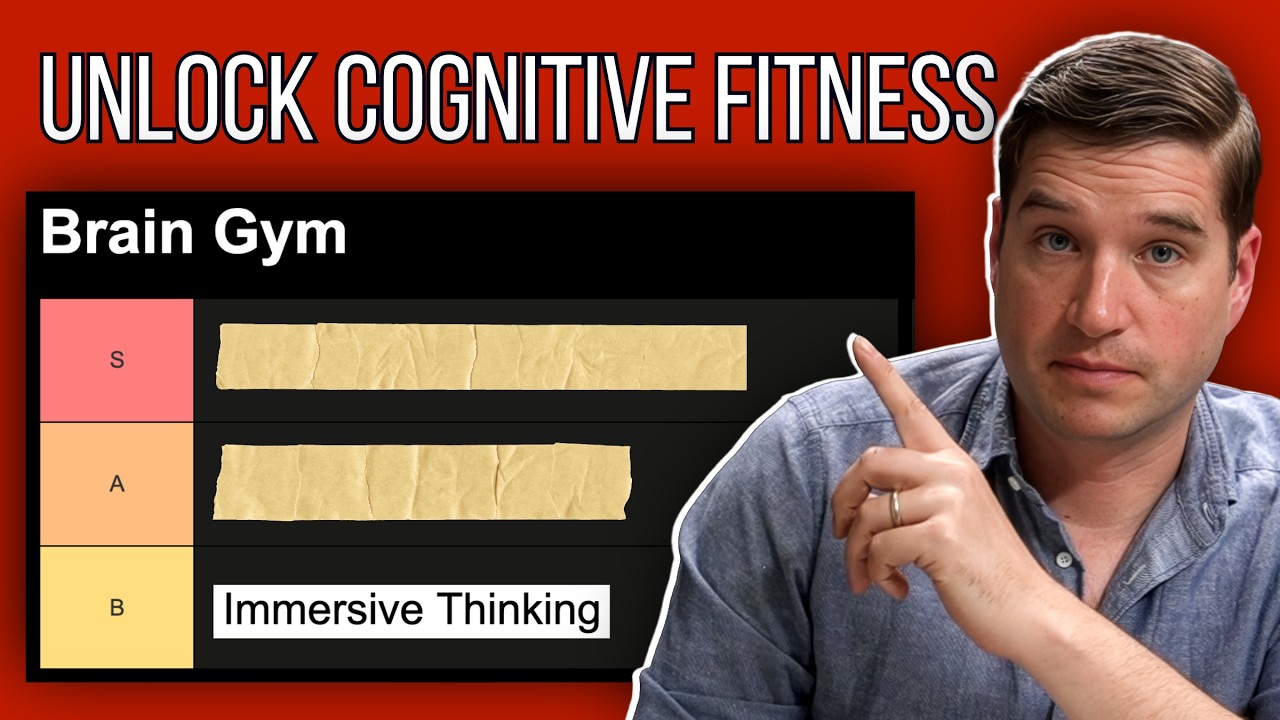
Do I Need a “Brain Gym”?
Ask anything from this episode.
Save it, chat with it, and connect it to Claude or ChatGPT. Get cited answers from the actual content — and build your own knowledge base of every podcast and video you care about.
Get Started Free