Key Moments
AI Makes My Job Miserable. How Do I Escape?
 Deep Questions with Cal Newport
Want to know something specific about what's covered?
We've already dissected every moment. Ask and we will deliver (with timestamps).
Key Moments
AI threatens to plunge knowledge work into a "busyness singularity," where tools automate pseudo-productive tasks to an absurd degree, making jobs miserable and potentially worthless.
Key Insights
Knowledge work emerged in the mid-1950s, with Peter Drucker emphasizing autonomy, which inadvertently led managers to use 'pseudo-productivity' (visible activity as a proxy for effort) to manage workers.
Digital technologies like computers, networking (email), and mobile computing have supercharged pseudo-productivity, making knowledge work increasingly frantic, with workers interrupted every two minutes on average.
Generative AI is now reducing the cost of pseudo-productive activities (writing emails, creating slide decks, transcribing meetings) to zero, leading to a potential "busyness singularity" of infinite shallow work.
To combat this, individuals can plan weekly for important tasks, maintain a portfolio of actual accomplishments, avoid tasks AI can do, pursue upskill projects, and focus on clear, concise writing.
Managers can foster slow productivity by making workloads transparent, holding docket clearing meetings twice a week, insisting on daily office hours, and having employees maintain portfolios of high-value accomplishments.
The sanctity of human speech is questioned in the age of LLMs, with the traditional view of speech as a unique, human characteristic for transmitting ideas potentially being undermined by AI's ability to generate it.
The rise of pseudo-productivity in knowledge work
The concept of knowledge work, coined by Peter Drucker in the mid-1950s, emphasized worker autonomy. However, this posed a management challenge, leading to the emergence of 'pseudo-productivity' – using visible activity as a proxy for useful effort. This heuristic, while imperfect, sufficed for decades. Early examples included appearing busy at the water cooler or maintaining long hours. This system, however, was poorly equipped to handle the shifts brought about by digital technology. Computers increased the number of tasks and administrative duties, leading to constant attention-switching. Networking technologies like email amplified the ability to demonstrate busyness through rapid responses and high email volume. Finally, mobile computing made work inescapable by blurring the lines between work and personal time, creating perpetual tension about whether to demonstrate effort. This evolution, detailed in Cal Newport's 'Slow Productivity,' highlights how technology has exacerbated the shortcomings of pseudo-productivity, leading to increasingly frantic and all-encompassing workdays.
AI's acceleration of pseudo-productivity to a 'busyness singularity'
Generative AI tools are now accelerating the pre-existing trend of pseudo-productivity to an extreme, creating what Newport terms the "busyness singularity." While AI is hailed for potential productivity miracles, its most common current applications in non-programming office jobs involve automating pseudo-productive tasks: writing and summarizing emails, creating slide decks, transcribing meetings, and generating reports. These are activities aimed at demonstrating busyness rather than creating significant intrinsic value. By reducing the cost and friction of these tasks to virtually zero, AI incentivizes a "mad performative dash of button mashing." The future envisioned is one of managing teams of agents producing and responding to AI-generated content, resulting in a "digital blitz of back and forth nothingness" with infinite density of shallow work. This collapse of productivity into absurdity poses a more significant societal threat than mass job automation, as it renders the very purpose of many knowledge roles increasingly hollow and exhausting to perform. The core issue isn't AI itself, but its poor interaction with the long-standing, flawed metric of visible activity in knowledge work.
Weekly planning to reclaim valuable work
To escape the gravitational pull of the busyness singularity, individuals can adopt several strategies. The first is to 'plan weekly.' On Monday mornings, workers should identify specific, non-ambiguous valuable tasks they want to accomplish that week and schedule dedicated time for them on their calendars. This proactive approach is crucial because, when faced with immediate daily choices, the lure of pseudo-productive activities (responding to emails, creating slide decks) is overwhelming. Planning weekly creates a buffer against this constant pull, ensuring that efforts are directed towards activities that genuinely create value rather than simply demonstrating busyness. It requires consciously protecting blocks of time, potentially by rescheduling less critical existing commitments, to make tangible progress on what truly matters.
Maintaining a portfolio of accomplishments
Second, 'maintain a portfolio.' This involves keeping a running list of important initiatives, projects, and accomplishments, akin to a professor's CV. This serves as an alternative metric for value beyond mere visible busyness. By documenting tangible achievements and their positive consequences, individuals can present concrete evidence of their contribution. This portfolio can be used in performance reviews or discussions with managers to shift their perception of value away from pseudo-productivity and towards actual value-producing activities. It provides a grounded counter-narrative to the overwhelming tide of busywork, allowing individuals to assert their contributions based on results rather than perceived effort.
Avoiding and transcending AI's capabilities
The third strategy is to 'avoid what AI can do.' Drawing from his earlier work, Newport suggests asking if a task could be performed by a smart, recently trained individual. Now, the test is even simpler: 'Is this something that an AI agent or chatbot could do?' If the answer is yes, individuals should actively move their work away from such activities. Relying on AI to automate core aspects of one's job makes one vulnerable, as the 'value' being produced is essentially automated. Instead, focus should shift to tasks that AI cannot easily replicate or perform. If most of your work can be automated by AI, you are on a path to obsolescence or, at best, endless cycles of AI-assisted pseudo-productivity. Prioritizing work that requires human judgment, creativity, and complex reasoning is key.
The importance of upskilling projects
Fourth, 'pursue upskill projects.' Continuously learning new, valuable, and relevant skills makes an individual rarer and more valuable in their field, thereby escaping the trap of AI-accelerated pseudo-productivity. Ideally, these skills are integrated into projects for one's job, allowing for both skill development and demonstrable contribution. If direct integration isn't possible, dedicating even a small amount of time daily (e.g., 30 minutes) to learning something new can build a foundation for higher-value work. By focusing on developing hard-won, difficult-to-replicate skills, individuals can move beyond a reliance on visible busyness as a proxy for worth, engaging instead in activities that yield genuine, quantifiable value that AI cannot replace.
Writing as a key human differentiator
The final suggestion is to 'write well.' In an era where AI can generate vast amounts of text, taking the time to craft clear, concise, and succinct professional communication becomes a significant differentiator. While others may inundate recipients with long, convoluted, or emoji-laden AI-generated reports and emails that lack clarity, human-crafted writing that is precise and insightful stands out. This focus on quality over quantity means that even if one sends fewer communications, those that are sent will be valued more. By investing more time in writing than others are willing to, individuals can distinguish themselves from AI-generated content, signaling human expertise and thoughtful engagement. This deliberate effort in writing ensures that communication is not only clear but also conveys a distinct human touch, making it rarer and more impactful.
Managerial strategies for fostering slow productivity
For managers, encouraging slow productivity within teams involves several key practices. Firstly, making workloads transparent is essential, using a central system to track who is working on what, and establishing a 'holding pen' for tasks not currently being addressed, rather than distributing all potential work. Secondly, implementing 'docket clearing meetings' twice a week allows teams to review new issues and decide on priorities, reducing context-switching from constant messages. Thirdly, insisting on daily 'office hours' for team members helps consolidate discussions that require more than a quick message. Finally, managers should encourage employees to maintain a portfolio of high-value accomplishments, shifting the team's focus from visible busyness to demonstrable results. These strategies collectively create a system focused on actual value creation, directly countering the pull towards the AI-driven busyness singularity.
Mentioned in This Episode
●Products
●Software & Apps
●Companies
●Organizations
●Books
●People Referenced
Escaping the Busyness Singularity: Your Action Plan
Practical takeaways from this episode
Do This
Avoid This
Common Questions
AI can exacerbate existing issues in knowledge work by automating pseudo-productive tasks, leading to an overwhelming 'busyness singularity'. This means work becomes a performative dash to generate more shallow content faster, making jobs feel frantic and less valuable.
Topics
Mentioned in this video
The host of the podcast 'Deep Questions', author of 'Slow Productivity' and 'Deep Work', discussing AI's impact on work and strategies for depth.
Mentioned as an instructor whose MasterClass course the speaker has enjoyed.
Co-host of the Acquired podcast, mentioned as someone who uses Claude for practice in communicating ideas.
Author of 'In Defense of Food', whose book Cal Newport reread as inspiration for his potential new book, 'In Defense of Thinking'.
Mentioned as an instructor whose MasterClass course the speaker has enjoyed.
CEO of Anthropic, mentioned alongside Sam Altman in the context of evaluating AI products before blindly embracing them.
Co-host of the Acquired podcast, mentioned as someone who uses Claude for practice in communicating ideas.
A friend of the show and author, with whom Cal Newport plans to edit and train while staying in Asheville.
CEO of OpenAI, mentioned in the context of evaluating AI products before blindly embracing them.
Quoted regarding the medieval commentary of Rashi on speech being central to human uniqueness and creation.
Governor of California who issued an executive order to explore overhauling labor policies due to potential job displacement from AI.
Management theorist who coined the term 'knowledge work' in the mid-1950s and emphasized autonomy as a key concept.
Mentioned as an instructor whose MasterClass course the speaker has enjoyed.
Mentioned as an example of a topic that used to be discussed at the water cooler before digital technology increased busyness.
Mentioned for a headline stating California's governor signed an AI order aimed at protecting workers.
The name of Cal Newport's podcast, which focuses on depth in a distracted world.
Mentioned for an article with the headline 'Prepare for an AI jobs apocalypse. It is not here yet, but government should lay a safety net.'
A podcast whose hosts, Ben Gilbert and David Rosenthal, are mentioned as using Claude for practicing communication and testing ideas.
A brand mentioned as an example of a business using Shopify.
A platform offering online courses, including Cal Newport's 'Rebuild Your Focus and Reclaim Your Time'.
A company focused on providing clear views of AI tool adoption and usage within organizations to help maximize value and manage risks.
Commerce platform recommended for businesses selling online, emphasizing its ease of use for building stores and creating marketing campaigns.
Mentioned for its Work Trend Index Annual Report, which provides data on online worker activities, including email and Teams message volume, and meeting frequency.
A company mentioned as an example of a business using Shopify.
A Virtual Private Network service recommended for enhancing online privacy by encrypting internet traffic and masking IP addresses.
Cal Newport's most recent book, serving as a primary source for the discussion on the negative evolution of knowledge work and the concept of pseudo-productivity.
Mentioned in the context of the essay 'On Gods and LLMs' and the identification of humans as speaking beings.
The book of the Bible that Evan has completed memorizing as part of his cognitive fitness efforts.
Cal Newport's upcoming book, which consolidates ideas from his podcast into a system for cultivating a deep life and making one's life more interesting than phones.
A previous book by Michael Pollan that Cal Newport reread, noted for its focus on setpiece stories and science reporting.
Cal Newport's 2016 book, which proposed the 'smart 22-year-old' test for identifying low-value tasks and is referenced for strategies on strengthening concentration.
Mentioned for a headline reporting a global survey that found worker burnout reaching new highs.
A book by Michael Pollan that Cal Newport reread for its manifesto on eating, seeking parallels for structuring a book about thinking.
More from Cal Newport
View all 314 summaries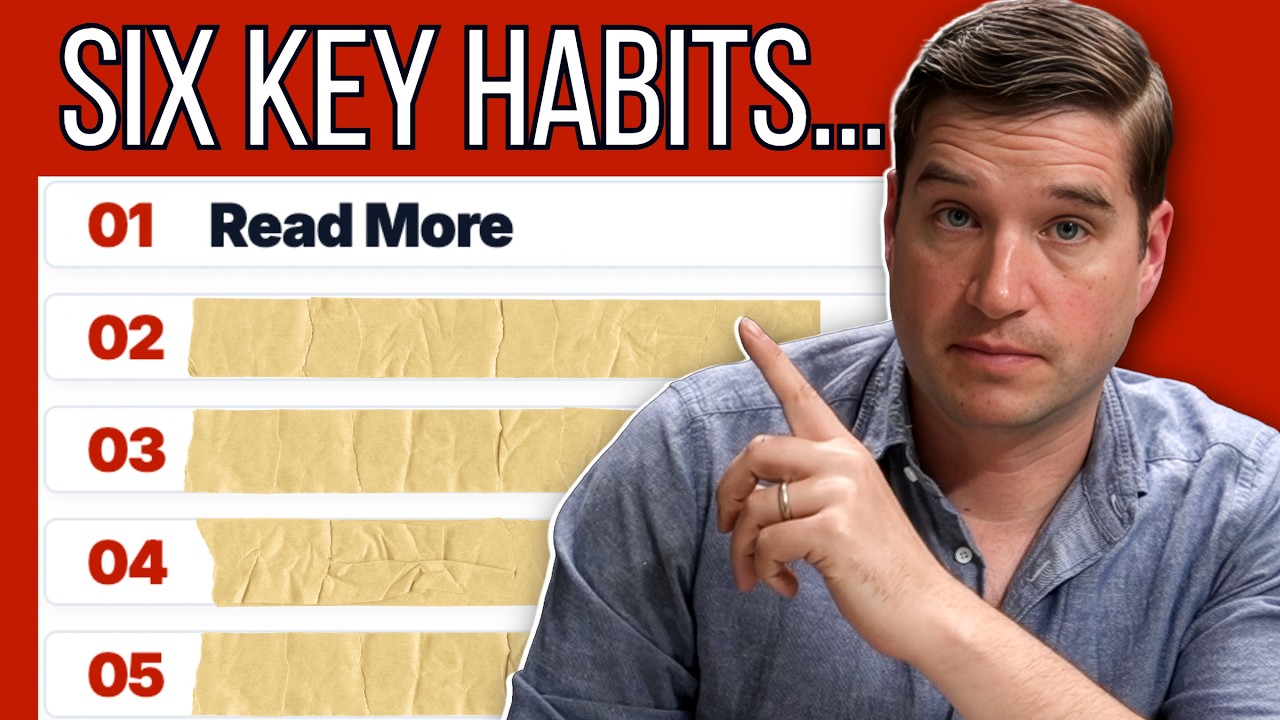 57 min
How to Kick Your Scrolling Habit (Practical Advice)
 65 min
How to Actually Achieve Your Goals (a Proven System)
 34 min
The Real Story Behind OpenAI’s “Rogue” Model
 32 min
Anthropic’s New “Research” Report is Dumb.
Ask anything from this episode.
Save it, chat with it, and connect it to Claude or ChatGPT. Get cited answers from the actual content — and build your own knowledge base of every podcast and video you care about.
Get Started Free