Key Moments
How to Be a Great Founder with Reid Hoffman (How to Start a Startup 2014: Lecture 13)
 Y Combinator
Want to know something specific about what's covered?
We've already dissected every moment. Ask and we will deliver (with timestamps).
Key Moments
Great founders aren't superheroes; they leverage teams, networks, and embrace paradoxes, adapting with both persistence and flexibility.
Key Insights
The myth of the 'super founder' is inaccurate; successful founders often rely on co-founders for diverse skills and support.
Location matters as founders must seek out networks essential for their specific industry and problems.
Being contrarian is valuable, but it requires knowing something others don't, not just disagreeing for the sake of it.
Great founders navigate apparent paradoxes, balancing seemingly conflicting traits like flexibility and persistence, belief and fear, and internal versus external focus.
An investment thesis is crucial for founders to track confidence in their idea, guiding decisions on when to persist and when to pivot.
Founders must take intelligent, focused risks, and minimize other risks to maximize the chance of success.
Product distribution strategy is paramount, often more critical than the product itself, and financing is the bedrock supporting all efforts.
Great founders exhibit adaptability and an "infinite learning curve," continuously learning and adjusting rather than being held back by ego.
Co-founding teams succeed through collaboration, mutual trust, and a diversity of necessary strengths, actively helping each other find truth.
Identifying a 'market' can involve creating a new one, which requires a strong investment thesis and validation, not just assuming demand.
Determining co-founder trust involves extensive conversation, exploring potential disagreements and even 'divorce' scenarios upfront.
DEBUNKING THE SUPERHUMAN FOUNDER MYTH
The popular image of a founder as a "superman" or "superwoman" with a panopticon of skills is a misconception. While founders need a broad skill set, they are not expected to be proficient in everything. Instead, great founders typically possess a few core 'superpowers' that give them an edge. The reality is that entrepreneurship is fraught with challenges, and no single individual can master every aspect. Often, the distinction between genius and madness is only clear in retrospect, highlighting the uncertain nature of innovation.
THE POWER OF CO-FOUNDERS AND NETWORKS
Contrary to the lone genius narrative, most successful startups are founded by teams of two or three individuals. This co-founding structure allows for the compensation of individual weaknesses, leveraging diverse skill sets, and a more robust attack on the wide array of problems startups face. High trust among co-founders is essential, as internal conflict can be fatal. Furthermore, great founders actively seek out networks crucial to their venture's success. While Silicon Valley is strong for certain tech sectors, founders must strategically choose locations where the relevant networks and talent aggregate, as demonstrated by Groupon's move to Chicago or a fashion startup benefiting from proximity to its industry ecosystem.
THE NUANCES OF CONTRARIAN THINKING
Being contrarian is often cited as a hallmark of great founders, but it's not about being disagreeable for its own sake. True contrarianism involves having a well-reasoned belief that is at odds with conventional wisdom, often because the founder possesses knowledge or insight that others lack. When pitching an idea, a founder should consider how intelligent critics might disagree, as this indicates a genuinely contrarian position. The key is not just to be different, but to be different and right, often by understanding nuances that others overlook, such as LinkedIn's strategy for network growth when others doubted its viability.
NAVIGATING APPARENT PARADOXES
Great founders excel at navigating seemingly contradictory demands. This includes balancing the need for persistence with flexibility, holding a strong vision while remaining open to data and customer feedback to pivot when necessary. They must also manage the paradox of focusing both internally on product development and externally on recruiting and market intelligence. The ability to hold both belief and fear is crucial; belief drives the vision, while an awareness of peril (fear) keeps founders grounded and responsive to challenges. This dynamic balancing act is central to adapting and making sound judgments in the face of uncertainty.
THE ROLE OF THE INVESTMENT THESIS AND INTELLIGENT RISK-TAKING
An "investment thesis" serves as a foundational roadmap for founders, articulating their contrarian view and the unique knowledge supporting it. This thesis is central to assessing progress: founders should continuously gauge whether incoming data and market feedback increase or decrease their confidence in the thesis. This evaluation guides decisions on persistence versus pivoting. Great founders also take "intelligent risks" – focused bets that, if successful, unlock significant opportunities, while simultaneously working to minimize other risks. This methodical approach to risk, rather than reckless abandon, is key to long-term success.
STRATEGIC PRIORITIES: DISTRIBUTION, FINANCING, AND VISION
While product innovation is important, product distribution is often more fundamental to a startup's success. A great product that doesn't reach customers is ineffective. Financing is the bedrock that enables all other efforts; running out of money is a common cause of failure. Founders must strategize for future fundraising while executing the current business. The long-term vision provides direction but must be balanced with solving immediate, short-term problems. This strategic interplay, including understanding how distribution and financing align, is critical for architecting a successful venture.
ADAPTABILITY AND CONTINUOUS LEARNING
Adaptability and an "infinite learning curve" are essential traits for great founders. They must continuously learn and adjust, especially as each entrepreneurial journey is unique. Ego can be a significant hindrance, preventing founders from adapting to challenges or incorporating feedback. Great founders, however, are adept at learning from both successes and failures, constantly refining their approach. This is often demonstrated in how they handle critiques and challenges, showing a willingness to engage with truth and adjust their course without losing sight of their core mission.
ASSESSING CO-FOUNDING TEAMS AND PARTNERSHIPS
Building a successful co-founding team hinges on collaboration, trust, and a diversity of essential strengths. Investors often look for a balance of technical and business-oriented founders. Crucially, effective co-founder relationships involve constructive disagreement, where partners challenge each other to find the truth and navigate risks collaboratively. Analyzing potential co-founders should involve extensive discussions, exploring potential conflicts and work styles upfront. This proactive approach establishes expectations and builds a strong foundation for navigating the inevitable challenges of a startup.
THE NATURE OF OPPORTUNITY IDENTIFICATION
The startup ecosystem's efficiency in identifying contrarian opportunities is mixed. While some investors and founders excel at spotting nascent markets or disruptive ideas before they become obvious, noise and conventional thinking can obscure opportunities. Creating markets, rather than just discovering them, is a difficult but potentially rewarding path. It requires a strong conviction in a nascent need and a robust investment thesis to validate it. Founders who can articulate why a market *should* exist, even if it doesn't yet, are often those who succeed in pioneering new ventures.
COMMITMENT AND THE UNBALANCED FOUNDER
True commitment to entrepreneurship often implies an "unbalanced" focus on the venture, at least for a period. Founders who emphasize "balance" in their lifestyle may not be fully committed to winning. This intense focus, while not precluding personal breaks, means pouring significant energy into the startup's success. The "jumping off a cliff and assembling an airplane on the way down" metaphor vividly captures the high-stakes, all-consuming nature of founding a company, underscoring the dedication required to navigate such a challenging and often uncertain path.
Mentioned in This Episode
●Companies
●Concepts
●People Referenced
Common Questions
The classic image of a great founder is that of a 'superwoman' or 'Superman' with a panopticon of skills, excelling in product, strategy, management, and fundraising. This is largely a myth because no single person is universally superpowered; founders typically have a few key strengths but also many weaknesses.
Topics
Mentioned in this video
Used as an example of a startup that might not have succeeded in Silicon Valley due to its need for a large sales force, contrasting with Chicago's strengths.
Mentioned as a startup that Benchmark was the sole investor in, highlighting the difficulty of identifying contrarian opportunities.
Mentioned as a giant competitor that LinkedIn was compared against during its early years.
Used as a primary example throughout the lecture to illustrate concepts like contrarian ideas, network growth, investment theses, and long-term vision.
Mentioned as an example of a startup where an investor could make a quick investment decision due to strong references.
Referenced as a competitor to LinkedIn during its early growth phase.
Incorrectly transcribed as 'zinga', mentioned as a digital gaming company where operational efficiencies are less critical compared to hardware companies.
Mentioned as an example of a startup that navigated challenging periods and pivoted its strategy (e.g., from Palm Pilots to email sync).
Mentioned as a classic example of a 'superfounder'.
Mentioned as a classic example of a 'superfounder'.
Co-founder of PayPal, mentioned for his role in developing fraud systems and proposing the pivot to email payments.
Mentioned as a classic example of a 'superfounder'.
Mentioned as a reference for advice on contrarian ideas and the importance of knowing co-founders for a long time.
Mentioned as a classic example of a 'superfounder'.
Co-founder of PayPal, mentioned in the context of strategic decisions and investor references.
Mentioned as a classic example of a 'superfounder' and his intelligence.
Cited as an example of a founder with a diverse background (teacher) contributing to their entrepreneurial success.
More from Y Combinator
View all 600 summaries 43 min
The Age Of The 40-Year-Old Solo Founder Is Here
 31 min
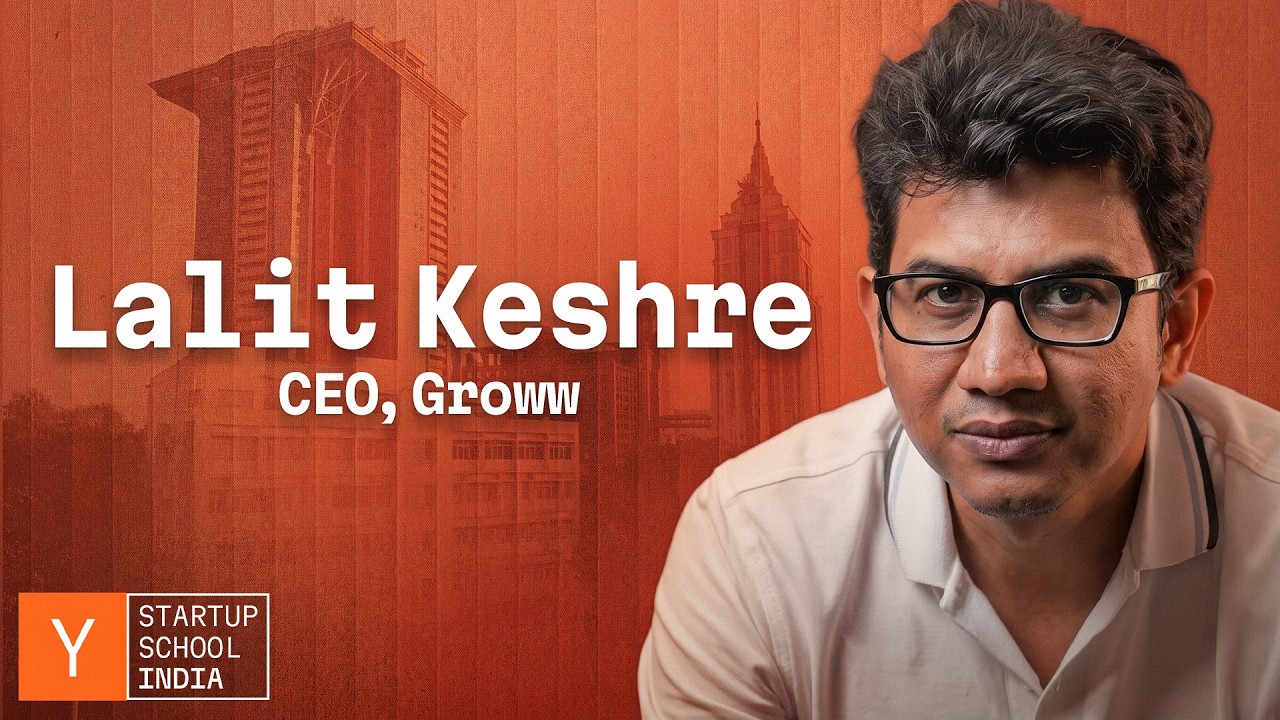
Groww: If Your Customers Don't Love It or Hate It, You've Already Lost
 77 min
5 Papers That Show Where AI Research Is Heading Right Now
 31 min
How Meesho Became India’s Biggest Shopping App
Ask anything from this episode.
Save it, chat with it, and connect it to Claude or ChatGPT. Get cited answers from the actual content — and build your own knowledge base of every podcast and video you care about.
Get Started Free