Key Moments
Gun Violence in America: A Conversation with Graeme Wood (Episode #283)
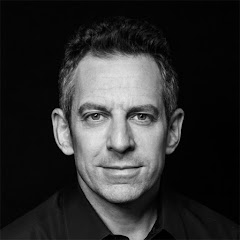 Sam Harris
Want to know something specific about what's covered?
We've already dissected every moment. Ask and we will deliver (with timestamps).
Key Moments
Discussing the complexity of US gun violence, focusing on mass shootings and potential, though difficult, solutions.
Key Insights
The US experiences a unique and intractable problem with gun violence, far exceeding other developed nations.
Focusing solely on assault weapons like AR-15s overlooks that handguns are the primary tool in most gun homicides and suicides.
Responsible gun ownership is possible but requires significant training, vetting, and safe storage, akin to obtaining a pilot's license.
Mass shootings, while horrific, represent a small fraction of overall gun deaths compared to daily homicides and suicides.
Effective responses to mass shootings should prioritize escape routes and decisive action against perpetrators, rather than defensible lockdowns.
Addressing underlying issues like mental illness, ideology, social contagion, and isolation is crucial but complex and difficult to implement at scale.
THE UNIQUE AND INTRACTABLE NATURE OF AMERICAN GUN VIOLENCE
The conversation highlights the deeply entrenched and complex nature of gun violence in the United States, which stands as a stark outlier compared to other developed nations. Despite recurring tragedies like the Uvalde massacre, effective solutions remain elusive due to a variety of deeply rooted cultural, political, and practical factors. The status quo is deemed unacceptable, yet resistance to change is formidable, suggesting that simplistic solutions fail to grasp the multifaceted reality of the problem.
HANDGUNS AS THE PRIMARY PROBLEM, NOT ASSAULT WEAPONS
A crucial insight is that the public discourse, especially after mass shootings, often fixates on assault weapons like AR-15s. However, statistics reveal that handguns are overwhelmingly the weapon of choice for homicides and suicides in the U.S. This focus on long guns, while emotionally charged, distracts from the more pervasive issue of handgun violence, which is politically far more challenging to address and represents the vast majority of gun-related deaths.
RESPONSIBLE GUN OWNERSHIP AND THE NEED FOR STRICTER REGULATIONS
While acknowledging that responsible gun ownership exists and can even enhance personal safety, the discussion emphasizes that acquiring a firearm, especially for self-defense, should be a more rigorous process. The anecdote about obtaining a concealed carry permit in Connecticut illustrates how easily firearms can be acquired without thorough vetting. The ideal proposed is akin to obtaining a pilot's license, requiring extensive training, background checks, and demonstrated competency, making gun ownership a much more non-trivial undertaking than it currently is.
MASS SHOOTINGS VS. THE BROADER SCOPE OF GUN VIOLENCE
The conversation distinguishes between the dramatic but statistically smaller problem of mass shootings and the larger issue of daily gun violence, including homicides and suicides. While mass shootings, particularly school shootings, generate intense emotional responses, they constitute a fraction of total gun deaths. Addressing the pervasive handgun violence in urban areas and the significant number of suicides by firearm are essential for tackling the overall problem, even if they garner less media attention.
EFFECTIVE RESPONSES TO ACTIVE SHOOTER EVENTS
In the context of active shooter events, especially in schools, the discussion critiques the 'shelter-in-place' or 'lockdown' protocols, arguing they can be detrimental. Instead, the focus should be on creating open campuses with ample escape routes, facilitating rapid dispersal like a 'flock of birds'. For those unable to flee, the emphasis shifts to immediate, decisive action against the perpetrator, drawing parallels to the post-9/11 hijackings. This approach prioritizes neutralizing the threat quickly and creating an environment where active shooter events are less likely to succeed or cause mass casualties.
UNDERLYING CAUSES AND THE CHALLENGE OF INTERVENTION
The discussion delves into the complex and often overlapping root causes of gun violence, including mental illness, extremist ideologies, social contagion, and increasing social isolation, exacerbated by factors like the pandemic and online culture. While identifying individuals at risk is crucial, effectively intervening at scale presents immense challenges. The conversation questions the feasibility and efficacy of large-scale monitoring and intervention programs, ultimately suggesting that focusing on points of human interaction, like responsible gun sales and fostering a culture of immediate response, may offer more practical, albeit difficult, avenues for mitigation.
Mentioned in This Episode
●Products
●Software & Apps
●Companies
●Organizations
●Books
●People Referenced
Common Questions
Graeme Wood grew up in Texas, where gun culture is prevalent, and has experience with responsible gun owners. His journalistic work on terrorism and counterterrorism has shaped his perspective on reactive policy-making, making him skeptical of simple solutions after tragedies like Uvalde.
Topics
Mentioned in this video
An organization Graeme Wood is a member of.
A 'gun celebrity' on YouTube who curates videos on self-defense acts, providing real-world evidence of successful gun use in defensive situations.
A cultural icon representing fantasies of self-defense, which Sam Harris argues are not always irrational for responsible gun owners.
US Senator who suggested having a single door for school entry and egress as a security measure, a proposal critiqued as obviously flawed.
Staff writer of The Atlantic, member of the Council on Foreign Relations, and teaches at Yale University. Has reported extensively on terrorism and counterterrorism, influencing his views on gun violence.
Cryptographer and security engineer whose maxim 'a security system that fails well' is cited in the context of school security design.
Comedian whose routine about taxing bullets at $1 million each is recalled as a humorous, yet possibly insightful, idea for limiting ammunition.
Host of the Making Sense podcast, expressing strong opinions on gun control, self-defense, and the political intractability of the issue.
Notorious sniper who shot people from the clock tower at the University of Texas, illustrating a scenario where rifles have a terrifying advantage.
Referenced in a hypothetical scenario of law enforcement intervening in the lives of potentially dangerous individuals flagged by social media data.
A university where Graeme Wood teaches.
Mentioned as an example of a well-resourced society where a killer using a bow and arrow was 'undetected by the system,' highlighting the difficulty of pre-crime detection.
A magazine Graham Wood writes for, publishing his pieces on gun violence and a profile of gun celebrity John Correia.
Criticized for its 'outsized influence politically' over the years, though Sam Harris points out that most gun owners, even NRA members, support comprehensive background checks.
Terrorist group that unusually claimed responsibility for the Las Vegas shooting without apparent evidence, contributing to the mystery of the event's motive.
Cited as another heavily armed society with low gun abuse, attributing this to its territorial defense plan and military training.
Mentioned in the context of their opinion columnists' stance on gun ownership being fatuous.
Mentioned as a neighboring state to Connecticut with potentially harder concealed carry permit processes.
Site of a racist-motivated mass shooting, differing in character from Uvalde but contributing to the debate on gun violence.
Graeme Wood's home state, where gun culture is deeply embedded and the Second Amendment is highly valued.
Referenced as a country that successfully disarmed its society after a mass shooting, initiating a gun buyback program.
State where Graeme Wood obtained his concealed carry permit, finding the process surprisingly easy despite its history with Sandy Hook.
Referenced as a country with low gun violence, suggesting America could resemble it if a gun buyback program were successful.
Mentioned as a neighboring state to Connecticut with potentially harder concealed carry permit processes.
Described as a heavily armed society where weapons are common, used effectively for self-defense, and rarely abused, suggesting a strong gun culture.
Mentioned as a neighboring state to Connecticut with potentially harder concealed carry permit processes.
Referenced as a country with low gun violence compared to the US.
Site of a mass shooting discussed in the podcast, highlighting the unique character and intractability of gun violence in America.
Mentioned in a hypothetical scenario where its user profiling capabilities could be used to identify dangerous individuals, raising privacy and intervention concerns.
A platform where 'gun celebrity' John Correia curates videos demonstrating self-defense shootings, challenging common assumptions about gun use.
Discussed as a potential remedy to identify individuals who pose a risk of violence before they act, particularly for those with mental health entanglement.
The constitutional right to bear arms in the U.S., which Sam Harris notes has inspired a 'religious cult' and contributes to the intractability of gun violence issues.
A type of rifle often the focus of discussion after mass shootings like Uvalde and Sandy Hook, but its role in point-blank range catastrophes is debated.
Site of the deadliest mass shooting in American history, which Sam Harris notes was "memory holed" quickly, possibly due to its unusual nature and other political events.
More from Sam Harris
View all 310 summaries 38 min
The Second Plane, 25 Years Later
 27 min
Is the Far Left Hijacking the Democratic Party?
 27 min
How Trump Became Immune to Scandal
 48 min
When Should You Trust Your Intuition?
Ask anything from this episode.
Save it, chat with it, and connect it to Claude or ChatGPT. Get cited answers from the actual content — and build your own knowledge base of every podcast and video you care about.
Get Started Free