Key Moments
Ep. 255: The Failure Of Cybernetic Productivity
 Deep Questions with Cal Newport
Key Moments
Cybernetic productivity through digital tools fails because it fills the void with more work.
Key Insights
Cybernetic productivity, focused on speeding up shallow tasks and information access, has failed to improve actual work output.
The 'infinite buffer effect' explains this failure: faster task completion leads to more tasks being added, negating time savings.
Solutions include centralizing workload management, intentionally reintroducing friction, and prioritizing attention-centric productivity.
Attention-centric productivity focuses on allocating time and attention intentionally, not just task speed.
Leaders should focus on minimizing context switching, which drains cognitive resources, rather than just adopting new IT systems.
Developing systems for work is a trained skill, often developed through early exposure to pragmatic non-fiction, rather than pure intuition.
THE RISE OF CYBERNETIC PRODUCTIVITY
The dominant model of productivity over the past two decades, termed 'cybernetic productivity,' centers on using digital tools to automate or accelerate non-essential aspects of knowledge work. This approach is defined by four key principles: speeding up shallow tasks, keeping information instantly accessible, reducing communication friction, and simplifying data analysis. Initially inspired by the concept of cybernetics—a symbiosis between humans and machines—this vision has become a widespread paradigm in the digital age, shaping how many knowledge workers interact with their tasks and information.
WHY CYBERNETIC PRODUCTIVITY HAS FAILED
Despite its widespread adoption, cybernetic productivity has largely failed to deliver on its promise of increased output or improved efficiency. The core reason identified is the 'infinite buffer effect.' When tools speed up the overhead tasks surrounding deeper work, they free up time that is immediately filled by new tasks from an ever-present backlog or 'buffer' of potential work. This cycle leads to individuals becoming busier and more exhausted as they efficiently manage more, rather than doing more valuable work or focusing on deep cognitive tasks.
THE INFINITE BUFFER EFFECT AND ITS CONSEQUENCES
The infinite buffer effect is exacerbated by the common organizational practice of assigning potential tasks to individuals to manage. As shallow tasks are automated or accelerated, the void is filled by more work, leading to constant context switching. This constant switching is detrimental, draining mental energy and reducing the capacity for deep, concentrated thought. The result is a feeling of exhaustion and overwhelm, where efficiency in handling administrative tasks does not translate into meaningful progress on core responsibilities, mirroring the concept of machine usefulness without true human value.
RETHINKING PRODUCTIVITY: MANAGING WORKLOADS
To combat the failures of cybernetic productivity and the infinite buffer, managing workloads centrally is proposed as a key solution. Instead of individuals holding onto a vast buffer of potential tasks, work should be managed in a central system. Individuals then pull tasks from this system as they complete existing ones, limiting the active number of projects. This approach helps break the cycle of filling freed-up time with more tasks, allowing for more focused deep work when applied correctly.
REINTRODUCING FRICTION AND EMBRACING ATTENTION
Another strategy involves intentionally reintroducing friction into certain processes. If excessive speed leads to an unmanageable workload, making some tasks more cumbersome—through deliberate use of less efficient tools or communication methods—can act as a natural brake on taking on too much. More broadly, the focus must shift to 'attention-centric productivity.' This approach prioritizes the intentional allocation of limited time and attention, emphasizing deep work, focus, and minimizing context shifts over mere task speed or digital efficiency.
APPLYING PRINCIPLES TO LEADERSHIP AND WORK
For leaders, the crucial step is to steer away from a purely IT-solutions-driven view of productivity and focus on the cognitive limitations and needs of the human brain. Minimizing context switching, even if it introduces friction or conflicts, is paramount. By understanding that deep concentration requires protected time and minimal distractions, leaders can foster environments where meaningful work can occur, rather than pursuing velocity for its own sake. This requires a fundamental reevaluation of work processes, communication, and collaboration, prioritizing sustained focus over constant busyness.
SYSTEMS THINKING AS A TRAINED SKILL
The ability to break down complex phenomena into structured systems and processes, often discussed by Cal Newport, is presented not as innate intuition but as a developed skill. Early and consistent exposure to pragmatic non-fiction, time management principles, and business advice can shape the brain to think in terms of systems. While this 'parlor trick' is useful for analysis and organization, its development is a result of deliberate practice over time, similar to how athletes hone their skills through dedicated training.
ORGANIZING TASKS BY CONTENT, NOT JUST TIME
When organizing tasks, it is more effective to group them by role or major project (content) rather than solely by time sensitivity. This content-specific organization allows the brain to load relevant cognitive contexts, making it easier to switch between tasks within that domain. While time sensitivity is important for planning, it should be a secondary organizational layer within these content-based boards. This approach leverages the brain's natural affinity for related information, reducing cognitive load and improving focus.
PROTECTING DEEP WORK TIME
For individuals in roles with inherent distractions, like legislative consultants, protecting time for deep work is crucial. This often means actively scheduling dedicated blocks of time for focused activity, such as the first two hours of the workday. This requires making deliberate choices, such as not scheduling meetings before a certain time, and accepting potential short-term client friction for long-term business growth and skill development. The trade-off of minor annoyances for significant personal and professional advancement is a key consideration.
LESSONS FROM TAYLOR SHERIDAN'S WORK HABITS
The practices of screenwriting hitmaker Taylor Sheridan offer an extreme example of deep work's potential. By creating an isolated 'writing bunker,' Sheridan was able to produce episodes of television shows at a phenomenal speed. While this was driven by significant financial pressures, it demonstrates the power of extreme concentration. The takeaway is that if such focused environments and dedication were applied to less extreme situations, individuals could achieve substantial output and still maintain a more balanced lifestyle, prioritizing depth over constant engagement.
Mentioned in This Episode
●Software & Apps
●Companies
●Books
●Concepts
●People Referenced
Common Questions
Cybernetic productivity, as defined in the video, is a framework focused on using digital tools to automate or speed up shallow tasks, keep information readily accessible, reduce communication friction, and simplify extracting wisdom from data, aiming to enhance human capabilities.
Topics
Mentioned in this video
Co-author of 'Power and Progress'.
A 'big idea' writer from the 1990s whose work influenced Cal Newport's early thinking about systems.
A writer from whom Cal Newport learned the term 'laptop workers'.
The host of the podcast, discussing his ideas on productivity.
Mentioned in the context of a high-ranking Microsoft employee mentioning being at his house.
A 'big idea' writer from the 1990s whose work influenced Cal Newport's early thinking about systems.
Pioneering mathematician and cyberneticist who articulated the idea of machines as complements to humans.
Involved in creating a project manager program at Microsoft.
A baseball player used as an analogy for precocious talent and childhood dedication.
Co-author of 'Power and Progress'.
Organizer of the Dartmouth conference where the term artificial intelligence was coined.
A 'big idea' writer from the 1990s whose work influenced Cal Newport's early thinking about systems.
Screenwriter and showrunner known for shows like Yellowstone, discussed for his productivity habits and writing isolation bunker.
An AI model mentioned as an example of a tool that can grab information.
A writing assistant and sponsor of the show, with a new product called Grammarly Go powered by generative AI.
A generative AI-powered communication assistant from Grammarly.
A feature from Blinkist allowing users to share premium accounts for a limited time offer.
A TV show related to the Yellowstone universe.
A movie written by Taylor Sheridan.
A hit TV show for which Taylor Sheridan is the showrunner and head writer.
A movie referenced for a humorous analogy about giving speeches on behalf of someone else.
A movie written by Taylor Sheridan.
An app offering summaries of non-fiction books and podcasts, serving as a sponsor.
A commerce platform that is a sponsor of the show.
Company where Cal Newport had a job interview experience described as 'Survivor'.
A VPN service recommended for online privacy and mentioned as a sponsor.
A company with which Taylor Sheridan signed a 200 million dollar deal for his shows.
More from Cal Newport
View all 296 summaries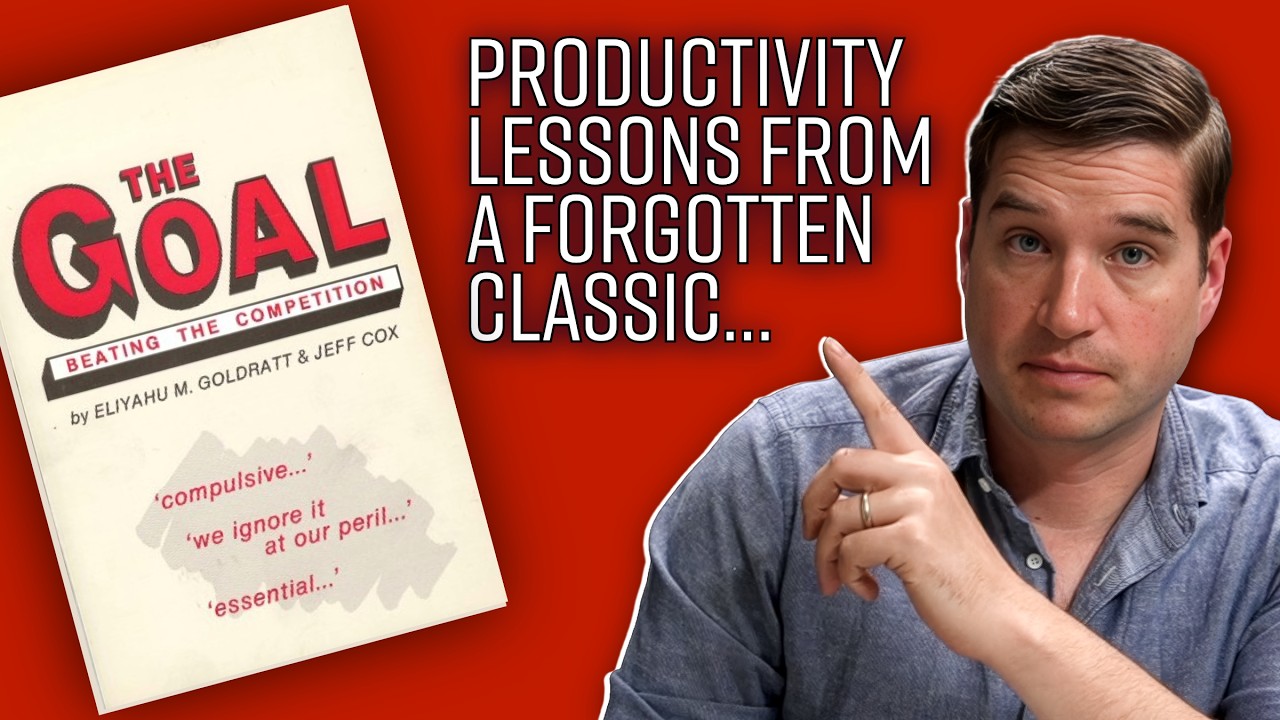 82 min
Am I Optimizing the Wrong Things?
 34 min
Is AI About to Automate Every Office Job? (Not a Chance)
 52 min
How Do I Reverse Brain Rot?
 74 min
Is AI Trending Up or Down in 2026? (Let’s Take a Closer Look)
Ask anything from this episode.
Save it, chat with it, and connect it to Claude or ChatGPT. Get cited answers from the actual content — and build your own knowledge base of every podcast and video you care about.
Get Started Free