Key Moments
Ep. 220: The Two Types Of Ambition
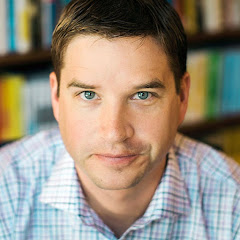 Deep Questions with Cal Newport
Want to know something specific about what's covered?
We've already dissected every moment. Ask and we will deliver (with timestamps).
Key Moments
Cal Newport discusses two types of ambition (feasting vs. simplicity) and a caller's struggle with the 'second control trap'.
Key Insights
Two distinct types of ambition exist: Type 1 craves opportunities success brings (like Michael Crichton), while Type 2 seeks simplicity and autonomy, using success as leverage (like John Grisham).
The 'second control trap' arises when career success grants autonomy, but market pressures entice one to maintain the status quo rather than exercise that control.
Effective career planning involves lifestyle-centric considerations, envisioning future life goals to guide present decisions.
Applying 'So Good They Can't Ignore You' principles involves deliberate practice in skills that are valuable, even if challenging.
Journaling can aid creativity, but improving writing skills requires writing for feedback from an audience.
Keystone habits can be applied to different life 'buckets,' including community, with examples like daily outreach or online community engagement.
THE SPECTRUM OF AMBITION: CRICHTON VS. GRISHAM
Cal Newport introduces two fundamental types of ambition, drawing parallels with authors Michael Crichton and John Grisham. Crichton exemplifies 'Type 1' ambition, characterized by a relentless pursuit of diverse opportunities and projects that success generates. He demonstrated this early in his career by juggling multiple book projects, screenplays, and even directorial ambitions alongside his medical studies. This type thrives on complexity and engagement with new challenges. In contrast, John Grisham represents 'Type 2' ambition, which prioritizes simplicity, autonomy, and a streamlined life. Grisham used his literary success to simplify his obligations, retreating into a focused writing routine rather than expanding into a multitude of ventures.
NAVIGATING THE SECOND CONTROL TRAP
The podcast delves into the 'second control trap,' a concept where individuals achieve significant career leverage and autonomy but find it paradoxically harder to exercise that control. This trap occurs when accumulated skills and respons1ibilities create a situation too lucrative or complex to easily alter. A caller, Spiros, exemplifies this by having excelled in robotics and self-driving cars, leading to high performance reviews and numerous options. Despite having the skills for autonomy, his current role involves a high degree of reactive work, meetings, and Slack communication, pulling him away from deep, proactive engagement and making it difficult to leverage his control for a simpler or more fulfilling lifestyle.
PRINCIPLES OF DELIBERATE PRACTICE AND CAREER PLANNING
Spiros's journey illustrates the practical application of Cal Newport's 'So Good They Can't Ignore You' principles. He initially applied deliberate practice by deeply engaging with fundamental research papers in robotics and then mastering essential programming languages and the Robot Operating System for the DARPA challenge. This approach, focusing on acquiring valuable skills, led to significant career advancement. Newport advises that for Spiros, bridging the gap from the second control trap involves a potential deep-to-shallow work ratio conversation with his manager and long-term lifestyle-centric career planning, envisioning future life goals at ages 40 and 50 to guide current decisions.
THE VALUE OF JOURNALING AND KEYSTONE HABITS
The discussion touches upon the role of journaling and keystone habits. Newport clarifies that while private journaling can foster creativity by surfacing new ideas, it's less effective for improving writing skills. True improvement in writing comes from seeking an audience and valuable feedback, whether through editors or reader engagement. For keystone habits, particularly for the 'community bucket,' suggestions include daily outreach to friends or family, engaging with a controlled online community, or participating in community-based learning like a daily Torah study with a partner. These habits signal commitment and maintain connection, even in small, consistent increments.
STRATEGIES FOR EFFECTIVE PLANNING AND READING
Newport emphasizes the importance of multi-scale planning, advocating for quarterly, weekly, and daily plans that inform each other for optimal time and energy management. His own quarterly plans are brief, focusing on key objectives like academic papers, book writing milestones, or media projects, serving as directional guides rather than exhaustive schedules. Regarding book selection, he employs a dual 'functional' and 'inspirational' approach. Books are acquired either for research or because they pique his interest, demonstrating a flexible yet intentional system for continuous learning and intellectual engagement.
FOUNDATIONAL ADVICE FOR TEENAGERS
For a 16-year-old aspiring to a deeply satisfying life with multiple income streams, Newport offers foundational advice: prioritize academic organization, introduce life discipline through physical and mental practices, be wary of excessive video game and social media use, embrace 'bulk positive randomness' to explore interests, study character and leadership through exemplary figures, and crucially, practice serving others. These habits build resilience and shape a character capable of navigating future opportunities effectively, ensuring a well-rounded and controlled adult life.
Mentioned in This Episode
●Products
●Software & Apps
●Companies
●Organizations
●Books
●Concepts
●People Referenced
Common Questions
Cal Newport identifies two types of ambition: Type 1 (exemplified by Michael Crichton) craves activity and seeks to maximize opportunities generated by success. Type 2 (exemplified by John Grisham) craves simplicity and autonomy, using success as leverage to reduce stressful obligations and focus on core activities. These represent different approaches to career and life. (Timestamp: 1041)
Topics
Mentioned in this video
A bookstore in Washington D.C. where Cal Newport is moderating a conversation for a book event.
An online learning platform offering classes from world-class instructors, recommended by Cal Newport.
A robotics company known for its advanced robots, including the Atlas humanoid robot.
A coffee brand that Cal Newport drank a lot of during his time at MIT.
A grocery store brand from which Cal Newport buys his pumpkin spice Harvest coffee.
The film studio that bought the movie rights for John Grisham's book 'The Firm' for $600,000 before its publication.
The publishing company that acquired the book rights for John Grisham's 'The Firm' after its movie rights were sold.
A research organization focusing on AI, mentioned as a potential affiliation for a location-independent professional.
A free app that helps users find patient-reviewed doctors who take their insurance and are available when needed.
A scientific research institute in La Jolla, where Michael Crichton had a 'half-hearted post-doc' after medical school.
A university where writers like Walter Isaacson and Jon Meacham hold visiting professorships.
The newspaper that published a profile of Michael Crichton in 1970, which inspired Cal Newport's discussion on ambition.
A magazine Cal Newport mentions writing for, in line with his 'aspirational Grisham' lifestyle of writing focused pieces.
An effective altruism organization that helps people find careers that do the most good.
A youth baseball organization that John Grisham was heavily involved with, building a complex with five great fields.
The university where Cal Newport's coffee consumption escalated due to the culture of the theory group.
An organization co-founded by William MacAskill and Toby Ord that researches and recommends effective charities to maximize positive impact.
The university where Cal Newport took computer science courses while in high school, associating coffee with intellectual work there.
The college Cal Newport attended, where he improved his academic performance significantly by applying systematic strategies.
One of Michael Crichton's early thrillers, published under a pseudonym, which won an Edgar Award for Best Mystery Novel of the year.
Michael Crichton's second techno-thriller written under his own name, which he also intended to direct as a movie.
John Grisham's second book, which gained significant attention and movie rights sales before publication, launching his career.
A book mentioned by a caller that discusses private journaling as a way to increase creativity.
A new book by David Sacks that Cal Newport will be moderating a conversation about.
Cal Newport's approach to working on things sequentially and with great focus, leading to results over time without being hyperactive.
Cal Newport's book offering study and time management strategies for college students, recommended for his son.
Cal Newport's book about developing rare and valuable skills for career success, which Spiros applied in his PhD studies and startup career.
Cal Newport's book discussing focused, undistracted work, and the concept of deep to shallow work ratio.
Cal Newport's book adapting study and time management advice for high school students, recommended for his son.
A memoir by Ben Casnocha about being a teenage entrepreneur, which introduces the term 'bulk positive randomness'.
An actor who starred in the movie adaptation of John Grisham's 'The Firm'.
An author who Cal Newport believes also shares a 'write-focused' ambition, similar to John Grisham.
A friend of Cal Newport who has a new book out called 'The Future Is Analog,' which Cal will be moderating a conversation for.
An actor who starred in the movie adaptation of John Grisham's 'The Firm'.
An extremely prolific author and director, initially discussed as an example of 'Type 1' ambition due to his hyperactive career juggling multiple projects simultaneously.
An author and speaker who has a podcast network and a MasterClass on writing, mentioned by Cal Newport.
A writer mentioned as holding a visiting professorship at a university.
Cal Newport mentions doing a 'top performer course' with him, which discusses a journalistic approach to career development.
A filmmaker whose MasterClass on scene deconstruction Cal Newport found fascinating.
The author and host of the podcast 'Deep Questions,' discussing his work on deep living and two types of ambition.
A pen name used by Michael Crichton during his early career when he published four books while in medical school.
An Oscar and Emmy award-winning screenwriter whose MasterClass included a screenwriting seminar with student feedback.
A philosopher and co-founder of Giving What We Can, focused on effective altruism.
A friend of Cal Newport who wrote 'The Startup of You' and coined the term 'bulk positive randomness'.
A military professional and podcaster mentioned as an example of someone to study for character and leadership.
A successful fiction writer, used as an example of 'Type 2' ambition due to his focus on simplicity and autonomy after achieving success.
A Pulitzer-winning writer mentioned as holding a visiting professorship at a university.
Author of a blog where Cal Newport wrote an article about the 'failed simulation effect'.
An effective altruist philosopher at Oxford, co-founder of Giving What We Can and 80,000 Hours.
A fundamental programming language Spiros learned while applying 'deliberate practice' to robotics software.
A middleware for robotics applications that Spiros learned as a fundamental skill.
A note-taking application Spiros used to organize his studies and notes on research papers.
A fundamental programming language Spiros learned while applying 'deliberate practice' to robotics software.
A place where John Grisham used to write, before moving to Charlottesville, Virginia.
The location of John Grisham's farm, where he has an outbuilding renovated for his monastic writing routine.
A seaside community in San Diego, California, where the Salk Institute is located.
The county where Cal Newport attended public high school, which includes Princeton.
An example of a place where one could live with a flexible, contractor-based work setup.
A city Spiros considers moving to for lifestyle optimization, leveraging its Central Time Zone for more morning deep work.
More from Cal Newport
View all 320 summaries 40 min
The Real Story Behind GPT-6’s “Stealth Thinking”
 52 min
How to Gain Control of Your Time
 27 min
The Truth about OpenAI’s “Secret AI Civilizations”
 81 min
How to Reinvent Your Life in 2026
Ask anything from this episode.
Save it, chat with it, and connect it to Claude or ChatGPT. Get cited answers from the actual content — and build your own knowledge base of every podcast and video you care about.
Get Started Free