
GPT-3
2020 transformer-based large language model
What podcasters actually say about GPT-3.
114 mentions, no marketing. Save them all to a pod and ask any question.
Common Themes
Videos Mentioning GPT-3
Stanford CS25: Transformers United V6 I From Next-Token Prediction to Next-Generation Intelligence
Stanford Online
A large language model trained around 2021 on hundreds of billions of tokens, serving as a reference point for data consumption evolution.

Stanford CS336 Language Modeling from Scratch | Spring 2026 | Lecture 13: Data (Sources, Datasets)
Stanford Online
Its dataset included Common Crawl processing, expanded web text, internet-based books corpora, and Wikipedia, totaling 500GB of text.

Stanford MS&E435 Economics of the AI Supercycle | Spring 2026 | Enterprise Internal Knowledge
Stanford Online
Mentioned as the first model that exhibited a level of general intelligence, building on scaling laws.

Stanford CS336 Language Modeling from Scratch | Spring 2026 | Lecture 15: Mid/Post-Training
Stanford Online
A large language model that represents a strong base model, but with limited utility and difficulty in instruction following compared to newer models. Its primary uses were copywriting and simple tasks.
Stanford CS336 Language Modeling from Scratch | Spring 2026 | Lecture 14: Data
Stanford Online
Mentioned in the context of its training data filtering process, which used Wikipedia, web text, and books as positive examples and web samples as negative examples, trained with a linear classifier.
Inference, Diffusion, World Models, and More | YC Paper Club
Y Combinator
Mentioned as an example of emergence of in-context learning in 2020.

Why AI Agents Need Context | Deep Dives with a16z
a16z Deep Dives
Mentioned as an early version of AI that Fiverr has used to build data replication connectors.
Stanford CS336 Language Modeling from Scratch | Spring 2026 | Lecture 17: Alignment - Multimodality
Stanford Online
Mentioned as a precursor to foundation models in the language domain before CLIP's development in vision.

The CEO Must Be the Chief AI Officer
Y Combinator
An early large language model that the speaker experimented with, recognizing its potential but seeing it as a research project.
Stanford CS153 Frontier Systems | Scale, AGI, and the Future of Everything
Stanford Online
A large language model developed by OpenAI. It was initially unclear how to productize it, leading to the launch of the GPT-3 API, which eventually gained traction and led to the development of ChatGPT.

Riding AGI, AI Anxiety, Who Funded COVID, Defending Taiwan, and California Empire
Naval
An early AI model from OpenAI, initially met with skepticism but now recognized for its value.

He Risked Everything To Warn You: No One Is Ready For What's Coming, And The AI Companies Know It!
The Diary Of A CEO
A large language model whose capabilities led Danielle Contello to shorten his AI timelines, perceiving it as a significant step towards superintelligence.
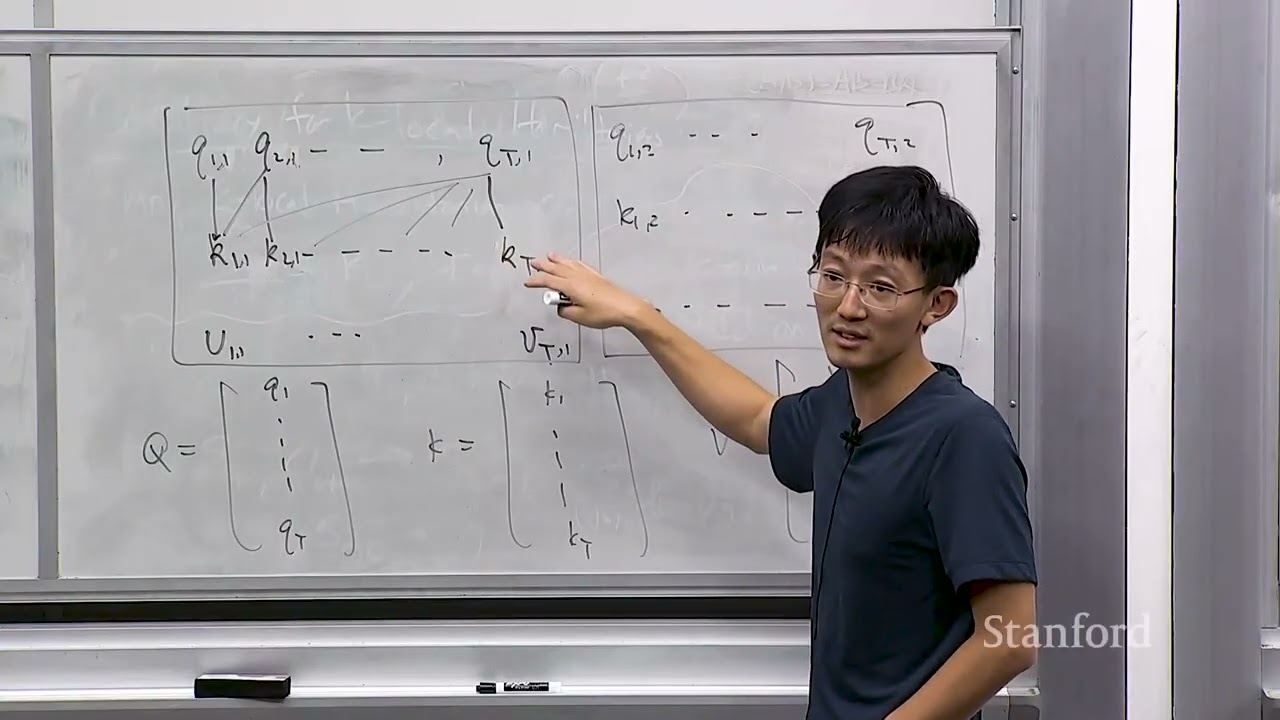
Stanford CS229 Machine Learning | Spring 2026 | Lecture 16: Basic Concept in RL, Policy Gradient
Stanford Online
Mentioned as the paper that highlighted the surprising few-shot and zero-shot capabilities of large language models without parameter updates.

Stanford CS229 Machine Learning | Spring 2026 | Lecture 14: Transformers, In-Context Learning
Stanford Online
Mentioned as the starting point for the current paradigm of autoregressive large language models.
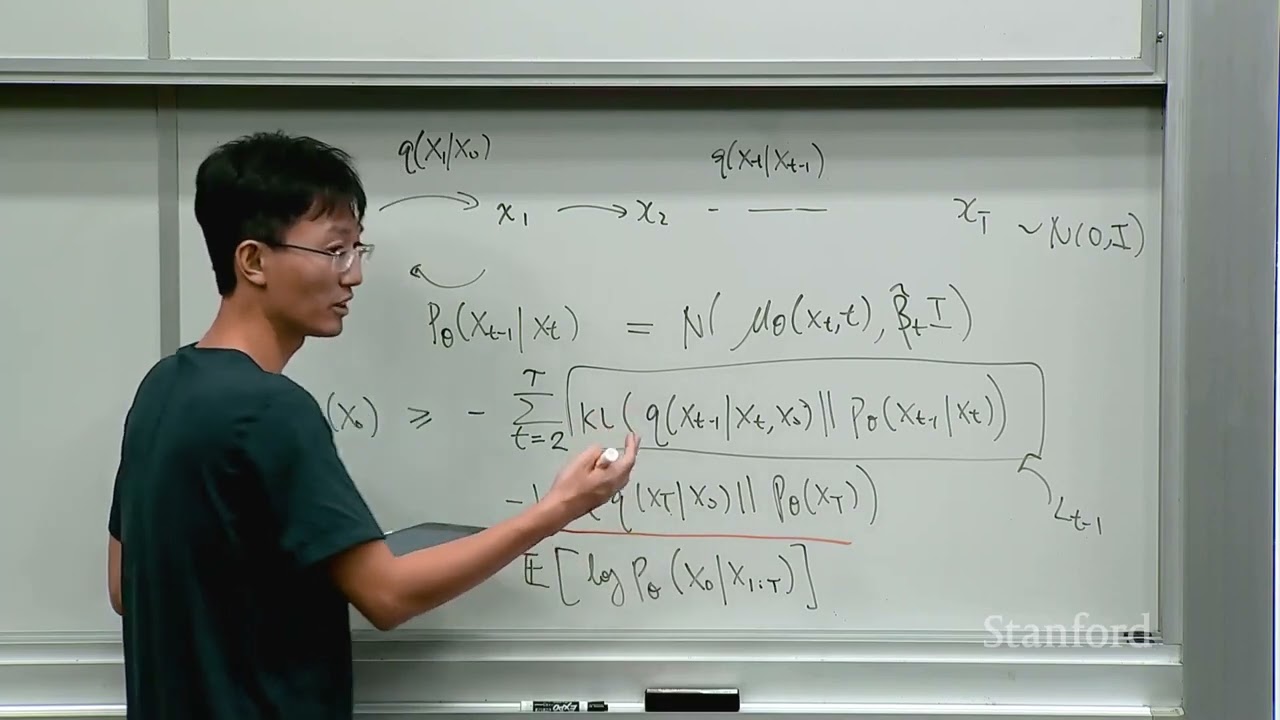
Stanford CS229 Machine Learning | Spring 2026 | Lecture 12: Representation Learning
Stanford Online
Mentioned as a breakthrough model that enabled few-shot and zero-shot learning, significantly impacting the adaptation phase in machine learning.

Stanford CS329A Self-Improving AI Agents | Part 1 | Course Overview
Stanford Online
A foundational large language model that demonstrated performance improvements with scaling.

Dr. John Vervaeke | Intelligence, Rationality, Wisdom and Spirituality
Peterson Academy
Mentioned as an example of current AI technology that is exciting and terrifying, but still incapable of general problem-solving like humans.

Open Models Are Collapsing The Cost Of AI
Y Combinator
A foundational large language model, mentioned implicitly in the context of token usage and cost.