Key Moments
E59: Twitter's content warning algo, equity audits, politicians trading stocks, Fed's next move
 All-In Podcast
Want to know something specific about what's covered?
We've already dissected every moment. Ask and we will deliver (with timestamps).
Key Moments
Podcasters discuss Twitter's content warnings, tech equity audits, politicians' stock trading, and the Fed's moves.
Key Insights
Twitter's content warning algorithm is being scrutinized for potentially flagging benign content and appears to be a blanket attempt to tone down discourse.
Proposed 'racial equity audits' for Big Tech companies could give political consultants veto power over product development, resembling a "party commissar" model.
Politicians in Congress and at the Federal Reserve are engaging in stock trading, raising concerns about insider trading and conflicts of interest despite existing regulations.
The Federal Reserve is accelerating its tapering of quantitative easing and preparing for interest rate hikes due to high inflation.
Omicron is spreading rapidly but appears less deadly, suggesting a potential for mass immunization, though the long-term impact on life quality and policy divergence between states remains a concern.
San Francisco is experiencing a crime surge, prompting calls for increased law enforcement and policy changes, signaling a potential shift away from radical progressive policies.
TWITTER'S CONTENT WARNING ALGORITHM AND TECH POLICY
The podcast opens with a discussion on the new Twitter CEO and early changes, specifically David Sacks's experience with a content warning on his tweet. The panelists theorize whether this is a machine-learned algorithm or manual flagging, suggesting it might be a broad effort to moderate discourse and prevent bullying. They question the transparency of these algorithms and the potential for them to influence the marketplace of ideas. Chamath's tweet also received a warning, leading to further discussion on the arbitrary nature of these labels and the potential for them to be used to target individuals.
EQUITY AUDITS: POWER GRABS OR FAIRNESS MEASURES?
A significant portion of the conversation focuses on proposals for 'racial equity audits' in Big Tech. The panelists express concern that these audits, pushed by activist groups and politicians, could lead to political consultants having veto power over product development, likening it to a "party commissar" system. They argue that 'equity' is being used as a tool for power grabs, diverging from the concept of equality or meritocracy. The discussion highlights the lack of clear principles in equity audits and the potential for them to stifle innovation and create undue burdens on companies.
THE FEDERAL RESERVE'S NEXT MOVES AND ECONOMIC UNCERTAINTY
The economic discussion centers on the Federal Reserve's shift towards tighter monetary policy. The acceleration of tapering quantitative easing and anticipated interest rate hikes are seen as necessary responses to persistent inflation. The panelists explain quantitative easing as the Fed injecting money into the economy by buying bonds, which can fuel inflation. They note that the government's substantial spending, combined with QE, has created an inflationary environment. This uncertainty from Washington regarding spending, taxes, and interest rates is distracting investors from core investment decisions, forcing them to become macroeconomists.
BUILD BACK BETTER'S FATE AND ECONOMIC HEADWINDS
The Build Back Better bill is discussed, with panelists agreeing it's likely dead for now, especially given the high inflation numbers and the Fed's pivot. The Congressional Budget Office's projection of massive costs further undermines its viability. The sentiment is that adding more spending in a hyperinflationary environment would be counterproductive. The shelving of the bill is seen as a TBD to avoid a definitive defeat, with a potential revisit in March, but likely to be overshadowed by other crises or the upcoming election cycle. The focus shifts to the need for economic health to ensure Democratic electoral success.
OMICRON'S SPREAD, VACCINE EFFICACY, AND THE PATH FORWARD
The rapid spread of the Omicron variant is acknowledged, with observations that while highly contagious, hospitalizations and deaths remain relatively flat, particularly among vaccinated populations. This suggests a potential for widespread, less severe infection, possibly leading to mass immunization. However, concerns linger about potential quality of life divergence between blue and red states regarding COVID restrictions. The panelists predict fatigue with restrictions, even in blue states, and a return to normalcy in red states. They emphasize that individual responsibility, vaccination, and healthy living are key, rather than extensive mandates.
POLITICIANS AND INSIDER TRADING: A CONTINUING SCANDAL
The issue of politicians trading stocks based on insider information is highlighted, with examples from both Republican and Democratic members of Congress, as well as Federal Reserve officials. Despite regulations like the STOCK Act, enforcement and penalties are weak, leading to widespread flouting of the rules. Nancy Pelosi's defense of stock trading as a 'free market' is contrasted with her party's usual calls for regulation. The panelists suggest this is a prime issue for outsider candidates and Republicans to campaign on. The discussion also touches on ethical concerns surrounding former officials and their lucrative post-office activities.
SAN FRANCISCO'S CRIME SURGE AND THE POLITICAL SHIFT
The conversation turns to the escalating crime in San Francisco, with Mayor London Breed calling for more aggressive law enforcement. This is seen as a significant departure from policies like 'defund the police' and a repudiation of radical progressive ideologies that have allegedly led to the city's decline. The panelists predict a potential clash between Breed and progressive District Attorney Chesa Boudin, suggesting that Breed's pragmatic stance may lead to his recall. This shift is framed as a broader national trend of voters moving away from extreme policies towards more pragmatic solutions.
THE POTENTIAL OF MRNA TECHNOLOGY IN MEDICINE
A detailed explanation of mRNA technology is provided, tracing its origins and its breakthrough with COVID-19 vaccines. The panelists highlight its potential to revolutionize treatments for various diseases, including cancer and genetic disorders, by enabling cells to produce therapeutic proteins. The journey of mRNA technology from early struggles to widespread acceptance, accelerated by the pandemic, is discussed. The potential for this technology to save lives by speeding up drug development is contrasted with past setbacks in gene editing, suggesting a potential long-term benefit that might outweigh the immediate costs of the pandemic.
THE IMPACT OF THE PANDEMIC ON CHILD DEVELOPMENT
A study indicating a significant drop in cognitive development among children born during the pandemic is discussed, with a particular focus on male children and those from lower socioeconomic backgrounds. The panelists attribute this decline partly to the disruption of education and the overuse of screens. They argue that this is a critical issue that requires government intervention, including better support for teachers and smaller class sizes, rather than simply injecting more money into ineffective systems. The long-term consequences for an entire generation are a major concern.
CELEBRITY METHOD ACTING AND CRITICISM OF 'IN THE ARENA'
The discussion touches on the intense method acting of Jeremy Strong, prompting a debate about the line between dedication and eccentricity. The backlash from critics versus the defense from fellow actors highlights a broader theme: the judgment of those 'in the arena' by those who are not. The panelists contrast the hard work of athletes and actors striving for perfection with critics who offer commentary without personal risk. This leads to a discussion about politicians who criticize others while engaging in similar or worse behavior themselves, framing it as a form of 'grifting'.
Mentioned in This Episode
●Companies
●Organizations
●People Referenced
Common Questions
David Sacks' tweets, including one about investors focusing on investments rather than debating interest rates, were flagged by Twitter. The panelists debated whether this flagging was algorithmic or manual, with concerns raised about transparency and potential bias in content moderation.
Topics
Mentioned in this video
A company mentioned for its light Italian cashmere sweaters.
Mentioned in comparison to tech companies facing potential equity audits, referencing their DOJ antitrust settlement.
Transformed the pharma industry with biologic drugs in the 80s and 90s, serving as a parallel to mRNA's potential impact.
Mentioned as a company that denied service to users based on political affiliations.
Stock saw significant growth during Obama's presidency, potentially linked to his stance on net neutrality.
Recommended as a brand for warm sweaters for $150.
Called upon to conduct racial equity audits.
An incubation shop in Boston where Moderna was started to pursue mRNA technology.
Pursued mRNA technology from Flagship Pioneering, struggled initially, but saw acceleration with COVID-19 vaccines.
Co-host, referred to as 'rain man' and 'consultant of science'. His Twitter account was flagged by Twitter for having 'interesting things to say'.
Mentioned as being at a dinner after a game, described as a great guy.
Mentioned as the senator who proposed racial equity audits for tech companies.
Mentioned for his sweater brand, with a humorous note about buttons made from endangered rhino horn.
The host, also referred to by nicknames like 'dictator' and 'sultan of science'. His taste in sweaters and tweets by his 'meme team' are discussed.
Mentioned for his show 'After Life', specifically a scene about pudding made from breast milk.
Criticized Elon Musk over taxes, sparking a Twitter exchange. Also mentioned in relation to banning insider trading by congress.
Actor praised for his method acting, with discussion around a New Yorker profile and the line between dedication and obsession.
Wrote a letter praising Jeremy Strong's acting abilities.
Kentucky Republican who was late disclosing his wife's stock purchase in a pharma company manufacturing an anti-viral COVID-19 treatment.
Nevada Democrat who failed to properly disclose over 200 trades, amounting to $3 million.
Secured over $50 million for book deals. His administration's stance on net neutrality potentially benefited Netflix.
Discussed in relation to Elizabeth Warren and Twitter. He responded to her tax comments and was named Time's Person of the Year.
Mentioned as an example of perfectionism in perfecting his basketball skills, including mapping the rim's circumference.
One of the actors who defended Jeremy Strong publicly after a critical New Yorker profile.
Published a letter defending Jeremy Strong on Twitter.
Defended members of Congress trading stocks, citing the free market. Her husband is a sophisticated private equity investor. Meme stocks follow her trading.
Florida Republican who was late in disclosing stock purchases in an aerospace company he testified before.
His SPAC is valued at close to $20 billion, despite having no revenue, leading to SEC inquiries.
Referred to as 'my one true bestie'.
Former CEO of Twitter, mentioned for promising transparency about algorithms that has not been delivered.
Fed Chair, mentioned for the Fed's plan to raise interest rates and accelerate tapering of quantitative easing.
Mentioned for a tweet about climate change that Elon Musk responded to.
Cited as potentially influencing the shelving of the Build Back Better Act due to economic concerns.
Mentioned as a comparison for Jeremy Strong's dedicated method acting approach.
Mentioned by Aaron Sorkin as a benchmark for Jeremy Strong's acting talent.
Running for Senate in Arizona, tweeted that banning insider trading by elected officials would be his first fix.
Secured over $50 million for book deals. Compared to high-end escorts and assessed as potentially a larger deal than expected for someone new to film.
Mayor of San Francisco, called for better policing and a shift from 'defund the police' to 'refunding the police', supporting school board recalls.
The current mayor of New York City, anticipated to clean up the city after Bill de Blasio.
Supported himself by writing books, drawing a parallel to politicians making money from books post-office.
San Francisco District Attorney, criticized for releasing repeat offenders and for prioritizing police prosecutions. His recall election is mentioned.
Mentioned regarding a comment about whether groups like Proud Boys could be considered gay activist groups.
Mentioned for coining the term 'pandemic politics' to describe the radical politics bred by the pandemic.
Former mayor of New York City, called the first real progressive leftist to run a major city, who is accused of running the city into the ground.
A PhD student and Twitter user whose concept of 'luxury beliefs' is discussed.
Mentioned in a satirical context alongside Proud Boys, suggesting an end to extreme political polarization.
A left-wing non-profit pushing for racial equity audits at tech companies and previously advocating for restrictions on Trump's posts.
Chinese Communist Party, used as a comparison for the potential authoritarian nature of tech company audits.
The CBO released a report stating the Build Back Better Act would cost more than anticipated, contributing to its shelving.
Mentioned in a satirical context alongside Antifa, suggesting an end to extreme political polarization.
More from All-In Podcast
View all 424 summaries 85 min
World's First Trillionaire, Anthropic Fable Banned, The New Oligarchs, Iran Peace Deal
 102 min
Anthropic's Fable Backlash, Nationalizing AI, Inflation Heats Up & California’s Broken Elections
 68 min
All-In's Best Ideas Pitch Competition: 4 Investors Present Their Top Trades Live
 44 min
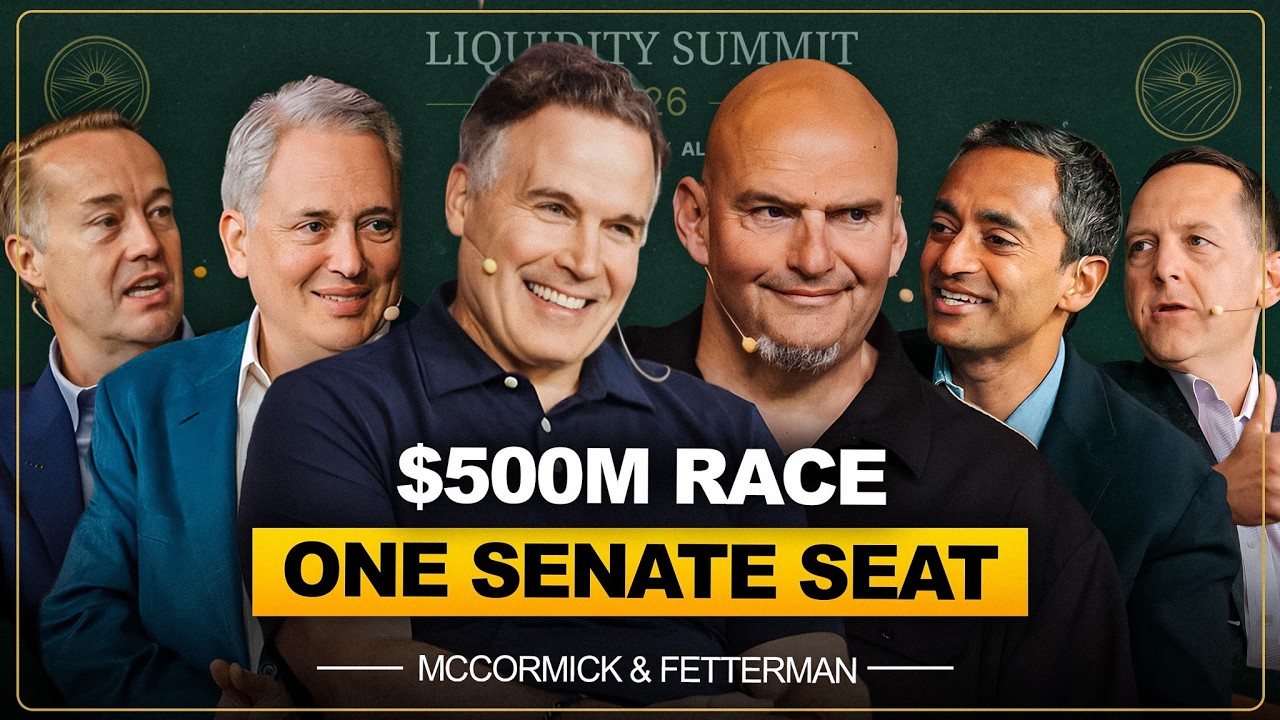
Senators John Fetterman and Dave McCormick: Bipartisanship, Money in DC, Datacenters, Graham Platner
Ask anything from this episode.
Save it, chat with it, and connect it to Claude or ChatGPT. Get cited answers from the actual content — and build your own knowledge base of every podcast and video you care about.
Get Started Free