Key Moments
E163: Market rips, Media RIFs, Texas defies Biden, Fintech reckoning, ARkStorm 2.0 & more
 All-In Podcast
Want to know something specific about what's covered?
We've already dissected every moment. Ask and we will deliver (with timestamps).
Key Moments
Markets rally, media struggles, Texas borders, fintech faces reckoning, climate fears.
Key Insights
Strong economic data fuels market rally, with GDP growth exceeding expectations and Dow hitting all-time highs.
The media industry is in a crisis due to a broken business model, facing significant layoffs and brand closures.
Texas is in a standoff with the Biden administration over border security, leading to legal challenges and political debate.
Fintech companies are facing a 'reckoning' as leaked financial data reveals high burn rates and margin challenges.
Speculation around severe 'ARkStorm 2.0' in California is assessed, with meteorologists indicating wet but not catastrophic conditions.
The role of technology and changing economic environments in business models and market dynamics is a key discussion point.
ROBUST ECONOMIC DATA IGNITES MARKET RALLY
The US economy shows surprising strength, with Q4 GDP growth at 3.3%, significantly beating expectations and pushing the Dow Jones Industrial Average to a historic all-time high. Inflation is cooling, with CPI up 0.3% month-over-month, inching closer to the Federal Reserve's 2% target. Job growth in 2023 was robust, and consumer sentiment has surged to its highest level since 1991, indicating a positive economic outlook and fueling speculation of a market 'melt-up' despite potential rate cut delays.
MEDIA'S BROKEN BUSINESS MODEL ACCELERATES DECLINE
The media industry is grappling with a fundamental crisis, marked by widespread layoffs and the demise of established brands like Sports Illustrated and Pitchfork. The shift of advertising revenue to tech giants like Google and Facebook, combined with the rise of direct-to-consumer expert content, has crippled traditional media. Rising operational costs and declining readership have made many publications financially unsustainable, leading to a search for new models, such as subscriptions, to survive.
TEXAS DEFIES FEDERAL BORDER POLICY AMIDST MIGRATION SURGE
Texas is escalating its dispute with the Biden administration over border security, deploying razor wire and challenging federal authority to remove it. Governor Abbott has declared a state of 'invasion,' vowing to defend the border independently. This conflict highlights a national debate on immigration policy, with critics arguing that the administration's actions are leading to record illegal crossings and overwhelming border states and sanctuary cities, while others criticize the potential for humanitarian crises and the strain on resources.
FINTECH'S RECKONING: LEAKS REVEAL FINANCIAL STRAINS
Confidential financial data leaks from prominent fintech companies like Brex and Anthropic have exposed significant financial challenges. Brex, facing high monthly burn rates, announced substantial layoffs, while Anthropic's leaked gross margins suggest a potentially unsustainable business model compared to traditional SaaS companies. This has sparked a discussion about the true viability of many fintech businesses, questioning whether they offer genuine technological advantages or are merely 'thin' businesses with unsustainable economics.
THE EVOLVING ECONOMIC LANDSCAPE AND RATE ENVIRONMENT
Participants discuss the long-term implications of a potentially sustained higher interest rate environment, contrasting it with the zero-interest-rate policies of the past decade. This shift is forcing businesses to re-evaluate their models, focusing on profitability and sustainable growth rather than rapid expansion fueled by cheap capital. Concerns are raised about the national debt and the growing cost of interest payments, which could necessitate difficult fiscal choices and impact future economic policy.
THE SEARCH FOR TRUTH IN A DECENTRALIZED INFORMATION AGE
The discussion delves into the challenges of discerning truth in the modern media landscape, where traditional outlets are losing trust and new decentralized sources emerge. The rise of citizen journalism, expert direct-to-consumer content, and platforms like X (formerly Twitter) allows for triangulation of information. However, the prevalence of misinformation and the weaponization of platforms by interest groups underscore the difficulty in navigating a complex information ecosystem and the need for critical evaluation of sources.
CALIFORNIA'S 'ARkSTORM 2.0' FEARS AND CLIMATE REALITY
There is speculation about a severe 'ARkStorm 2.0' event hitting California due to unusually warm ocean temperatures fueling powerful atmospheric rivers. While meteorologists acknowledge a period of significant wet weather, they largely dispute the imminent threat of a catastrophic megaflood. The discussion highlights the increased frequency and intensity of extreme weather events driven by climate change, emphasizing the need for preparedness and adaptation, even if the most severe forecasts are not immediately realized.
THE ECONOMIC RATIONALE AND POLITICAL IMPLICATIONS OF IMMIGRATION
A significant portion of the conversation focuses on the motivations behind current immigration policies, with contributors debating economic benefits versus political strategies. One theory suggests that increased, lower-cost labor could help reduce inflation and boost GDP, while another posits that the Democratic party is strategically encouraging immigration to secure future voting blocs. The strain on social services in major cities and the potential for this issue to become a critical factor in upcoming elections are also highlighted.
RETHINKING BUSINESS MODELS IN A NEW INTEREST RATE REGIME
The conversation emphasizes that for many, the prolonged period of zero or near-zero interest rates has shaped their entire economic lives. Businesses and individuals made decisions based on these conditions, which may no longer be valid. The emergence of consistently higher interest rates necessitates a fundamental shift in how businesses are built and financed, with a greater focus on profitability and efficiency rather than growth at all costs. This marks a transition to a different economic phase than many have experienced.
THE DECLINE OF TRADITIONAL MEDIA'S AUTHORITY AND TRUST
The panelists critically examine why traditional media outlets are failing, citing a loss of trust due to perceived bias and sensationalism. The shift from factual reporting to narrative-driven storytelling, intended to capture clicks and revenue, has alienated audiences. The ease with which information can now be sourced and analyzed through decentralized channels means that centralized, less trustworthy media entities struggle to maintain relevance and readership in the current environment.
THE ROLE OF EXPERTS AND DIRECT ACCESS TO INFORMATION
The rise of experts directly engaging with audiences through podcasts, newsletters, and social media is changing how information is consumed. This bypasses traditional media gatekeepers, allowing individuals to seek out specific voices and perspectives. This trend is seen as a natural evolution of the internet, enabling a more personalized and, ideally, more accurate consumption of news and analysis by allowing consumers to choose their preferred arbiters of information.
FINTECH'S MARGIN CHALLENGES AND CUSTOMER ACQUISITION COSTS
Many fintech companies, initially lauded for their technological prowess, are now revealing that their cost structures and customer acquisition strategies mirror traditional financial services. High transaction costs, increasing customer acquisition costs (CAC), and the reliance on 'give-to-get' referral programs highlight a struggle to achieve superior margins or lower CAC compared to incumbents. This realization is leading to a 'reckoning' where the perceived tech advantage is being scrutinized against tangible financial performance.
THE GRAND RECKONING FOR HIGH-GROWTH, LOW-MARGIN BUSINESSES
The discussion highlights a broad trend where companies, including many in fintech, that were valued highly for growth potential are now being judged on profitability and sustainable margins. This mean reversion is expected to impact a wide range of companies, particularly those that operate with high gross margins but have historically struggled to translate that into consistent profitability. The belief is that technology is becoming ubiquitous, and companies will be increasingly evaluated based on their core underlying sector's economics.
Mentioned in This Episode
●Software & Apps
●Companies
●Organizations
●Concepts
●People Referenced
US Federal Debt and Interest Payments (2019-2024)
Data extracted from this episode
| Metric | 2019 (end) | 2020 | 2024 (current/projected) |
|---|---|---|---|
| Total Federal Debt | $22 Trillion | N/A | $34-35 Trillion |
| Average Interest Rate on Debt | N/A | 1.5% | ~3% |
| Annualized Q4 Interest Paid | N/A | N/A | ~$1 Trillion |
| Interest Payment (per 1% rate hike) | N/A | N/A | ~$1 Billion/day |
Fintech vs. SaaS Gross Margin Profiles
Data extracted from this episode
| Business Type | Typical Gross Margin | Revenue Quality Notes |
|---|---|---|
| Traditional SaaS | 70-80% | High quality, less transaction cost related |
| Fintech (general) | Significantly lower | High transaction costs, loss rates, claims payouts (e.g., lending, insurance, payments) |
| Payments Business (example) | Very low (e.g., 25 basis points or 0.25% of gross) | High fees paid to networks (Visa/Mastercard), fraud losses, customer support costs |
Common Questions
Sentiment is flipping towards a market melt-up in 2024, driven by strong GDP numbers (3.3% in Q4), Dow and S&P 500 hitting all-time highs, reasonable CPI numbers, and beats on jobs data. This outlook suggests that as the economy cools and inflation comes down, rate cuts will follow, leading to significant money from the sidelines entering risk assets.
Topics
Mentioned in this video
A prediction market that suggested a 37% chance of a rate cut by March, but indicated cuts might be pushed back towards spring or the second half of 2024.
Content subscription service cited as a rare example of a company able to charge high transaction fees (10%) due to its niche.
Proprietary large language model developed by Anthropic, described as 'dope'.
Along with Google, was a primary channel for customer acquisition for fintech and D2C businesses, driving up CAC over time.
Fintech company offering credit card and expense management software, whose confidential financials were leaked, revealing it was burning $17 million a month.
Investment platform that innovated with a 'give to get' referral program and 1% interest for moving assets to acquire customers cheaply.
Platform mentioned as a company whose gross market transactions were often conflated with its actual revenue, demonstrating intellectual dishonesty in reporting.
A platform for crowdsourced citizen journalism, seen as a decentralized source of information and the best way to triangulate to the truth.
Along with Facebook, gained most of the advertising revenue, and its PageRank algorithm serves as a model for dynamic systems of truth arbitration.
Online auto insurance business started by David Friedberg, which demonstrated challenges in fintech models regarding margin advantage as it scaled.
News wire service discussed as being close to what a neutral 'truth' reporting service would be, but ultimately criticized as not being a 'great business'.
Payment network mentioned as an entity to which payments companies pay transaction fees, impacting gross margins.
Electric vehicle manufacturer that issued a missive indicating a different demand curve for Q1, suggesting a belt-tightening phase in the economy.
Platform where people share direct video, evidence, and documents, decentralizing information.
AI company building the large language model Claude, whose gross margin was leaked as between 50-55%, which is lower than typical SaaS margins.
Payments company cited as an example to explain how to avoid confusing gross payment volume with actual revenue due to high transaction costs and low margins.
Ride-sharing company whose gross market transactions were often conflated with its actual revenue, demonstrating intellectual dishonesty in reporting.
Payment network mentioned as an entity to which payments companies pay transaction fees, impacting gross margins.
Food delivery service whose gross market transactions were often conflated with its actual revenue, demonstrating intellectual dishonesty in reporting.
Journalist mentioned as an example of an eloquent, interesting arbiter of information who takes spicy takes but doesn't outright lie.
Governor of Texas, who challenged the Supreme Court ruling on border security, stating Texas is under invasion and will defend itself, becoming a 'national hero' in public opinion.
Journalist mentioned as an example of an eloquent, interesting arbiter of information who takes spicy takes but doesn't outright lie. Later cited for a clip explaining his theory on Democratic immigration strategy.
Supreme Court Justice who voted with the majority against Texas in the border security dispute.
Mentioned for his visit to the border to conduct citizen journalism and criticizing Biden's border wall policy.
Republican politician, mentioned as part of the 'neocon warmongering Republican party' which is losing to populist figures like Trump.
Public figure who stated an extreme negative opinion about Business Insider, calling it a 'worthless rag' and a 'stain upon humanity'.
Author who coined the term 'Gell-Mann Amnesia effect,' used to explain how people selectively believe news.
Mentioned as conducting citizen journalism by going to the border to see for himself what's happening.
President of the United States, whose administration's border policies, including removing razor wire and granting asylum, have been criticized as 'active sabotage' and a 'losing argument' politically.
Former President, whose appeal to working-class Democrats is discussed, and mentioned as 'crushing it in the polls' due to populist positions.
Economist who shared a chart analyzing unemployment against inflation over 20 years, noting the deviation since COVID-19.
Journalist mentioned as an example of an eloquent, interesting arbiter of information who takes spicy takes but doesn't outright lie.
Chief Justice of the Supreme Court who voted with the majority against Texas in the border security dispute.
Governor of California, mentioned for extending healthcare to illegal immigrants, exemplifying an ideological view of providing benefits.
Publication that doesn't use bylines, focusing on the brand, and mentioned as an example of less biased reporting.
Conducted an analysis called 'ArkStorm 2.0' predicting over a trillion dollars in damages if a massive atmospheric river event hit California again.
Media company that announced 8% job cuts. Criticized by Bill Ackman and discussed as an example of a publication resorting to sensationalism or lying.
Media company that went bankrupt, illustrating the severe challenges in the media industry.
A once respected brand that cut 100+ jobs and lost subscribers after putting a trans person on its cover.
An example of crowdsourced citizen journalism, criticized for biased 'bios of living people' (BLPs) sections that are easily weaponized by interest groups.
News wire service discussed as being close to a neutral 'truth' reporting service but not a 'great business'.
Referenced for a study that concluded the actual number of illegal aliens in the US is over 22 million, not 11 million.
Its survey found that American inflation expectations have reached their lowest point in three years.
Media outlet whose historical articles are described as boring and factual, in contrast to today's sensationalist approaches.
A weather phenomenon causing massive rainfall, central to the 'ArkStorm' scenario in California, with increased frequency due to warming oceans.
A phenomenon where readers recognize inaccuracies in news on subjects they know well but uncritically accept information on other subjects.
Google's algorithm for ranking sites, discussed as a model for scoring or voting on data quality, similar to how information could be arbitrated on the internet.
More from All-In Podcast
View all 413 summaries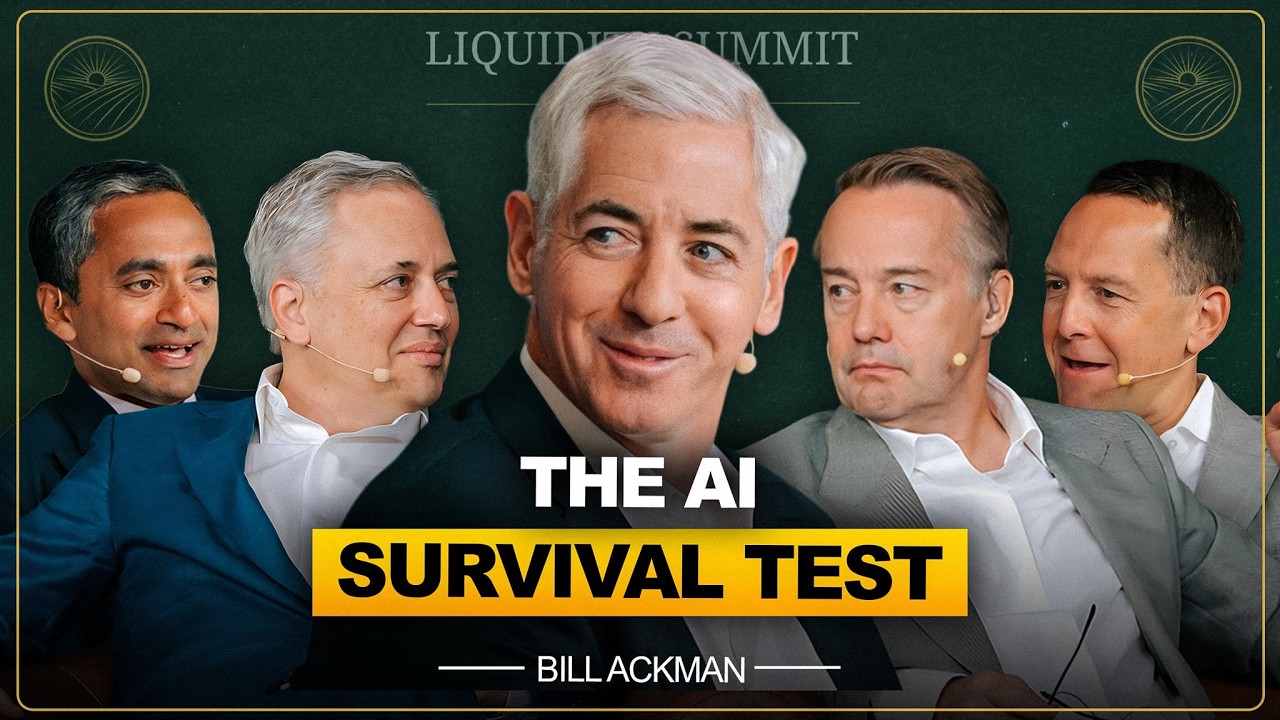 30 min
Bill Ackman: Investment Strategy, What the Market is Missing, How AI Breaks Businesses
 33 min
OpenAI CFO Sarah Friar on IPO, AI Rivalries, New Device, and Spending $100B+ on Compute
 95 min
Anthropic's Digital God, Pope vs AI, Job Loss Narrative Flips, Open Source Crackdown Coming?
 102 min
SpaceX’s $2T Case, Nvidia’s Shock Selloff, America Turns on AI, Trump Pulls AI Order, Bond Crisis?
Ask anything from this episode.
Save it, chat with it, and connect it to Claude or ChatGPT. Get cited answers from the actual content — and build your own knowledge base of every podcast and video you care about.
Get Started Free