Key Moments
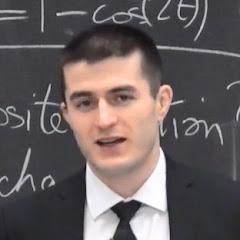
Drago Anguelov (Waymo) - MIT Self-Driving Cars
 Lex Fridman
Want to know something specific about what's covered?
We've already dissected every moment. Ask and we will deliver (with timestamps).
Key Moments
Waymo's Drago Anguelov discusses taming the long tail of autonomous driving through ML, simulation, and hybrid systems.
Key Insights
The "long tail" of rare and unpredictable events is the primary challenge in achieving fully autonomous driving.
Machine learning, especially with a "factory" approach to data collection, labeling, training, and validation, is crucial for handling complexity.
Simulation plays a vital role in testing and validating self-driving systems on a massive scale, covering billions of miles.
Hybrid systems, combining machine learning with expert-designed algorithms and complementary sensors, are essential for robustness, especially in uncertain scenarios.
Developing realistic agent behaviors for simulation, particularly for pedestrians and other drivers, is critical for effective testing.
Automated machine learning (AutoML) is used to optimize neural network architectures for performance and efficiency.
THE CHALLENGE OF THE LONG TAIL
Drago Anguelov from Waymo highlights that achieving fully autonomous driving requires addressing the 'long tail' of rare, unpredictable events. While common driving scenarios are manageable, the vast number of infrequent situations, like bizarre objects on the road or rule-breaking drivers, pose the greatest hurdle. Successfully taming this long tail is essential for enabling safe and scalable self-driving capabilities.
CORE COMPONENTS: PERCEPTION, PREDICTION, AND PLANNING
Autonomous driving relies on three core AI tasks: perception, prediction, and planning. Perception involves interpreting sensor data to understand the environment, identifying objects, and mapping scenes. Prediction focuses on anticipating the future behavior of other road users, considering past actions, semantic context, and subtle cues. Planning then generates safe, comfortable, and efficient vehicle actions based on these inputs.
MACHINE LEARNING AS A SCALABLE SOLUTION
Modern machine learning is presented as a powerful tool for tackling the complexity of autonomous driving, akin to a 'factory' process. This involves building robust infrastructure for data collection, labeling, training, and validation. By feeding large datasets into this factory, Waymo can iteratively develop and improve machine learning models that handle intricate mappings and diverse scenarios, essential for addressing the long tail.
THE ML FACTORY: INFRASTRUCTURE, DATA, AND MODELS
Waymo's 'ML factory' comprises key ingredients: computing infrastructure (leveraging TensorFlow, data centers, and specialized hardware), high-quality labeled data, and advanced models. Data selection is critical, focusing on rare and interesting cases through techniques like active learning and data mining. Collaboration with Google and DeepMind provides access to cutting-edge AI research and model architectures, enhancing perception and decision-making capabilities.
AUTOMATED MACHINE LEARNING AND HYBRID SYSTEMS
Automated machine learning (AutoML) is employed to optimize neural network architectures, finding efficient and high-performing models for tasks like lidar segmentation and lane detection. Complementing this, hybrid systems integrate machine learning with expert-designed algorithms and redundant sensors (camera, lidar, radar). This approach enhances robustness, allowing safe operation even when ML models are uncertain or encounter novel situations.
IMMERSIVE SIMULATION FOR LARGE-SCALE TESTING
To test and validate self-driving systems rigorously, Waymo utilizes extensive simulation, equivalent to billions of miles driven virtually each day. This simulation generates vast numbers of scenarios, including those derived from real-world logs and custom-designed situations. Simulating realistic agent behaviors, such as those of pedestrians and other drivers, is crucial for creating a believable and effective testing environment.
MODELING AGENT BEHAVIOR AND THE LONG TAIL OF TESTING
Modeling realistic driver and pedestrian behavior is key to effective simulation. Techniques range from simple 'break and swerve' models to complex learned agents that mimic real-world interactions. End-to-end driving models, trained on extensive data, show promise but still struggle with the very edge cases in testing. Trajectory optimization, informed by observed behaviors and learned potentials, offers a more constrained yet robust approach to simulating diverse agent interactions.
SCALABLE DEPLOYMENT AND CONTINUOUS IMPROVEMENT
Scaling self-driving capabilities to numerous cities requires a systematic approach. This involves driving extensively in new environments to collect data, enabling the system to quantify its uncertainty and identify areas for improvement. The goal is a virtuous cycle where data collection, retraining, and deployment lead to continuous enhancement, supported by scalable training and testing infrastructure and the ability for systems to reason and self-update.
Mentioned in This Episode
●Software & Apps
●Companies
●Organizations
●Studies Cited
●People Referenced
Common Questions
The 'long tail' refers to the vast number of rare, unusual, and challenging situations that autonomous vehicles must be able to handle safely, beyond the common driving scenarios. Taming this 'long tail' is crucial for achieving truly driverless operation at scale.
Topics
Mentioned in this video
Mentioned as the developer of the 'dagger' problem in imitation learning at Waymo.
Mentioned in relation to 'Type 1' and 'Type 2' reasoning in humans, contrasting it with current AI capabilities.
Mentioned in the context of papers on weakly supervised learning and imitation learning.
Drago Anguelov's PhD advisor at Stanford, a prominent figure in AI and machine learning.
A pioneer in autonomous driving and robotics, who founded Waymo (formerly Google's self-driving car project).
A deep learning framework developed by Google, leveraged by Waymo for its machine learning infrastructure.
A neural network architecture invented at Google, which became popular and improved object detection.
Automatic machine learning, a system developed at Google that allows machines to search for and optimize neural network architectures.
A large-scale visual database used for training deep neural network models, where Google and DeepMind have achieved state-of-the-art results.
A self-driving technology company, part of Alphabet, celebrating its 10-year anniversary. They aim to lead the world in autonomous driving.
An AI research laboratory owned by Google, collaborating with Waymo to improve its models and advance AI in areas like perception and reinforcement learning.
The parent company of Waymo and DeepMind, providing infrastructure and AI expertise, including TensorFlow and specialized hardware for model training.
More from Lex Fridman
View all 550 summaries 174 min
Biggest Mysteries in Physics: Antimatter, Dark Energy & ToE - Don Lincoln | Lex Fridman Podcast #497
 259 min
FFmpeg: The Incredible Technology Behind Video on the Internet | Lex Fridman Podcast #496
 124 min
Vikings, Ragnar, Berserkers, Valhalla & the Warriors of the Viking Age | Lex Fridman Podcast #495
 146 min
Jensen Huang: NVIDIA - The $4 Trillion Company & the AI Revolution | Lex Fridman Podcast #494
Ask anything from this episode.
Save it, chat with it, and connect it to Claude or ChatGPT. Get cited answers from the actual content — and build your own knowledge base of every podcast and video you care about.
Get Started Free